 Sudden Valley Roofing
 Why Shingle Choice Matters More Here Than It Does Elsewhere
Every roofing material sold in the Pacific Northwest is technically rated to handle rain. Not all of them are built to handle rain that shows up nine months out of the year, salt-tinged air rolling off the Sound, and the kind of low, cool, damp shade that lets moss colonies take hold on a north-facing slope before you've even finished paying off the roof. Sudden Valley sits at the edge of Lake Whatcom, tucked against timber, which means shade, moisture, and organic debris are part of daily life for a roof here in a way they simply aren't for a house in a drier inland climate.
Choosing a shingle isn't just about matching a color to your siding. It's about understanding how a specific product behaves over fifteen, twenty, thirty years under this exact set of conditions — driving rain that gets pushed sideways under poorly lapped courses, humidity that never fully lets a roof deck dry out, and moss spores that are always in the air looking for a foothold. This guide walks through the real differences between shingle types, what the ratings on the wrapper actually mean, and what we've found holds up honestly in Whatcom County.
Asphalt Composition Shingles: The Baseline Most Homes Use
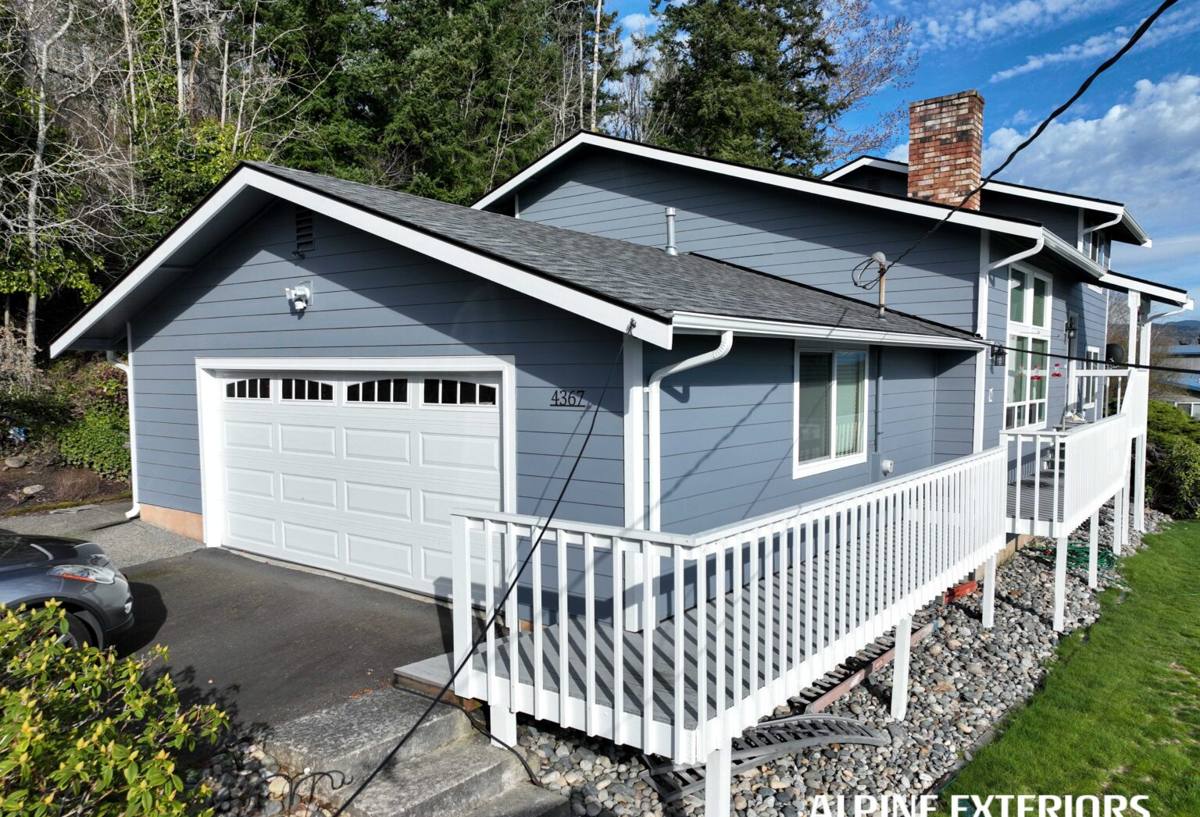
The large majority of homes in Sudden Valley and across Whatcom County are roofed in asphalt composition shingles, and for good reason — they're cost-effective, widely available, easy to repair in sections, and manufacturers have gotten genuinely better at engineering them for wet climates over the last couple decades. But "asphalt shingle" isn't one product. It's a category with real performance differences inside it.
3-Tab Shingles
These are the thinnest, flattest, least expensive asphalt shingles on the market. They're a single layer laminated to look uniform, and they carry the shortest wind and impact ratings of any composition product. In a climate with regular winter windstorms coming off the water, we don't recommend 3-tab shingles for most Sudden Valley homes — not because the product is defective, but because it's built to a price point that doesn't leave much margin against sustained wind and moss intrusion at the tabs.
Architectural (Dimensional) Shingles
This is the standard we install on most re-roofs in the area. Architectural shingles are built from two or more laminated layers, which gives them more mass, a heavier wind rating (commonly 110-130 mph depending on the product line), and a shadow-line profile that sheds water more decisively than a flat 3-tab. The extra thickness also means the granule surface — the layer that actually protects the asphalt from UV and moisture cycling — has more material to wear through before the shingle starts to fail.
Premium / Designer Shingles
These mimic the look of slate or heavy cedar shake using extra-thick laminate construction. They carry the best wind and impact ratings in the asphalt category and often the longest warranties. The tradeoff is cost — expect to pay noticeably more per square than standard architectural shingles. For a home with a lot of street-facing roofline, or an owner who wants the roof to last as close to the deck's own lifespan as possible, it's worth pricing out.
What "Algae-Resistant" (AR) Actually Means
Almost every asphalt shingle sold today is available in an "algae-resistant" or "AR" version, and in a climate like ours, this isn't an optional upgrade — it's close to mandatory. Here's what's actually happening: the dark streaking homeowners call "mold" or "moss" on a roof is usually a form of algae (Gloeocapsa magma) that feeds on the limestone filler in ordinary shingle granules. AR shingles have copper or zinc compounds embedded in the granules, which the algae can't tolerate.
AR granules don't stop moss outright — moss is a different organism entirely, and it takes hold from windblown organic debris (needles, seeds, leaf litter) that collects on a roof and holds moisture against the surface rather than from the granule chemistry itself. But AR shingles measurably slow the algae staining that makes a roof look prematurely aged, and the copper content has a modest secondary effect of discouraging moss establishment. Given how much tree cover shades roofs throughout Sudden Valley, we treat AR granules as a baseline requirement, not an upsell.
Metal Roofing: Where It Makes Sense and Where It Doesn't
Standing-seam and exposed-fastener metal roofing has become more common on newer builds and additions in Whatcom County, and it has real advantages in our climate. Metal sheds moisture instantly with no granule surface for organic debris to grip, it doesn't host moss the way asphalt or wood can, and a quality standing-seam system can outlast two or three asphalt roof cycles.
The tradeoffs are upfront cost and installation sensitivity. Metal roofing is unforgiving of a poor install — flashing details, panel fastening, and expansion allowances all have to be done correctly the first time, because there's very little room to patch a mistake later without it showing. It's also a louder roof under heavy rain unless proper underlayment and decking are used, which matters on a home with living space directly under the roof plane. We'll walk homeowners through metal as an option honestly, including the real cost gap versus asphalt, rather than pushing it as a universal upgrade.
Wood Shake and Shingle: An Honest Look
Cedar shake has a genuine aesthetic appeal, especially on the wooded lots common around Sudden Valley, and historically it was a regional standard. Our professional standard today is to steer most homeowners away from it for a primary roof in this specific climate, and it's worth explaining why in plain terms rather than just saying no.
Wood is an organic material sitting in a location that's damp for most of the year and shaded by conifers for much of that time. Even with pressure treatment, cedar shake needs regular maintenance — cleaning, treatment reapplication, and diligent gutter and debris management — to keep moisture from cycling into the wood fibers and encouraging exactly the kind of moss and rot growth this climate is already primed for. It's not that cedar shake fails outright; it's that the maintenance burden required to keep it performing well here is significantly higher than asphalt or metal, and a lot of homeowners underestimate that commitment until they're several years in. If a homeowner wants the look with less of the upkeep, we can talk through shake-profile architectural asphalt shingles as a middle ground.
Comparing Shingle Types Side by Side
| Type | Typical Lifespan | Wind Rating (typical) | Moss/Algae Resistance | Relative Cost |
|---|---|---|---|---|
| 3-Tab Asphalt | 15-20 years | 60-70 mph | Low unless AR-treated | Lowest |
| Architectural Asphalt | 25-30 years | 110-130 mph | Good with AR granules | Moderate |
| Premium/Designer Asphalt | 30+ years | 130+ mph | Good with AR granules | Higher |
| Standing-Seam Metal | 40-60+ years | 140+ mph | Excellent | Highest upfront |
| Cedar Shake | 20-30 years with upkeep | Moderate | Poor without regular maintenance | Moderate to high |
These ranges are general industry figures, not guarantees — actual performance depends heavily on installation quality, roof pitch, tree cover, and how consistently the roof gets cleaned of debris.
Roof Pitch, Shade, and Airflow: The Factors Homeowners Skip
Two identical shingles on two different roofs in the same neighborhood can age at very different rates, and the shingle brand usually isn't why. Pitch matters — a low-slope section drains slower and gives moss and algae more contact time with standing moisture. Shade matters, and around Lake Whatcom, a lot of rooflines sit under heavy conifer canopy that keeps a north or east-facing slope damp long after the rest of the roof has dried. Attic and ridge ventilation matter too — poor airflow traps moisture underneath the deck itself, which can shorten shingle life from the underside regardless of what's happening on the surface.
None of this means a shaded, low-pitch roof is doomed to fail early. It means the shingle spec and the maintenance plan should account for those conditions rather than assuming every roof on a house performs identically.
Questions Worth Asking Before You Choose
- Does the shingle line come standard with algae-resistant (AR) granules, or is it an upcharge?
- What's the manufacturer's wind rating, and does it match what this specific roof plane is exposed to?
- Does the warranty require a specific underlayment or ventilation setup to stay valid?
- How does this shingle's profile handle water at low-slope transitions and valleys?
- What's the realistic maintenance schedule — cleaning, gutter clearing, moss treatment — for this material in a shaded, high-rainfall setting?
Underlayment and Ventilation: Half the Roof's Performance Isn't the Shingle
Homeowners often focus entirely on the visible shingle and skip past the layers underneath, but in a climate that gets driving rain and long wet seasons, the underlayment is doing real work. Synthetic underlayments have largely replaced felt paper because they resist tearing and hold up better to moisture exposure during the install window itself — which matters in a region where you can't always count on a dry week to get a roof dried in. Proper ice-and-water shield at eaves, valleys, and around penetrations adds a second line of defense exactly where driving rain and wind-blown moisture concentrate.
Ventilation is the other half of the equation. A roof deck that can't breathe traps moisture from the living space below, which condenses against the underside of the sheathing and shortens the life of the shingles from beneath — independent of how good the shingle itself is. Balanced intake and exhaust ventilation isn't a cosmetic detail; it's part of what makes any shingle warranty meaningful in this climate.
Maintenance That Actually Extends Shingle Life Here
Whatever shingle a homeowner chooses, a few habits make a bigger difference in Whatcom County than almost anywhere drier:
- Clear needles, leaves, and debris off the roof surface and out of valleys at least once or twice a year, more often under heavy conifer cover.
- Keep gutters clear so water isn't backing up under the shingle courses at the eaves during heavy rain.
- Address moss growth early with proper treatment rather than letting it establish and lift shingle edges.
- Trim back overhanging branches to reduce shade and debris load on north-facing slopes.
- Have the roof looked at after major windstorms, since lifted or cracked shingles are easiest to fix before the next rain event finds the gap.
What This Means for a Sudden Valley Home
For most homes in the area, a mid-to-upper-tier architectural asphalt shingle with algae-resistant granules, installed over quality synthetic underlayment with proper ventilation, gives the best balance of upfront cost, appearance, and real-world durability against salt air, driving rain, and moss pressure. Homes with unusual wind exposure along the lake, heavy tree shade, or owners planning to stay long-term sometimes make a stronger case for metal roofing despite the higher initial cost. Cedar shake remains an option for homeowners who understand and accept the maintenance commitment it requires in this specific climate.
There isn't a single "best" shingle for every roof in Whatcom County — there's a best shingle for your specific roof's pitch, shade, exposure, and how much maintenance you want to take on. If you'd like an honest look at what makes sense for your home, we're happy to come out for a free, no-pressure estimate and walk through the options in person — just fill out the form below.