 Sudden Valley Roofing
 Bellingham's Exterior Challenges: Salt Air, Rain, and Moss
Homes in and around Bellingham take a different kind of beating than homes further inland. Sitting close to Bellingham Bay and the greater Salish Sea shoreline means a steady dose of salt-laden air moving through the neighborhood, on top of the driving rain and long gray stretches that define a Whatcom County winter. Add in the mature tree canopy that shades a lot of Bellingham lots, and you've got a near-perfect recipe for moss, mildew, and slow moisture damage that homeowners in drier climates never have to think about.
Salt Air and Corrosion
Salt air doesn't just affect homes right on the water. Wind carries fine salt particles well inland, and over years that exposure accelerates corrosion on exposed metal — roof flashing, fasteners, gutter hardware, and any lower-grade trim. It's one of the reasons we pay close attention to fastener and flashing material on Bellingham jobs, not just the roofing or siding product itself.
Driving Rain and Water Intrusion
Whatcom County doesn't usually get dramatic downpours — it gets long, low-intensity rain that comes in sideways on a windy day. That kind of weather finds every weak point in a roof or siding system: a poorly lapped seam, an under-flashed window, a gap where two materials meet. It's slow, patient water intrusion rather than a single dramatic storm, which is exactly why it can go unnoticed until there's already damage behind the wall or under the shingles.
Moss and Shade
Bellingham's tree cover is part of what makes the area beautiful, but shaded, damp roof surfaces are where moss and algae take hold fastest. Once moss gets established on a roof, it holds moisture against the surface, lifts shingle edges, and shortens the life of the roofing material. A shaded, north-facing slope can show heavy moss growth years before a sunnier slope on the same roof.
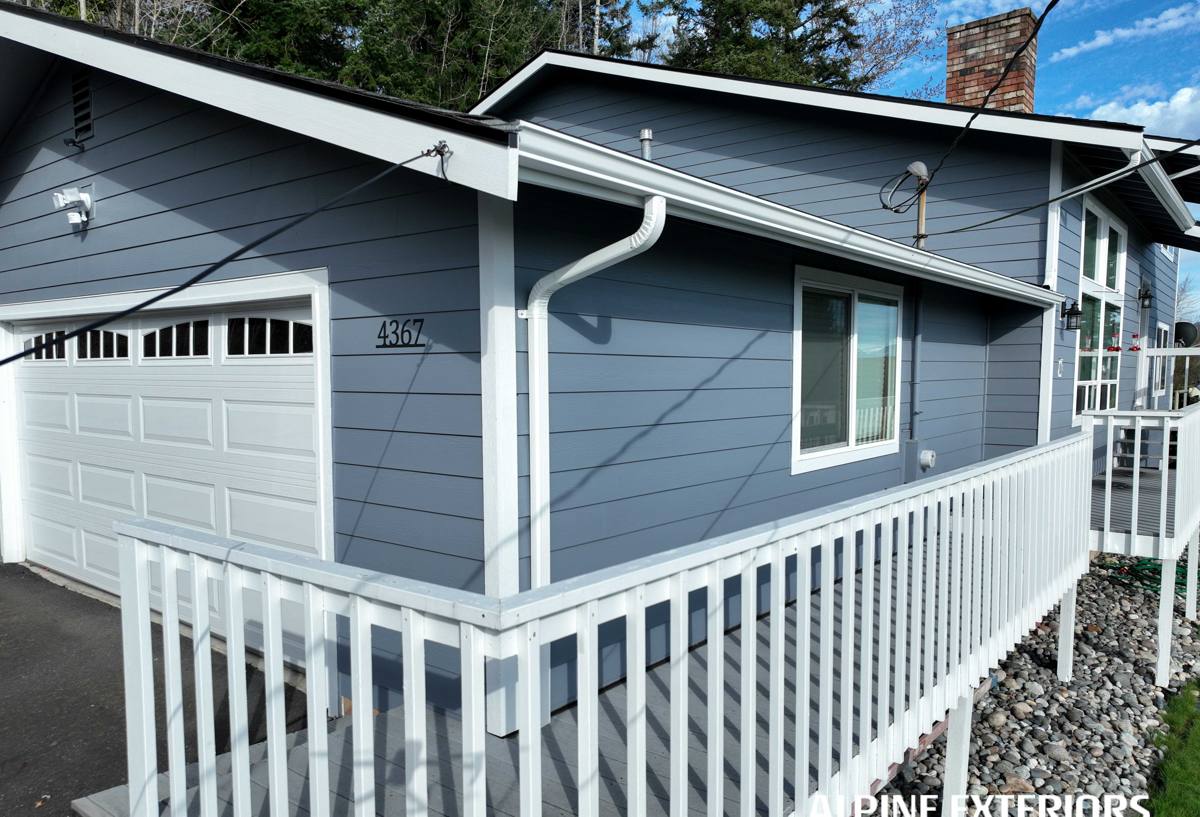
Roofing in Bellingham: What Holds Up Here
There's no single "best" roofing material for every home — it depends on your roof's pitch, how much shade it gets, your budget, and how long you plan to stay in the house. What matters most in this climate is proper underlayment, correct flashing at every penetration, and ventilation that keeps moisture from building up in the attic.
| Roofing Material | Moss/Moisture Resistance | Typical Lifespan | Considerations for Bellingham |
|---|---|---|---|
| Asphalt Composition Shingle | Moderate — benefits from algae-resistant granules | 20–30 years | Good value, wide color range, needs periodic moss treatment on shaded roofs |
| Standing Seam Metal | High — sheds moisture, little surface for moss to grip | 40–60 years | Higher upfront cost, excellent in wet/shaded areas, needs corrosion-resistant fasteners near the water |
| Cedar Shake | Low without diligent maintenance | 20–30 years with upkeep | Classic look, but retains moisture and needs regular treatment in a damp, shaded climate |
Inspections and Maintenance
A roof inspection isn't just about finding leaks — it's about catching the small stuff before it becomes a repair. On a Bellingham roof, that means checking flashing around chimneys and skylights, looking at gutter attachment and flow, and assessing moss coverage on shaded slopes. We recommend most homeowners here have their roof looked at every one to two years, or after any significant windstorm.
Repair vs. Replacement
Not every roof problem means a full replacement. Isolated flashing failures, a handful of damaged shingles, or a clogged valley can often be repaired directly. We'll always tell you honestly when a repair makes sense versus when the roof's overall age and condition point toward replacement — we don't upsell a full tear-off when a targeted fix will hold.
Siding for Whatcom County Weather
Siding takes a constant, lower-grade hit from the same conditions that affect roofs: wind-driven rain, humidity, and salt air. The goal with any siding system here is managing moisture at the seams and behind the cladding, not just picking a material that looks good on day one.
Fiber Cement
Fiber cement holds up well against moisture and doesn't provide the same food source for mold and mildew that wood does. It takes paint well and resists the swelling and warping that can show up on wood siding after repeated wet-dry cycles. The trade-off is weight and installation sensitivity — it needs to be installed with the right fasteners and clearances to perform as intended.
Vinyl
Vinyl siding is a lower-maintenance, lower-cost option that resists moisture absorption by nature of the material. In a salt-air environment it holds up reasonably well, though quality varies a lot between grades, and lower-grade vinyl can become brittle over time with UV and temperature swings.
Wood Siding
Wood has a natural, warm look that a lot of homeowners want, especially on older or craftsman-style homes common in this area. It's a viable choice, but it comes with a real maintenance burden in a climate this wet — regular refinishing, careful caulking at joints, and closer attention to any spot that stays shaded and damp longer than the rest of the wall.
Where Water Gets In
Most siding failures we see aren't a failure of the material itself — they're a failure at the transitions: around windows, at trim boards, where siding meets the foundation, or at inside corners that don't drain well. That's where careful flashing and installation technique matter more than which siding product you chose.
Windows: Comfort, Condensation, and Energy
Older single-pane or early double-pane windows struggle in this climate in two specific ways: they let heat escape during Bellingham's long heating season, and they're prone to interior condensation when warm, humid indoor air meets a cold glass surface. That condensation, over years, can lead to sill and frame damage even when the window itself hasn't failed structurally.
What to Look For
When we replace windows, we're looking at the whole assembly — frame material, glazing, and how it's flashed into the wall opening — not just the glass. A well-installed window with average glass will often outperform a premium window that's poorly flashed and lets water track in behind the trim.
Signs a Window Needs Attention
- Fogging or moisture between panes (a sign the seal has failed)
- Soft or discolored wood at the sill or frame
- Drafts you can feel even with the window fully latched
- Difficulty opening, closing, or locking due to frame swelling
- Visible gaps or cracked caulking around the exterior trim
Decks: Built for Wet Winters
A deck in Bellingham spends a big part of the year wet, which puts real stress on fasteners, ledger connections, and any horizontal surface where water can pool. The details that matter most are proper flashing at the ledger board where the deck meets the house, adequate slope for drainage, and fasteners rated to resist corrosion in a humid, salt-influenced environment.
Material Considerations
Pressure-treated lumber remains a solid, economical choice when properly maintained — sealed and re-stained on a regular cycle. Composite decking trades that maintenance cycle for a higher upfront cost, and performs well against moisture, though it still needs a structurally sound, well-drained frame underneath it to last. Either way, the framing and flashing underneath matter as much as the surface material people see.
Moss and Slip Hazards
Shaded decks grow the same moss and algae that shaded roofs do, and on a walking surface that's a safety issue, not just an appearance one. Regular cleaning and, where needed, a breathable moss treatment keep a deck both looking better and safer underfoot through the wet months.
Why a Local Crew Matters
A crew that works Whatcom County roofs and siding week in and week out develops a feel for this specific climate that's hard to get anywhere else — which slopes hold moss, which siding transitions tend to leak first, how much ventilation an attic actually needs given our humidity. That local, repeated exposure is worth more than a glossy brochure. It shows up in the small decisions made on site: the flashing detail at a tricky roof valley, the fastener choice near the water, the extra care at a window that faces the prevailing wind and rain.
Working with a local, licensed and insured contractor also means someone who's still around next year if a question comes up — not a crew that worked the area for a season and moved on.
Maintenance Checklist for Bellingham Homeowners
A little regular attention goes a long way in this climate. Here's what we recommend keeping an eye on:
- Clear gutters and downspouts at least twice a year, more often under heavy tree cover
- Check shaded roof slopes for moss buildup each fall before the heavy rains set in
- Inspect caulking and trim around windows and doors annually
- Look for soft spots, discoloration, or peeling paint on siding, especially near ground level
- Walk the deck surface and check for soft boards, loose fasteners, or standing water after storms
- Have a full roof inspection every one to two years, or after any major windstorm
What to Expect When You Work With Us
We start with an honest, in-person look at what's actually going on — not a sales pitch. That means a real inspection of the roof, siding, windows, or deck in question, a plain-English explanation of what we're seeing, and options that range from a targeted repair to a full replacement, depending on what the situation calls for. You'll get a written estimate that spells out materials and scope so there's no guessing later about what was included.
Because we handle roofing, siding, windows, and decks under one roof, we can also flag issues that cross over between systems — a siding leak that's actually coming from a roof flashing failure, for example — instead of treating each exterior component in isolation.
If you're noticing moss on the roof, a soft spot on the deck, drafty windows, or siding that's holding onto moisture longer than it should, we're happy to take a look. Reach out for a free, no-pressure estimate using the form below, and we'll walk you through what we find and what your real options are.