 Sudden Valley Roofing
 Roofing and Exterior Work for Geneva, on the North Shore of Lake Whatcom
Geneva sits along the north shore of Lake Whatcom, tucked into the forested hills that separate the lake from Bellingham and the bay beyond. It's a quieter corner of Whatcom County, and most of the homes here share the same conditions: tall conifers close to the roofline, deep shade for a good part of the day, and a lot of moisture that has nowhere fast to go. If you own a home in Geneva, your roof, siding, windows, and deck are all dealing with a slightly different climate than a house out in the open in Ferndale or Lynden, and they need to be treated that way.
We're a local crew, and we've worked on enough homes around Lake Whatcom to know that a generic exterior job doesn't hold up out here the way it might somewhere drier and sunnier. This page walks through what Geneva's climate actually does to a house, and what we do differently because of it.
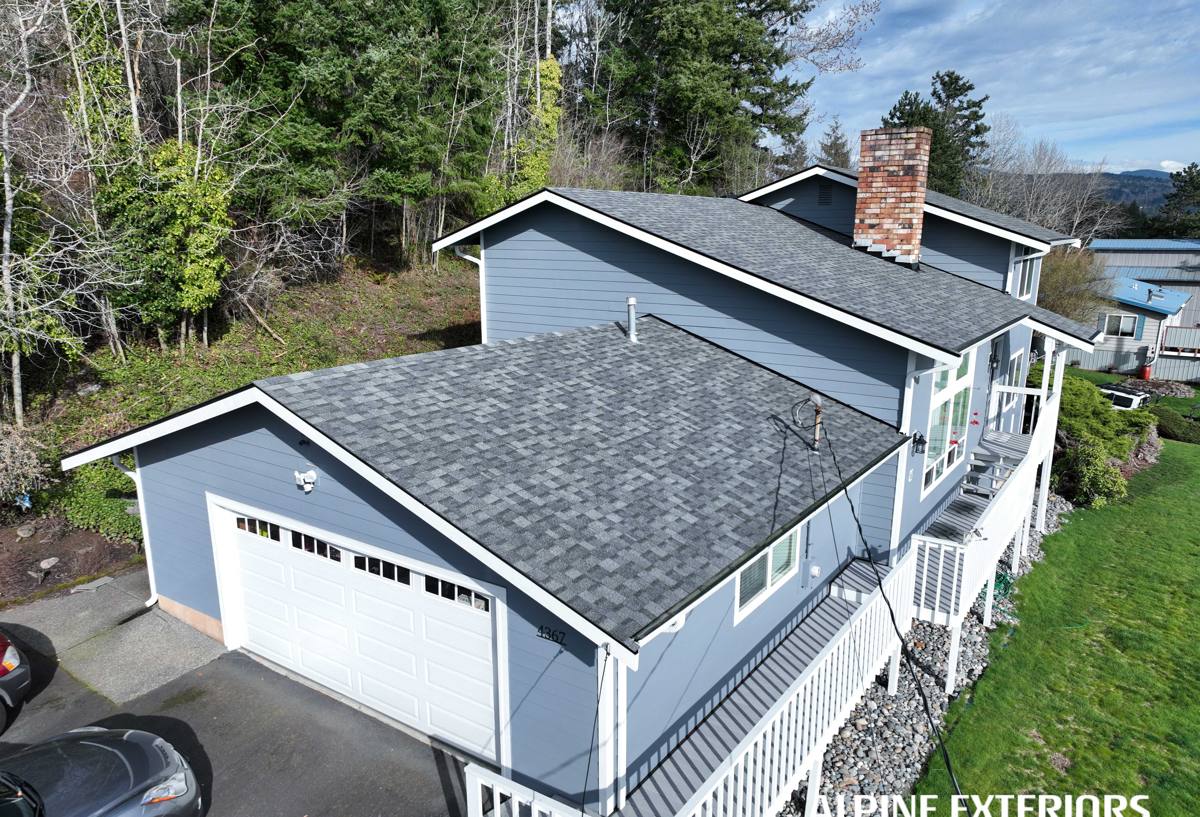
What the Local Climate Does to a House
Whatcom County gets a mix of marine air off Puget Sound and Georgia Strait and heavier, wetter systems that stall against the foothills. By the time that weather reaches Geneva, it's usually settled into a long stretch of steady, driving rain rather than short storms. Add the lake itself, which keeps humidity higher along the shoreline than it is even a few miles inland, and you've got a recipe for a roof and siding system that rarely gets a chance to fully dry out.
Shade and Moss
The tree cover that makes Geneva a nice place to live is also the reason moss and algae show up faster here than in more open neighborhoods. Shingles and shake that stay damp and shaded for days at a time grow moss in the granule bed and along butt edges. Left alone, that moss holds water against the roof surface, lifts shingle edges, and shortens the life of the roofing material well before it would otherwise need replacing.
Driving Rain and Wind-Loaded Moisture
When wind pushes rain sideways off the lake or through gaps in the tree line, it finds its way into places a straight-down rain never would: under poorly lapped siding, around loose trim, and into window and door openings that have started to gap with age. This is less about any single storm and more about repetition — years of wind-driven moisture working at the same weak points.
Freeze-Thaw Swings
Geneva doesn't see the hard freezes of the passes, but winter cold snaps do happen, and when a roof or siding surface is already holding water from weeks of shade and rain, freezing that water expands cracks and seams that were already under stress. It's the combination — chronic dampness plus occasional freeze — that does the real damage, not either one alone.
Roofing Services for Geneva Homes
Roof work in this area usually falls into three categories: full replacements on roofs that have reached the end of their service life, targeted repairs on roofs that are otherwise sound, and moss/debris maintenance that extends the life of a roof that's still in good shape. We handle all three, and we'll tell you honestly which one your roof actually needs rather than defaulting to the most expensive option.
Inspections That Account for Shade
A roof inspection on a shaded, lake-adjacent lot needs to look closely at north-facing slopes and any section that sits under overhanging branches, since those areas age faster than the rest of the roof. We check for granule loss, soft decking, moss intrusion under shingle edges, and flashing that's started to separate — all common failure points on homes with Geneva's tree exposure.
Material Choices That Make Sense Here
Material choice matters more in a high-moisture, low-sun environment than it does in a drier part of the county. The table below is a general guide, not a quote — actual costs depend on roof size, pitch, tear-off needs, and access.
| Material | Typical Lifespan (Local Conditions) | Moss/Moisture Resistance | Relative Cost |
|---|---|---|---|
| Architectural asphalt shingle | 20-30 years | Good with regular maintenance | $ |
| Standing seam metal | 40-50+ years | Excellent — sheds moss and debris | $$$ |
| Cedar shake | 20-25 years in shaded, damp lots | Requires diligent upkeep; shortens under heavy shade | $$ |
| Composite/synthetic shake | 30-40 years | Very good — doesn't absorb moisture like natural wood | $$ |
We're upfront that cedar shake, while attractive, is a tougher call on a heavily shaded Geneva lot. It's not that the product is bad — it's that natural wood shake needs airflow and sun exposure to shed moisture the way it's designed to, and a lot of lots here simply don't offer that. On those properties we'll usually recommend architectural shingle or a synthetic shake profile instead, and explain why, rather than talk anyone out of a look they want without a reason.
Roof Repairs vs. Replacement
Not every roof problem means a new roof. Localized flashing failures, a section of damaged shingles from a fallen branch, or moss buildup that hasn't yet compromised the decking are all repairable. We'll always look for the option that gets you the most useful life out of what's already up there before recommending a full tear-off.
Siding That Holds Up to Lake Moisture
Siding failures around Geneva tend to start at the same few spots: butt joints that weren't properly lapped, caulking that's dried and cracked after a few seasons of sun-shade cycling, and lower courses near grade that stay damp from splashback and slow-draining soil. We install and repair fiber cement, engineered wood, and vinyl siding, and we pay particular attention to flashing and water management details at windows, corners, and the base of the wall — the places wind-driven rain actually gets in.
Fiber cement has become a common choice in this part of Whatcom County because it holds paint well and doesn't swell or rot the way older wood siding products could when they stayed damp for extended periods. It's not the only good option, but for a shaded, moisture-heavy lot it's usually worth the conversation.
Windows: Comfort and Moisture Control
Older windows around the lake often show the same pattern: fogged double-pane glass from a failed seal, and soft or discolored trim where driven rain has worked its way past aging weatherstripping. Replacing failing windows isn't just about energy bills — on a shaded, damp lot, a leaking window is a slow moisture source feeding rot in the framing around it. We install and flash replacement windows to shed water outward, not into the wall cavity, which matters more here than in a drier climate where a minor gap might never cause a problem.
Decks in a Wet, Shaded Climate
A deck on a shaded Geneva lot works harder than one out in full sun. Boards stay damp longer after rain, algae builds up on the walking surface, and ledger boards and fasteners near the house are a common spot for hidden rot if flashing wasn't done correctly at installation. Composite decking has become popular here because it doesn't absorb water the way wood does, but it still needs a properly built substructure with good drainage underneath — composite boards on a poorly ventilated frame will still trap moisture below the surface. For wood decks, we build in gapping and drainage details that account for the extra weeks of dampness a shaded lot holds compared to an open one.
Why a Local Crew Matters
Whatcom County's roofing and siding needs aren't the same as a contractor's experience in a drier region, and they're not identical to conditions on the open, windier stretches of the county either. Geneva's mix of lake humidity, tree shade, and driving rain off the water calls for judgment that comes from working on homes in these exact conditions repeatedly — knowing which slopes moss out first, which siding details actually fail here, and which materials are worth the extra cost on a shaded lot versus a sunny one. That's the kind of knowledge that doesn't come from a manufacturer's spec sheet; it comes from being local.
A Maintenance Checklist for Geneva Homeowners
- Have gutters cleared at least twice a year — more often if you're under conifers that drop needles year-round
- Check roof valleys and north-facing slopes for moss buildup each fall before the wet season sets in
- Look at caulking and trim around windows annually; recaulk before it cracks, not after water gets in
- Keep tree branches trimmed back from the roofline to improve airflow and drying time
- Inspect deck ledger boards and fastener points where the deck meets the house for softness or staining
- Address small roof and siding repairs promptly — in this climate, small gaps become bigger problems fast
Getting Started
Whether it's a roof that's due for replacement, siding showing early signs of moisture damage, windows that have started to fog or leak, or a deck that needs rebuilding with better drainage in mind, we're glad to come take a look and give you a straight answer about what's actually needed. If you're in Geneva or elsewhere around Lake Whatcom, use the form below to request a free, no-pressure estimate — we'll walk the property with you and explain what we see in plain language.