 Sudden Valley Roofing
 Exterior Work Built for Silver Beach's Climate
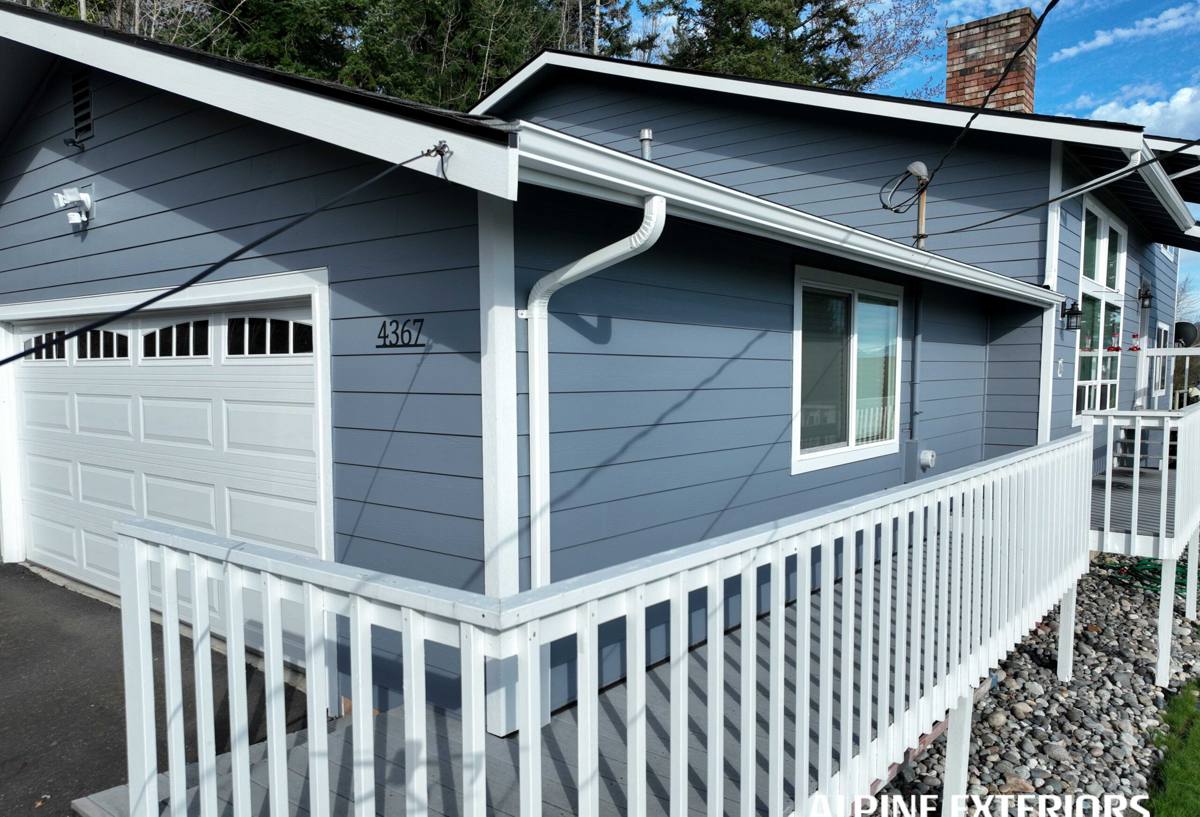
Silver Beach sits in one of the wetter, greener corners of Whatcom County, with heavy tree cover, close-together lots, and a lot of moisture in the air for most of the year. Homes here don't fail because they were built badly — they fail because Western Washington weather is relentless and patient. Roofs, siding, windows, and decks all take a slow beating from rain that shows up in every season, salt-laden marine air moving in off the Puget Sound region, and a moss season that can run from fall through spring. We work on homes throughout Silver Beach and the surrounding Sudden Valley area, and we build every repair and installation around what actually happens to materials here, not a generic weatherproofing checklist written for a drier climate.
What Local Weather Does to a House
Moisture and Moss
Moss is the most visible sign of what this climate does to a roof, but it's really a symptom of a bigger issue: prolonged dampness. Shaded roof planes, north-facing slopes, and areas under tree canopy stay wet longer after every rain, and that constant moisture is exactly what moss, algae, and lichen need to take hold. Left alone, moss doesn't just look bad — it lifts shingle edges, holds water against the roof deck, and shortens the life of the roofing material underneath it.
Wind-Driven Rain
Rain in this part of Whatcom County rarely falls straight down. Storms moving through tend to push rain sideways, which means it finds its way into places a roof or wall system wasn't designed to shed water from directly — under flashing, around window trim, behind siding laps. Good exterior work here depends less on any single product and more on how the whole system is layered to handle water that's coming in at an angle.
Marine Air and Salt Exposure
Being close to the water in this region means dealing with salt-laden air in addition to plain rainfall. Salt air accelerates corrosion on exposed metal — fasteners, flashing, gutter hardware — and it can be harder on certain paint and coating systems over time. We factor that into what fasteners and metal components we use and how often we recommend a homeowner get eyes on those details.
Roof Repair and Replacement
Most roof calls we get in Silver Beach start with one of two things: a homeowner notices a leak, or moss and granule loss have gotten bad enough to raise questions about how much life is left in the roof. Both deserve an honest look before anything gets recommended.
When Repair Makes Sense
If the roof is reasonably young and the damage is localized — a section of damaged flashing, a handful of lifted or cracked shingles, a clogged valley — repair is usually the right call. We'd rather fix what's actually wrong than sell a full replacement a roof doesn't need yet.
When Replacement Makes Sense
Widespread granule loss, multiple past repairs, soft spots in the decking, or a roof that's simply reached the end of its expected service life are all signs that patching is just delaying a bigger job. In a climate like this one, an aging roof that's already struggling with moisture doesn't get a break — it gets worse faster than the same roof would in a drier region.
Comparing Common Roofing Materials for This Climate
| Material | How It Handles Moisture & Moss | Maintenance Burden | Typical Lifespan Here |
|---|---|---|---|
| Asphalt composition shingle | Good when installed with proper ventilation and moss treatment; algae-resistant options help | Periodic moss/debris removal | 20-30 years |
| Architectural/dimensional shingle | Heavier profile sheds water well; still needs moss management in shaded areas | Periodic moss/debris removal | 25-35 years |
| Metal roofing | Sheds water and moss quickly due to slick surface; low organic buildup | Low; occasional fastener/coating check, especially near marine air | 40-50+ years |
| Cedar shake | Handles moisture when properly ventilated, but is more moss- and rot-prone without upkeep | High; regular treatment and inspection needed | 20-30 years with upkeep |
There's no single "best" roof for every Silver Beach property — a heavily shaded, tree-covered lot changes the math compared to a more open one. We talk through actual sun exposure, tree cover, and roof pitch on your specific home before recommending a material.
Siding Repair and Replacement
Siding in this climate has one job above all else: keep bulk water and driving rain away from the wall assembly while still letting incidental moisture dry out. When siding fails here, it's almost always a moisture story — caulk that's given out, laps that were installed backward or too tight, trim that's absorbing water at end grain, or a moisture barrier that wasn't detailed correctly behind the finish material.
What We Look For
On an inspection we're checking corners, window and door trim, bottom courses near grade, and any spot where two materials meet — those transition points are where water intrusion almost always starts. We also look at how well a wall is drying, not just whether it's currently wet, since a wall that stays damp longer than it should is the real long-term problem.
Material Trade-Offs, Honestly
Fiber cement, engineered wood, vinyl, and traditional wood siding all perform differently here. Fiber cement handles sustained moisture and the local moss/algae environment well but is heavier and more sensitive to install correctly. Vinyl is low-maintenance and moisture-tolerant but can show wear under long-term UV and temperature swings. Traditional wood siding can look excellent but demands the most upkeep in a climate this wet — it's a legitimate choice, but one that comes with a real maintenance commitment, not a flaw in the product itself. We'll walk you through what each option actually asks of you as a homeowner rather than pushing whatever's easiest to install.
Windows
Older or failing windows in Silver Beach show their age in specific ways: fogged glass between panes (a sign the seal has failed), drafts around the frame, and in worse cases, soft or discolored trim from water getting behind the window over time. Window replacement here isn't just about energy efficiency — it's about closing off one of the more common paths for water intrusion into a wall system. Correct flashing and sealant detail around a new window matters as much as the window unit itself, especially with the wind-driven rain this area sees.
Decks
A deck in this climate goes through repeated wet-dry cycling nearly year-round, and that cycling is hard on fasteners, ledger connections, and any wood that isn't properly sealed or spaced to drain. Common issues we see include soft or spongy boards, rust-streaked fasteners, and ledger boards that have taken on water where the deck meets the house — one of the more serious issues since it's a structural connection point. Composite decking has become a popular option locally because it resists moisture absorption and doesn't need refinishing, though it comes at a higher upfront cost than wood. Either way, proper flashing at the ledger and enough gap and slope for water to actually drain matters more than which decking material sits on top.
Why a Local Crew Matters
A lot of exterior problems in Whatcom County are climate problems first and material problems second. A crew that mainly works in drier regions can install a technically correct roof or wall assembly that still isn't set up for the amount of sustained moisture, moss pressure, and wind-driven rain a Silver Beach or Sudden Valley property deals with. Working locally means we see the same conditions repeatedly — heavy tree canopy, shaded north slopes, lakeside and marine-influenced air — and build ventilation, drainage, and material choices around that reality instead of a one-size-fits-all approach.
A Simple Maintenance Checklist for This Climate
Regular upkeep goes a long way toward preventing small issues from becoming expensive ones. A few habits worth keeping on a Silver Beach property:
- Clear gutters and downspouts at least twice a year, more often under heavy tree cover
- Have moss treated or removed from the roof before it spreads under shingle edges
- Check window and door trim yearly for soft spots or failing caulk
- Inspect deck ledger boards and fasteners annually for rust or softness
- Walk the siding after major windstorms to check for loosened panels or trim
- Keep tree branches trimmed back from the roofline to reduce shade and debris buildup
What to Expect When You Reach Out
We start with a straightforward look at what's actually going on — not a sales pitch. That usually means walking the roof, checking siding and trim at the problem areas, and being upfront about what's a repair versus what genuinely needs replacement. You'll get a clear explanation of what we found and what your realistic options are, without pressure to choose the most expensive one.
If you're dealing with a leak, moss buildup, aging siding, drafty windows, or a deck that's starting to show its age, we're glad to take a look. Reach out for a free, no-pressure estimate using the form below.