 Sudden Valley Roofing
 Every roofing season in Whatcom County brings a fresh wave of contractors knocking on doors after a windstorm, leaving flyers on porches in Sudden Valley, or running ads that promise a "free inspection" with a suspicious sense of urgency. Most roofers in this region are honest tradespeople. But roofing is one of the easiest industries for a bad actor to fake credibility in, because most homeowners never climb up to check the work themselves. This page walks through the warning signs we see most often, so you can tell the difference between a legitimate local contractor and someone who's here for one job and gone before the first hard rain finds the leak.
Why Roofing Attracts More Bad Actors Than Most Trades
A new roof is a big-ticket purchase that most homeowners make once every 20-30 years. That combination — high dollar amount, low repeat customer knowledge, and a product that's hard to inspect once it's installed — is exactly what draws in storm chasers, unlicensed crews, and outfits that exist mainly to collect a deposit. Whatcom County's weather adds another layer: salt air off the Sound accelerates corrosion on fasteners and flashing, driving rain finds any shortcut in the underlayment or valley work within a season or two, and our long moss season means a roof that wasn't installed with proper ventilation and drainage in mind will show problems faster here than it would in a drier climate. A contractor who doesn't understand or account for that isn't necessarily dishonest, but they're not set up to do right by a roof in this area.
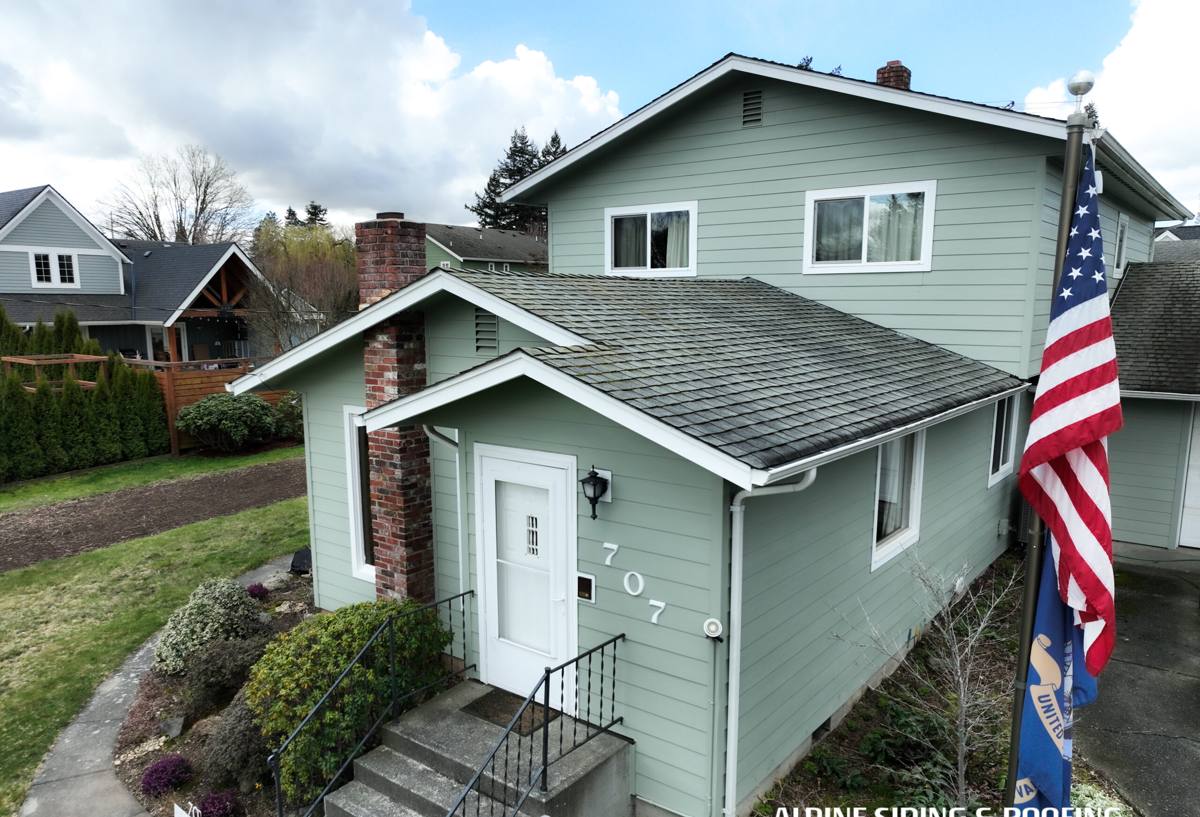
Red Flag: Door-to-Door Storm Chasing and High-Pressure Sales
After any significant wind or hail event, it's common to see out-of-area crews going door to door offering "free inspections" and pushing for a same-day signature. The pressure tactics are the tell: claims that your insurance will "definitely" cover a full replacement before anyone has actually inspected the roof, discounts that expire "today only," or a push to sign a contract before you've had time to get a second opinion. A legitimate roofer will give you time to think, won't need to leave town before the job is finished, and won't ask you to sign anything before a real inspection has happened.
What Legitimate Urgency Looks Like
There's a difference between a contractor telling you "this needs attention before the next storm system" based on what they actually found, and one who's manufacturing urgency to close the deal fast. Ask what specifically makes it urgent. A real answer will point to a specific condition — exposed decking, failed flashing, a soft spot — not just a generic "prices are going up."
Red Flag: No Verifiable License, Bond, or Insurance
Washington requires roofing contractors to carry a state contractor license and liability insurance, and to be bonded. This isn't paperwork trivia — it's what protects you if a worker is hurt on your roof or if the job goes wrong and needs to be redone. Any contractor should be able to give you a license number on the spot, and that number should be checkable through the Washington Department of Labor & Industries. If someone hesitates, gives you a number that doesn't match their business name, or asks you to "just trust me," that's a hard stop.
- Ask for the WA contractor license number and confirm it's active, not expired or suspended
- Confirm liability insurance coverage directly with the insurer, not just a certificate the contractor hands you
- Check whether the license has any history of complaints or bond claims
- Confirm the business has a real, physical presence — not just a P.O. box or an out-of-state address
Red Flag: Demanding Full Payment Upfront
Materials deposits are normal — a roofer often needs to order shingles, underlayment, and flashing before the crew shows up, and a partial deposit covers that. What's not normal is being asked to pay the full contract price, or close to it, before any work has started. If the contractor disappears after that check clears, you have very little recourse. A standard structure is a modest deposit at signing, progress payments tied to actual milestones, and a final payment only after the work is complete and you've had a chance to look it over.
Red Flag: Vague, Verbal, or Pressure-Timed Estimates
A written estimate should spell out the scope of work in enough detail that you could hand it to a different roofer and get an apples-to-apples comparison. That means the specific product line and color, the underlayment type, ice-and-water shield locations, ventilation changes if any, disposal of the old roofing, and a payment schedule. "Tear off and replace roof — see attached" with a single lump number is not enough information to know what you're actually paying for, and it makes it easy for a contractor to substitute cheaper materials later without you noticing.
Red Flag: Bids That Skip What Whatcom County Roofs Actually Need
This is the one that's easy to miss because it looks like good news — a bid that comes in noticeably lower than everyone else's. Sometimes that's a legitimately leaner operation. More often, it means something got left out that matters a lot here specifically: proper attic or roof-deck ventilation to manage condensation, adequate ice-and-water shield at eaves and valleys for driving rain, corrosion-resistant fasteners and flashing for salt-air exposure, or any plan at all for moss and drainage management. Those line items don't show up as dramatic differences on a one-page bid, but they're the difference between a roof that holds up through a Whatcom County winter and one that needs attention again in three years.
Comparing What a Bid Should Include
| Bid Element | Red Flag Version | What a Solid Bid Includes |
|---|---|---|
| Underlayment | Not specified, or "standard felt" with no detail on ice-and-water shield | Named product, ice-and-water shield at eaves/valleys/penetrations called out separately |
| Ventilation | No mention of intake or exhaust venting | Existing ventilation assessed, upgrades noted if the current setup is inadequate |
| Fasteners & Flashing | Unspecified, or reuse of old flashing to save cost | Corrosion-resistant fasteners and new flashing at valleys, chimneys, and penetrations |
| Moss & Drainage | Not addressed at all | Gutter and drainage condition noted, moss-resistant approach discussed if relevant |
| Warranty | Vague "labor guarantee," no manufacturer paperwork mentioned | Written workmanship warranty plus manufacturer material warranty terms explained |
| Cleanup & Disposal | Not mentioned; magnet sweep for nails not included | Disposal method and job-site nail sweep specified |
Red Flag: No Manufacturer Certification and No Warranty Clarity
Most major roofing manufacturers offer certification programs and enhanced warranties to contractors who meet installation and training standards. A contractor who can't tell you whether they're certified for the product they're proposing, or who can't explain the difference between the manufacturer's material warranty and their own workmanship warranty, either doesn't have that certification or hasn't thought through what happens if something fails down the road. Ask specifically: what does the manufacturer warranty cover, what does the workmanship warranty cover, and who do you call if a leak shows up two years from now.
Red Flag: No References or a Refusal to Let You Check Recent Work
Any contractor doing steady business locally should be able to point you toward past customers or projects you can ask about. That's not about celebrity testimonials — it's about being able to confirm the company actually does the work it says it does, on schedule, and stands behind it afterward. A contractor who's cagey about this, or whose only reviews are recent and clustered right after a storm event, deserves a closer look.
A Practical Vetting Checklist
Before you sign anything, it's worth working through a short list. None of these questions should make a legitimate contractor uncomfortable.
- Is the WA contractor license active, and does the business name match the license?
- Can they confirm current liability insurance directly with their insurer?
- Is there a physical local or regional address, not just a phone number?
- Is the estimate written, itemized, and specific about materials and underlayment?
- Does the payment schedule tie to milestones rather than one large upfront payment?
- Do they explain both the manufacturer warranty and their own workmanship warranty?
- Have they addressed ventilation, drainage, and moss given our climate — not just the shingles?
- Are they willing to give you time to think it over instead of pushing for a same-day signature?
Trust Your Instincts, Then Verify
If something about a pitch feels rushed, vague, or designed to close before you can compare it to anything else, that instinct is usually worth listening to. The fix is simple: slow down, ask for the license number, ask for the written scope, and get at least one other bid to compare it against. A roof in Sudden Valley has to deal with salt air, driving rain, and months of moss pressure every single year — it's worth the extra day or two it takes to hire someone who's actually set up to handle that, not just someone who showed up first.
If you're weighing a roofing decision and want a second opinion or a straightforward, no-pressure estimate, we're happy to take a look and walk you through exactly what we'd do and why. Use the form below to get started.