 Sudden Valley Roofing
 Exterior Contracting for Edgemoor and the Surrounding Sudden Valley Area
Homes near Edgemoor sit close enough to the water that salt air is part of daily life, and close enough to the hills and tree cover around Lake Whatcom and the Sudden Valley area that shade, moisture, and moss are constant companions. That combination is tougher on a roof and exterior than most homeowners realize until they're dealing with early wear, streaking, or a soft spot on the decking. We work throughout this part of Whatcom County, and the way we spec materials and plan projects here reflects what actually happens to a house a few miles from the bay versus one further inland.
This page covers what we see most often on homes in and around Edgemoor, how our roofing, siding, window, and deck work is adapted for it, and what to expect from a project here.
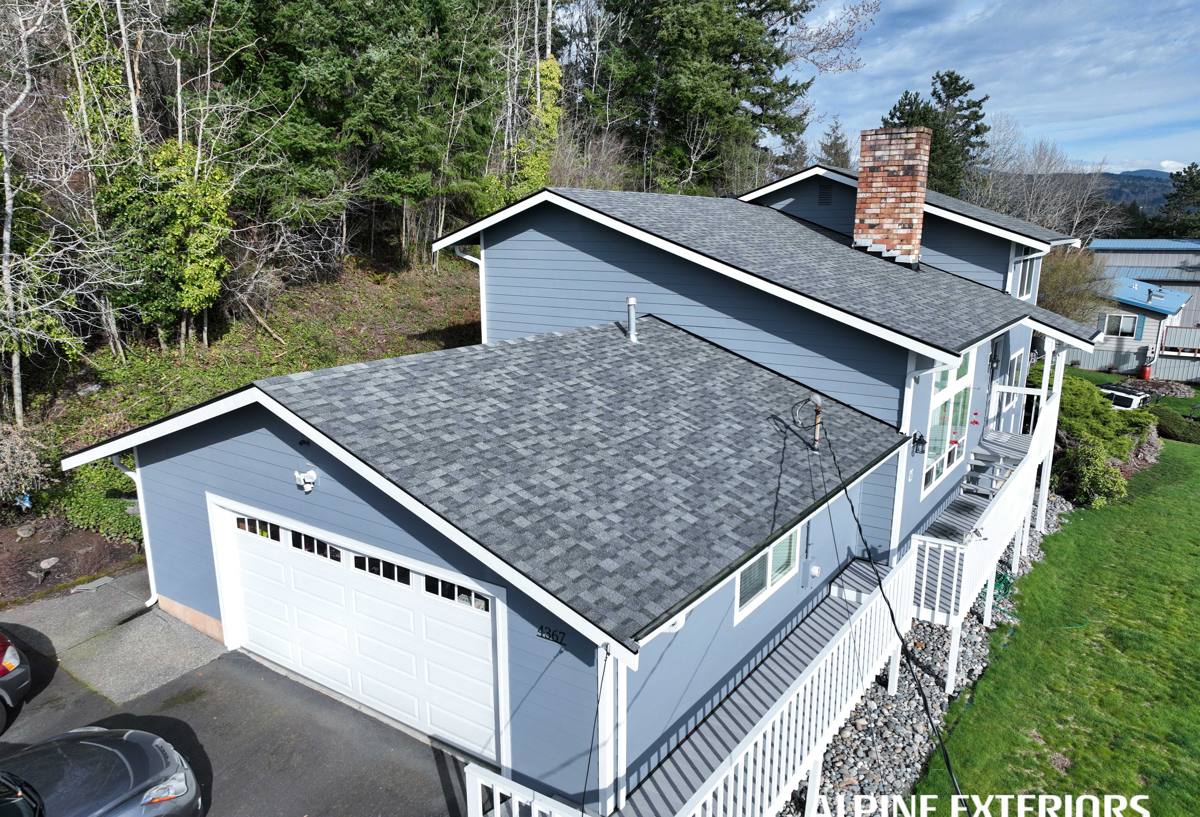
What the Climate Does to Homes in This Area
Salt Air and Corrosion
Proximity to Bellingham Bay and the Salish Sea means airborne salt settles on roofs, siding, gutters, and fasteners over time. Salt exposure accelerates corrosion on unprotected metal — flashing, nails, gutter hangers, and lower-grade hardware are the first things to show it. It's not dramatic, it's cumulative: a fastener that would last decades inland can start rusting and weeping stains years earlier this close to the water. This is one of the main reasons material and fastener choice matters more here than in a lot of other parts of the county.
Driving Rain
Whatcom County gets plenty of straight-down rain, but the rain that does real damage is the kind that comes in sideways during a windstorm off the water. Driving rain finds every gap in flashing, every under-lapped shingle, every poorly sealed window frame. It's why proper flashing detail at roof valleys, chimneys, and wall-to-roof transitions matters as much as the roofing material itself — a premium roof with sloppy flashing will leak, and a modest roof with correct flashing usually won't.
Moss and Shade
Between tree cover around Sudden Valley and the general dampness of a Pacific Northwest fall through spring, moss season here runs long. Moss holds moisture against roofing material, works its way under shingle tabs, and can lift edges enough to let water in. North-facing slopes and roof sections shaded by mature trees are usually the first places we see it establish. Left unmanaged for a few seasons, moss growth shortens the useful life of a roof regardless of what it's made of.
Roofing in the Edgemoor / Sudden Valley Area
We install and repair asphalt composition roofing, metal roofing, and, where it fits the home, cedar and other specialty materials. What changes from house to house here isn't usually the base material — it's the detailing: how flashing is stepped and sealed around penetrations, how ridge and valley work is handled, and whether the roof has adequate ventilation to keep moisture from condensing under the deck in a shaded, damp lot.
Common Issues We Find
- Moss and organic growth on shaded, north-facing slopes
- Corroding or undersized flashing at chimneys, skylights, and wall intersections
- Granule loss on older asphalt roofs accelerated by moisture cycling
- Gutter and downspout systems overwhelmed by needle and leaf debris from surrounding trees
- Attic ventilation that's inadequate for how damp the local climate stays for much of the year
Our Approach
On any roof in this area, we look at ventilation and flashing before we talk shingle brand. A roof that breathes properly and sheds water correctly at every transition will outperform a roof that's just a nicer material on top of the same old flashing mistakes. When moss is already established, we address removal and treatment as part of the project rather than just installing new material over the same conditions that caused it.
Siding That Handles Salt Air and Moisture
Siding on homes near the water takes a slower, quieter kind of damage than roofing — fading, chalking, moisture intrusion behind poorly sealed joints, and in older wood or engineered wood products, softening at the bottom courses where splash-back and standing moisture do their work. We install fiber cement, engineered wood, and vinyl siding, and we're honest about the tradeoffs of each rather than pushing whichever one has the best margin.
Why We Lean on Fiber Cement Here
Fiber cement holds up well against the moisture cycling and salt exposure common in this area, resists pest damage, and takes paint well over the long term. It's heavier and more labor-intensive to install correctly than vinyl, which is part of why installation quality — proper fastening, caulking, and flashing behind the siding — matters as much as the product choice itself. A well-installed mid-tier product will outlast a premium product installed carelessly.
Where Vinyl Still Makes Sense
Vinyl siding has a place, especially on a budget-conscious project or a home where low maintenance is the priority over a wood-look finish. Its main tradeoff in a salt-air environment is that lower-grade panels can become brittle and fade faster than fiber cement over a long timeline. We'll walk through both honestly rather than assuming one is automatically right for your project.
Windows: Sealing Out Driving Rain
Window failures in this area are rarely about the glass — they're about the seal around the frame. Driving rain off the water tests window installations that would be fine in a more sheltered location. We check flashing tape integration, sill pan drainage, and caulking at every window replacement, because a well-made window installed without proper flashing will still leak eventually.
Signs It's Time to Look at Your Windows
- Fogging or condensation between panes on double- or triple-glazed units
- Soft or discolored trim and sill areas, especially on walls facing prevailing weather
- Drafts or whistling during windstorms
- Difficulty opening, closing, or locking sashes as frames swell with moisture
- Visible gaps or failing caulk lines around the exterior frame
Decks: Built for Shade and Moisture
Decks around Sudden Valley often sit under partial tree cover, which keeps them shaded and slower to dry after rain — a combination that's hard on wood decking and on the fasteners and framing underneath it. We build and repair decks in both traditional wood and composite materials, and we pay particular attention to ledger board flashing and joist protection, since that's where hidden rot tends to start on a deck that looks fine from the surface.
Wood vs. Composite for This Climate
| Factor | Wood Decking | Composite Decking |
|---|---|---|
| Upfront cost | Lower | Higher |
| Maintenance | Regular cleaning, sealing, occasional board replacement | Periodic washing; no sealing or staining required |
| Moss/mildew resistance | Needs upkeep to resist growth in shaded areas | More resistant, though not immune in constant shade |
| Appearance over time | Natural look, but requires refinishing to maintain it | Consistent color and texture with minimal effort |
| Repairability | Easy to replace individual boards | Generally easy, though matching older material can be harder |
Neither option is automatically better — it depends on how much upkeep you want to take on and how shaded your specific lot is. We'll talk through what your yard and tree cover actually mean for either choice.
What Drives the Cost of a Project Here
Every exterior project is priced around the specifics of the home, but a few factors come up consistently in this area:
| Factor | Why It Matters Locally |
|---|---|
| Roof pitch and access | Steeper roofs and limited driveway/lot access affect labor time and equipment needs |
| Existing moss or moisture damage | Remediation and repair of hidden rot adds scope beyond straightforward replacement |
| Material choice | Fiber cement, metal, and composite materials cost more upfront but reduce long-term maintenance |
| Flashing and detail work | Proper flashing at valleys, chimneys, and wall transitions takes more time but prevents future leaks |
| Tree cover and shading | Heavily shaded lots may need extra attention to ventilation, drainage, and moss prevention |
We give straightforward, itemized estimates so you can see where the money is going rather than a single lump number.
Why a Local Crew Matters
A roofing or siding crew that works across Whatcom County regularly knows which details actually matter here versus in a drier or more sheltered part of the state. That means understanding how far salt air travels inland from the bay, which roof orientations hold moss the longest, and how to detail flashing for wind-driven rain rather than just rain that falls straight down. It also means being around after the project is done — if something needs a look under warranty, we're not driving in from out of the area to handle it.
What to Check Before Hiring Any Contractor
- Current Washington state contractor license and proof of liability insurance
- A written, itemized estimate — not just a total price
- Clear explanation of flashing and moisture management details, not just the visible material
- References or examples of work done in similar coastal or shaded conditions
- A warranty that's explained in plain terms, covering both material and workmanship
Get a Straightforward Estimate
If you're noticing moss buildup, a slow leak, drafty windows, or a deck that's starting to feel soft in spots, it's worth having a local crew take a look before small issues turn into bigger repairs. Use the form below to request a free, no-pressure estimate — we'll walk the property, explain what we find in plain language, and give you honest options for your roofing, siding, window, or deck project.