 Sudden Valley Roofing
 Roofing Built for Sehome's Weather, Not Just Any Weather
Sehome sits close enough to Bellingham Bay that salt-laden air is a real factor in how roofing materials age here, and it's far enough into the Pacific Northwest's wet belt that driving rain and long stretches of overcast, damp weather are simply part of the calendar. Add in Whatcom County's mature tree canopy — a big part of what makes this neighborhood attractive to live in — and you get a climate combination that's tough on roofs in ways that don't always show up in a quick visual inspection. We've worked on homes throughout this area long enough to know that "looks fine from the ground" and "is actually fine" are two different things when moss, moisture, and salt air are all working on a roof at the same time.
This page is about roofing specifically, but we also handle siding, windows, and decks — and on a lot of Sehome homes, those systems are all dealing with the same weather stress. A roof problem often shows up first as a siding or trim problem, or vice versa, so we look at the whole exterior even when the call starts with "I've got a leak."
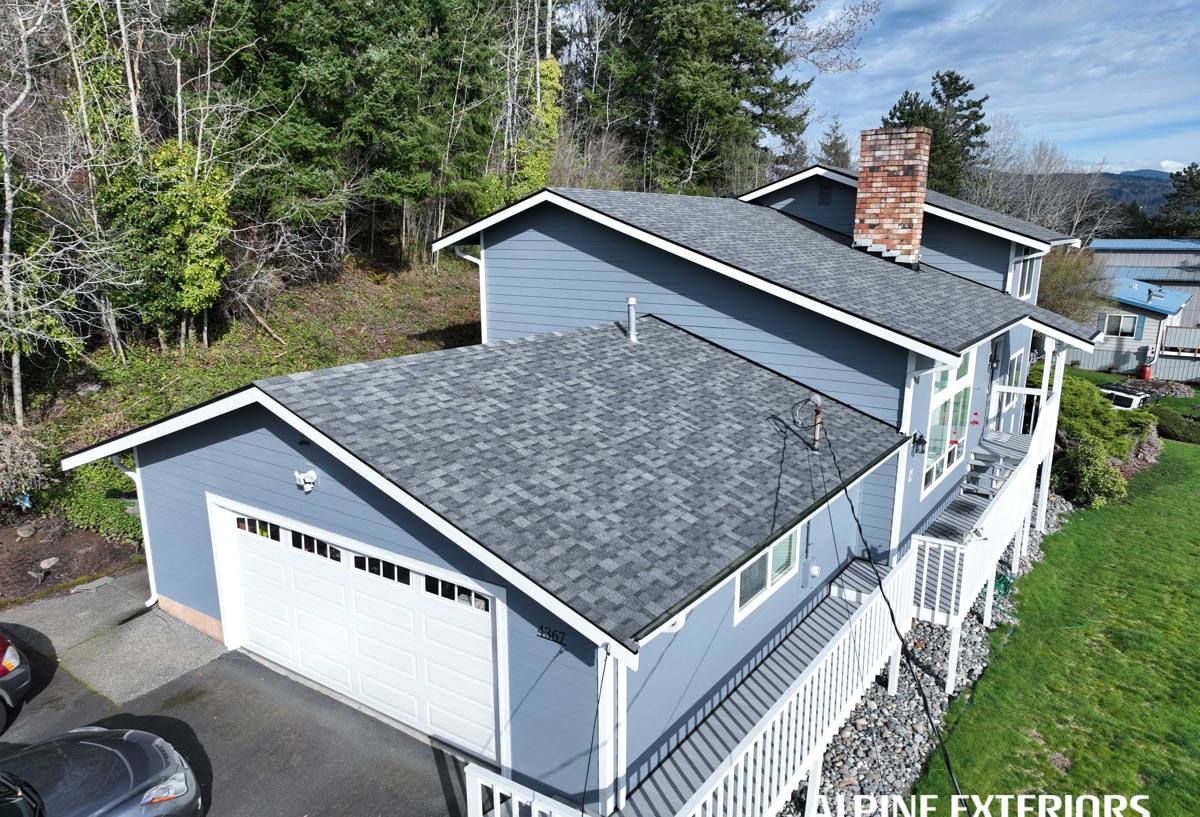
What Sehome's Climate Actually Does to a Roof
Salt Air
Proximity to the water means airborne salt settles on exposed surfaces, including roofing. Salt accelerates corrosion on exposed metal fasteners, flashing, and any galvanized components that aren't properly coated or protected. Over years, this can mean earlier-than-expected rust at flashing seams, valleys, and around penetrations like vents and chimneys — often well before the shingles themselves are due for replacement.
Driving Rain
Wind-driven rain doesn't just fall straight down — it gets pushed sideways and upward under eaves, around vents, and into any gap in flashing or underlayment that a calm-weather inspection might miss. This is why proper flashing detail and underlayment quality matter more here than they would in a drier climate. A roof that would perform fine in a low-rainfall region can underperform in Whatcom County if it wasn't installed with wind-driven rain specifically in mind.
Moss Season
Shade from mature trees, combined with months of damp conditions, gives moss and algae a long runway to establish on north-facing slopes and shaded valleys. Moss isn't just cosmetic — as it grows, it lifts shingle edges, holds moisture against the roofing material, and creates channels that redirect water in ways the roof wasn't designed for. Left unaddressed, a moss-heavy roof section will degrade noticeably faster than a clean one of the same age and material.
Common Issues We See on Sehome Roofs
- Moss buildup on shaded, north-facing slopes — especially on lots with significant tree cover.
- Corroding flashing and fasteners around chimneys, skylights, and vent penetrations from long-term salt exposure.
- Granule loss on aging asphalt shingles, accelerated by constant damp-dry cycling.
- Clogged gutters and downspouts from needles and leaf debris, leading to water backing up under the roof edge.
- Ventilation problems in older homes, where trapped attic moisture condenses and damages roof decking from underneath — a problem you can't see without getting into the attic.
Roofing Materials: What We Recommend and Why
There's no single "best" roofing material for every home — it depends on your budget, your roof's slope and shade exposure, and how long you plan to be in the home. Here's how the common options stack up for a climate like this one:
| Material | Typical Lifespan | How It Handles This Climate | Maintenance Burden |
|---|---|---|---|
| Architectural asphalt shingle | 25–30 years | Good performance with proper ventilation and flashing; moss-resistant options available | Moderate — periodic moss/debris removal |
| Standing seam metal | 40–50+ years | Sheds moss and moisture well; needs quality coatings and fasteners to resist salt corrosion | Low |
| Composite/synthetic shingle | 30–50 years | Strong moisture and impact resistance; less prone to granule loss | Low to moderate |
| Cedar shake | 20–30 years | Attractive but needs diligent moss and moisture management in shaded areas | High — regular treatment required |
We install and repair asphalt, metal, and composite systems, and we'll walk you through the honest trade-offs for your specific roof rather than pushing whatever's easiest for us to install. Roofs with heavy tree shade, for example, often do better long-term with metal or a moss-resistant shingle than with standard cedar, simply because of how much upkeep cedar demands in constant shade and damp.
Repair vs. Replacement: How We Help You Decide
Not every roofing problem in Sehome means a full tear-off. We look at a few key factors before recommending anything:
Signs a Repair Is Usually Enough
- Localized flashing failure around a chimney, skylight, or vent
- Isolated moss damage on one section, with the rest of the roof in decent shape
- A handful of missing or damaged shingles from wind
- Roof is under 15 years old with no widespread granule loss
Signs Replacement Makes More Sense
- Widespread granule loss or curling shingles across multiple slopes
- Repeated leaks in different areas rather than one isolated spot
- Visible sagging or soft decking underfoot
- Roof is past or near the end of its material's expected lifespan
We'll give you a straight answer either way, including when a repair is the more sensible near-term move even if a full replacement is coming eventually.
Beyond the Roof: Siding, Windows, and Decks
A roof doesn't fail in isolation, and the same climate factors that stress a roof — driving rain, salt air, prolonged dampness — put equal pressure on the rest of a home's exterior.
Siding
Water that gets past a compromised roof edge or damaged flashing often travels down behind siding before it ever shows up as an interior stain. We check siding condition, especially around roof-to-wall transitions, whenever we're up assessing a roof.
Windows
Older or poorly flashed windows are a common secondary source of water intrusion that gets mistaken for a roof leak. Proper window flashing integrates with the roofing and siding system rather than working against it.
Decks
Outdoor decks in this climate deal with the same constant moisture cycling as roofs do, just at ground level — and covered decks or porches often share roofing and flashing details with the main roof structure.
Why a Local Crew Matters Here
Roofing crews that work across many different climates tend to default to generic installation practices. A crew that works Whatcom County roofs regularly knows to size and detail flashing for wind-driven rain, to talk through moss-resistant options before a customer even asks, and to recognize salt-related corrosion patterns early rather than after they've spread. That local pattern-recognition is the difference between a roof that's technically installed to code and one that's actually built for what Sehome's weather does to it year after year.
It also matters for response time. When a storm damages a roof or a leak shows up during a heavy rain event, having a crew that's local and familiar with the area means a faster, more informed response than calling in a company from outside the region.
What Affects the Cost of Your Project
| Factor | Why It Matters |
|---|---|
| Roof size and pitch | Steeper, larger roofs require more material and labor time, and steep pitches add safety and access complexity |
| Material choice | Asphalt, metal, and composite materials carry different upfront costs and lifespans |
| Extent of decking repair needed | Water-damaged decking discovered during tear-off adds material and labor beyond the original estimate |
| Flashing and ventilation upgrades | Bringing older flashing and attic ventilation up to current standards adds cost but reduces future problems |
| Access and tree cover | Dense tree cover or difficult access can affect labor time and equipment needs |
We provide itemized estimates so you can see exactly where the cost is going, and we'll flag likely surprises — like probable decking repair — before work starts whenever we can spot them during inspection.
A Simple Maintenance Checklist for Sehome Homeowners
- Clear gutters and downspouts at least twice a year, more often if you have heavy tree cover
- Have moss professionally treated or removed rather than pressure-washed, which can damage shingle surfaces
- Check attic ventilation periodically — trapped moisture is a leading cause of premature decking failure
- Inspect flashing around chimneys, skylights, and vents annually for early signs of corrosion or lifting
- Trim back overhanging branches to reduce shade, debris, and physical abrasion on roofing material
- Schedule a professional roof inspection after any major windstorm
What to Expect When You Work With Us
- A thorough on-site inspection, including attic access when relevant — not just a look from the ground
- A clear, itemized estimate explaining what's needed and why, with material options laid out honestly
- A defined project timeline, with realistic allowance for Whatcom County's weather windows
- Cleanup and a final walkthrough so you know exactly what was done
If you're in Sehome and dealing with a roof that's showing its age, a leak you can't pin down, or you just want an honest read on how much life is left in your current roof, we're happy to take a look. Reach out for a free, no-pressure estimate using the form below.