 Sudden Valley Roofing
 Exteriors Built for Columbia's Conditions
Homes in and around Columbia face a specific combination of weather stresses that not every contractor thinks about until something fails. Proximity to Lake Whatcom and the broader Whatcom County marine climate means moisture is a near-constant factor — not just rain volume, but the kind of low, driving rain that gets pushed sideways into siding laps, window flashing, and roof valleys. Add in the salt-tinged air that moves through the region and a moss season that can stretch for much of the year in shaded, tree-covered lots, and you have a climate that is genuinely tougher on exterior materials than most manufacturers' warranty language accounts for.
Sudden Valley Roofing Co works this area regularly, which matters more than it might sound. A crew that only sees a property once knows what's failing today. A crew that works the same streets and neighborhoods season after season knows what tends to fail here in year three, year seven, year fifteen — and builds the job differently from the start because of it.
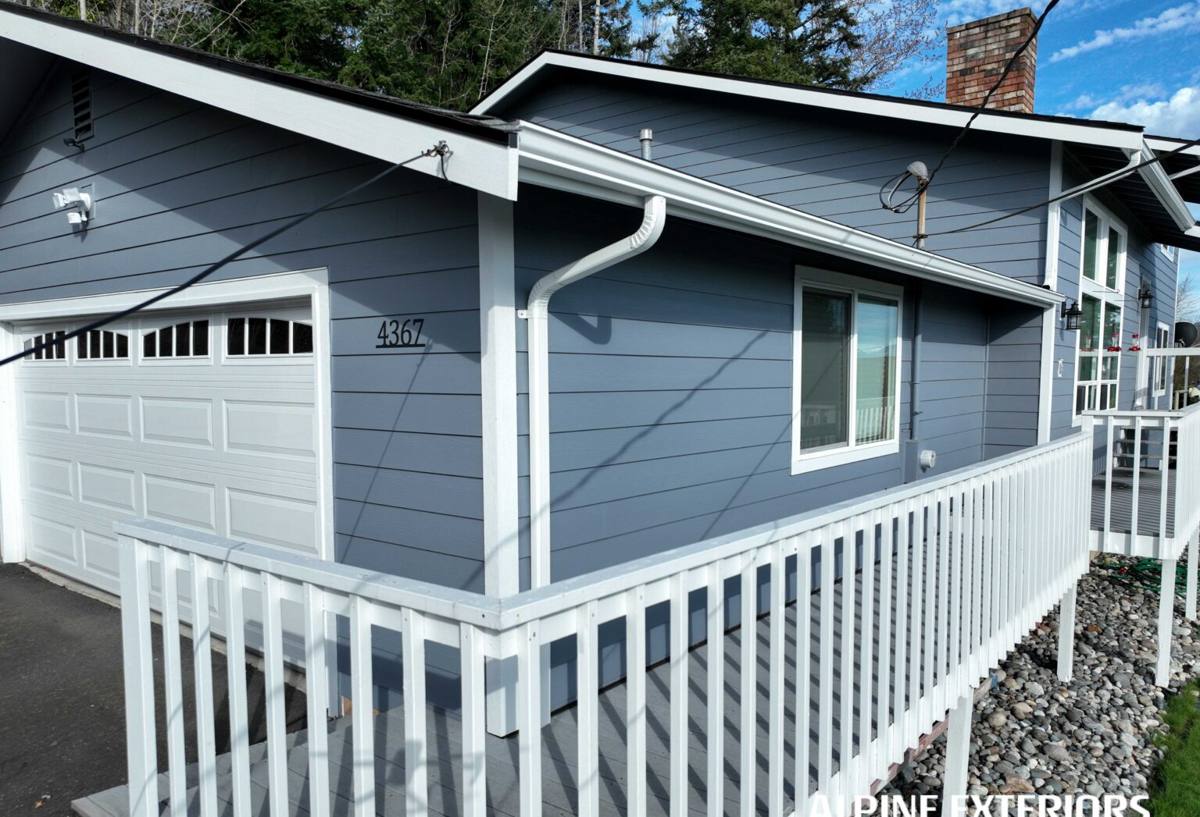
Roofing: What Columbia Roofs Deal With
Moss and Algae Growth
Shaded lots, morning dew that doesn't burn off quickly, and long stretches of damp weather are ideal conditions for moss and algae to take hold on a roof. Left alone, moss doesn't just look bad — it lifts shingle edges, holds moisture against the roof deck, and accelerates granule loss. On roofs with any tree cover, this is usually the single biggest maintenance issue we see, and it's largely preventable with the right combination of material choice, proper ventilation, and a periodic cleaning schedule.
Flashing and Valleys
Driving rain finds every gap in a roof system, and it finds it fastest at valleys, chimney flashing, and roof-to-wall transitions. We pay close attention to these details because a roof can look fine from the ground while quietly leaking at a poorly sealed valley. Proper step flashing, correctly lapped underlayment, and valley metal sized for real water volume — not just code minimums — make the difference in a climate like this one.
Ventilation
A roof that can't breathe traps moisture in the attic, which shows up later as premature sheathing rot, mold, or shortened shingle life from the underside. Balanced intake and exhaust ventilation is one of the most overlooked parts of a roofing job, and it's one we check on every inspection, not just new installs.
Siding: Standing Up to Salt Air and Driving Rain
Salt-laden air accelerates corrosion on anything metal — fasteners, flashing, trim — and it can degrade certain finishes faster than inland installations of the same product. Driving rain, meanwhile, tests the water-shedding design of the siding itself: how well laps overlap, how corners and butt joints are sealed, and whether the wall assembly behind the siding can dry out if moisture does get past the surface.
Material Trade-Offs
We install fiber cement, engineered wood, and vinyl siding, and we're upfront about the trade-offs of each rather than pushing one product as a universal answer:
- Fiber cement holds up well against moisture and moss compared to untreated wood, but it's heavier, requires correct fastening patterns, and needs a crew experienced with its specific installation tolerances.
- Engineered wood siding offers a more traditional look and easier installation, but performs best with diligent caulking and paint maintenance in a wet climate — it's less forgiving of gaps.
- Vinyl siding is low-maintenance and cost-effective, but it can become brittle over long-term UV and temperature cycling, and it relies heavily on correct flashing behind it since the panels themselves aren't a complete moisture barrier.
None of these is a wrong choice — the right one depends on the home's sun exposure, tree cover, budget, and how much upkeep the homeowner wants to take on.
Windows: Where Condensation and Efficiency Meet
Moisture at the Frame
In a consistently damp climate, window installation quality matters as much as the window unit itself. Poorly flashed window openings let wind-driven rain track behind the frame, which shows up later as staining, soft trim, or mold at the sill — problems that get blamed on the window when the real cause is the installation detail around it.
Energy Performance
Double- and triple-pane options with appropriate low-E coatings help manage both heat loss in winter and interior condensation, which is a common complaint in older single-pane or poorly sealed windows once temperatures drop. We size window recommendations to the home's exposure rather than defaulting to the most expensive option on every job.
Decks: Built to Handle Standing Moisture
Decks in this climate deal with near-constant exposure to damp air, shade-driven moss growth on decking boards, and — for coastal-influenced properties — accelerated corrosion of fasteners and hardware. A deck built with the wrong fastener grade can develop rust streaking and structural weak points years before the decking material itself would normally need replacing.
Fastener and Hardware Selection
We use fasteners and structural hardware rated for the moisture and corrosion exposure of the specific site, not a one-size-fits-all spec. This is a detail that's invisible once the deck is finished but has a direct impact on how long the structure lasts.
Board Spacing and Drainage
Proper gapping between boards and attention to under-deck drainage reduces the standing moisture that feeds moss and mildew growth on the deck surface, extending the time between cleanings and re-coatings.
Why a Local Crew Matters Here
A lot of exterior problems in Whatcom County aren't caused by bad materials — they're caused by details that get generalized from drier climates. Flashing laps that would be adequate in a low-rain region aren't adequate here. Ventilation that's fine on a sunny, exposed roof doesn't perform the same on a shaded, moss-prone one. A crew that works Columbia and the surrounding Sudden Valley area regularly has already seen which shortcuts show up as callbacks two winters later, and builds around that experience rather than a generic spec sheet.
Local presence also means faster response for storm damage, follow-up questions, and warranty service — you're not waiting on a crew that has to travel in from out of the area.
What Drives the Cost of an Exterior Project
Every home is different, but a few factors consistently move the price on roofing, siding, window, and deck projects in this region:
| Factor | Why It Matters Here |
|---|---|
| Tree cover / shade | More moss and algae exposure means more prep, cleaning, and sometimes different material choices |
| Roof/wall complexity | More valleys, dormers, and transitions mean more flashing detail work and labor time |
| Existing moisture damage | Rot or trapped moisture found during tear-off or removal adds repair scope before new material goes on |
| Material choice | Fiber cement, engineered wood, vinyl, asphalt, and metal all carry different material and labor costs |
| Access and site conditions | Steep lots, limited driveway access, or lake-adjacent sites can affect equipment and staging |
We walk every property before quoting so the estimate reflects the actual site conditions, not a generic square-footage number.
Roofing Material Comparison for This Climate
| Material | Moss/Algae Resistance | Typical Lifespan Here | Cost Range |
|---|---|---|---|
| Standard asphalt shingle | Moderate; benefits from algae-resistant granules | 15-25 years with maintenance | $ |
| Architectural asphalt shingle | Good with algae-resistant option | 25-30 years with maintenance | $$ |
| Metal roofing | Strong resistance, sheds moss more easily | 40-50+ years | $$$ |
Cost ranges are broad and vary by roof size, pitch, and complexity — the table is meant to frame relative trade-offs, not to substitute for an on-site quote.
A Simple Seasonal Maintenance Checklist
Whether or not we're the ones doing the work, these habits go a long way toward protecting a home's exterior in this climate:
- Clear roof valleys and gutters of debris at least twice a year, more often under heavy tree cover
- Have moss treated or removed before it visibly lifts shingle edges
- Check window sills and trim after major storms for signs of water intrusion
- Inspect deck fasteners and hardware annually for rust streaking or loosening
- Re-caulk siding joints and trim as sealant ages, before gaps open up
- Walk the roofline after wind events to check for lifted or missing shingles
What to Expect When You Work With Us
We start with an honest, on-site look at what's actually going on — not a sales pitch built around whatever product line pays best. That means telling you when a repair makes more sense than a full replacement, and being clear about maintenance expectations for whatever material you choose. Our estimates lay out material options, realistic cost ranges, and the reasoning behind our recommendation, so you're deciding with full information rather than guessing.
If you're weighing a roof repair, new siding, window replacement, or deck work on a Columbia-area property, we're happy to take a look and give you a straightforward, no-pressure estimate — just fill out the form below to get started.