 Sudden Valley Roofing
 Roofing in Barkley: Built for a Wet, Salt-Touched Climate
Barkley sits in the part of Whatcom County that gets the full package of Pacific Northwest weather: long stretches of steady rain from fall through spring, humid air off the water, and short, intense windstorms that come through a few times a year. None of that is unusual for a Whatcom County roof. What matters is how a roofing system responds to it over ten, twenty, or thirty years — and that's where a lot of roofs in this area start to show their age faster than homeowners expect.
Sudden Valley Roofing Co works throughout the Sudden Valley and greater Bellingham area, and Barkley homes see a predictable set of issues tied directly to the local climate: moss and algae growth on north-facing slopes, gutter systems that can't keep up with sustained rain events, and salt-influenced air that slowly works on exposed metal fasteners and flashing. None of these problems are dramatic on their own, but left unaddressed they compound.
What Salt Air and Driving Rain Actually Do to a Roof
Salt Air
Being close enough to the water to catch salt-laden air means metal components on a roof — nails, flashing, drip edge, and vent stacks — corrode faster than they would further inland. This isn't a reason to avoid metal roofing altogether; it's a reason to be selective about the grade of metal and fastener coatings used, and to inspect those components more often than a manufacturer's generic maintenance schedule might suggest.
Driving Rain
Whatcom County rain isn't always gentle. When wind pushes rain sideways during a storm, water gets forced up under shingle tabs, into flashing laps, and around penetrations that would stay dry in a calm rain. This is why flashing detail and underlayment quality matter more here than in drier climates — a roof that's "good enough" somewhere with less wind-driven rain can underperform in Barkley.
Moss Season
Whatcom County effectively has a moss season that runs most of the year, not just a few weeks. Shaded, north-facing roof slopes and anything under overhanging trees stay damp long enough for moss and algae to take hold. Moss doesn't just look bad — it holds moisture against the roofing material, lifts shingle edges as it grows, and can work its way under flashing over time.
Signs a Barkley Roof Needs Attention
Most roof problems in this area develop slowly, which means homeowners often don't notice until there's a leak. A few minutes walking the property a couple of times a year can catch problems while they're still simple, inexpensive fixes.
- Green or black streaking on shingles, especially on shaded or north-facing slopes
- Granules collecting in gutters or at downspout outlets
- Sagging or spongy-feeling sections when walked (from the ground, this shows as an uneven roofline)
- Daylight visible through the attic roof deck
- Water stains on interior ceilings, especially near chimneys, skylights, or valleys
- Curling, cracked, or missing shingles after a windstorm
- Moss buildup thick enough to hold visible standing moisture
- Gutters overflowing during moderate rain rather than only during downpours
Any one of these is worth a call. Several at once usually means it's time for a full inspection rather than a spot repair.
Roofing Materials That Hold Up in This Climate
There isn't a single "best" roofing material for every home — the right choice depends on the roof's pitch, how much shade it gets, the home's architectural style, and budget. What we can say plainly is how common material options actually perform under sustained Whatcom County moisture and occasional salt exposure.
| Material | Typical Lifespan (this climate) | Moss/Moisture Behavior | Relative Upfront Cost |
|---|---|---|---|
| Asphalt composition shingle | 18-25 years | Moderate moss resistance; algae-resistant granule options help but don't eliminate growth | Lowest |
| Standing seam metal | 40-50+ years | Sheds moisture quickly, minimal moss adhesion; fastener quality matters most in salt-exposed settings | Highest |
| Synthetic/composite shingle | 30-40 years | Good moisture resistance; less organic material for moss to root into than wood or basic asphalt | Mid-to-high |
| Cedar shake (natural wood) | 20-30 years with upkeep | Requires the most active moss and moisture management of any option in this climate | Mid-to-high |
We install and service asphalt, metal, and synthetic roofing systems, and we'll walk through the honest trade-offs of each for your specific roof rather than pushing whatever happens to be easiest to install. A steep, shaded roof under mature trees is a different conversation than an open, sun-exposed roof on the same street.
Beyond the Roof: Siding, Windows, and Decks Face the Same Climate
Barkley homes take on moisture from more than just the roof, and we treat the whole exterior as one connected system rather than isolated projects.
Siding
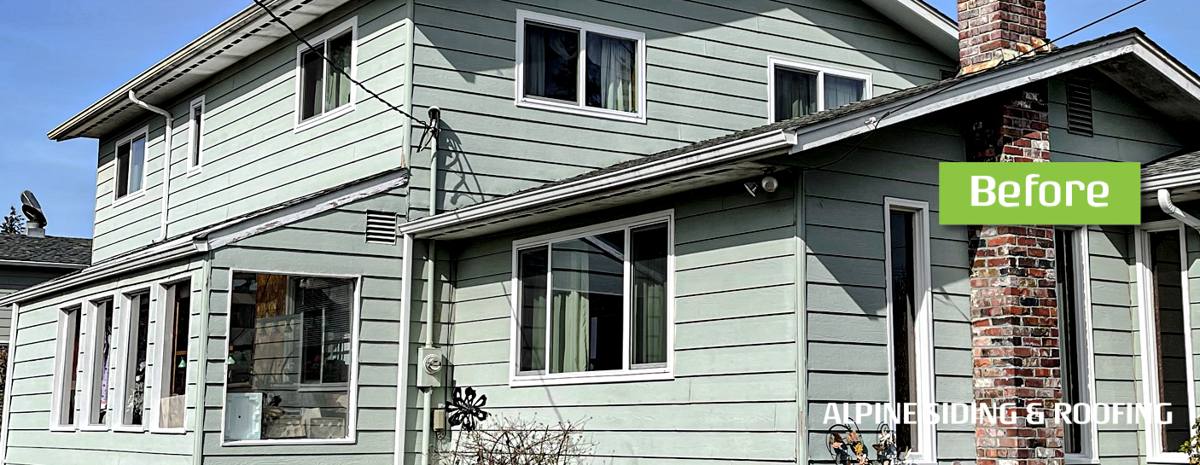
Fiber cement and quality vinyl siding both hold up well against Whatcom County's rain and humidity, provided the water management behind them — house wrap, flashing, and proper gapping — was installed correctly the first time. A lot of siding failures we see aren't the siding material's fault; they're the result of moisture getting behind it through poor original installation.
Windows
Older single-pane or poorly flashed windows are a common source of both energy loss and slow water intrusion around the frame. In a climate with this much sustained rain, window flashing detail matters as much as the window unit itself.
Decks
Exterior decks take the most direct, repeated exposure to rain and standing moisture of anything on the property. Proper ledger flashing, board spacing for drainage, and a maintenance-appropriate finish all matter more here than in drier parts of the country.
Because the same climate stresses all four systems in related ways, having one crew that understands roofing, siding, windows, and decks means fewer gaps between contractors and a more consistent standard of moisture management across the whole house.
Moss and Debris Maintenance: What Actually Helps
Moss removal and gutter maintenance are the two most impactful, least expensive things a Barkley homeowner can do between full inspections.
- Have moss physically removed rather than just treated — chemical treatments alone won't clear existing growth
- Keep gutters clear of needles and debris, especially before the fall rain season starts
- Trim back tree limbs that keep a roof section shaded and damp longer than the rest of the roof
- Check and clear roof valleys, where debris and moss both tend to collect first
- Avoid pressure washing shingles — it can strip granules and shorten the roof's life
Why a Local Crew Matters for Barkley Homes
A crew that works throughout Whatcom County day in and day out knows which slopes on a typical Barkley roof will show moss first, how local wind patterns tend to drive rain into flashing, and what a normal maintenance cadence looks like here versus a drier climate. That local knowledge shows up in small decisions — flashing choices, fastener grades, where extra underlayment is worth the cost — that a crew unfamiliar with this specific climate might not think to make.
It also matters for accountability. A local, established contractor is easy to reach for warranty work, follow-up questions, or a second look if something doesn't seem right after a storm.
What to Expect When You Call Us
- A straightforward roof, siding, window, or deck inspection — no pressure, no scare tactics
- A written explanation of what we found, including photos of specific problem areas
- An honest recommendation: repair, partial replacement, or full replacement, with the reasoning behind it
- A clear estimate broken down by material and labor, so you know what you're paying for
Cost Factors Homeowners Should Understand
Roofing and exterior costs vary by home, but a few factors consistently drive price up or down in this area more than homeowners expect.
| Factor | Why It Matters Here |
|---|---|
| Roof pitch and complexity | Steeper, multi-valley roofs take longer to flash correctly and require more careful water management |
| Tree cover and shade | Heavily shaded roofs need more moss-resistant materials and more frequent maintenance to reach full lifespan |
| Existing decking condition | Rot found under old shingles during tear-off adds cost but is far cheaper to fix now than after a leak spreads |
| Material choice | Asphalt costs less upfront; metal and synthetic options cost more but need less frequent replacement |
| Access and layout | Steep sites or limited access around the home can add to labor time on any exterior project |
Let's Look at Your Barkley Home
If you're noticing moss buildup, gutter overflow, or a roof that's simply reaching the age where it's worth a professional look, we're happy to come take a look. There's no pressure and no obligation — just a straight assessment of what your roof, siding, windows, or deck actually need. Use the form below to request a free estimate, and we'll get back to you to schedule a time that works.