 Sudden Valley Roofing
 Exterior Work Built for Cordata's Climate
Cordata sits close enough to the water and to Sudden Valley's tree cover that homes here take a specific kind of beating year after year. It isn't one dramatic storm that does the damage — it's the steady combination of salt-tinged air moving in off the Sound, long stretches of driving rain through the fall and winter, and a moss season that can run from October well into spring. Roofs, siding, windows, and decks all age differently here than they would in a drier inland climate, and the crews who work on them need to understand that difference before they ever pick up a tool.
We're a local exterior contractor serving Sudden Valley and the surrounding Whatcom County area, including Cordata. Roofing is our core trade, but we also handle siding, windows, and decks, because on most homes those systems fail or hold up together. A roof leak rarely stays a roof problem for long — it shows up in siding rot, window sill damage, or a deck ledger board that's been absorbing runoff for years without anyone noticing.
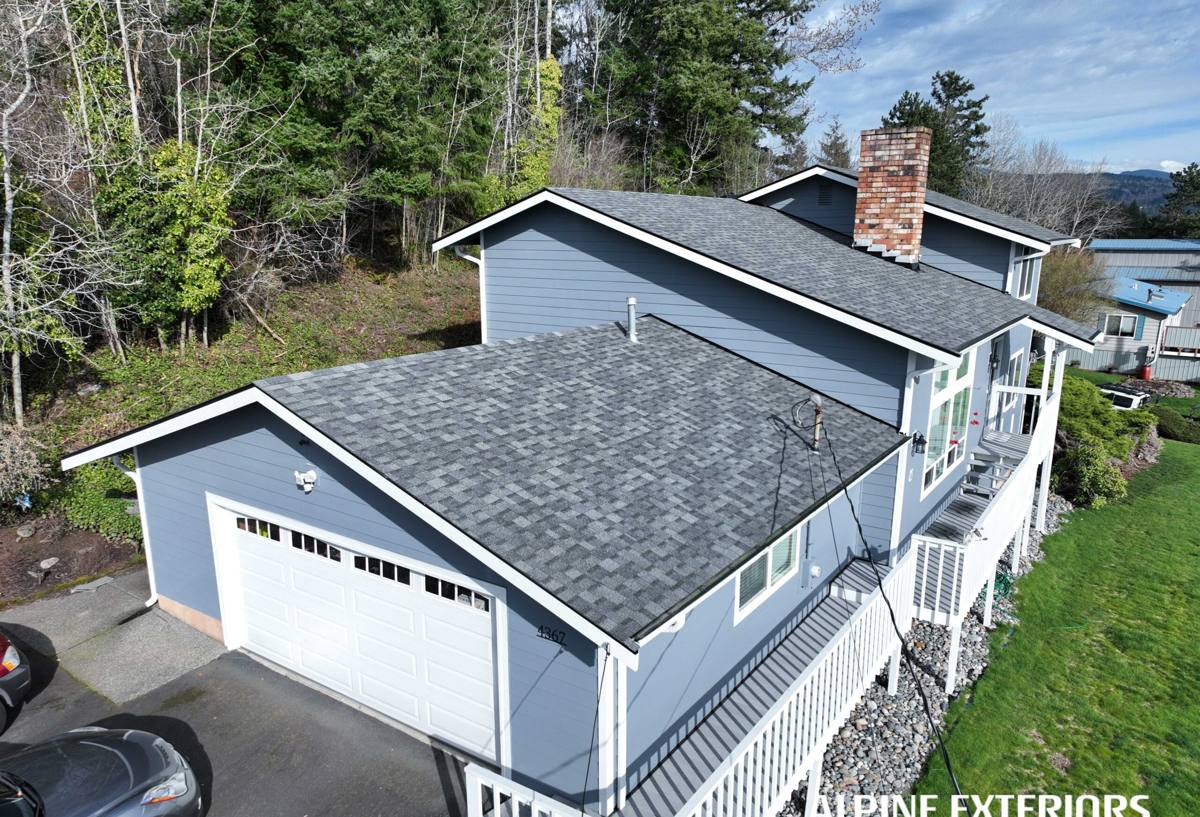
What Moss and Moisture Actually Do to a Roof
Moss gets blamed for a lot of things it doesn't directly cause, but it's still a real problem. It holds moisture against roofing material longer than the material was designed to handle, and on asphalt shingles that constant dampness accelerates granule loss. On wood shakes or shingles, moss root structures work into the grain and speed up decay. The bigger issue is often what moss traps underneath it — needles, seed pods, and organic debris that build a spongy mat capable of holding water against the roof deck itself.
Why Moss Takes Hold Here
Shaded, north-facing roof sections and areas under overhanging trees stay damp longer after a rain, which is exactly the environment moss needs. Combined with our region's long wet season, a roof that isn't inspected and cleaned periodically can go from a light green tint to a real maintenance problem within a couple of seasons.
What We Actually Recommend
We don't push pressure washing as a moss solution — high-pressure water can strip granules and drive moisture under shingle edges, doing more harm than the moss itself. Soft washing with an appropriate treatment, combined with keeping gutters and valleys clear so water has somewhere to go, is the more durable approach. Zinc or copper strips near the ridge can help slow regrowth on some roof types, and we'll walk you through whether that makes sense for your specific roof.
Salt Air and Material Selection
Homes closer to the water deal with airborne salt that accelerates corrosion on exposed metal — flashing, fasteners, gutters, and any metal roofing components. It's not usually dramatic, but it adds up over the years, particularly on lower-quality fasteners or flashing that wasn't rated for coastal exposure. When we spec materials for a Cordata home, we're thinking about corrosion resistance on every metal component, not just the primary roofing material, because a roof is only as good as its weakest fastener.
| Roofing Material | How It Handles Local Conditions | Maintenance Reality |
|---|---|---|
| Asphalt composition shingle | Solid performer with proper ventilation; moss and moss-related granule loss are the main long-term concerns | Periodic moss treatment, gutter clearing, and inspection after major wind events |
| Metal roofing (standing seam) | Sheds moisture and moss well due to slick surface; needs corrosion-resistant fasteners and coatings near the water | Low maintenance once installed correctly; check fastener condition periodically |
| Wood shake/shingle | More vulnerable to moisture retention and moss root intrusion in our climate | Higher maintenance burden — regular treatment and earlier replacement cycles |
| Synthetic/composite shingle | Resists moisture absorption well; performance varies by manufacturer and installation quality | Moderate — still benefits from periodic cleaning and inspection |
Siding: The Wall System Is Part of the Roof System
A lot of homeowners think of siding and roofing as separate projects, but water doesn't respect that division. Driving rain in this part of Whatcom County doesn't just fall — wind pushes it sideways into wall assemblies, especially around window and door trim, corner boards, and anywhere two different materials meet. If flashing details at those transitions aren't done right, water gets behind the siding and you end up with rot, mold, or failed sheathing that's invisible until it's a bigger repair.
Signs Your Siding Is Losing the Battle
- Soft or spongy spots when you press on the siding near the bottom edge or around windows
- Paint or finish that keeps failing in the same spots no matter how often it's redone
- Visible gaps or separation at trim, corners, or seams
- Discoloration or streaking that doesn't wash off, suggesting moisture is tracking through the material
- Increased pest activity, which often follows softened, moisture-damaged wood
We install and repair fiber cement, engineered wood, and vinyl siding systems, and we pay particular attention to flashing and water management details around penetrations — that's usually where failures start, not in the field of the siding itself.
Windows: Where Leaks Get Blamed on the Wrong Thing
Window leaks in this climate are almost always a flashing or sealant failure rather than a defect in the window unit itself. Older single-pane or early dual-pane windows also lose thermal performance over time, which in a damp climate can mean more condensation on interior glass — a comfort and moisture issue even when the window isn't technically leaking. When we replace windows, proper flashing integration with the surrounding wall assembly matters as much as the window product itself. A premium window installed with poor flashing will leak; a mid-range window installed correctly usually won't.
Decks: Built to Handle Standing Water, Not Just Rain
Decks in Cordata face a slightly different challenge than roofs and walls — they're horizontal, so water doesn't run off as fast, and structural components like ledger boards, joists, and support posts can sit in damp conditions for extended periods if the deck wasn't built with adequate drainage and separation from moisture.
What We Check on Every Deck Project
- Proper ledger board flashing where the deck attaches to the house — a frequent failure point that leads to hidden rot
- Adequate gap and airflow between decking boards for water to drain and wood to dry
- Post base connections that keep wood off standing water
- Fastener and hardware corrosion resistance, especially for decks closer to the water
- Overall structural condition on older decks before doing cosmetic work over a compromised frame
Composite decking has become popular here because it doesn't absorb moisture the way wood does, but it comes with real trade-offs — higher upfront cost, and it still needs a properly built and flashed substructure underneath. We'll give you an honest read on whether composite, treated wood, or cedar makes sense for your specific project and budget.
Why a Local Crew Matters More Than It Sounds Like It Should
There's a practical reason local experience matters on exterior work: a crew that works Whatcom County roofs and walls regularly has already seen how a given material or detail performs after five or ten wet seasons here, not just how it looks on installation day. That shapes decisions — which underlayment to use, how much roof ventilation a given attic needs, where flashing details need extra attention — in ways that generic best practices don't always cover. It also means faster response when something needs attention after a storm, and a crew that's genuinely local rather than passing through the area for a season.
What to Expect From a Cordata Estimate
Every property is different, and roof pitch, tree coverage, sun exposure, and proximity to water all affect what we'd recommend for your home. A thorough estimate includes a physical inspection of the roof, siding, and any windows or decks in question — not just a drive-by guess. We'll walk you through what we find, what's urgent versus what can be scheduled, and give you straightforward pricing without pressure to upsell material you don't need.
Questions Worth Asking Any Contractor Before You Hire
- Are you licensed and insured to work in Washington State, and can you provide proof?
- What warranty applies to labor versus what the manufacturer covers on materials?
- Will the same crew that gives the estimate be doing the actual work?
- How do you handle unexpected damage found once work begins, like rotted sheathing under old siding?
- Can you provide references from recent local projects?
If you're noticing moss buildup, siding that won't hold a finish, drafty windows, or a deck that feels less solid than it used to, we're happy to take a look. Reach out for a free, no-pressure estimate — we'll give you a straightforward assessment of what your home actually needs, using the form below.