 Sudden Valley Roofing
 Exterior Work Built for Happy Valley's Weather
Happy Valley sits in the kind of Whatcom County terrain that looks calm on a dry afternoon and then reminds you exactly what it's capable of the first week of November. Homes here deal with a steady mix of moisture year-round: long stretches of driving rain off the water, salt-laden air that works its way inland, and a moss season that can stretch from fall through spring if a roof or siding line isn't kept ahead of it. None of that is unusual for this part of Washington. What matters is how a home's exterior is built and maintained to handle it, because the difference between a roof that lasts its full service life and one that fails early almost always comes down to installation quality and upkeep, not bad luck.
We work on roofs, siding, windows, and decks, and in a community like Happy Valley those four systems really do function as one envelope. Water that gets past a compromised roof edge shows up as staining on siding two seasons later. A window that's lost its seal lets moist air into a wall cavity that then feeds moss and mildew from the inside out. Treating these as separate problems is how homeowners end up paying for the same water damage twice.
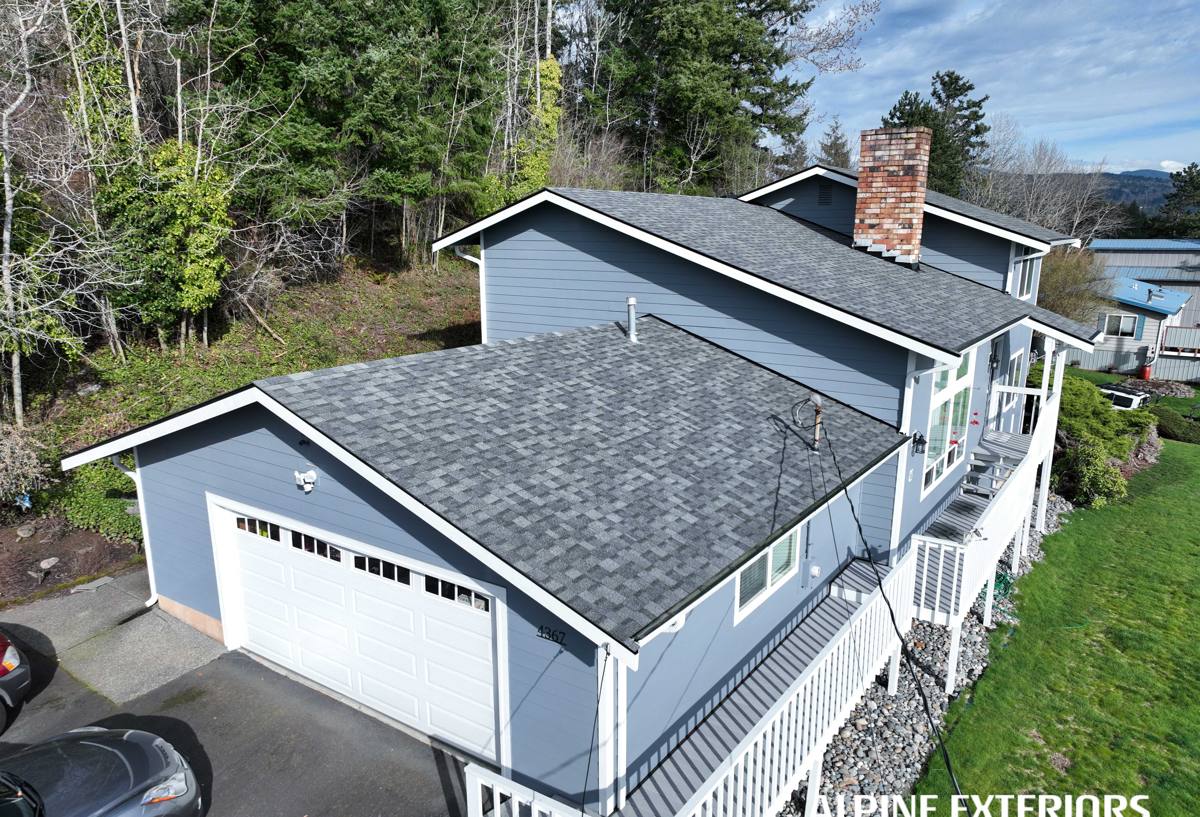
What Salt Air, Rain, and Moss Actually Do to a Home
Salt Air and Metal Fasteners
Salt-laden air moving inland accelerates corrosion on anything metal — roofing nails, flashing, gutter hangers, and screws holding trim and siding panels. Standard fasteners can start showing rust streaks well before the roofing material itself is due for replacement. It's a slow process, but it's steady, and it's one of the main reasons we pay attention to fastener spec, not just shingle or panel brand, when we're working in this area.
Driving Rain and Wind-Driven Water
Rain that falls straight down is easy to shed. Rain that's being pushed sideways by wind is a different problem — it tests every seam, every piece of flashing, and every place where two materials meet. This is where underlayment quality, proper flashing details around chimneys and valleys, and correctly lapped siding matter more than the finish material on top. A roof or wall can look fine from the street and still be letting water in at the details.
Moss, Algae, and Extended Damp Seasons
Moss needs shade, moisture, and time — Happy Valley's tree cover and long wet season provide all three. On roofing, moss holds water against the surface and can lift shingle edges over time. On siding, algae staining is mostly cosmetic but signals a surface that's staying damp longer than it should, which shortens the life of paint, caulking, and the material underneath.
Roofing for This Climate
We install and repair asphalt composition roofing, and for homeowners who want a longer-term, lower-maintenance option, metal roofing. Each has a real role depending on the home, the roofline, and the budget.
- Proper ice-and-water shield at eaves, valleys, and around penetrations — the details that matter most in wind-driven rain
- Fastener and flashing choices suited to salt-air exposure, not just the cheapest spec that meets code
- Ventilation that keeps attic moisture from condensing and feeding rot from underneath
- Moss treatment and removal that doesn't damage the roofing surface in the process
Roof repair is often the more practical call — a damaged section, failed flashing, or a handful of lifted shingles usually doesn't require a full tear-off. We'll tell you honestly when a repair will hold and when the roof's overall condition means a patch is just delaying the inevitable.
Siding That Holds Up to Damp Seasons
Siding takes a beating from the same conditions as the roof, plus direct exposure to splash-back, irrigation overspray, and ground moisture at the base of the wall. We work with fiber cement, engineered wood, and vinyl siding, and we size the recommendation to the home rather than pushing one product for every job.
Our standard is to flash every window and door opening properly, lap siding courses so water sheds outward instead of behind the panel, and leave the right gap at grade so the bottom edge isn't sitting in standing moisture. These aren't upgrades — they're the baseline for siding that's actually built to last in this climate, and they're the kind of detail that's easy to skip and hard to spot until the damage is already done.
Windows: The Quiet Source of Water and Energy Loss
Older windows in this climate tend to fail in two ways: the seals go first, letting in drafts and moisture, and then the flashing or sealant around the frame lets water track into the wall. Replacement windows address both — better seals for comfort and energy use, and a fresh, correctly detailed installation that keeps water out of the wall assembly. We flash every new window installation the same way regardless of the window brand, because the installation is what actually determines whether water gets in, not the label on the frame.
Decks: Built for Wet Wood Exposure
A deck in Happy Valley spends a large part of the year wet, shaded, or both. That combination is hard on wood decking and even harder on the structural framing underneath if it isn't detailed correctly. We build and repair decks with attention to ledger flashing, joist protection, and drainage away from the house — the parts that don't show but determine whether a deck is solid in ten years or soft and spongy in five. We work in both traditional wood decking and composite materials, and we'll walk through the honest maintenance trade-offs of each rather than just selling whichever is easier for us to install.
Why a Local Crew Matters Here
A crew that works Whatcom County roofs and siding regularly knows which details actually matter for this climate versus which are just generic best practices from a manual written for a drier region. We know what a roof looks like after one wet season with weak flashing versus five. We know which sides of a house take the worst of the wind-driven rain and which corners tend to hold moss longest. That local pattern recognition is hard to replace with a crew that's just passing through the area for a single job.
It also matters for accountability. A local company is still around next year if a question comes up about workmanship, and that's worth something a lower out-of-town bid usually can't offer.
Cost Factors to Understand Before You Get a Quote
Every home is different, and we don't publish blanket pricing because it isn't honest to do so — roof pitch, access, existing damage, and material choice all move the number. What we can tell you is what tends to drive cost up or down.
| Factor | Tends to Lower Cost | Tends to Raise Cost |
|---|---|---|
| Roof condition | Sound decking, no hidden rot | Rotted decking or structural repair needed |
| Access | Simple roofline, easy staging | Steep pitch, limited access, multiple stories |
| Material | Standard asphalt composition | Metal roofing, premium siding profiles |
| Scope | Targeted repair | Full tear-off or whole-envelope replacement |
| Timing | Scheduled off-peak | Emergency or storm-response work |
We'll always separate what's necessary now from what can reasonably wait, so you're not paying to solve problems that aren't actually urgent.
A Practical Maintenance Checklist for This Climate
Most of the exterior damage we see in Happy Valley and the surrounding Sudden Valley area is preventable with basic, consistent upkeep. A few habits go a long way:
- Clear moss and debris from roof valleys and gutters before the fall rains set in
- Check gutters and downspouts for proper flow at least twice a year
- Walk the exterior after major windstorms and note any lifted shingles, loose trim, or new staining
- Keep tree limbs trimmed back from the roofline to reduce shade and debris buildup
- Watch for soft spots or discoloration around window frames and deck ledgers, which often signal water intrusion before it's visible elsewhere
- Have caulking and sealant around windows and doors checked every few years, since it degrades faster in constant damp conditions
None of this replaces a professional inspection, but it will catch a lot of small problems before they turn into expensive ones.
Getting Started
If you're noticing moss buildup, staining, a soft spot on the deck, or just want an honest read on where your roof, siding, or windows stand, we're glad to take a look. We'll give you a clear, no-pressure estimate and tell you what actually needs attention now versus what can wait — use the form below to get started.