 Sudden Valley Roofing
 Roofing Built for South Hill's Weather
Homes in South Hill sit in one of the wetter, more weather-active corners of Whatcom County, and the roof over your head takes the brunt of it. Between salt-tinged air drifting in off the water, long stretches of driving rain through fall and winter, and a moss season that can run for months, roofs here age differently than they do in drier parts of the state. A roof system that would coast along with minimal attention in Eastern Washington needs a more deliberate approach out here — the right materials, the right ventilation, and regular upkeep that actually accounts for what the climate is doing to the surface.
We work on roofs throughout South Hill and the surrounding area, and the patterns repeat: moss establishing in shaded north-facing slopes, gutters overwhelmed by sustained rain events, and flashing that was fine for a few years but starts failing once salt air and moisture work into the seams. None of that is unusual for this part of Washington. It's just the reality of building here, and it's why a roof plan for South Hill should look different from a generic one.
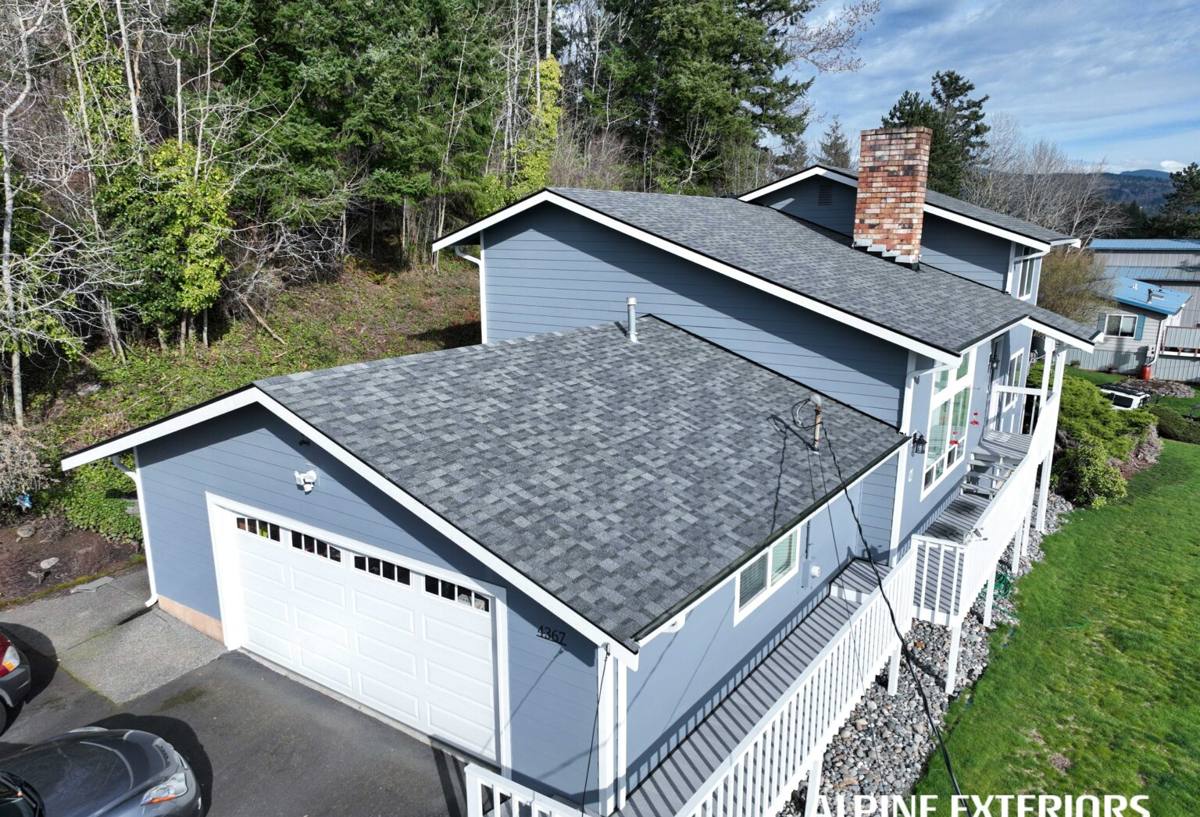
What Salt Air, Rain, and Moss Actually Do to a Roof
Salt Air
Airborne salt doesn't just affect homes right on the water. It travels inland on wind and settles on exposed metal — fasteners, flashing, gutters, and vent caps. Over time it accelerates corrosion on lower-grade metal components, which is why fastener and flashing material matters more here than in inland climates. Cheaper galvanized hardware can start showing rust streaks and pitting years before it would somewhere drier and saltier.
Driving Rain
It's not just how much rain falls, it's how it arrives — wind-driven rain pushes water sideways and upward under shingle edges, around vents, and into any gap in the flashing that a straight-down rain would never find. This is where installation quality separates a roof that lasts from one that develops leaks around year eight or nine. Underlayment coverage, proper shingle overlap, and step flashing at every wall intersection aren't optional details in a climate like this.
Moss Season
Shaded, moisture-retaining roof sections — especially north-facing slopes under tree cover, which is common throughout South Hill's tree-lined streets — give moss exactly what it needs to take hold. Moss isn't just cosmetic. As it grows, it lifts shingle edges, holds moisture against the roof surface far longer than it would otherwise sit there, and speeds up granule loss on asphalt shingles. Left unchecked for a few seasons, a mossy roof can lose years of usable life.
Signs Your Roof Needs Attention
- Moss or dark streaking building up on shaded slopes or along the roofline
- Granules collecting in gutters or at downspout outlets
- Shingles that look curled, lifted, or cracked at the edges
- Rust staining around metal flashing, vent boots, or fasteners
- Water stains or discoloration on interior ceilings, especially after a heavy rain
- Sagging or soft spots anywhere on the roof deck
- Gutters that overflow during normal rain rather than just extreme storms
Any one of these on its own isn't necessarily an emergency, but they're worth a look before the next wet season rolls in. Catching a failing section of flashing or a patch of established moss early is a straightforward fix. Ignoring it usually turns into a deck repair or a full section replacement.
Roofing Materials That Hold Up Locally
There's no single "best" roofing material for every home — it depends on your roof's pitch, sun and shade exposure, budget, and how long you plan to be in the house. What we can say honestly is which materials tend to perform well against this specific combination of salt air, sustained rain, and moss pressure, and which require more upkeep to keep performing.
| Material | Typical Lifespan Here | Moss Resistance | Maintenance Needs |
|---|---|---|---|
| Architectural asphalt shingles | 25-30 years | Moderate — benefits from periodic cleaning | Low to moderate |
| 3-tab asphalt shingles | 15-20 years | Lower — thinner profile sheds moss less effectively | Moderate |
| Metal roofing (standing seam) | 40-50+ years | High — moss struggles to anchor on smooth metal | Low |
| Cedar shake | 20-30 years with upkeep | Lower without regular treatment | High |
We're upfront with homeowners about trade-offs rather than pushing one product. Metal roofing, for example, resists moss well and holds up strongly against wind-driven rain, but it's a bigger upfront investment and not the right look or budget for every home. Architectural shingles remain a solid middle ground for most South Hill homes when installed with proper underlayment and ventilation. The installation quality — flashing detail, ventilation balance, fastener choice — usually matters more to long-term performance than the shingle brand printed on the wrapper.
Our Roofing Services
Roof Replacement
When a roof is past the point where repairs make sense, we handle full tear-off and replacement, including proper underlayment, flashing detail at every wall and penetration, and ventilation sized correctly for the attic space. Ventilation matters more than most homeowners realize — a poorly vented attic traps moisture, which works against everything else you're doing to protect the roof.
Roof Repair
Not every issue needs a full replacement. Localized shingle damage, a section of failed flashing, or a leak traced back to a specific penetration point can often be repaired directly, extending the roof's usable life without the cost of starting over.
Moss Treatment and Roof Cleaning
We remove established moss and treat roof surfaces to slow regrowth, using methods that don't strip granules or damage the shingle surface the way aggressive pressure washing can. This is one of the most cost-effective things a homeowner in a moss-prone area can do on a regular basis.
Gutter and Flashing Work
Given how much of the damage we see traces back to water management rather than the roofing material itself, we pay close attention to gutters, downspouts, and flashing as part of any roofing project — not as an afterthought.
Beyond the Roof: Siding, Windows, and Decks
The same climate pressures that wear down a roof — driving rain, salt air, sustained moisture — affect the rest of a home's exterior too. We also handle siding, window, and deck work, which matters because these systems interact. Poor gutter performance can stain or rot siding below it. Failing flashing around a window can let water into wall framing long before it shows up as an interior stain. When we're on a South Hill property for roofing work, we're looking at the whole exterior envelope, not just the roof deck, because problems in one area often start as symptoms from another.
Why a Local Crew Matters
A roofing crew that works Whatcom County regularly understands things a traveling or out-of-area contractor won't necessarily account for: how shaded, tree-covered lots hold moisture longer, which slopes in this area are most prone to moss buildup, and how wind-driven rain off the water behaves differently than a straight-down storm. That local pattern recognition shows up in the details — where extra flashing gets added, how ventilation gets balanced, which materials are worth the upgrade cost for a specific roof's exposure. It also means being reachable and accountable after the job is done, not just during the sale.
Cost Factors to Understand
Roofing costs vary widely based on roof size, pitch, material choice, tear-off complexity, and the condition of the decking underneath. Rather than quote a number that won't reflect your specific roof, here's what actually drives the price on most South Hill projects:
- Roof size and number of squares (100 sq ft units) to be covered
- Roof pitch and accessibility — steep or complex rooflines take more labor
- Material selected — asphalt, metal, and cedar carry different material and labor costs
- Condition of the existing decking — rot or damage found during tear-off adds cost
- Number of penetrations (chimneys, skylights, vents) requiring flashing work
- Whether full tear-off is needed versus a repair or overlay where code allows
We walk through these factors on-site rather than estimating from a photo or a phone call, because the condition of the decking and the flashing details underneath the surface are what actually determine the real cost.
Maintenance That Extends Roof Life
A little regular attention goes a long way in this climate. Keeping gutters clear so water isn't backing up under the roof edge, having moss addressed before it spreads across a full slope, and getting an inspection after any major windstorm are the three habits that do the most to protect a roof investment here. None of it is complicated, but it does need to happen on a schedule rather than only when something already looks wrong.
If you're noticing moss buildup, a slow leak, or you're just not sure how much life is left in your current roof, we're glad to take a look. Reach out for a free, no-pressure estimate using the form below — we'll walk the roof, talk through what we see, and give you honest options for your home.