 Sudden Valley Roofing
 Exterior Work Built for Acme's Terrain
Acme sits at the edge of the foothills leading up toward Mount Baker, along the South Fork Nooksack River drainage in Whatcom County. It's a different environment than a lot of the county's lowland neighborhoods — more tree cover, more shade, more moisture that lingers instead of draining off quickly. Homes out here tend to be surrounded by conifers, set back from the road, and exposed to the kind of steady, driving rain that rolls in off the Pacific and gets funneled up the valley. That combination shapes almost every exterior decision a homeowner makes, from what roofing material holds up best to how often gutters need attention.
We're a Whatcom County crew, and we treat Acme differently than we'd treat a dry, open lot closer to town. Tree-shaded roofs age differently. Siding on a shaded north wall behaves differently than siding baking in full sun. A deck tucked under a canopy needs a different maintenance conversation than one out in the open. None of that is complicated, but it does mean a generic exterior job — the kind a crew unfamiliar with this stretch of the county might do — can miss the details that actually matter here.
Roofing: The Moss and Moisture Problem
Moss is the single most common complaint we hear from homeowners in and around Acme. With heavy tree cover, roofs stay damp longer after rain, and shaded sections rarely get enough direct sun to dry out between storms. That's exactly the environment moss and moss-adjacent organic growth thrive in. Left alone, moss doesn't just look bad — it holds moisture against the roofing material, works its way under shingle edges, and slowly lifts and degrades the surface it's growing on.
What We Actually Recommend
- Keep gutters and valleys clear of needle and leaf litter — this is where moisture pools first and moss gets its start
- Have moss physically removed rather than just chemically killed and left in place; dead moss still holds water
- Consider zinc or copper strips near the ridge on new installs, which discourage regrowth over time without constant chemical treatment
- Prioritize roof ventilation — a well-ventilated attic dries the underside of the roof deck faster, which matters a lot under tree cover
- Schedule an annual inspection before the wet season ramps up, not after damage is already visible
We install and repair asphalt composition roofing, metal roofing, and other standard systems suited to this region. For a heavily shaded, high-moisture lot like a lot of Acme properties, we'll usually walk through the trade-offs between materials honestly — metal sheds moss growth more easily than asphalt but costs more up front; asphalt is more affordable and easier to repair in sections but needs more regular moss management. There's no universally "right" answer — it depends on your budget, your roof's exposure, and how much maintenance you want to take on yourself.
Roofing Material Comparison
| Material | Moss Resistance | Typical Lifespan | Maintenance Level |
|---|---|---|---|
| Asphalt composition | Moderate — needs periodic cleaning | 20-30 years | Moderate |
| Metal (standing seam) | High — sheds debris and dries fast | 40-60+ years | Low |
| Cedar shake | Low without diligent upkeep | 25-35 years | High |
Siding That Handles Driving Rain
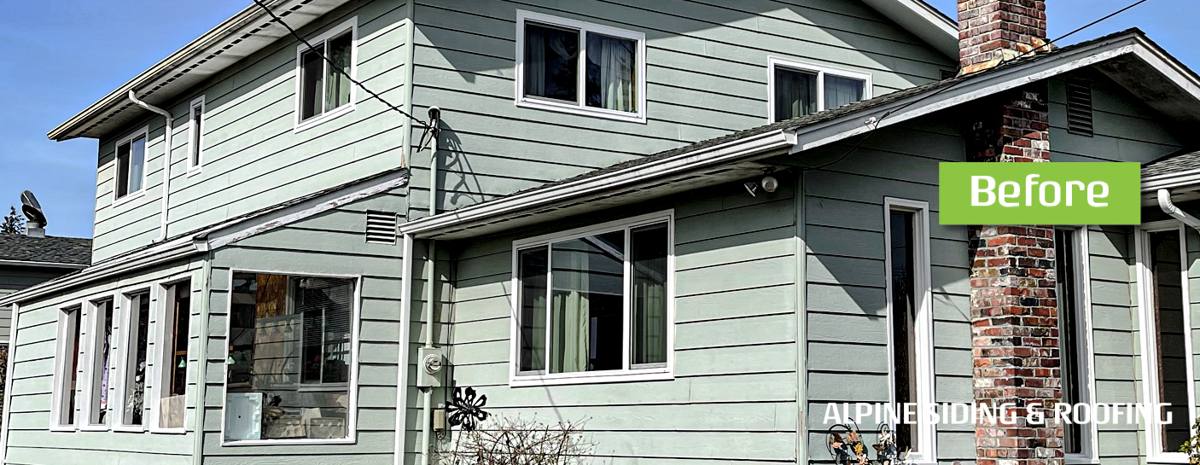
Driving rain doesn't fall straight down — wind pushes it sideways into wall assemblies, and that's where siding either does its job or doesn't. In a valley setting like Acme, wind-driven rain during winter storms can push moisture into seams, trim joints, and anywhere flashing was installed poorly the first time around. We see this most often around window and door openings, at the base of walls near grade, and anywhere old caulking has failed and nobody noticed.
We install fiber cement, engineered wood, and vinyl siding depending on the home and the homeowner's priorities. Fiber cement is our most common recommendation for this kind of climate — it holds paint well, resists moisture intrusion better than raw wood products, and doesn't feed the kind of fungal growth that shows up on siding kept damp by shade. We're honest about the trade-offs: it costs more than vinyl and is heavier to install correctly, which is part of why proper installation technique matters as much as the product choice itself.
Whatever material you choose, the flashing and house wrap details behind it matter more than the siding itself. A quality product installed with poor flashing will still let water in. That's a big part of what a local, experienced crew brings to the table — we've seen how water actually moves through a wall assembly in this kind of weather, not just in a manufacturer's spec sheet.
Windows: Sealing Out the Damp
Older windows in shaded, moisture-heavy settings are prone to seal failure, fogging between panes, and slow rot at the sill if flashing wasn't done right originally. In Acme's tree-covered lots, window sills and trim don't get the drying benefit of direct sun the way they would on a more exposed property, so any small gap or failed seal has more time to do damage before anyone notices.
Signs It's Time to Look at Your Windows
- Fogging or condensation between panes on double-pane units — a sign the seal has failed
- Soft or discolored trim and sill wood, especially on north- or west-facing walls
- Drafts or noticeable temperature difference near the window frame
- Difficulty opening or closing, which often points to frame swelling from moisture
- Visible gaps in caulking or weatherstripping around the frame
We install replacement windows sized to fit existing openings as well as full-frame replacements when the surrounding structure needs attention too. For a shaded property, we pay close attention to sill pan flashing and drainage — small details that matter more here than they would on a drier lot.
Decks: Building for Shade and Standing Water
A lot of Acme properties have wooded lots, and decks built under or near tree canopy face their own set of issues: less UV exposure to dry out wood between rains, more debris accumulation (needles, leaves, sap), and a higher chance of standing water in low spots if the deck wasn't framed with proper drainage in mind from the start.
We build with both traditional wood and composite decking, and for a shaded lot we'll usually walk homeowners through what each material actually means for upkeep:
| Deck Material | Shade Performance | Upfront Cost | Upkeep |
|---|---|---|---|
| Pressure-treated wood | Prone to moss/algae in shade | Lower | Annual cleaning/sealing |
| Cedar | Moderate — needs regular sealing | Moderate | Regular sealing |
| Composite | Resists moss better, still needs cleaning | Higher | Occasional washing |
Beyond material choice, proper joist spacing, gap sizing between boards, and ledger flashing all affect how well a deck sheds water and resists rot in a shaded, high-moisture setting. These are structural details, not cosmetic ones — cutting corners here is exactly where deck problems start years down the road.
Why Hire a Local Crew for Acme Specifically
A contractor based farther out in the county — or one that doesn't regularly work in this specific terrain — may not think twice about tree cover, valley drainage patterns, or how differently a shaded roof or wall ages compared to one in the open. We work throughout Whatcom County, including Sudden Valley and the surrounding foothill communities, and we bring that regional knowledge to every estimate: what moss pressure actually looks like on a roof like yours, how wind-driven rain tends to hit walls in a valley setting, and which materials genuinely hold up versus which ones just look good on a spec sheet.
Local also means accountability. We're not driving in from out of the area for a one-time job — we're around for warranty work, follow-up questions, and the next storm season.
Maintenance Habits That Matter Most in Acme
- Clean gutters at least twice a year, more often if your lot has heavy conifer cover
- Have moss addressed before it spreads past a small patch — early treatment is far cheaper than a moss-damaged roof section
- Check window and door caulking annually, especially before the wet season starts
- Keep tree limbs trimmed back from the roofline to reduce shade, debris, and abrasion damage
- Inspect deck framing and ledger boards yearly for soft spots or standing water
None of this requires a major project every year — it's mostly about catching small issues before driving rain and a long wet season turn them into bigger ones.
Getting Started
If you're dealing with a mossy roof, siding that's showing its age, drafty windows, or a deck that needs attention, we're happy to come take a look and give you an honest read on what's going on and what your options actually are. We offer free, no-pressure estimates for homeowners in Acme and throughout the Sudden Valley area — use the form below to get in touch and we'll set up a time to come out.