 Sudden Valley Roofing
 Understanding Yew Street's Exterior Climate Challenges
Homes along Yew Street sit in a part of Whatcom County where the weather rarely does anything halfway. Lake Whatcom's marine-influenced air keeps things mild most of the year, but that same air carries persistent moisture, and the surrounding tree cover means shaded rooflines and siding stay damp longer than you'd expect after a storm passes through. Add in the salt-tinged air that moves inland off the Puget Sound region, driving rain that comes in sideways during winter fronts, and a moss season that can stretch from October well into spring, and you have a climate that is genuinely hard on exteriors — not in a dramatic way, but in a slow, cumulative way that catches homeowners off guard five or ten years in.
We've worked on enough homes in this part of Sudden Valley to know the pattern: roofs that look fine from the driveway but have moss working into the shingle mat on the north-facing slope, siding that's holding water behind trim boards nobody's looked at in years, and windows that were caulked once at installation and never checked again. None of this is unusual or a sign of bad luck — it's just what happens to exteriors in a wet, shaded, marine-adjacent climate when maintenance gets deferred.
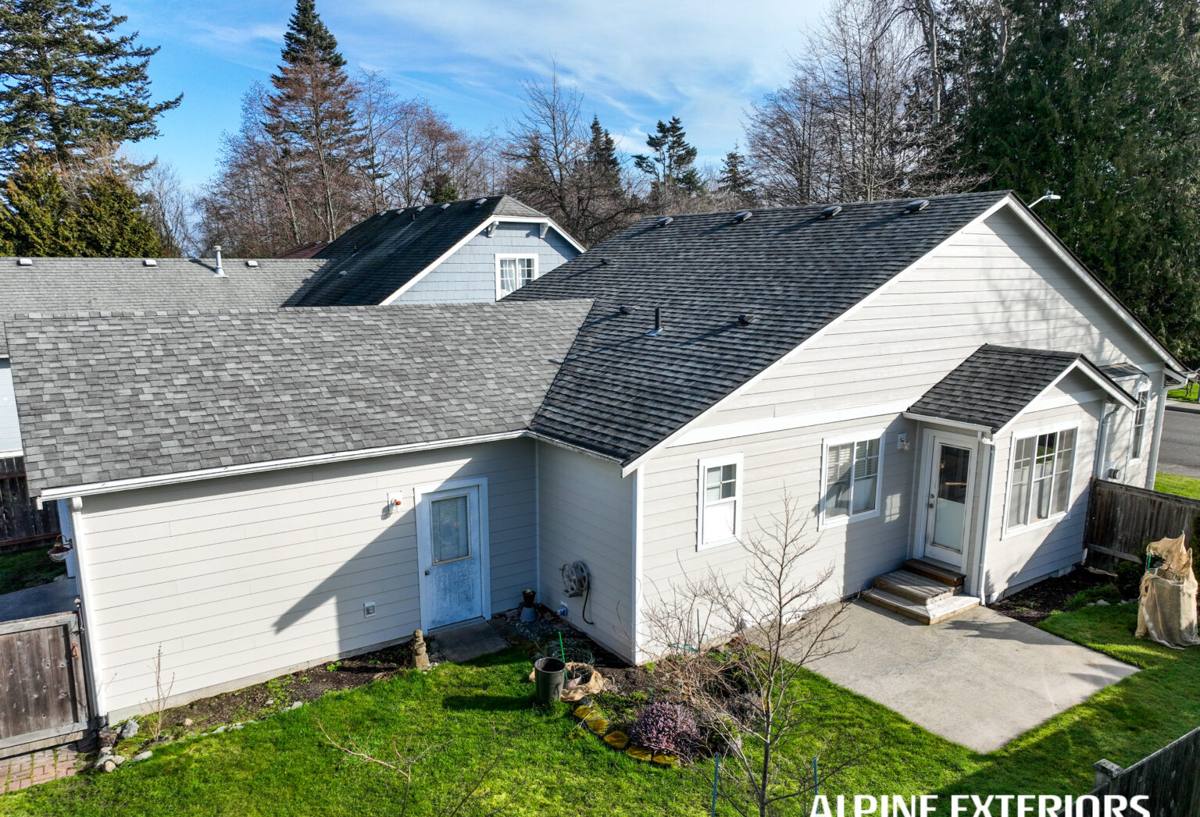
Roofing Systems That Perform in Sudden Valley
The right roofing system for a Yew Street home depends heavily on how much shade the roof sees, its pitch, and how exposed it is to wind-driven rain. There's no single "best" roof for every lot here — a sun-exposed roof and a heavily shaded one under mature conifers face different problems and sometimes call for different solutions.
Asphalt Composition Shingles
Still the most common roofing material in this area, and for good reason — modern architectural shingles with algae-resistant granules hold up reasonably well against moss and moisture when they're installed with proper ventilation underneath. The key word is ventilation. A shingle roof without adequate intake and exhaust airflow traps moisture in the attic space, which shortens the life of the shingles from underneath, not just from weather exposure on top.
Metal Roofing
Metal panel roofing sheds moss and standing water far more effectively than shingles because there's no granulated surface for spores and debris to catch on. It's a strong option for heavily shaded lots or homes closer to the lake where moisture sits longer. The tradeoff is upfront cost and the need for a contractor who's actually experienced with metal detailing — flashing, fastener patterns, and panel expansion all matter more here than on a shingle roof, and mistakes show up as leaks within a few seasons rather than immediately.
Roof Ventilation and Underlayment
Whatever the surface material, we treat ventilation and underlayment as non-negotiable in this climate. A quality synthetic underlayment gives a second line of defense when wind-driven rain works its way past the surface layer at eaves and valleys, which happens more often here than homeowners realize during a hard winter storm.
Moss, Algae, and Roof Longevity
Moss is the single biggest maintenance issue we see on roofs in this area, and it's largely a function of shade and moisture retention rather than the age of the roof itself. Moss doesn't just sit on top of shingles — its root structure lifts granules and creates channels where water sits against the roof deck instead of running off. Left long enough, that turns a cosmetic issue into a moisture intrusion issue.
Chemical moss treatments and zinc or copper strips can slow regrowth, but they're not a substitute for physical removal and a periodic inspection. We recommend homeowners think of moss control as an annual task in this climate, not a one-time fix.
| Roofing Material | Moss Resistance | Typical Lifespan Here | Best Suited For |
|---|---|---|---|
| Asphalt composition (standard) | Moderate | 18-22 years | Sun-exposed, well-ventilated roofs |
| Asphalt composition (algae-resistant) | Good | 20-25 years | Most homes, moderate shade |
| Metal panel | Very good | 40-50+ years | Heavily shaded, lakeside, steep-slope lots |
| Cedar shake (untreated) | Poor without upkeep | 15-20 years | Homeowners committed to regular treatment |
Siding for Salt Air and Wind-Driven Rain
Siding on Yew Street homes takes a different kind of beating than the roof — it's the wind-driven rain and repeated wet-dry cycling that cause the most damage, particularly around window trim, corner boards, and anywhere two materials meet. Salt-influenced air accelerates corrosion on exposed metal fasteners and flashing over time, which is why we pay close attention to what's holding the siding on, not just the siding itself.
Fiber Cement Siding
Fiber cement has become a strong standard choice in this region because it resists moisture absorption and doesn't swell or rot the way wood-based products can. It holds paint well over the long term, which matters in a climate where UV exposure is lower but moisture exposure is constant.
Wood Siding
Cedar and other wood sidings still have a place here and can look excellent, but they carry a real maintenance burden in this climate — recoating, caulking, and inspecting joints on a regular schedule. We're upfront with homeowners about that commitment rather than downplaying it, because a wood siding job left unmaintained for several years in driving rain conditions will show it.
Vinyl Siding
A budget-conscious, low-maintenance option that performs adequately here, though we're cautious about vinyl in spots with heavy wind exposure, since panels can loosen or crack in sustained wind events. Installation quality — proper nailing, expansion gaps, and starter strip work — matters more with vinyl than most homeowners expect.
Windows and Wind-Driven Rain Protection
Window failures in this area are rarely about the glass itself — they're almost always about the seal, the flashing, and the sill detail underneath. Wind-driven rain finds any gap in the flashing or caulking and works its way behind the trim, where it can sit against sheathing for months before anyone notices a soft spot or discoloration inside.
When we replace or install windows, we treat proper flashing integration with the surrounding siding or trim as the most important part of the job, more important than the window unit's brand or glass package. A well-flashed mid-range window will outperform a premium window with a sloppy installation every time in this climate. For homeowners simply looking to extend the life of existing windows, an annual check of exterior caulk lines and sill flashing is one of the cheapest, highest-value maintenance tasks available.
Decks: Building for Wet-Dry Cycles
Decks in Sudden Valley go through repeated soak-and-dry cycles for most of the year, which stresses fasteners, ledger connections, and any horizontal surface where water can pool instead of draining. The ledger board connection — where the deck attaches to the house — is the single most important structural detail on any deck in this climate, since water intrusion at that joint is both common and hard to spot until it's advanced.
Composite decking has become popular here because it resists rot and doesn't require refinishing, though it still needs a properly built substructure with adequate drainage and airflow underneath — composite boards don't rot, but the framing beneath them still can if it's buried in damp debris. Pressure-treated wood decking remains a solid, more affordable choice for homeowners willing to keep up with periodic sealing and inspection.
Why a Local Crew Matters in Yew Street
A lot of exterior problems in this area aren't caused by bad materials — they're caused by details that get overlooked by crews unfamiliar with how this specific climate behaves. Knowing which slopes on a Sudden Valley roof tend to hold shade and moss longer, how much ventilation a Whatcom County attic actually needs, and where wind-driven rain typically finds its way in isn't something you learn from a manual. It's something you learn by working on homes in this exact area, season after season.
A local crew is also easier to hold accountable — we're not driving in from out of the region for one job and disappearing. If something needs a warranty follow-up or a maintenance check a few years down the line, we're still working in this same neighborhood.
Maintenance Checklist for Yew Street Homeowners
- Inspect roof slopes for moss buildup at least once a year, especially shaded north- and east-facing sections
- Clear gutters and downspouts before the fall rains start, and again mid-winter if trees are nearby
- Check window and door trim caulking annually for cracks or gaps
- Look at deck ledger boards and fastener heads for rust staining or soft wood
- Walk the siding perimeter after major wind storms to check for lifted panels or loose trim
- Confirm attic ventilation isn't blocked by insulation or debris
- Address small leaks or stains immediately rather than waiting for a dry season to schedule repairs
Getting a Straight Answer on Cost
Every exterior project on Yew Street comes with its own set of cost factors, and we'd rather walk through those honestly than quote a number that doesn't hold up once we're actually on the roof or up against the siding.
| Factor | Why It Affects Cost |
|---|---|
| Roof pitch and access | Steeper or harder-to-access roofs take longer and require more safety setup |
| Existing moisture damage | Rotted sheathing or framing found during tear-off adds material and labor |
| Material choice | Metal and fiber cement cost more upfront than asphalt or vinyl, but last longer |
| Number of penetrations | Chimneys, skylights, and vents each need individual flashing work |
| Shade and moss history | Heavier moss removal and treatment adds time before installation begins |
If you're a homeowner on Yew Street dealing with a roof, siding, window, or deck question — whether it's a specific problem or just wanting an honest read on what your exterior needs in the next few years — we're happy to come take a look. The estimate is free, there's no pressure, and you'll get a straight answer about what actually needs attention versus what can wait.