 Sudden Valley Roofing
 Roofing Built for Alger's Weather
Homes around Alger sit close enough to the water and the timber that the roof over your head is doing real work almost every day of the year. Salt-laced air moving in off the water, long stretches of driving rain through fall and winter, and shade from the surrounding evergreens all add up to conditions that are harder on a roof than a typical dry-climate install. It's not dramatic weather, most of the time, but it's relentless, and relentless is what actually wears a roof down.
We've worked on enough roofs in this part of Whatcom County to know that the failures we get called out for aren't usually one big storm event. They're the slow stuff: moss working its way under shingle edges, flashing that's been seeping quietly for a year before a stain shows up on the ceiling, gutters that overflow in a hard rain and send water somewhere it shouldn't go. Roofing done right out here means designing and maintaining for that slow, steady moisture load, not just checking a box after installation.
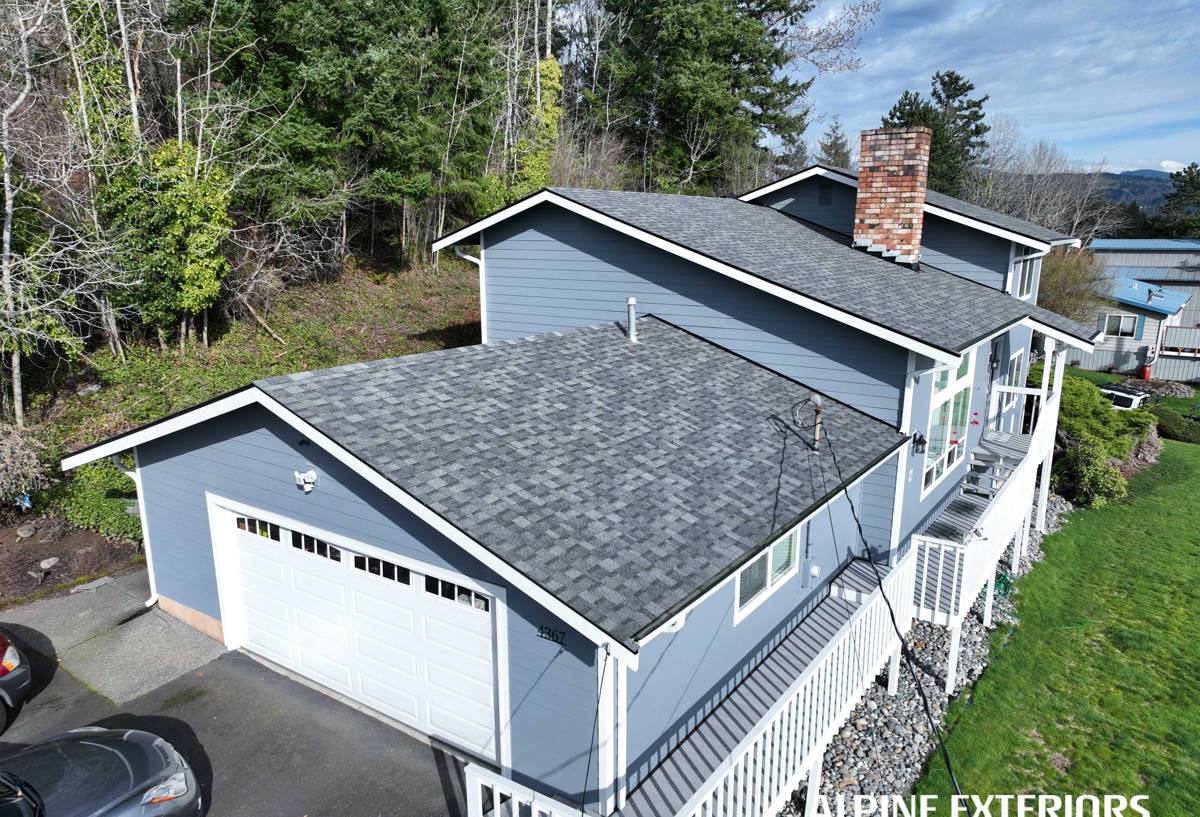
What We Actually See on Alger Roofs
Moss and Organic Growth
Shaded, north-facing slopes and roofs tucked under tree cover hold moisture longer than open, sun-exposed sections. That extra dampness is exactly what moss and algae need to get established. Left alone, moss doesn't just look bad — it lifts shingle edges, holds water against the roofing material, and speeds up granule loss. A roof that would otherwise last two decades can lose years off its service life to unmanaged moss.
Moisture Intrusion at Penetrations
Vent pipes, chimneys, skylights, and valleys are where most leaks actually start — not in the open field of shingles. Flashing that was installed a little loose, or has simply aged and lost its seal, lets water in during long soaking rains even when the shingles themselves look fine from the ground.
Gutter and Drainage Strain
Long rainy stretches mean gutters and downspouts are carrying a heavier load for more months out of the year here than in drier parts of the state. Undersized systems, or gutters clogged with needles and leaf litter, back water up under the roof edge and into fascia boards.
Salt-Air Corrosion
Metal components — flashing, fasteners, gutter hardware — corrode faster with salt-laced coastal air in the mix. It's a slower process than moss or leaks, but it's a real factor in choosing materials and hardware grades for homes closer to the water.
Roofing Materials: What Holds Up and What to Expect
There's no single "best" roofing material for every home — it depends on your roof's exposure, your budget, and how much upkeep you want to take on. Here's how the common options compare for a property in this climate:
| Material | Moss/Moisture Resistance | Typical Lifespan | Maintenance Needs |
|---|---|---|---|
| Asphalt composition shingle | Good with proper ventilation and periodic moss treatment | 20-30 years | Moderate — periodic cleaning, gutter checks |
| Standing seam metal | Very good — sheds moss and moisture quickly | 40-50+ years | Low — occasional fastener and seam checks |
| Cedar shake | Requires diligent upkeep to resist moss and rot in wet shade | 20-30 years with maintenance | High — regular treatment and inspection |
| Synthetic/composite shingle | Good — engineered to resist moisture absorption | 30-50 years | Low to moderate |
We don't push one product on every roof. A steep, well-ventilated, sun-exposed roof can do fine with a quality composition shingle for decades. A shaded, low-slope section closer to the tree line often does better with metal or a synthetic product that doesn't hold moisture the way natural wood does. We'll walk your roof and tell you honestly which category fits your situation — and why — before we talk numbers.
More Than Roofing: Siding, Windows, and Decks
The same weather that stresses a roof stresses the rest of the exterior, so we handle siding, windows, and decks alongside roofing rather than treating them as separate problems.
Siding
Siding takes on wind-driven rain directly, and seams, corners, and butt joints are where water finds its way in over time. We check siding condition as part of any roofing job, because a roof leak and a siding leak can look identical by the time they show up as a stain inside.
Windows
Older window flashing and failing seals let moisture track down into wall cavities, often unnoticed for years. Replacing windows is also one of the more direct ways to cut down on drafts and condensation issues that show up in older homes in wetter climates.
Decks
Decks are exposed to the same rain and moss pressure as roofs, but with the added stress of foot traffic and standing water on horizontal surfaces. Proper board spacing, drainage, and material choice matter as much here as they do on a roof.
Handling all four trades under one roof means fewer contractors walking through your project, and a crew that looks at your home's exterior as one connected system instead of four unrelated jobs.
How We Approach a Roofing Project
1. Inspection First
We start on the roof, in the attic, and at every penetration point — not just a look from the driveway. Ventilation, decking condition, and flashing all get checked before we recommend anything.
2. A Straight Answer on Repair vs. Replace
Sometimes a roof needs a repair, not a full replacement. We'll tell you which one it actually needs, and explain what we found so you're not taking our word for it blind.
3. Material and Ventilation Plan
We size ventilation and underlayment for how wet this region actually gets, not a generic spec sheet. Under-ventilated roofs trap moisture and shorten the life of whatever material is on top.
4. Clean Installation and Cleanup
Flashing details, fastener patterns, and edge work are where most roofing failures actually originate, so that's where we spend the extra care. We clear job-site debris and check gutters and downspouts are clear before we call a job finished.
A Homeowner's Maintenance Checklist
Between full inspections, a few habits go a long way toward protecting a roof — and the siding, windows, and deck around it — in this climate:
- Clear gutters and downspouts at least twice a year, more often if you're under heavy tree cover
- Have visible moss growth treated before it spreads across a full slope
- Trim back branches that overhang the roofline to reduce shade, debris, and abrasion
- Check attic insulation and ventilation for signs of trapped moisture or musty odor
- Look at exterior caulking and window seals annually, especially before the wet season
- Inspect deck boards and fasteners for soft spots or lifting before they become a fall hazard
- Walk the exterior after any major windstorm to check for loose flashing, siding, or shingles
Cost Factors Worth Understanding
No two roofing or exterior projects cost the same, but the factors that move the number are consistent. Knowing them ahead of time makes it easier to compare quotes honestly.
| Factor | Why It Matters |
|---|---|
| Roof pitch and access | Steeper or harder-to-access roofs take more time and safety equipment |
| Existing layer removal | Tear-off of old material adds labor and disposal cost versus a bare deck |
| Decking repair needs | Rotted or soft sheathing found underneath adds material and labor |
| Material choice | Metal and composite products cost more upfront but less over their lifespan |
| Ventilation upgrades | Adding proper intake/exhaust venting protects the new roof's warranty and lifespan |
| Flashing and detail work | Chimneys, skylights, and valleys require more precise, time-intensive work |
We provide written estimates that break these factors out, so you can see exactly what's driving the price rather than one lump number.
Why a Local Crew Makes a Difference
A crew that works throughout Whatcom County day in and day out knows how this region's rain, wind exposure, and tree cover actually behave on a roof over time — not from a manual, but from having repaired the results. That matters when it comes to sequencing a job around weather windows, choosing ventilation and underlayment for real conditions, and knowing which details tend to fail first on homes like yours. It also means someone local answers the phone if a question comes up after the job is done, rather than a call center somewhere else.
We're not going to tell you your roof needs replacing when it needs a repair, or sell you a premium material your home's exposure doesn't call for. We'd rather earn a long-term relationship with homeowners in this area than push one job.
Ready for a Straight Answer on Your Roof?
If you're noticing moss buildup, a stain on a ceiling, or you're just due for a check after a few rainy seasons, we're happy to take a look. Use the form below to request a free, no-pressure estimate — we'll walk the roof, tell you what we find, and let you decide from there.