 Sudden Valley Roofing
 Deming sits in a part of Whatcom County where the weather doesn't do anything by halves. Winters bring long stretches of driving rain off the water, damp air lingers late into spring, and shaded rooflines can carry moss and algae for most of the year. Homes here take that weather on the chin, season after season, and roofing systems in particular show the wear before anything else does. Sudden Valley Roofing Co has worked on homes across this stretch of the county, and Deming's mix of tree cover, moisture, and seasonal temperature swings shapes how we approach every roof, wall, window, and deck we touch here.
This page walks through what local homeowners tend to run into, how our services address it, and what to look for when you're deciding who to hire for exterior work on your home.
What Deming's Climate Does to a Roof and Exterior
Whatcom County's weather pattern is built around persistent moisture, not dramatic storms. That's actually the harder problem for a building envelope. A single hard storm is easy to spot damage from. Months of low-grade dampness, on the other hand, works slowly and quietly into places you don't check often.
Moss and Algae Growth
Shaded roof sections, north-facing slopes, and areas under tree canopy stay damp long after the rest of the roof has dried out. That's exactly the environment moss needs to take hold. Once moss establishes itself on a roof, it holds moisture against the shingle or shake surface, lifts butt edges, and accelerates granule loss on asphalt roofing or surface breakdown on wood products. Left unaddressed for a few seasons, moss growth can shorten the usable life of a roof significantly.
Driving Rain and Wind-Driven Moisture
Rain that comes in at an angle, pushed by wind off open water or through valley corridors, behaves differently than straight-down rain. It gets up under shingle tabs, works into siding laps, and finds gaps around window flashing that would never leak in calmer conditions. Flashing details around chimneys, skylights, valleys, and wall-to-roof transitions matter more here than in drier climates, because those details are what stand between wind-driven rain and your sheathing.
Salt Air and Corrosion
Homes closer to open water in this part of the county deal with a slow corrosive effect on exposed metal — fasteners, flashing, gutters, and hardware. It's not dramatic, but over years it can weaken the metal components that are supposed to be the most reliable part of a roofing or siding system. We account for this when we spec fasteners and flashing material on jobs in this area rather than defaulting to whatever is cheapest.
Temperature Swings and Material Movement
Even though this region doesn't see extreme heat, the swing between damp winter cold and drier summer days causes wood, vinyl, and fiber cement products to expand and contract. Poorly installed siding or trim that wasn't given room to move will eventually crack, buckle, or pull fasteners loose. Installation technique matters as much as the material itself.
Roofing Services for Deming Homes
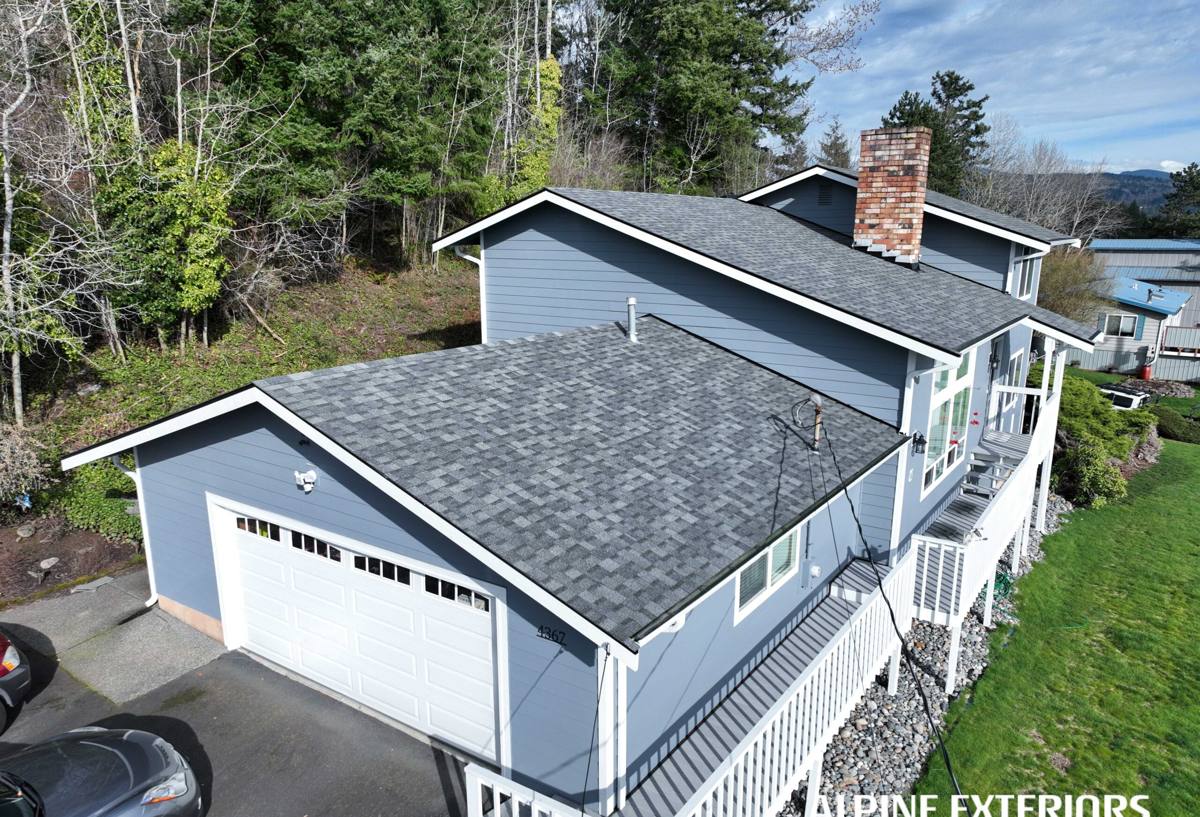
Roofing is where most of the climate stress in this area shows up first, so it's usually where we start when we walk a property.
Roof Inspections
A thorough inspection covers more than what you can see from the ground. We check flashing at penetrations, valley condition, moss and debris buildup, gutter and downspout function, attic ventilation, and signs of moisture intrusion at the deck level where visible. Most roof failures we see didn't start as a leak — they started as a small flashing gap or a moss mat that went unnoticed for a couple of years.
Roof Repair
Not every roofing issue calls for a full replacement. Localized shingle damage, a failed flashing detail, a soft spot from long-term moss retention, or storm-related damage can often be repaired directly. We'll tell you honestly when a repair makes sense and when it doesn't — patching a roof that's structurally near the end of its life just delays a bigger problem and spends money that would be better put toward replacement.
Roof Replacement
When a roof is past the point where repair makes sense, we walk through material options, underlayment strategy, and ventilation with you before anything gets ordered. In a climate like this one, the underlayment and flashing details often matter more to long-term performance than the shingle brand on top of them. A well-installed mid-range roofing system with proper underlayment will consistently outperform a premium product installed with shortcuts on flashing and ventilation.
Moss Treatment and Roof Maintenance
For homes with heavy tree cover or shaded roof planes, we offer moss removal and treatment as a standalone service, along with guidance on maintenance intervals. Removing moss the right way — without damaging the roofing surface underneath — takes a different approach than pressure washing, which can strip granules and shorten roof life just as fast as the moss itself.
Siding Services
Siding takes the brunt of wind-driven rain, so material choice and installation detail both matter here.
Material Options
| Material | Moisture Performance | Maintenance | Typical Lifespan |
|---|---|---|---|
| Fiber cement | Strong resistance to moisture and rot | Periodic repainting | 30-50 years |
| Vinyl | Good if installed with proper drainage gap | Low; occasional cleaning | 20-40 years |
| Engineered wood | Moderate; depends on sealed edges and coating | Regular inspection of seams | 20-30 years |
| Traditional wood | Requires diligent maintenance in wet climates | High; recoating and moisture checks | Varies widely with upkeep |
Why Installation Detail Matters As Much As the Product
We see more siding failures caused by installation shortcuts than by the material itself. Proper house wrap, correctly lapped flashing at windows and doors, and a drainage plane that actually lets incidental moisture escape are what keep siding performing for decades in a wet climate. We don't cut corners on these details even though they're invisible once the siding is up, because they're the part that actually keeps water out.
Window Services
Windows are one of the most common points of water intrusion in older homes in this area, usually not because the window unit itself failed, but because flashing and sealant around it broke down.
- Flashing integration with siding or trim, so water is directed out and away from the wall assembly
- Proper sealant application that accounts for material expansion and contraction
- Correct sill pan installation to manage any moisture that does get past the primary seal
- Energy performance appropriate for the local climate, without overpaying for features that don't add value here
When we replace windows, we also inspect the surrounding wall assembly for signs of past moisture damage, since a failing window is often a symptom of a flashing issue that's been present for a while.
Deck Services
Decks in this climate face near-constant moisture exposure for months at a time, plus the same moss and algae pressure that affects roofs.
Common Issues We See
- Ledger board connections that have trapped moisture against the house framing
- Fastener corrosion, especially with older or mismatched hardware
- Surface moss and algae creating a slip hazard on walking surfaces
- Structural posts or beams showing early rot at ground contact or under decking boards
Building and Repair Approach
For new deck builds, we pay close attention to ledger flashing, joist protection, and fastener selection given the corrosive potential of damp, occasionally salt-influenced air in this area. For repairs, we assess whether the issue is cosmetic or structural before recommending a fix — a mossy surface board is a different conversation than a compromised support post.
Why a Local Crew Matters in Deming
Exterior work in Whatcom County isn't generic. A crew that mostly works in drier climates will often under-detail flashing, skip drainage gaps behind siding, or underestimate how much moss pressure a shaded roof will face. We work this specific weather pattern regularly, which means we're not guessing at material choices or installation methods — we're applying what consistently holds up here.
Being local also means faster response for inspections, storm damage assessment, and warranty follow-up. You're not waiting on a crew that has to travel in from outside the area, and you're working with people who'll still be around County if a question comes up years after the job is done.
What to Look for When Hiring an Exterior Contractor
| Factor | Why It Matters |
|---|---|
| Washington state contractor license | Confirms legal standing and basic accountability |
| Liability insurance and bonding | Protects you if something goes wrong on your property |
| Written, itemized estimates | Avoids vague scope and surprise charges later |
| Manufacturer certifications | Often required for full warranty coverage on roofing and siding |
| Local references or project history | Shows experience with this specific climate, not just general construction |
A Straightforward Look at Cost Factors
Every home is different, but a few factors consistently drive cost on roofing, siding, window, and deck projects in this area:
- Roof or wall complexity — more valleys, dormers, or corners mean more flashing work and labor time
- Material choice — fiber cement and higher-end roofing systems cost more upfront but often less over the life of the home
- Extent of hidden damage found once old material is removed, which isn't always knowable until the job is underway
- Accessibility — steep roofs, limited driveway access, or tight lot lines can affect labor and equipment needs
- Scope — full replacement versus targeted repair changes both cost and timeline significantly
We'd rather give you a realistic range up front and flag what could change it than quote low and surprise you later.
Get a Free, No-Pressure Estimate
If you're dealing with a mossy roof, a siding section that's holding moisture, a window that's letting in more draft than it should, or a deck that needs an honest structural look, we're glad to come take a look. Use the form below to request a free estimate — no pressure, no obligation, just a straight assessment of what your home actually needs.