 Sudden Valley Roofing
 Building New in Acme? The Windows Deserve as Much Attention as the Foundation
If you're framing a new home out in Acme or finishing up a build near Sudden Valley, it's easy to treat windows as a finish-stage decision — pick a style, pick a color, move on. That's a mistake in this part of Whatcom County. New-construction windows aren't just an aesthetic choice; they're one of the few components of a house that has to perform against wind-driven rain, salt-laden air moving up from the Salish Sea, and a moss season that can stretch from October well into spring. Get the window and its installation right the first time, and you avoid callbacks, rot, and premature seal failure years down the road. Get it wrong, and the mistakes hide behind trim and siding until they show up as a stain on drywall.
We install new-construction windows on homes going up in and around Acme regularly enough that we know how this particular stretch of Whatcom County behaves — the wind exposure, the rainfall patterns, the way moisture lingers on north-facing walls under tree cover. This page is about that one job, done right, in this one area.
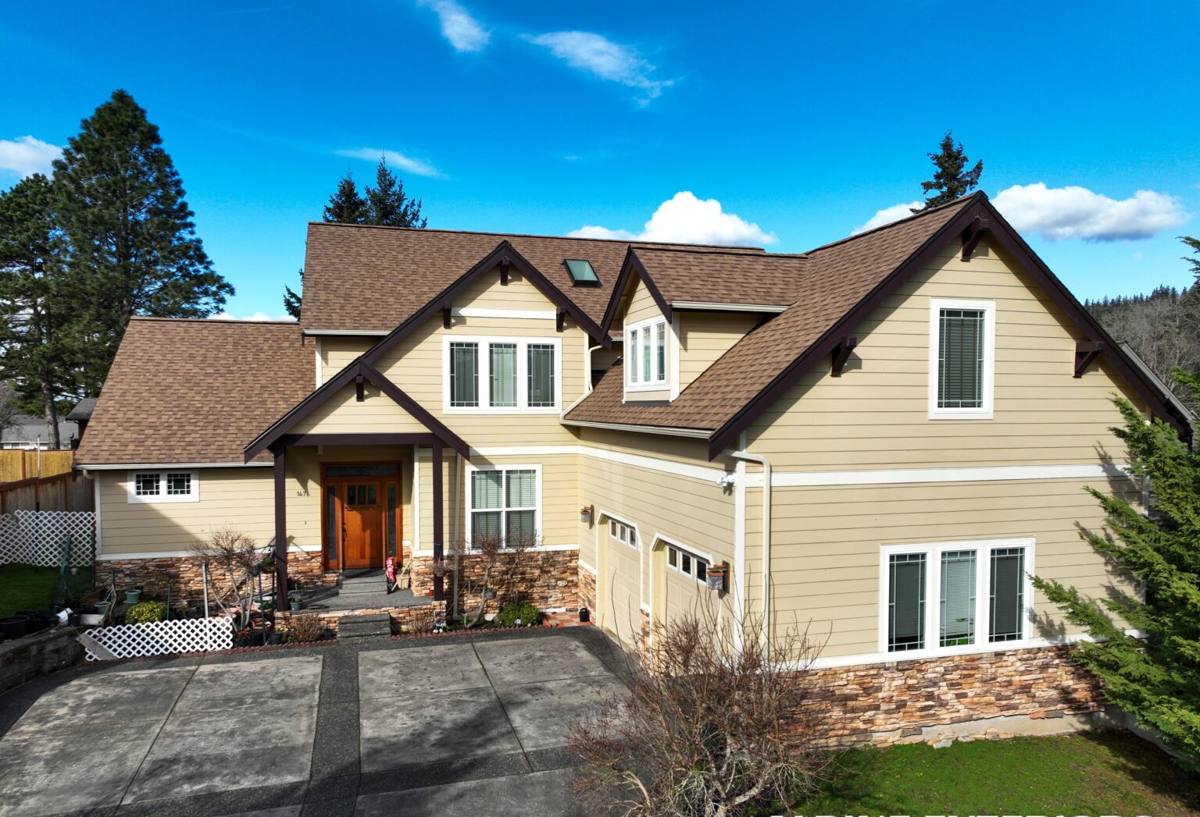
What Sudden Valley and Acme's Climate Actually Demands From a Window
Salt Air and Slow Corrosion
Whatcom County sits close enough to Puget Sound and the Salish Sea that salt-laden air reaches inland well beyond the immediate shoreline, especially on windy days. Salt air accelerates corrosion on unprotected fasteners, cheaper aluminum components, and window hardware that isn't rated for coastal-adjacent exposure. On a new build, this matters most at the fastening and flashing stage — the parts you can't see once siding goes on. We spec corrosion-resistant fasteners and hardware on every new-construction install out here as a baseline, not an upgrade.
Driving Rain and Water Management
Rain in this region doesn't just fall — it drives sideways during winter storms, and it comes often enough that a window's water management has to work every time, not most of the time. New construction gives us an advantage here that a retrofit never will: full access to the rough opening, the sheathing, and the water-resistive barrier before anything is closed in. That access is what lets us build a drainage plane that actually sheds water instead of trapping it behind the window.
A Long Moss Season Means Long Periods of Standing Moisture
Moss thrives on shaded, north- and east-facing walls throughout this region for a good chunk of the year, and wherever moss holds, moisture holds with it. On a window installation, that means sill design, drip caps, and sealant choice all matter more here than they would in a drier climate. A window that's merely "installed to code" can still trap moisture against the frame for months at a time if the flashing detail is wrong.
What Correct New-Construction Window Installation Actually Involves
New-construction windows use a nailing flange (also called a nail fin) that attaches directly to the sheathing before the water-resistive barrier and siding go on. Done correctly, this is one of the most weathertight window installation methods available. Done carelessly, it's also one of the easiest ways to build a hidden leak path into a brand-new wall. The difference is entirely in sequencing and flashing.
Flashing and Water-Resistive Barrier Integration
The rough opening gets sill flashing first, lapped so water is directed outward and down, never inward. The window's nailing flange is then integrated with the house wrap or building paper in a shingle-lap sequence — bottom, sides, then top — so every layer above sheds water onto the layer below it. The head flashing goes in last, over the top flange, tucked behind the water-resistive barrier above the opening. Skipping or reversing any step in that order is the single most common cause of the water-in-the-wall-cavity problems we get called to diagnose on other builders' work.
Frame Selection and Glazing for This Climate
Frame material affects how a window handles years of damp, cool weather. We talk homeowners through the trade-offs honestly rather than pushing one product:
| Frame Material | Moisture Behavior | Maintenance | Typical Cost Position |
|---|---|---|---|
| Vinyl | Won't rot; can expand/contract with temperature swings | Low — occasional cleaning | Most economical |
| Fiberglass | Dimensionally stable, holds up well to moisture and temperature cycling | Low | Mid to upper-mid |
| Wood-clad | Interior wood needs protection from condensation; exterior cladding shields from rain | Higher — finish and seams need periodic checks | Highest |
Glazing matters just as much as frame. For this region we generally recommend dual-pane, low-E glass with an argon fill as the practical baseline — it manages heat loss on cold, damp nights and cuts down on condensation at the glass edge, which is where mold gets its start in humid climates like ours.
Our New-Construction Window Process for Acme Builds
- Plan review and rough opening verification — we confirm window sizes and opening tolerances against the actual framing before ordering, not just the plan set, since field dimensions and drawings don't always match.
- Sill pan and flashing installation — sloped sill flashing goes in before the window ever touches the opening.
- Window set and shim — the unit is leveled, plumbed, and shimmed so the frame isn't carrying stress that could distort the sash over time.
- Flange integration with the water-resistive barrier — shingle-lapped sequencing, sealed at the manufacturer's specified points only, since over-sealing can trap moisture as easily as under-sealing.
- Interior air-sealing — low-expansion foam or backer rod and sealant around the interior perimeter to control air leakage without over-compressing the frame.
- Final inspection and documentation — we check every opening before siding closes it in, because that's the last point where a flashing mistake is cheap to fix.
Choosing the Right Window Line for a New Build in Acme
There's no single "best" window — there's the right window for the wall assembly, the budget, and how exposed the elevation is to wind-driven rain. A south- or west-facing wall on an open lot near Sudden Valley takes more weather than a sheltered, tree-shaded elevation, and we'll spec accordingly rather than using one spec for the whole house.
| Factor | Why It Matters Here |
|---|---|
| Design pressure rating | Higher ratings matter on exposed elevations that catch driving rain and wind directly |
| U-factor | Affects heat loss during the long, cool, damp season typical of Whatcom County winters |
| Air infiltration rating | Lower ratings mean less wind-driven moisture finding its way past the frame |
| Warranty structure | Look for coverage on seal failure and hardware, not just glass breakage |
Common Mistakes We Catch on New Builds in This Area
Some of our new-construction jobs in and around Acme are corrections of work already in progress. The same handful of issues show up repeatedly:
- Sealant used in place of proper flashing — caulk is a backup, not a water management system
- House wrap taped over the nailing flange instead of shingle-lapped under and over it correctly
- No sloped sill pan, leaving the sill flat and prone to holding standing water
- Fasteners that aren't corrosion-resistant, which show rust staining on siding within a few years in salt-influenced air
- Foam or sealant packed too tightly around the frame, distorting it and causing the sash to bind
- Windows ordered from plan dimensions without verifying the actual framed opening
Why a Crew That Already Works Acme Matters
Building codes, wind exposure categories, and typical rainfall patterns shift somewhat across Whatcom County, and a crew that installs windows here regularly already knows what this specific stretch — Acme, Sudden Valley, and the surrounding area — throws at a new build. That means fewer surprises during inspection, flashing details that match what local building officials expect to see, and a realistic sense of which elevations on a given lot need the extra attention. It also means we're not learning the region's quirks on your project.
Timeline and Coordination With Your Builder
Window installation on a new build has to land at the right point in the schedule — after sheathing and water-resistive barrier are in place, but before siding closes everything in. We coordinate directly with your general contractor or framing crew so windows go in on schedule without holding up the next trade. For a typical new home, window installation itself usually runs a few days depending on the number and size of openings, though scheduling around weather and other trades can shift that. We'll give you a realistic window (no pun intended) once we've seen the plans and the framed structure.
If you're planning a new build in Acme or nearby and want windows installed by a crew that treats flashing and sequencing as seriously as the windows themselves, we're happy to walk the plans with you and give you a straightforward, no-pressure estimate — just fill out the form below.