 Sudden Valley Roofing
 Roofing in Ferndale: A Climate That Doesn't Cut Corners
Ferndale sits close enough to the water that salt air is part of daily life, and close enough to the foothills that rain shows up sideways more often than most homeowners would like. That combination is hard on a roof. It's hard on siding, windows, and decks too, but the roof takes the first hit every time, because it's the surface doing the most work — shedding water, blocking wind, and holding up under months of damp shade from the tree cover that's common throughout this part of Whatcom County.
Sudden Valley Roofing Co has worked on homes across this stretch of Washington long enough to know that a roof built for a drier climate, or installed by a crew unfamiliar with what this weather does over time, tends to show its age early. We build and repair roofs around what actually happens here, not around a generic install.
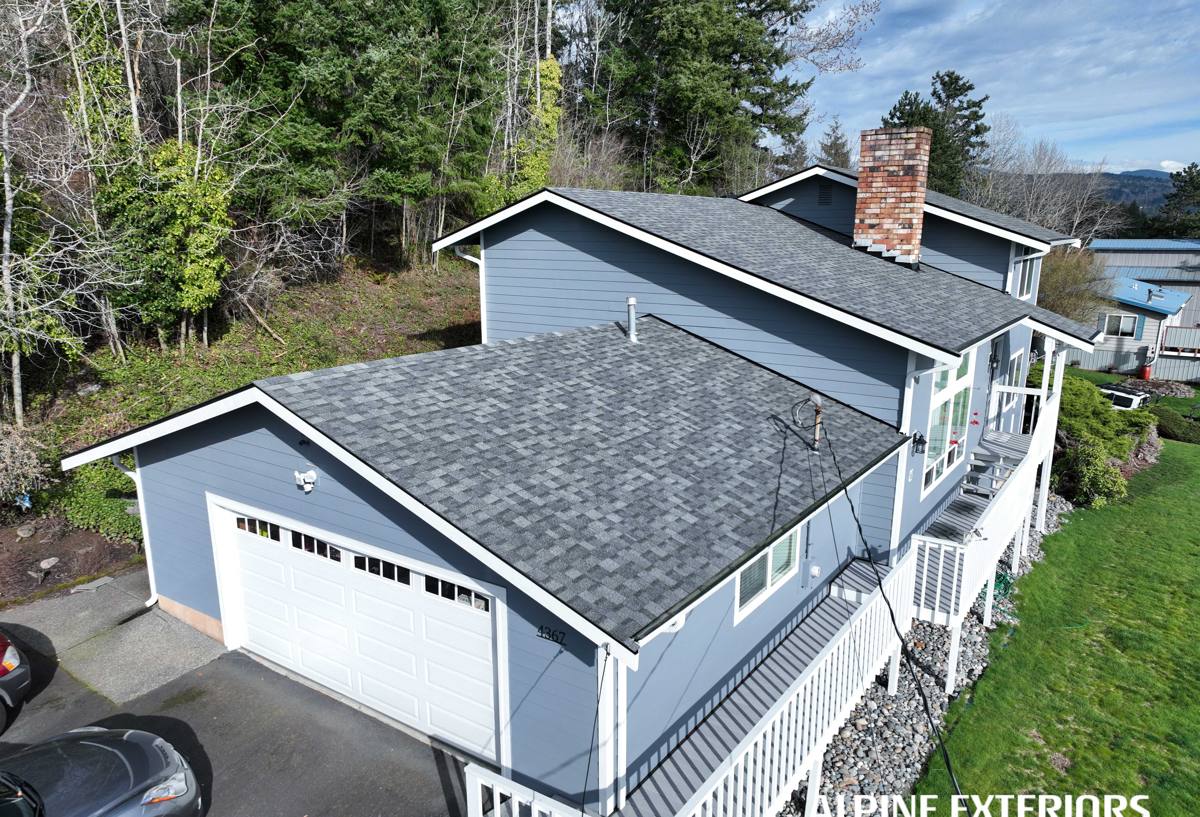
What Ferndale's Weather Actually Does to a Roof
Salt Air and Slow Corrosion
Homes nearer the water deal with airborne salt that settles on metal flashing, fasteners, and any exposed hardware. Over years, that accelerates corrosion in lower-grade metals. It's rarely dramatic — no single storm causes it — but it adds up, which is why the fasteners and flashing details we use are chosen with that slow, steady exposure in mind rather than picked for lowest cost.
Driving Rain and Wind-Driven Moisture
Rain here doesn't always fall straight down. When wind pushes it sideways, water finds its way under improperly lapped shingles, around poorly sealed vents, and into gaps at wall-roof transitions that would stay dry in calmer weather. A roof that looks fine from the ground can still be letting moisture in at these edge details, which is where most leaks in this region actually start.
Moss Season
Whatcom County's damp, shaded conditions give moss a long growing window — often most of the year on north-facing slopes or roofs under tree cover. Moss holds moisture against roofing material, lifts shingle edges as it grows, and can work its way under shingle tabs over time. Left unaddressed, it shortens the life of an otherwise sound roof.
Roofing Materials That Make Sense for This Area
There's no single "best" roofing material — the right choice depends on the home, the budget, and how much maintenance a homeowner wants to take on. Here's how the common options stack up for a climate like Ferndale's.
| Material | Moss & Moisture Resistance | Typical Lifespan | Maintenance Level |
|---|---|---|---|
| Asphalt Composition Shingle | Moderate — benefits from algae-resistant granules | 20–30 years | Periodic moss/debris removal |
| Standing Seam Metal | Strong — sheds moisture quickly, moss struggles to grip | 40–60+ years | Low, but seams/fasteners need occasional checks |
| Cedar Shake | Weakest without diligent upkeep — retains moisture | 20–30 years with maintenance | High — regular treatment and inspection |
| Synthetic/Composite Shingle | Strong — engineered to resist moisture uptake | 30–50 years | Low to moderate |
We don't push cedar shake as a first recommendation in this climate. It can look great, but it demands a maintenance schedule most homeowners underestimate, and moisture retention is a real long-term concern here — not a defect in the product itself, just a mismatch with how much upkeep this weather requires. Asphalt shingle with algae-resistant granules remains a solid, budget-friendly middle ground, and standing seam metal is worth the conversation for anyone thinking in decades rather than years.
Signs a Ferndale Roof Needs a Closer Look
Most roof problems don't announce themselves with a dramatic leak. They show up as small signals first. Worth checking for:
- Dark streaking or green-black growth on north-facing or shaded roof sections
- Granules collecting in gutters or at downspout outlets
- Shingle edges that look lifted, curled, or cupped
- Soft or spongy feeling decking near roof edges or valleys (best assessed from the ground or by a professional — not something to test by walking the roof)
- Daylight visible through the attic roof deck
- Water stains on ceilings, especially after a windy rainstorm
- Moss buildup thicker than a quarter inch, or moss bridging across multiple shingles
- Rust staining around metal flashing or vent boots
Any one of these on its own isn't necessarily an emergency, but they're worth a professional look before the next wet season rather than after.
Moss Removal and Prevention Done Right
Moss removal has a wrong way and a right way. Pressure washing a roof — a shortcut some crews still use — can strip granules and force water under shingles, doing more damage than the moss itself. Our approach is manual moss removal with soft brushing and low-pressure methods, followed by treatments that slow regrowth, plus attention to the tree cover and shading that's letting moss thrive in the first place. Zinc or copper strips near the ridge can help suppress regrowth over time as rain carries trace metal down the roof slope — a low-maintenance option worth discussing for homes with a heavy moss history.
Beyond the Roof: Siding, Windows, and Decks in the Same Climate
A roof doesn't fail in isolation — the same salt air, rain, and moss pressure that wears on shingles works on the rest of a home's exterior too. We handle all four trades because they're connected, and treating them separately often means the same weather problem gets fixed once and reappears somewhere else on the house.
Siding
Wind-driven rain finds gaps at siding seams and trim the same way it finds gaps at a roofline. Proper flashing and lap details at windows, corners, and the roof-to-wall transition matter as much as the siding material itself.
Windows
Older or poorly sealed windows let moisture and drafts in during storms and fog off with condensation during damp, cool stretches — common in this part of Washington for much of the year. Correct flashing and sealing at installation matters more here than in drier climates.
Decks
Decks take direct rain exposure with nowhere for water to hide, so drainage, board spacing, and ledger board flashing (where the deck meets the house) are the details that determine whether a deck lasts or starts rotting from the inside within a few seasons.
Repair vs. Replacement: What Actually Drives the Decision
Homeowners often ask whether a problem area can be repaired or whether it signals the whole roof needs replacing. A few honest factors that go into that call:
| Factor | Leans Toward Repair | Leans Toward Replacement |
|---|---|---|
| Age of roof | Under 15 years, well-maintained | Nearing or past material's expected lifespan |
| Extent of damage | Isolated to one section or detail | Widespread across multiple slopes |
| Underlying decking condition | Solid, no soft spots | Soft, rotted, or previously water-damaged |
| Moss/algae history | Recent, surface-level growth | Long-term growth with granule loss underneath |
| Number of past repairs | First or second repair | Recurring repairs in the same areas |
We'll give a straight answer either way. If a repair genuinely solves the problem, that's what we recommend — replacement isn't the default answer just because it's the bigger job.
Why Hiring Local Matters in Whatcom County
A crew that works this area regularly knows which details tend to fail first in Ferndale's climate, what local permitting and building department expectations look like, and how to schedule around the wet season instead of fighting it. That local knowledge shows up in the small decisions — flashing choices, fastener grade, moss treatment timing — that a crew unfamiliar with this specific stretch of coastal Washington might not think twice about.
It also matters for accountability. A local company is easy to reach if a question comes up after the job is done, and has a reputation in the community worth protecting.
Our Process for Ferndale Homeowners
We start with an honest inspection — roof, and where relevant, siding, windows, or deck condition — and explain what we find in plain terms. From there we walk through material and repair options with real trade-offs, not a one-size pitch. Every estimate is written, itemized, and free of pressure tactics. Once work begins, we keep the homeowner informed of timeline and any surprises found once material comes off, which happens more often than any contractor likes to admit but should never be hidden.
If you're in Ferndale and dealing with a roof that's showing its age, moss that keeps coming back, or exterior issues that seem connected to the weather rather than a single bad spot, we're happy to take a look. Reach out for a free, no-pressure estimate using the form below.