 Sudden Valley Roofing
 Why Alger-Area Homes Need Windows Built for This Climate
Homes in and around Alger near Sudden Valley sit in a stretch of Whatcom County where the weather doesn't do anything in half measures. Winters bring driving rain that comes in sideways, humidity stays high enough for months at a time to keep siding and trim damp, and shaded lots under fir and cedar canopy grow moss and algae faster than most homeowners expect. Windows take the brunt of all three. A window that's a great fit in a dry inland climate can start failing here in five or six years if it wasn't sealed, flashed, and specified for this environment in the first place.
We've replaced and repaired enough windows on houses in this area to know the failure patterns before we get on a ladder: sills gone soft from years of standing water, sashes that swell and stick every winter, and older dual-pane units fogged from the inside. This page covers what actually goes into doing a custom window job right for an Alger-area home — not a generic "why replace your windows" pitch.
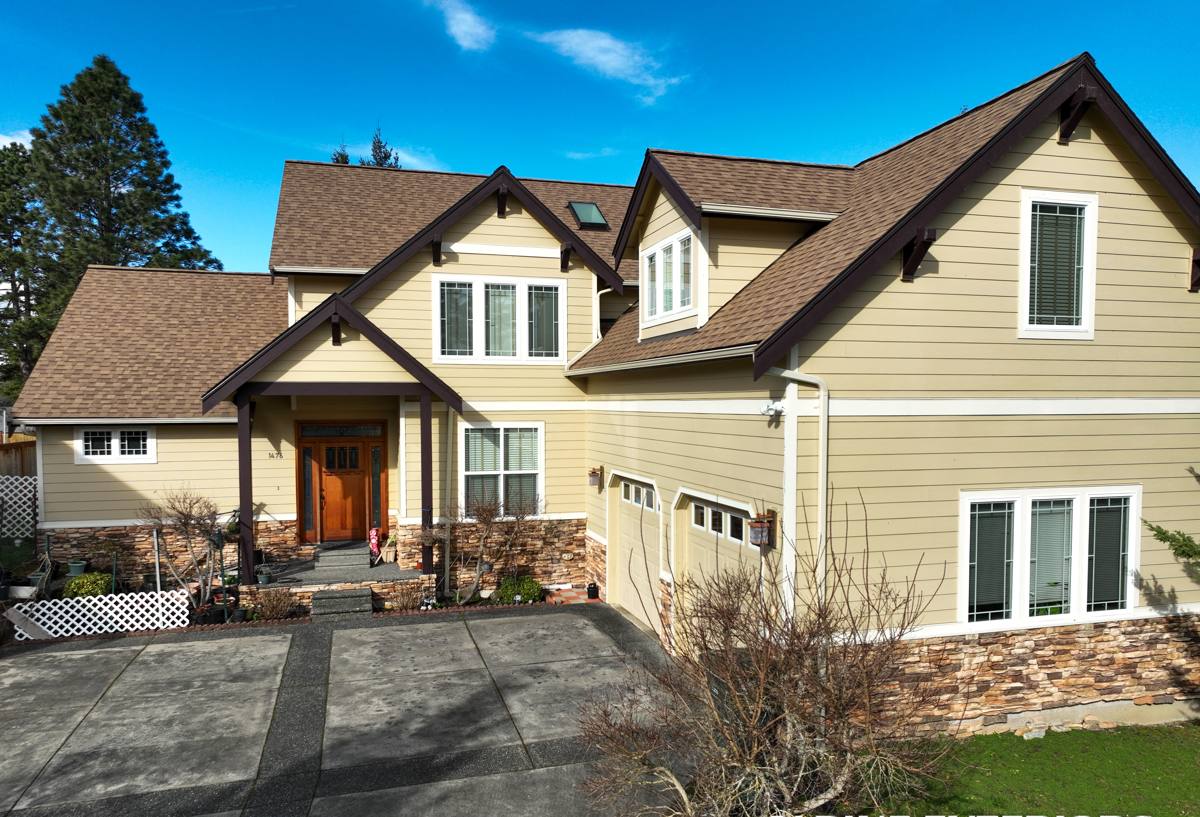
What Makes a Window Job "Custom" Rather Than Off-the-Shelf
"Custom" doesn't mean fancy shapes or a higher price tag for its own sake. It means the window is built to the actual opening in your wall, not the other way around. Most houses in this area weren't built with perfectly square, perfectly sized rough openings, especially anything more than fifteen or twenty years old. Framing settles, foundations shift slightly, and old sashes often get reworked over the years by whoever owned the house before.
Openings That Are Rarely Perfectly Square
When we measure for replacement windows, we check the opening in multiple spots — width and height at top, middle, and bottom, plus diagonal measurements to catch any racking. An opening that's out of square by even a quarter inch needs to be accounted for in how the new window is built and shimmed, or you end up with a unit that won't operate smoothly and won't seal evenly against wind-driven rain. Stock "one size fits the rough opening" replacement windows can work fine on newer, square construction. On older or settled homes, that's exactly where gaps and future leaks start.
Frame Material: What Holds Up Here and What Doesn't
Frame material matters more in a marine climate than a dry one. Constant moisture, humidity swings, and a degree of salt in the air all put extra stress on whatever the frame is made from. Here's how the common options actually perform under those conditions, based on how they behave in the field rather than marketing claims.
| Frame Material | How It Handles Moisture & Damp Air | Maintenance Over Time | Honest Trade-off |
|---|---|---|---|
| Vinyl | Doesn't rot or corrode; handles humidity well | Low — occasional cleaning | Fewer color options; can flex on very large sizes |
| Fiberglass | Very stable through temperature and moisture swings | Low | Higher upfront cost than vinyl |
| Aluminum | Doesn't rot, but conducts cold and can condense | Moderate | Prone to interior condensation in our winters unless thermally broken |
| Wood / Wood-clad | Attractive, but exterior wood needs protection from driving rain | Highest — periodic repainting or resealing | Most vulnerable to rot if caulking or cladding fails |
We don't push wood-frame windows on exteriors that take direct, wind-driven rain unless the homeowner understands the maintenance commitment going in. It's not that wood windows are a bad product — it's that a maintenance lapse in this climate shows up as rot, not just peeling paint, and by the time it's visible from outside it's often already into the frame.
Glass and Coatings: What Actually Matters in a Wet Climate
Most replacement windows sold today are dual-pane with some form of low-E coating, and that's the right baseline for this area. Where the real decisions happen is in the details: argon or krypton gas fill between panes, a low-E coating tuned for our heating-dominated climate rather than a hot, sunny one, and a warm-edge spacer system that resists seal failure over time.
Condensation and Seal Failure in a Marine Climate
The most common complaint we hear about older dual-pane windows here isn't drafts — it's fogging between the panes. That's a failed seal letting humid air in, and once it happens the insulated glass unit needs to be replaced; it can't be fixed. Consistently damp air outside and warm, humid air inside — especially from bathrooms and kitchens — puts more stress on seals here than in a drier climate, which is part of why we pay attention to spacer quality and installation technique, not just the glass package on a spec sheet.
Flashing and Water Management — Where Most Failures Actually Start
Almost every window failure we get called out to inspect traces back to water management around the opening, not the window unit itself. This is the part of the job that doesn't show up in a brochure and is the easiest for a rushed installer to shortcut.
- Sill pan flashing under the window to direct any water that gets past the frame back outside, not into the wall cavity
- Proper head flashing integrated with the house wrap or building paper above the window, lapped correctly so water sheds down and out
- Compatible sealants at every joint — some sealants don't bond well to certain siding or trim materials and fail within a season or two
- Correct shimming so the frame isn't under stress that can crack seals or bind the sash over time
- Weep holes and drainage paths left clear, not caulked shut
Skipping any one of these doesn't usually cause an immediate leak. It shows up eighteen months to three years later as a soft spot in the sill, a stain on interior trim, or moss and algae getting a foothold on siding that's staying damp longer than it should. That delay is exactly why cutting corners on flashing is such a common — and expensive — mistake.
Our Installation Process
- On-site assessment. We measure every opening individually, check for existing rot or water damage, and look at how the current windows are flashed and sealed.
- Product selection. We go over frame material, glass package, and style options based on your home, your budget, and how that side of the house takes weather.
- Custom ordering. Windows are built to the actual measured openings, not a generic stock size.
- Removal and inspection. When we pull the old unit, we inspect the framing and sill underneath for hidden rot before anything new goes in — this is often where problems the homeowner didn't know about get caught.
- Repair as needed. Any soft or damaged framing gets repaired before the new window is installed; setting a new window into a damaged opening just resets the clock on the same failure.
- Installation and flashing. The new window is set, shimmed square and plumb, and flashed with proper sill pan, head flashing, and compatible sealant.
- Interior and exterior finish. Trim, caulking, and insulation around the frame are finished on both sides.
- Final walkthrough. We check operation and sealing, and go over cleanup with you before we consider the job done.
Signs It's Time to Replace, Not Repair
Not every window problem means full replacement. But a few signs point toward it rather than a simple repair:
- Fogging or haze between the panes that won't clean off — the seal has failed
- Sashes that stick, won't stay open, or won't latch securely
- Visible gaps, soft wood, or paint failure at the sill or corners
- A noticeable draft or cold spot near the frame even with the window closed
- Condensation forming on the interior glass or frame regularly in winter
- Moss or dark staining building up on the exterior trim around the window
- Rising energy bills with no other obvious explanation
Cost Factors to Expect
We don't quote window pricing off a phone call — too much depends on the actual opening, existing damage, and product choice. These are the factors that move the number up or down on most jobs:
| Factor | Why It Matters |
|---|---|
| Frame material | Vinyl is typically the most affordable; fiberglass and wood-clad cost more upfront |
| Number and size of openings | Larger and custom-shaped windows require more material and labor |
| Hidden rot or framing damage | Discovered once old windows come out; repair adds time and material before installation can proceed |
| Glass package | Upgraded low-E coatings, gas fills, or grid patterns add cost but improve comfort and durability |
| Access and site conditions | Second-story or hard-to-reach openings take more time and equipment |
Why Hire a Crew That Already Works Alger and Sudden Valley
A window installer who mostly works in a different climate zone doesn't necessarily think about salt air, wind-driven rain, or a long moss season the way it needs to be thought about here. We've worked on houses throughout the Sudden Valley and greater Whatcom County area long enough to have a feel for how local construction ages — which sides of a house tend to take the worst weather, and how quickly moss and algae take hold on shaded or north-facing walls under heavy tree cover.
That local pattern recognition matters when we're diagnosing an existing problem, and it matters when we're specifying a new window for a wall that's going to face decades of the same weather. It also means straightforward logistics — we're not routing a crew in from far outside the area, and we're already familiar with the kind of housing stock common around Alger and Sudden Valley.
If your windows are drafty, fogged, sticking, or just old enough that you're wondering whether repair still makes sense, we're happy to take a look and give you a straight answer — including telling you if repair is the better call. Reach out for a free, no-pressure estimate, and we'll walk the openings with you and explain exactly what we'd do and why.