 Sudden Valley Roofing
 Asphalt Shingle Roofing That's Actually Built for Bellingham
Bellingham sits in a stretch of Whatcom County where a roof rarely gets a break. The air coming off Bellingham Bay carries salt that works its way into fasteners and flashing. Winter and fall bring driving, wind-pushed rain that tests every seam and lap in a roof system, not just the shingles on top. And the heavy tree cover that makes this area beautiful also means long, damp shade that keeps roofs wet for weeks at a time, which is exactly what moss and algae need to take hold. A shingle roof that would hold up fine in a drier, sunnier climate can fail early here if it wasn't installed with these specific conditions in mind.
Sudden Valley Roofing Co installs and replaces asphalt shingle roofs for homeowners throughout the Bellingham area, and this page is about that one job done right for this one climate — not a generic rundown of shingle roofing in general.
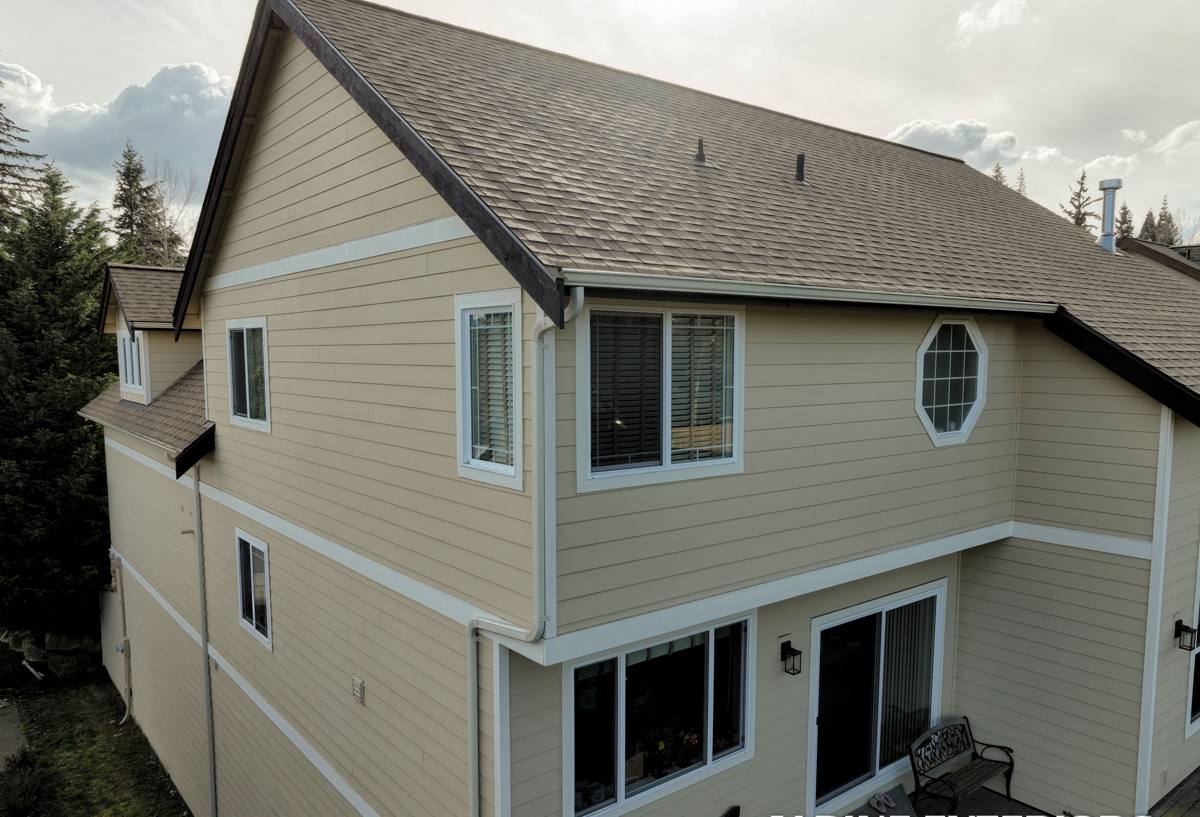
What Bellingham's Climate Actually Does to a Shingle Roof
Salt Air and Corrosion
Homes closer to the water deal with airborne salt that accelerates corrosion on exposed metal — nail heads, drip edge, flashing, and vent caps. Standard galvanized fasteners can start to rust years before they should, and once a fastener corrodes, the seal around it fails long before the shingle itself wears out. That's a slow, hidden leak path that often isn't obvious from the ground.
Driving, Wind-Pushed Rain
This isn't gentle, straight-down rain. Whatcom County storms regularly push rain sideways under wind, which means water gets tested against every lap, seam, and penetration on the roof — not just the open field of shingles. A roof that only handles rain falling straight down will eventually leak at valleys, wall flashing, and vent boots.
Moss and Algae Season
Bellingham's tree cover and cloud cover mean shaded roof sections can stay damp for days after a storm passes. That moisture, combined with organic debris from overhanging trees, is what feeds moss and black algae streaking. Moss isn't just cosmetic — as it grows, it lifts shingle edges, holds water against the roof deck, and works granules loose, all of which shortens the life of the roof.
What a Correctly Installed Roof Needs to Handle This Climate
A shingle roof built for Bellingham conditions isn't just "shingles nailed to a deck." Every layer underneath matters as much as what's visible on top.
- Synthetic underlayment rather than old-style felt, for better tear resistance and more consistent water shedding while a roof is exposed during install
- Ice-and-water membrane at eaves, valleys, and around penetrations — not because Whatcom County gets heavy ice buildup, but because these are the exact spots where wind-driven rain gets forced backward under shingles
- Corrosion-resistant flashing and fasteners, especially on homes closer to the bay or lake where salt air exposure is higher
- Balanced attic and roof ventilation to keep the underside of the deck dry, which slows moss growth from the inside out and protects the shingles' warranty
- Proper nailing pattern and shingle rating for wind exposure, since a roof that's only fastened to minimum code often loosens first at ridges and rakes
Choosing the Right Shingle for a Bellingham Roof
Not every asphalt shingle product is built the same way, and the right choice depends on your roof's shade exposure, pitch, and how long you plan to stay in the home. Here's how the main options compare for this climate specifically:
| Shingle Type | Typical Lifespan Here | Moss/Algae Resistance | Best For |
|---|---|---|---|
| Standard 3-tab | 15–20 years | Lower unless AR-rated | Budget-conscious re-roofs, sun-exposed slopes |
| Architectural/laminate | 25–30 years | Better mat and heavier profile resist granule loss | Most Bellingham homes, especially shaded lots |
| Algae-resistant (AR) shingles | Same as base product | Copper/zinc-infused granules actively slow algae growth | North-facing slopes, tree-covered lots |
| Impact/wind-rated shingles | 25–30+ years | Varies by product line | Exposed or higher-elevation properties |
Our default recommendation for most Bellingham homes is an algae-resistant architectural shingle. The added upfront cost is modest compared to the labor cost of re-roofing sooner because moss and algae streaking pushed a roof into premature replacement.
Moss Prevention Isn't a One-Time Job
Even the best shingle and the best install will grow some moss over time if a roof sits under trees and gets shaded most of the day — that's just the reality of this region. What changes the outcome is how the roof is set up to resist it and how it's maintained afterward.
What We Build In
Where it makes sense for the roof design, we install zinc or copper strips near the ridge. Rainwater running over these strips carries trace metal ions down the roof slope, which naturally inhibits moss and algae regrowth in the areas below the strip.
What Homeowners Can Do Between Roofs
- Keep overhanging branches trimmed back so roof sections get more light and airflow
- Clear needles, leaves, and debris from valleys and gutters each fall
- Have visible moss brushed off gently (not pressure-washed) rather than left to spread
- Watch north-facing and heavily shaded slopes first — that's where moss typically shows up before anywhere else on the roof
Our Process for a Bellingham Shingle Roof
- On-site inspection — we look at the existing roof, deck condition, ventilation, flashing, and how much shade and tree exposure the roof deals with
- Written estimate — clear scope, shingle options, and pricing before any work starts, no surprise add-ons sprung on you mid-project
- Tear-off and deck inspection — old roofing removed down to the deck so we can actually see and repair any soft, rotted, or water-stained sheathing rather than roofing over it
- Underlayment and flashing installation — synthetic underlayment, ice-and-water membrane at vulnerable areas, and corrosion-resistant flashing throughout
- Shingle installation — installed to manufacturer spec and rated for local wind exposure, with attention to nailing pattern at ridges, rakes, and valleys
- Ventilation check — confirming intake and exhaust venting is balanced so the new roof isn't fighting trapped moisture from day one
- Cleanup and walkthrough — job site cleared of debris and nails, and we walk the finished roof with you before calling it done
What Affects the Cost of a Bellingham Shingle Roof
Every roof is priced based on its own specifics, but these are the factors that move the number most often on Bellingham jobs:
| Factor | Why It Matters Here |
|---|---|
| Roof size and pitch | Steeper roofs take longer to work safely and use more material per square |
| Number of tear-off layers | Removing multiple old layers adds labor and disposal cost |
| Deck repair needed | Moisture-damaged sheathing found during tear-off has to be replaced before shingles go on |
| Shingle tier selected | Standard 3-tab vs. algae-resistant architectural shingles carry different material costs |
| Ventilation upgrades | Adding or correcting intake/exhaust venting protects the new roof but adds scope |
| Access and site conditions | Steep driveways, tree cover, or tight lot access can affect equipment and staging time |
We give straight, itemized estimates so you know what you're paying for and why — no vague lump-sum numbers that hide what's actually being done.
Signs a Bellingham Roof Needs Attention
Because moss and constant moisture can mask other problems, it's worth checking a few things before they turn into interior damage:
- Visible moss or dark algae streaking, especially on shaded or north-facing slopes
- Granules collecting in gutters or downspouts more than usual
- Shingles that look curled, cupped, or lifted at the edges
- Rust staining around flashing, vent boots, or nail heads
- Soft or spongy spots when walking the roof, or sagging visible from the ground
- Musty smell or visible moisture in the attic, which often points to a ventilation or flashing issue before it shows up as a ceiling stain
Why It Matters That We Already Work in This Area
A roofing crew that mainly works drier, sunnier regions can install a technically correct roof that still underperforms here, simply because they're not used to designing for salt air corrosion, wind-driven rain, and near-constant shade. Working Bellingham and the broader Whatcom County area regularly means we're already accounting for these conditions in the underlayment, flashing, fastener choice, and shingle selection — not treating them as an afterthought. It also means we're a known, local business you can reach after the job is done, not a crew that's moved on to another state by the time a warranty question comes up.
If you're weighing a repair, a full replacement, or just want an honest read on how much life is left in your current roof, we're happy to take a look. Reach out for a free, no-pressure estimate using the form below.