 Sudden Valley Roofing
 Why Decks in Barkley Need to Be Built Differently
Barkley sits in the same wet, mild, marine-influenced stretch of Whatcom County as the rest of the Lake Whatcom and Sudden Valley area, and that climate is hard on outdoor structures in ways a lot of homeowners don't fully appreciate until a deck starts failing. It's not one big storm that does the damage — it's the combination of near-constant moisture, tree cover, and salt-tinged air drifting in from Bellingham Bay and the Sound that slowly works on wood, fasteners, and framing year after year. A deck built to a generic national standard will often underperform here. One built with this specific climate in mind holds up.
We build and repair decks throughout this area, and the patterns are consistent: decks fail first at the connections and the surfaces that stay damp longest, not from any single dramatic event. Understanding why that happens is the first step to building one that doesn't.
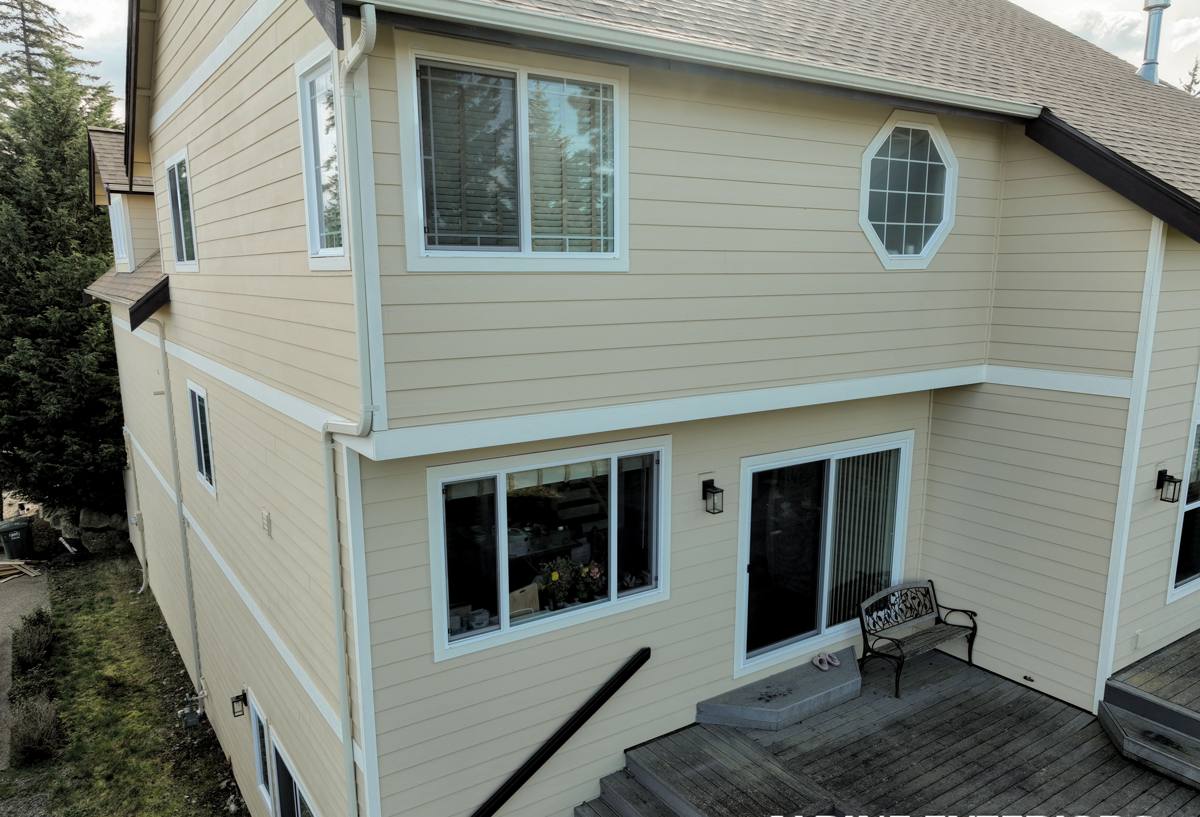
What Local Weather Actually Does to a Deck
Moss, Mildew, and Standing Moisture
Western Washington's moss season isn't a few weeks — it's most of the year in shaded, tree-covered lots, which describes a lot of properties in and around Barkley and Sudden Valley. Moss holds moisture against decking boards long after a storm has passed, and that constant dampness accelerates wood decay, degrades the surface of composite boards over time, and turns a deck surface slick and dangerous underfoot. Decks positioned under heavy canopy or on the shaded side of a house need drainage and material choices that account for this, not decking that assumes regular sun exposure to dry out between rains.
Driving Rain and Wind-Driven Moisture
Rain here doesn't always fall straight down. Wind off the lake and the wider Puget Sound region pushes rain sideways into ledger connections, railing posts, and any gap where water can get behind a board instead of running off it. A deck that's fine in a dry climate can develop hidden rot within a few seasons here if flashing and drainage details are skipped.
Marine Air and Corrosion
Whatcom County's proximity to saltwater means the air carries a mild salt content even well inland, and that air is corrosive to the wrong hardware. Fasteners, brackets, and connectors that aren't rated for coastal or marine exposure can start corroding years before the rest of the structure shows any wear — and a corroded fastener at a structural connection is a safety issue, not just a cosmetic one.
Choosing the Right Decking Material
There's no single "best" decking material — there's a best material for your site, your budget, and how much upkeep you actually want to do. Here's how the common options compare under this area's conditions:
| Material | Moisture & Moss Behavior | Maintenance | Relative Lifespan |
|---|---|---|---|
| Pressure-treated lumber | Absorbs moisture; needs to dry between rains or moss and mildew take hold quickly | Annual cleaning and periodic staining/sealing | Moderate, shorter if under-maintained |
| Cedar | Naturally rot-resistant but still surface-absorbent; shows mildew staining in shaded spots | Regular cleaning, refinishing every couple of years | Moderate to long with upkeep |
| Traditional composite | Moisture-resistant core but can hold surface moss if not cleaned | Low — periodic washing | Long |
| Capped composite / PVC | Best resistance to moisture intrusion and moss staining of the common options | Lowest — occasional washing | Longest |
We'll walk you through the honest trade-offs for your specific lot rather than pushing one product. A heavily shaded, damp site changes the calculation compared to a sunnier, more open one — and your budget and how you plan to use the deck matter just as much as the material spec sheet.
What a Correctly Built Deck Actually Includes
Footings Sized for Wet Ground
Saturated soil common to this area behaves differently than dry soil, and footings need to be sized and set to account for that rather than built to a bare-minimum spec. Undersized or shallow footings are one of the more common shortcuts we find when repairing older decks in this area.
Ledger Flashing — the Most Common Failure Point
Where a deck attaches to the house is where we find the most rot, almost without exception, because it's the connection most exposed to wind-driven rain and the easiest place to skip proper flashing. Correct ledger flashing directs water away from the house framing instead of trapping it against it — it's not optional in this climate, no matter how the deck is otherwise built.
Fasteners and Hardware Rated for This Climate
We use fasteners and structural connectors rated for the moisture and mild salt exposure typical of this part of Whatcom County, not general-purpose hardware that looks the same on the shelf but corrodes faster in practice.
Drainage and Airflow Underneath
A deck built low to the ground or over a slope needs a path for water to get out from underneath it, plus enough airflow to let framing dry between rain events. Decks that trap moisture underneath rot from the joists up, often well before the visible decking shows any problem.
Stairs and Railings
Stairs and railings need to meet current building code for rise, run, and guard height, and in a wet climate the stair surface itself needs a material and finish that stays reasonably grippy when damp — a detail that's easy to overlook when picking materials for looks alone.
Our Process for a Barkley Deck Project
- Site visit and consultation — we look at slope, drainage, tree cover, sun exposure, and how you actually plan to use the space.
- Design and material selection — honest recommendations based on your site and budget, not a one-size pitch.
- Permitting — we handle the Whatcom County permitting steps that apply to your project so you don't have to navigate that alone.
- Construction — framing, ledger flashing, footings, and decking installed to hold up to local conditions, not just pass a minimum inspection.
- Final walkthrough — we go over the finished deck and basic care with you before we consider the job done.
Cost Factors for a Custom Deck in This Area
We avoid quoting numbers that don't reflect your actual project, but these are the factors that move a deck's cost up or down the most:
| Factor | Effect on Cost |
|---|---|
| Size and footprint | Straightforward — more square footage, more material and labor |
| Height and multiple levels | Taller or multi-level decks need more framing, footings, and railing, raising cost |
| Site access and slope | Difficult access or a steep, wooded lot adds labor time |
| Decking material | Pressure-treated is the lowest upfront cost; capped composite/PVC costs more but needs less upkeep over time |
| Railing and stair complexity | Custom railing designs and multiple stair runs add cost beyond basic construction |
| Engineering or permit requirements | Larger or elevated decks may need engineered plans, which adds a design cost |
Maintenance That Actually Matters in a Long Moss Season
A well-built deck still needs some basic upkeep to get its full lifespan out of this climate. Most of it is simple and doesn't take long if you stay ahead of it:
- Sweep leaves and needles off regularly — trapped organic debris is what moss and mildew feed on
- Wash the deck surface at least once or twice a year to remove moss and algae before it embeds
- Check that gutters and downspouts direct water away from the deck structure, not onto or under it
- Inspect the ledger flashing and post bases annually for any sign of water intrusion or corrosion
- Re-stain or reseal wood decking on a regular schedule rather than waiting until it visibly needs it
- Trim back overhanging branches and nearby vegetation to improve airflow and sun exposure
- Watch for soft spots, loose fasteners, or corrosion — small issues are far cheaper to fix early
Why a Crew That Already Works Barkley and Sudden Valley Matters
A contractor who works this specific area regularly already knows how sloped, tree-covered lots near Lake Whatcom drain, which framing and hardware choices actually hold up to the moss season and marine air here, and how the county permitting process works for typical residential deck projects. If your property is part of a homeowners association with its own design guidelines, we can work within those requirements as part of the design process rather than treating them as an afterthought. That local familiarity translates into fewer surprises during construction and a deck that's built for the conditions it will actually face, not just conditions on a generic spec sheet.
If you're planning a new deck or replacing one that's showing its age, we're happy to take a look and talk through honest options for your property. Reach out for a free, no-pressure estimate using the form below.