 Sudden Valley Roofing
 Roof Repair for Bellingham Homes, Done by a Crew That Already Works This Area
Bellingham roofs don't fail the way roofs fail in drier parts of the country. Out here, the damage is slow and cumulative — a lifted shingle that lets in wind-driven rain, a moss mat that holds moisture against the roof deck for months at a stretch, a flashing detail that was fine when it was installed but has since been worked loose by years of marine wind. Sudden Valley Roofing Co is based right here in Whatcom County, and Bellingham is part of our regular route, not a special trip. That matters for roof repair specifically, because so much of doing it correctly depends on recognizing patterns you only see by working the same neighborhoods, the same exposures, and the same roof ages year after year.
This page is about roof repair — not full replacement — for homes in and around Bellingham. If your roof is past the point where repair makes sense, we'll tell you that plainly. But a large share of the calls we get are roofs with 10, 15, even 20 years of useful life left, dragged down by a handful of fixable problems that were left alone too long.
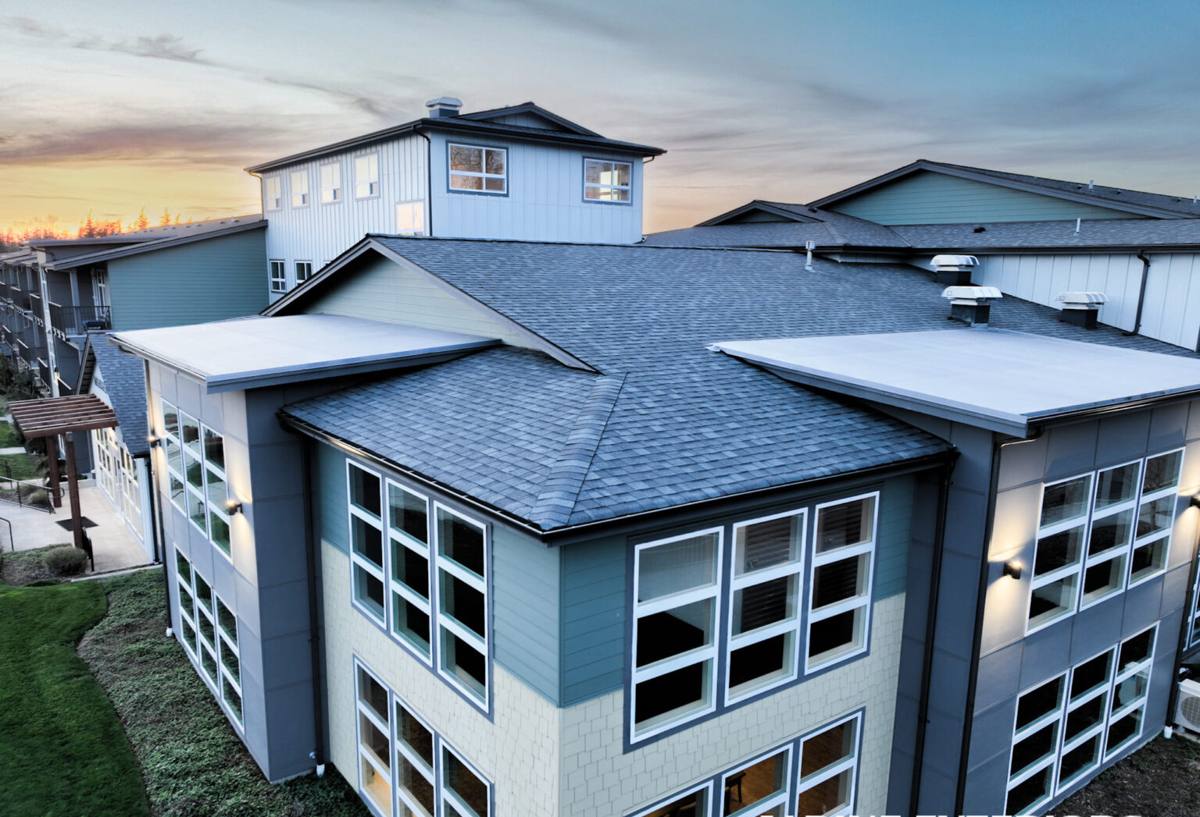
What Bellingham's Climate Does to a Roof
Salt Air and Metal Fatigue
Homes closer to the water pick up a steady dose of salt-laden air, and that air is hard on every exposed metal component on a roof — flashing, drip edge, fasteners, vent boots with metal collars. Salt exposure speeds up corrosion, and corroded flashing is one of the most common sources of a slow, hard-to-trace leak. It rarely fails all at once; it thins out over years until a hard rain finally finds the gap.
Driving Rain, Not Just Rain
Bellingham doesn't get the heaviest rainfall totals in the state, but wind off the bay and the Salish Sea regularly pushes rain sideways instead of straight down. A roof detail that would shed water fine in a calm, vertical rain can leak under driving rain if laps, seals, or flashing overlaps are even slightly short. Repair work here has to account for rain moving sideways and even slightly uphill under shingle edges, not just rain falling down.
The Long Moss Season
Shaded, north-facing, and tree-covered roof sections in this part of Whatcom County can stay damp for most of the year, and that's exactly the condition moss needs to take hold. Moss does more than look bad — it holds water against the roofing material, works its rhizoids into shingle granules and seams, and lifts shingle tabs as it grows, creating small gaps that let wind-driven rain underneath. A roof with heavy moss almost always has moisture-related damage underneath it, even if the leak hasn't shown up inside the house yet.
Freeze-Thaw at the Margins
Whatcom County doesn't get deep freezes often, but it gets enough freeze-thaw cycling in a typical winter to matter. Water that's worked into a crack, a fastener hole, or a compromised seal can freeze, expand, and widen the damage — then thaw and let more water in next time. Small problems left alone tend to get bigger every winter, not stay the same size.
What a Correct Roof Repair Actually Involves
A lot of "roof repair" in this trade is really just patching the visible symptom — sealing a spot that's dripping, nailing down a lifted shingle — without addressing why it happened. That approach tends to buy a homeowner one more season, not a real fix. Correct repair work follows a sequence:
1. Find the Actual Source, Not Just the Stain
Water travels. A stain on a ceiling is very often several feet away from where water is actually entering the roof — it ran along a rafter, a sheathing seam, or the underlayment before it found a path through the ceiling material. Chasing the stain instead of the entry point is one of the most common reasons a "repaired" leak comes back.
2. Check What's Under the Surface
Once we're at the source, we check the roof deck and underlayment condition around it, not just the shingles or panels on top. If water has been getting in for a while, the plywood or OSB underneath can be softened or delaminated, and a repair that just replaces the top layer without addressing a compromised deck won't hold.
3. Match the Repair to the Roofing System
Asphalt shingle, cedar shake, and metal roofing all fail differently and repair differently. Shingle repair is about proper lapping, sealant placement, and matching granule wear so a patch doesn't stand out or create a new water path. Flashing repair — at valleys, chimneys, skylights, and wall intersections — is often more about the metal work than anything else, since flashing failure is one of the single biggest causes of roof leaks in this region.
4. Address the Moss, Not Just the Leak
If moss contributed to the problem, removing it and treating the surface is part of the repair, not an optional add-on. We remove moss carefully — aggressive pressure washing can strip granules and shorten the life of the roofing material — and address the shade or drainage conditions that let it establish in the first place where that's practical.
Our Bellingham Roof Repair Process
- Inspection first. We look at the whole roof, not just the reported problem spot — a leak in one area is sometimes a symptom of a broader issue elsewhere on the same roof.
- Honest scope. We tell you plainly whether this is a repair, a partial re-roof of one section, or a job where repair isn't the responsible recommendation anymore.
- Written estimate before work starts. No verbal-only quotes, no surprise change orders for anything foreseeable from the inspection.
- Matched materials. We match shingle type, color, and profile as closely as the market allows, since a mismatched patch is its own kind of cosmetic problem.
- Photos of what we found. Before covering anything back up, we document deck condition, flashing condition, and the actual failure point so you know what you paid to have fixed.
- Cleanup that includes the ground, not just the roof. Nails and debris in the yard or driveway are a completed job's last, most avoidable mistake.
Repairable vs. Replace: How We Tell the Difference
| Condition Found | Usually Repairable | Usually Needs Replacement |
|---|---|---|
| Isolated flashing failure (chimney, valley, skylight) | Yes — flashing rework in that area | Only if deck rot has spread beyond the local area |
| A few lifted or cracked shingles from wind | Yes — spot replacement | Not typically, unless the whole field is brittle with age |
| Heavy moss on one slope, roof otherwise sound | Yes — moss removal, treatment, spot repair | Only if deck moisture damage is found underneath |
| Granule loss across most of the roof, shingles curling | Rarely — patches won't match or hold long | Usually — the roofing material itself is at end of life |
| Soft or spongy deck felt in multiple areas | No, not as a standalone repair | Yes — deck damage this widespread points to a systemic issue |
Cost Factors Homeowners Actually Ask About
Roof repair pricing depends on more than square footage. The factors that move the number most:
- Roof pitch and access. A steep or hard-to-reach section takes longer and needs more safety setup than a low-slope, easily accessible one.
- How the damage was discovered. A leak found early, before it spreads into the deck, is a smaller job than one that's been dripping for a season or two.
- Material availability. Matching an older shingle color or a discontinued profile can take longer to source than a common current product.
- Number of penetrations involved. Chimneys, skylights, plumbing vents, and roof-to-wall intersections each add flashing detail and labor.
- Extent of moss and organic buildup. Heavy moss adds a removal and treatment step before the actual repair can begin.
We don't quote roof repair over the phone sight-unseen beyond a rough range, because two roofs with the same symptom can need very different scopes of work once we're actually up there.
Why a Crew That Already Works Bellingham Matters Here
Roof repair is a trade where local pattern recognition is worth a lot. A crew that regularly works Bellingham and the surrounding Whatcom County communities has already seen how salt air ages flashing on homes of a given age and exposure, which roof sections in this area tend to hold moss longest, and which original construction details from different decades tend to need attention first. That's not something a crew unfamiliar with the area can fully substitute with general roofing experience alone — it comes from doing the work here, repeatedly, and following up on it.
Being based in Sudden Valley also means a shorter response time for follow-up if something needs a second look after a repair, and it means we're not treating a Bellingham roof repair as a one-off out-of-town job squeezed between unrelated work elsewhere.
Signs a Bellingham Roof Needs Repair Attention Now
- Visible moss growth, especially on shaded or north-facing slopes
- Granules collecting in gutters or at downspout outlets
- Shingles that look cupped, curled, or lifted at the edges
- Any ceiling stain, even a small one, especially after a windy rainstorm
- Visible daylight or gaps around chimney, skylight, or vent flashing from the attic side
- Sagging or soft-feeling areas anywhere on the roof surface
None of these by themselves mean the roof needs full replacement. But each one is worth a look before it turns into a bigger, more expensive repair — or a full deck replacement — down the line.
If you're dealing with a leak, moss buildup, or storm damage on a Bellingham roof, we're happy to take a look and give you a straight answer about what it actually needs. Request a free, no-pressure estimate using the form below — there's no obligation, and we'll tell you honestly if repair is the right call or if you should be thinking about something bigger.