 Sudden Valley Roofing
 Board & Batten Siding Built for Lake Whatcom's Conditions
Lake Whatcom sits in a tough spot for exterior siding. Homes here take on lake-effect moisture, driving rain off the water, long stretches of shade under conifers, and a moss season that can run eight months out of the year. Board and batten siding — with its bold vertical lines and deep shadow reveal — is one of the most requested looks in this part of Whatcom County, and it happens to be a style that fiber cement handles exceptionally well. But "board and batten" is a profile, not a material, and the material choice is what decides whether this siding looks sharp for thirty years or starts failing at the seams in five.
We install board and batten in James Hardie fiber cement only. On a lake-adjacent property with this much sustained moisture exposure, we don't think any other substrate gives you a fair shake long-term, and we'll explain exactly why below.
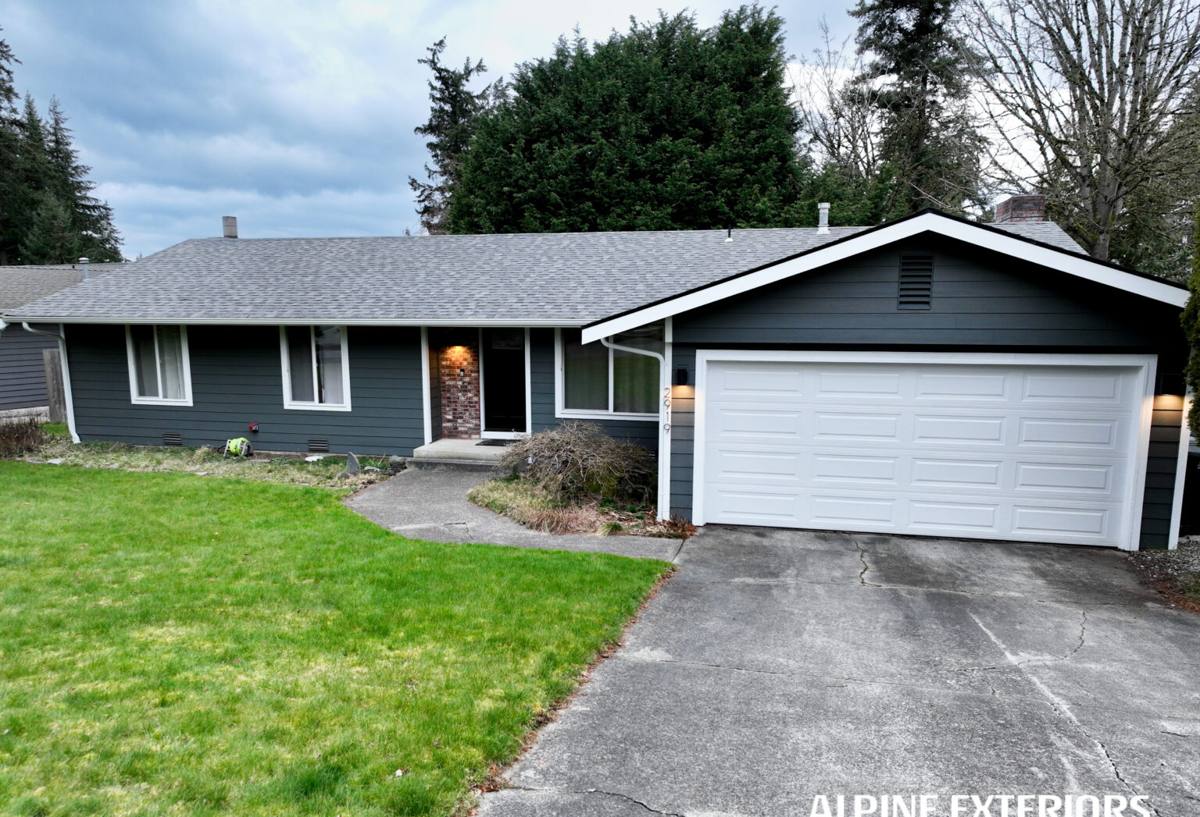
What Lake Whatcom's Climate Does to Vertical Siding
Moisture that doesn't let up
Board and batten relies on battens — narrow strips fastened over the seams between wider boards — to shed water and hide joints. That seam-and-batten geometry is exactly where wood-based products struggle near the lake. Wood fibers wick moisture along the grain, and once water gets behind a batten or into a cut edge, it doesn't dry out quickly in our shaded, humid microclimate. Repeated wet-dry cycling swells the fibers, and that's when boards cup, battens pop their fasteners, and paint lines start to fail.
Moss, algae, and northern exposure
Homes tucked under tree cover around the lake, or on north-facing walls that rarely see direct sun, deal with moss and algae growth most of the year. On a porous or lightly primed surface, that green film isn't just cosmetic — it holds moisture against the siding face and accelerates whatever degradation is already happening underneath. Fiber cement doesn't feed mold and moss the way wood-based material can, which matters a lot when a wall gets sun for two hours a day in December.
Wind-driven rain off open water
Lake Whatcom isn't ocean-front, but open water still pushes wind-driven rain against lake-facing elevations with more force than a sheltered inland lot. That means your batten laps, corner details, and butt joints need to be installed tight and correctly flashed — sloppy work that might survive on a sheltered street in Bellingham will get found out fast on a lake-facing wall.
Why We Only Install Board & Batten in James Hardie Fiber Cement
We get asked regularly about primed wood board and batten, and occasionally about vinyl board and batten panels. Both have a place in the market. Neither is what we put on Lake Whatcom homes, and here's the honest reasoning:
| Material | What it gets right | Why it's a problem here specifically |
|---|---|---|
| Primed wood / spruce | Classic look, easy to cut and fit on site | End grain and batten seams absorb moisture; repaints needed every few years; rot risk climbs fast in shaded, damp wall sections near the lake |
| Vinyl board & batten panels | Low upfront cost, no repainting | Panels expand/contract with temperature swings, can bow or loosen over time, and don't hold up to impact or UV fade the way a factory-baked finish does |
| James Hardie fiber cement | Non-combustible, dimensionally stable, factory ColorPlus finish | Higher install skill required, but the product itself doesn't feed moss and doesn't wick water along seams |
James Hardie's board and batten (HardiePanel with HardieTrim battens, or true board and batten profiles depending on the look you want) is fiber cement — sand, cement, and cellulose fiber, engineered to hold its shape in wet, humid climates without swelling or rotting. It's also non-combustible, which matters more each year as regional wildfire smoke and dry-season risk becomes part of the conversation even on the wetter west side of the Cascades. For Lake Whatcom specifically, we spec Hardie's HZ10 formulation, engineered for the Pacific Northwest's wet climate zone rather than a generic national product.
What a Correct Board & Batten Install Actually Involves
The style is simple to look at; the installation is where quality separates fast. A correct job on a lake property includes:
- Proper water-resistive barrier and rainscreen/furring behind the siding, so any incidental moisture has somewhere to drain and dry rather than sitting against the substrate
- Correct batten spacing and fastening per Hardie's engineering specs — not "close enough," since over-driven or under-driven fasteners are one of the top causes of premature siding failure
- Factory-cut, factory-sealed panel edges wherever possible, minimizing field cuts that expose raw fiber cement to weather
- Flashing and kickout details at every roof-wall intersection, window head, and deck ledger — the places where Lake Whatcom's driving rain actually finds its way in
- Caulking only where Hardie's install guide calls for it, not as a substitute for proper flashing and lap sequencing
- Factory-applied ColorPlus finish, which eliminates the field-painting step that's the weakest link in most wood board and batten jobs
Skip any one of these and the siding may look right for a season or two before the shortcuts show up as staining, streaking, or soft spots at the bottom edge of boards.
Our Process for a Lake Whatcom Board & Batten Project
1. On-site assessment
We walk the property and look specifically at lake-facing and shaded elevations, existing moisture damage, moss buildup, and how water currently moves off the roof and around the foundation. This tells us where rainscreen detailing and flashing need extra attention.
2. Design and product selection
We help you choose panel width, batten spacing, and ColorPlus color — board and batten reads differently at wide spacing versus tight spacing, and we'll show you what fits the home's proportions before anything is ordered.
3. Tear-off and prep
Old siding comes off, sheathing is inspected for hidden rot (common on lake-adjacent homes with a history of moisture intrusion), and any damaged material is repaired before a single new panel goes up.
4. Installation to Hardie spec
Installed per manufacturer fastening schedules and local code, with full flashing at penetrations and transitions.
5. Final walkthrough
We review the finished job with you, including basic maintenance expectations for the moss season ahead.
Ongoing Care in a Moss-Heavy, Shaded Environment
Fiber cement dramatically reduces maintenance compared to wood, but no siding on a shaded Lake Whatcom lot is entirely maintenance-free. A simple annual routine keeps board and batten looking sharp:
- Rinse shaded and north-facing walls in late summer or early fall, before the wet season sets in, to knock back early moss and algae growth
- Keep gutters clear so overflow doesn't run directly down wall faces near lake-facing corners
- Trim back vegetation that keeps a wall in permanent shade — sun exposure is the cheapest moss prevention there is
- Check caulking at trim and penetrations every couple of years and have any gaps addressed before the rains build back up
Cost Factors for Board & Batten in This Area
| Factor | Why it moves the price |
|---|---|
| Existing sheathing condition | Rot repair on lake-exposed walls adds labor before new siding can go on |
| Batten spacing and panel width | Tighter batten spacing means more material and more fastening labor |
| Wall height and roofline complexity | Multi-story lake-facing elevations and complex rooflines add scaffolding and flashing detail |
| Rainscreen/furring addition | Recommended in this climate; adds material and labor but pays off in drainage performance |
| ColorPlus finish selection | Standard color range vs. premium finishes affects per-panel cost |
We give straightforward, itemized quotes so you can see exactly what you're paying for — no vague lump sums.
Why a Crew That Already Works Lake Whatcom Matters
Board and batten forgives almost nothing in the details — it's a style built on clean, consistent lines, and every batten seam is a potential water entry point if it's not done right. A crew that already works lake-adjacent Whatcom County properties has seen how wind-driven rain behaves on this specific terrain, knows which elevations need extra flashing attention, and isn't guessing at how much moss pressure a shaded north wall will see over a Pacific Northwest winter. That local pattern recognition is worth more than a generic install crew's national experience when your home sits this close to the water.
If you're considering board and batten siding for a home in the Lake Whatcom area, we're happy to walk the property, talk through the design options, and give you a straightforward, no-pressure estimate using James Hardie fiber cement — the only material we stand behind for this climate. Reach out through the form below to get started.