 Sudden Valley Roofing
 Deck Repair in Columbia: Built for Whatcom County Weather
Homes in the Columbia area of Sudden Valley sit in one of the wetter, greener corners of Whatcom County, and that shows up fast in an unmaintained deck. Salt-tinged marine air drifting in off the water, months of driving rain, and a moss season that can start in October and not really let go until May all work against wood, fasteners, and even composite decking if it isn't detailed correctly. We're not talking about occasional storms here — it's the steady, low-grade exposure that does the damage: boards that never fully dry between rains, ledger connections that trap moisture against the house, and north-facing sections that stay shaded and damp long after the rest of the deck has dried out.
A deck built or repaired without that climate in mind might look fine for a season or two before problems show up — soft spots, black-green moss film, rust bleeding from fasteners, or a railing that's gone spongy at the post base. Correct deck repair in this area isn't just about swapping bad boards; it's about addressing why those boards failed in the first place so the same spot doesn't fail again in two or three years.
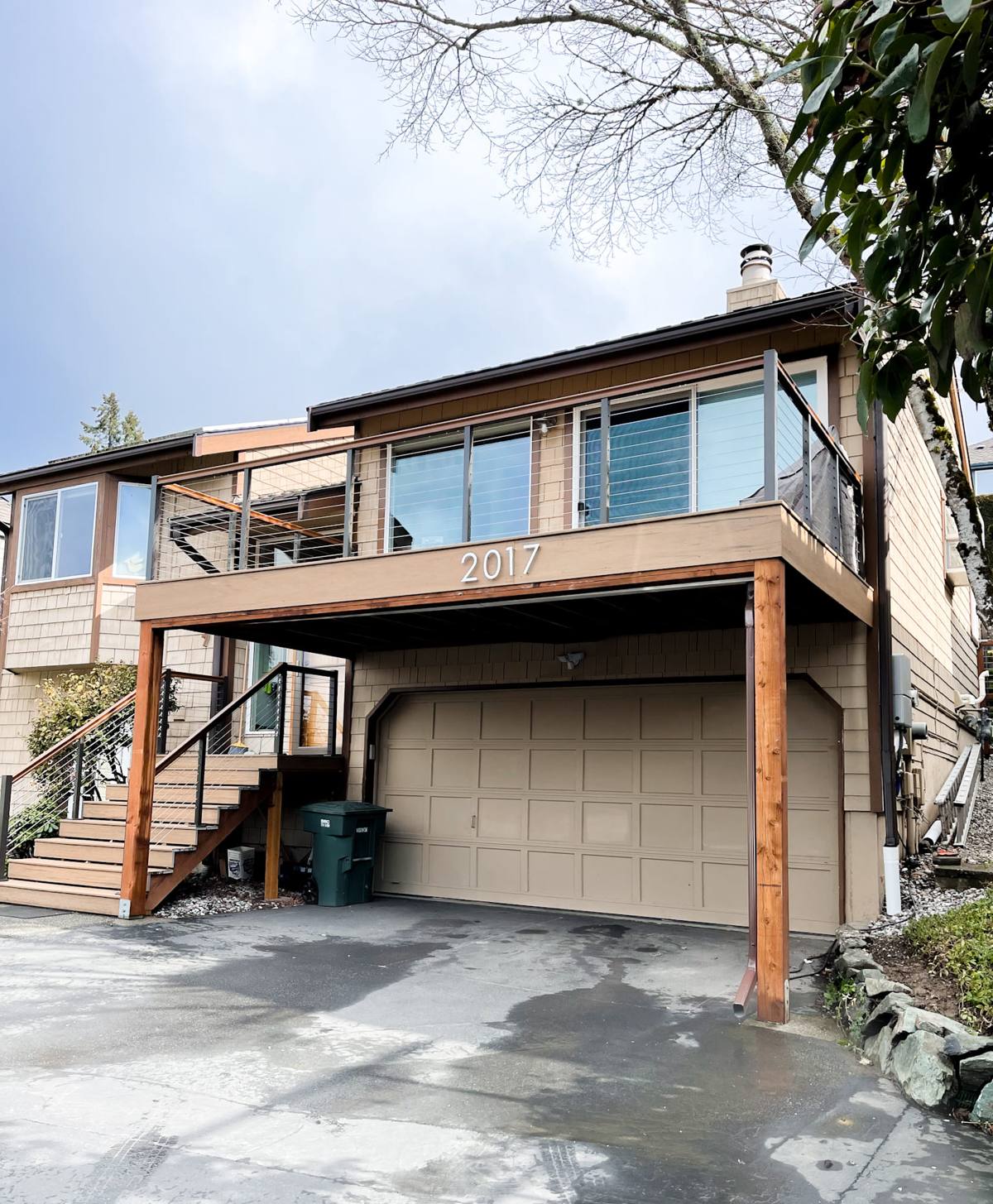
Signs Your Columbia Deck Needs Repair
Most deck problems we find in this neighborhood start small and get ignored because the deck still "feels" usable. By the time a board visibly sags, the framing underneath has often been compromised for a while. Here's what we tell homeowners to check before it becomes a bigger job:
- Soft, spongy, or bouncy spots when you walk across the deck, especially near the house or stairs
- Persistent moss, algae, or black staining that comes back within weeks of cleaning
- Rust streaks below screws, nails, or metal hardware
- Gaps opening up where the deck meets the house (ledger board separation)
- Railings or posts that wiggle, lean, or feel loose when pushed
- Visible rot, splintering, or discoloration at board ends and around fastener holes
- Stair stringers that feel uneven or have started to crack
- Standing water that doesn't drain within an hour or two after rain stops
Any one of these on its own might be a simple fix. Two or three together usually mean moisture has been getting into the structure for a while and it's worth a full inspection rather than a spot patch.
What a Correct Deck Repair Actually Involves
Structural Framing and the Ledger Board
The ledger board — where the deck attaches to the house — is the single most important connection on the whole structure, and it's also the one most likely to trap water against the framing in a climate like this. A proper repair checks the flashing behind the ledger, the condition of the lag bolts or structural screws, and whether the joists themselves have softened where they meet the house. Cosmetic fixes that skip this step are the reason decks that "look repaired" fail again within a couple of years.
Decking Boards and Fasteners
Individual board replacement only works if the fasteners going back in are rated for the moisture and, where relevant, the marine air exposure this area gets. Standard hardware-store screws that aren't corrosion-resistant will bleed rust and loosen faster here than in a drier inland climate. We match fastener type to the board material rather than defaulting to whatever's fastest.
Railings and Guardrails
Loose railings are a safety issue, not just a cosmetic one. Repair means resetting or replacing the post-to-frame connection, not just tightening a visible screw, since the real weakness is usually below the surface where it's been wicking moisture.
Flashing and Moisture Management
Good deck repair pays as much attention to where water goes as to what the deck is made of. That means correct flashing at the ledger, gapping between boards for drainage and airflow, and grading or drainage paths that move water away from support posts instead of pooling around them.
Repair or Replace? Cost Factors to Weigh
Not every deck problem calls for full replacement, and not every repair is worth doing instead of rebuilding. The honest answer depends on how much of the structure — versus just the surface — has been affected.
| Factor | Favors Repair | Favors Replacement |
|---|---|---|
| Framing condition | Solid joists and ledger, isolated soft spots | Widespread rot or soft framing throughout |
| Age of deck | Under 10-15 years, built to a reasonable standard | Original construction quality was already poor |
| Extent of damage | A few boards, one railing section, one stair | Damage in multiple structural zones |
| Moisture exposure | Sun-exposed areas that dry between rains | Chronically shaded, damp, poor-drainage areas |
| Budget goals | Extend usable life a number of years affordably | Want long-term, lower-maintenance solution |
We'll tell you plainly if a repair is realistic or if you'd be spending money to patch a deck that's going to need replacing again soon anyway. That call should be based on what we find when we get underneath the deck, not on which service is more profitable for us.
Our Process for Columbia Deck Repairs
Inspection and Diagnosis
We start below the decking, not on top of it — checking joists, the ledger connection, post bases, and any spot where water collects or has clearly been sitting. Surface damage tells us where to look; it rarely tells us the whole story.
Scope and Estimate
You get a clear, written breakdown of what needs to be repaired, what materials we'd use, and a realistic cost range before any work starts — no vague verbal estimates that change once the job is underway.
The Repair Work
We remove and replace only what's actually compromised, correct any drainage or flashing issues we found, and use fasteners and hardware suited to this climate rather than whatever's cheapest.
Final Walkthrough
Before we consider the job done, we walk the deck with you, point out what was fixed and why, and flag anything worth keeping an eye on going forward.
Decking Material Trade-Offs for This Climate
Homeowners in Columbia often ask whether to repair with the same wood species that's there now or switch to composite decking during the repair. Both have a place, and the right call depends on your goals, not on one material being universally "better."
Wood — typically cedar or pressure-treated fir — is easier to spot-repair, blends with existing decking, and costs less upfront. Its trade-off is maintenance: in a climate with this much rain and moss pressure, wood needs regular cleaning, sealing, and re-staining to keep moisture from working into the grain, especially in shaded sections.
Composite decking resists moss and rot better and needs less annual upkeep, but it's a different repair conversation — boards typically need to be replaced in matching sections rather than patched, and it carries a higher material cost. It's also more sensitive to correct installation: gapping, ventilation underneath, and fastener choice all matter more with composite than with solid wood, because mistakes show up as warping or moisture trapped beneath the board rather than obvious rot you can see and cut out.
We'll walk you through both honestly for your specific deck rather than pushing whichever material is easier for us to install.
Why Hire a Crew That Already Works in Columbia
A deck repair crew that's worked other properties in this part of Sudden Valley already knows which framing details tend to fail first in homes built to older standards, how the tree cover and shade patterns in this neighborhood affect moss and drying time, and what drainage issues are common on sloped lots near the lake. That local pattern recognition means less time spent diagnosing and more time spent fixing the actual problem.
If your property falls under a community association with exterior or architectural guidelines, we can also work within those requirements rather than treating them as an afterthought once materials are already ordered. And because we're not driving in from out of the area, warranty callbacks and follow-up questions don't involve waiting on a crew that's an hour away.
Keeping Your Deck in Shape After the Repair
A repaired deck still needs seasonal attention in this climate — the same conditions that caused the original damage don't go away once the repair is finished.
- Sweep debris and standing leaves off the deck regularly through fall
- Clean moss and algae buildup before it stains or gets slick, especially on shaded boards
- Check fastener heads and railing connections once a year for early rust or looseness
- Re-seal or re-stain wood decking on the manufacturer's recommended schedule, not just when it looks faded
- Keep gutters and downspouts clear so overflow isn't draining directly onto the deck
- Confirm gaps between boards haven't closed up from swelling, which blocks drainage and airflow
If you're seeing soft spots, moss that won't stay gone, or a railing that doesn't feel solid, it's worth having it looked at before this winter's rain adds another season of exposure. We're happy to come out, take an honest look at your Columbia-area deck, and give you a straightforward, no-pressure estimate for what it would take to fix it right — just fill out the form below.