 Sudden Valley Roofing
 Composite Decking Built for Happy Valley's Weather
Happy Valley sits in one of the wetter, greener pockets of Sudden Valley, and that's exactly why so many homeowners here are moving away from wood decking. Between the salt-tinged air moving in off the coast, driving rain that can last for days at a stretch, and a moss season that seems to run longer every year, a deck in this neighborhood works harder than a deck almost anywhere else in the state. Composite decking was designed for conditions like these — it doesn't absorb water the way wood does, it doesn't need to be stripped and re-stained every couple of summers, and it holds up to the freeze-thaw cycles and shade cover that are common on Happy Valley lots.
This page covers what actually matters when you're putting composite decking on a home in this specific part of Whatcom County: what the climate does to a deck over time, what a correctly built substructure looks like, how we handle the job from first visit to final walkthrough, and what it actually costs to do it right.
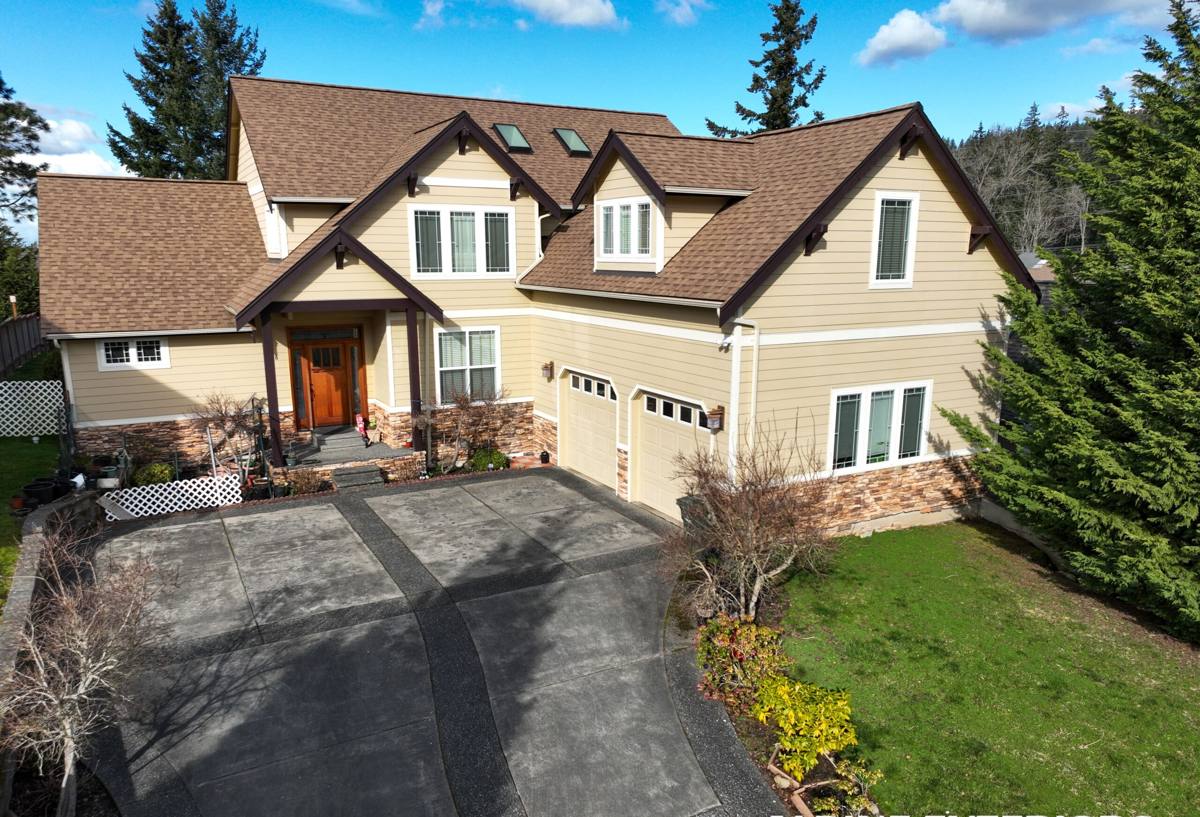
What Whatcom County Weather Does to a Deck
Before talking about materials, it helps to understand what a deck in Happy Valley is actually up against year-round.
Moisture and Standing Water
Whatcom County gets a lot of rain, and Happy Valley's tree cover and terrain mean water doesn't always dry off a deck surface as fast as it would in a more open, sunny yard. Wood decking soaks that moisture into the grain, which is what eventually causes warping, cupping, and soft spots — usually starting at the fastener holes and board ends first. Composite boards don't absorb water into their structure the same way, which is the single biggest reason they outlast wood in a climate like this.
Moss, Algae, and Shade
A long moss season isn't just cosmetic. Moss and algae hold moisture against a surface, and on wood decking that trapped moisture accelerates rot underneath the growth you can see. On composite, moss and algae can still take hold on the surface — no exterior decking material is fully immune to organic growth in a shaded, damp yard — but because the board itself isn't absorbing water, growth stays a surface-level cleaning issue rather than a structural one.
Salt Air and Fasteners
Coastal-influenced air moving through Whatcom County carries salt content that accelerates corrosion on exposed metal. This matters more than most homeowners expect, because the fasteners, joist hangers, and hidden clips holding a deck together are often the first thing to fail — long before the decking itself shows its age. Composite decking systems are only as good as the hardware underneath them.
Sun Exposure and Temperature Swings
Even with plenty of overcast days, UV exposure adds up over a full season, and the swing between damp mornings and warmer afternoons causes materials to expand and contract. Composite decking is engineered to handle that movement with far less fading, splintering, or surface checking than wood.
Wood vs. Composite vs. PVC: An Honest Comparison
There's no single "best" decking material for every home — it depends on budget, how the deck will be used, and how much maintenance you actually want to do. Here's how the three main options compare for a climate like this one.
| Material | Moisture Performance | Maintenance | Typical Lifespan Here | Upfront Cost |
|---|---|---|---|---|
| Pressure-treated wood | Absorbs water; needs sealing to slow it | Annual cleaning, periodic staining/sealing | 10–15 years before major repairs | Lowest |
| Composite (capped) | Resists absorption; core is protected | Periodic washing, no staining or sealing | 25–30+ years | Mid-range |
| PVC / cellular decking | Fully non-absorbent | Lowest maintenance, occasional cleaning | 25–30+ years | Highest |
We install composite decking as our standard recommendation for most Happy Valley homes because it hits the practical middle ground: a real, lasting improvement over wood's moisture problems, without the premium price tag of full PVC systems. Where PVC makes sense — very shaded, very wet, ground-level applications — we'll say so plainly rather than upsell you into it.
What a Correct Composite Deck Installation Involves
Composite boards get most of the marketing attention, but the framing and details underneath them determine whether the deck actually performs for the next few decades. This is where a lot of shortcuts happen on lower-bid jobs.
Substructure and Framing
Composite decking is heavier than wood decking and behaves differently under load, so joist spacing has to match the manufacturer's engineering specs — not the old rules of thumb used for wood. We use joists and beams treated or protected for ground contact where relevant, and we check that framing is square and level before a single deck board goes down, because composite won't hide a crooked substructure the way wood sometimes can.
Drainage and Airflow Underneath
Given how much rain this area sees, what happens under the deck matters as much as what happens on top of it. Proper grading away from the house, gaps for airflow, and keeping vegetation from crowding the underside all reduce the trapped moisture that leads to mold, mildew smell, and premature hardware corrosion.
Fasteners and Board Spacing
We use fastener systems rated for the specific composite product being installed — usually hidden clip systems that also allow for the board's natural expansion and contraction. Board gapping is adjusted for the temperature and humidity on install day, since composite that's fastened too tight in cool, damp weather can buckle once it warms up.
Railings, Stairs, and Fascia
Railing posts need solid blocking and correct attachment to the framing — not just to the decking surface — to meet code and hold up to real-world use. We match fascia board and railing choices to the decking line being installed so the whole structure ages evenly instead of one component outlasting another.
How We Approach a Happy Valley Deck Project
- Site visit and assessment. We look at drainage, sun/shade exposure, existing structure condition (if replacing a deck), and how the space will actually be used.
- Design and material selection. We walk through board tiers, colors, and railing options based on your budget and the site conditions we just assessed.
- Written estimate. A clear scope and price before any work starts — no surprise add-ons for things we should have caught during the site visit.
- Permitting. Deck work often requires a permit depending on size, height, and attachment to the home; we handle that process rather than leaving it on you.
- Demolition (if replacing). Old decking and, if needed, damaged framing is removed and hauled off.
- Framing and structural work. Substructure is built or repaired to current code and to the composite manufacturer's span requirements.
- Decking, railing, and finish work installation. Boards, railings, fascia, and stairs go in per manufacturer specs.
- Final walkthrough. We go over the finished deck with you, including basic care so it looks right for years, not just for the first season.
Choosing the Right Composite Board for This Climate
Not all composite decking is built the same, and in a climate this wet, the difference between board tiers actually shows up over time.
Capped vs. Uncapped Composite
Capped composite has a protective outer shell bonded to the composite core, which is what actually resists moisture, staining, and fading. Uncapped composite is more affordable but relies on the composite blend itself to resist moisture, and in a high-rainfall, high-shade environment like Happy Valley, that difference in performance shows up faster than it would in a drier climate. For most homes here, we recommend capped boards as the practical standard.
Color and Surface Texture
Darker board colors show less dirt and moss staining between cleanings but run warmer underfoot in direct sun; lighter colors show organic staining more readily but stay cooler. Textured, wood-grain surfaces also tend to disguise the light surface film that moss and algae leave better than smooth, matte finishes.
Warranty Structure
Composite manufacturers typically separate fade/stain warranties from structural warranties, and terms vary by product tier. We'll walk you through what's actually covered on the specific board line you choose, rather than pointing you at marketing language.
What a Composite Deck Actually Costs
Every deck is different, but these are the main factors that move the price up or down. We'll give you real numbers for your project during the estimate — this is just to help you plan before that conversation.
| Cost Factor | Why It Matters |
|---|---|
| Deck size and shape | More square footage and cut angles mean more material and labor |
| Board tier (capped vs. uncapped) | Capped boards cost more upfront but need less long-term upkeep |
| Height off the ground | Taller decks need more substantial framing, footings, and often stairs and additional railing |
| Existing structure condition | Reusing sound framing costs less than a full rebuild from footings up |
| Railing style and materials | Composite, aluminum, and cable railing all price differently |
| Site access | Tight or sloped lots can add labor time for material handling and demolition removal |
Living With Composite Decking Here: Maintenance That Actually Matters
Composite decking is genuinely low-maintenance compared to wood, but "low-maintenance" isn't "no-maintenance," especially with this area's moss season. A short, consistent routine keeps a composite deck looking and performing like new for decades.
- Sweep debris — leaves, needles, seed pods — off the surface regularly so it doesn't trap moisture against the boards
- Wash the deck at least once or twice a year with a soft-bristle brush and a cleaner made for composite decking, focusing on shaded areas where moss and algae are most likely to form
- Avoid pressure washers on high settings, which can damage the board's cap layer and void some manufacturer warranties
- Keep gutters and downspouts clear so runoff isn't dumping extra water directly onto or under the deck
- Trim back overhanging branches and vegetation to improve airflow and sun exposure across the deck surface
- Check railing posts and fastener points annually for any looseness, especially after a hard winter
Why It Matters to Hire a Crew That Already Works in Happy Valley
A deck built to a generic spec sheet doesn't always hold up to the specific combination of shade, moisture, and salt-influenced air that this part of Whatcom County deals with. Crews who regularly work in Happy Valley and the broader Sudden Valley area already know which framing details, fastener grades, and board tiers actually hold up here versus which ones look fine on paper and struggle after a few wet winters. That local pattern recognition is hard to substitute for.
It's also worth checking early whether your property is part of a community or homeowners' association, since many properties in planned communities like this one have design guidelines that can affect decking material, color, or railing style. Sorting that out before material is ordered saves time and avoids rework.
If you're planning a new composite deck or replacing an aging wood deck in Happy Valley, we're happy to come take a look and walk you through your options with no pressure to commit. Fill out the form below for a free estimate.