 Sudden Valley Roofing
 Why Decks in Cordata Need to Be Built Differently
Cordata sits close enough to Bellingham Bay that homes here live with a steady mix of salt-tinged air, driving rain, and a moss season that can start in October and hang on well past April. That combination is hard on a deck. Salt air speeds up corrosion on fasteners and hardware. Driving rain finds its way into any gap in flashing or framing that isn't detailed correctly. And a long, damp moss season turns boards, stair treads, and railings slick and green faster than most homeowners expect. A deck built to a generic, one-size-fits-all spec might look fine for a year or two, but in this climate the shortcuts show up early — as soft spots at the ledger, rust streaks below fastener heads, or a green film that never fully dries out between storms.
None of that means a deck in Whatcom County has to be a maintenance headache. It means the framing, flashing, fastener choice, and decking material all have to be selected with this specific climate in mind, not just picked off a standard materials list.
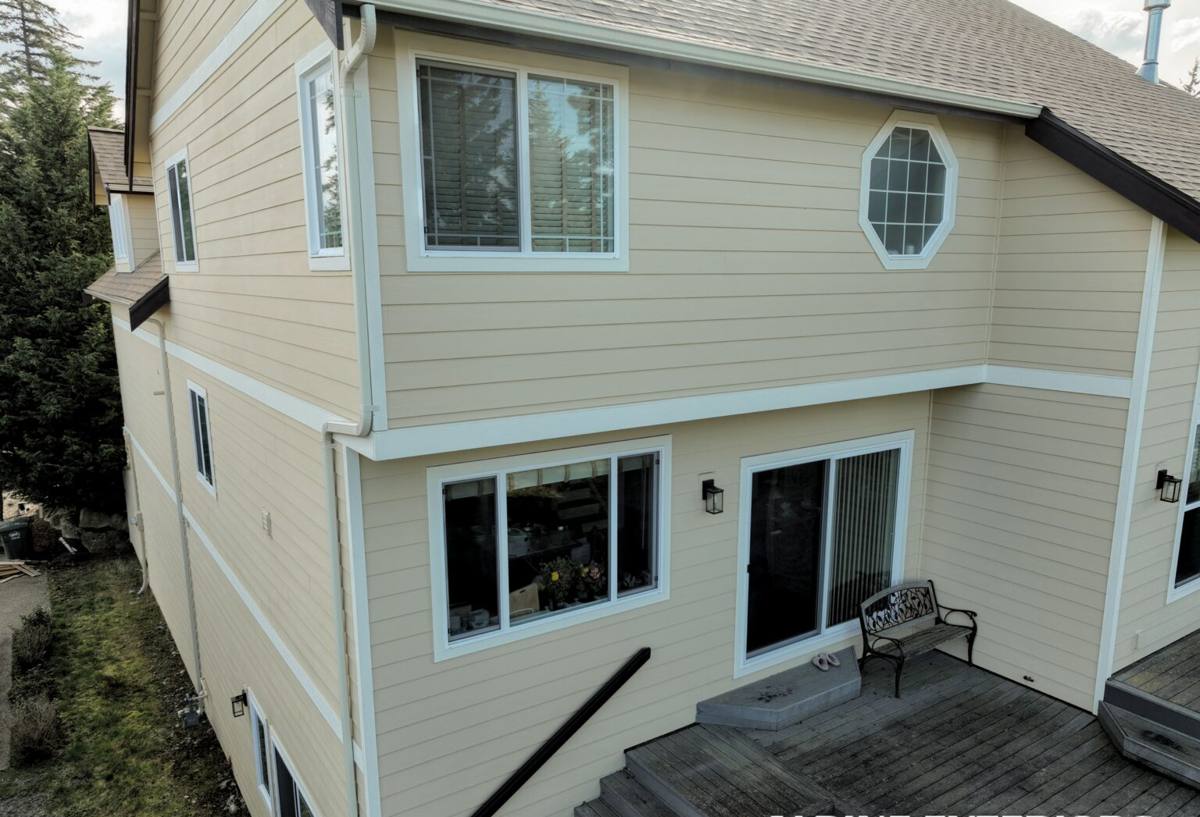
What a Correctly Built Deck Involves Here
Footings and Framing
Footings need to go below the local frost depth and rest on undisturbed, well-draining soil — not fill dirt or backfill that will settle over a wet winter. On sloped or uneven Cordata lots, that sometimes means individual footings set at different depths rather than a single uniform pour. Framing lumber should be rated for ground contact or exposure as appropriate, and every cut end, notch, or drilled hole needs to be resealed before it goes into service. An unsealed cut end is one of the fastest ways water gets into framing lumber, and in a climate that rarely gets a long dry stretch, that moisture doesn't have much chance to fully evaporate before the next rain.
Ledger Flashing and Ledger-Free Options
The ledger board — where the deck attaches to the house — is the single most common point of failure on decks in wet climates. It needs proper flashing that directs water away from the house wall and off the top of the ledger, with a gap or drainage plane behind it so moisture doesn't get trapped against the siding. On some homes, especially where siding condition or wall assembly makes ledger flashing tricky to do right, a free-standing deck design that doesn't attach to the house at all is the more honest long-term answer. We'll tell you when that's the better call rather than forcing a ledger connection just because it's the default.
Hardware and Fasteners
In an area with salt-tinged air, standard zinc-plated hardware corrodes faster than it should. Structural connectors, joist hangers, and fasteners should be stainless steel or hot-dip galvanized rated for the treatment used on the lumber and for coastal exposure. This is one of the areas where cutting corners doesn't show up for a few years — and then shows up all at once, as rust stains bleeding through decking or a hanger that's lost its holding strength.
Comparing Decking Materials for Whatcom County Weather
There's no single "right" decking material for every project — it depends on budget, how much upkeep you want to do, and how the deck is used. Here's how the common options stack up in a climate defined by long wet stretches and a real moss season.
| Material | Moisture & Moss Resistance | Upkeep | Typical Lifespan |
|---|---|---|---|
| Pressure-treated lumber | Good if sealed regularly; end grain and fastener holes are weak points | Annual cleaning and periodic sealing | 15-20 years with upkeep |
| Cedar | Naturally moisture- and rot-resistant, but surface still greys and can host moss without cleaning | Cleaning plus staining or oiling every 1-2 years | 15-25 years with upkeep |
| Capped composite | Excellent — the cap layer sheds moisture and resists algae and moss staining | Occasional washing, no sealing or staining | 25-30 years |
| Uncapped composite | Moderate — more prone to surface moisture absorption and mildew than capped boards | Regular cleaning, more upkeep than capped composite | 15-25 years |
| Tropical hardwoods | Very good natural density and rot resistance | Periodic oiling to maintain color and seal the surface | 25+ years |
For most Cordata homes, capped composite is the lowest-maintenance choice in this climate simply because it doesn't give moss and mildew a porous surface to grab onto. That said, plenty of homeowners are happy with a well-sealed cedar or pressure-treated deck as long as they're realistic about the yearly upkeep it takes to keep it looking and performing well through the wet season.
Design Decisions That Matter on Cordata Lots
Grading and Drainage Around the Deck
Where a deck sits relative to the grade of the yard matters as much as what it's built from. If the ground under and around a deck doesn't drain, moisture sits under the structure year-round and never gets the chance to dry out, even in a short summer break in the rain. We look at existing grade and drainage patterns before we design footing placement and skirting, and we'll flag it if a drainage fix needs to happen alongside the deck build rather than after.
Railings, Stairs, and Code Minimums
Any deck significantly above grade needs railings and, in most cases, code-minimum guard heights and baluster spacing. Stairs need consistent rise and run, and in a climate where treads get slick with rain and moss, tread material and surface texture are worth extra thought — a smooth board that looks great dry can be genuinely hazardous wet. We design stairs and landings with that in mind rather than treating slip resistance as an afterthought.
Our Process, Start to Finish
- An on-site visit where we look at the site, existing grade, sun and rain exposure, and how you actually plan to use the deck.
- A design and material conversation, including honest trade-offs between the options above for your budget and maintenance preferences.
- A written proposal covering scope, materials, and a realistic timeline before any work begins.
- Permit handling where required, including any structural details the local jurisdiction needs to see.
- Construction, with footings, framing, flashing, and fastener choices matched to this climate at every step — not just at the parts that show.
- A final walkthrough where we go over the finished deck and what upkeep it needs going forward.
Permits and Local Code Basics
Most decks attached to a house, and many free-standing decks above a certain height, require a permit in Whatcom County jurisdictions. Requirements can vary depending on deck height, size, and whether it's attached to the home, so it's worth confirming with the local building department before work starts rather than assuming a deck is small enough to skip the process. We handle the permit application and inspection scheduling as part of the job, so you're not the one tracking down code requirements or waiting on inspectors.
Protecting Your Deck From Moss, Mildew, and Salt Air Year-Round
Even a well-built deck needs some seasonal attention in this climate. A short annual routine goes a long way toward keeping moss and mildew from getting a foothold:
- Sweep leaves, needles, and debris off the deck surface regularly through fall — trapped organic matter is what moss and mildew feed on.
- Wash the deck surface at least once a year with a cleaner appropriate for the material; avoid high-pressure settings that can gouge softer woods or composite surfaces.
- Check and clear gaps between boards so water can drain through rather than pooling on the surface.
- Inspect the ledger flashing and any spots where the deck meets the house for signs of trapped moisture or staining.
- Reseal or restain wood decking on the schedule appropriate to the product — waiting until it visibly greys usually means the wood has already gone unprotected for a while.
- Look over railings, stair treads, and fastener heads once a year for early rust or corrosion, especially on hardware closest to the ground.
Repair, Resurface, or Rebuild — How to Tell the Difference
Not every aging deck needs to be torn out. The right call depends on where the problem actually is.
| Situation | Likely Fix | Why |
|---|---|---|
| Surface boards are worn, greyed, or moss-stained but the frame is solid | Resurface with new decking | Framing and footings are the expensive, structural part — reusing a sound frame keeps cost down |
| Soft or spongy spots at the ledger or near posts | Targeted repair | Localized rot usually points to a flashing or moisture problem that can be fixed without a full rebuild |
| Widespread rot in joists or posts, or a deck that feels unstable | Full rebuild | Once the structural frame is compromised in multiple places, patching isn't a lasting or safe fix |
| Deck is undersized or poorly laid out for how you use the space | Rebuild or expand | No amount of repair changes a layout that doesn't work for the household |
We'll tell you honestly which category a deck falls into rather than defaulting to "replace it all" when a repair would do the job.
Why It Matters to Hire a Crew That Already Works in Cordata
A lot of deck problems in this region trace back to a design or product choice that would work fine somewhere drier. A crew that regularly builds in Cordata and the rest of Whatcom County already knows which ledger details fail on local siding types, which fastener grades hold up against the salt air near the bay, and how much moss pressure a given material actually sees through a typical wet season here — not in a generic climate zone, but on lots like the ones in this neighborhood. That familiarity shows up in fewer callbacks, fewer surprises during permitting, and a deck that's built for the weather it will actually face rather than the weather assumed in a national installation guide.
If you're planning a new deck or trying to decide whether an existing one needs repair, resurfacing, or a full rebuild, we're happy to take a look and walk you through the options. Fill out the form below to schedule a free, no-pressure estimate.