 Sudden Valley Roofing
 Why Cordata Siding Has to Work Harder Than It Looks
Cordata sits in a part of Whatcom County where the weather doesn't take much of a break. Homes here deal with salt-laden air rolling in off the water, long stretches of driving rain pushed sideways by wind, and a moss and algae season that can run from early fall clear through spring. None of that is dramatic on its own, but stacked together year after year, it's exactly the combination that finds every weak point in a home's exterior. Siding that looks fine from the curb can be quietly failing behind the surface, and by the time it shows on the outside, the damage underneath is usually further along than most homeowners expect.
This isn't a climate that punishes siding all at once with a single storm. It's a slow, steady erosion — moisture cycling in and out of joints, salt air breaking down finishes and fasteners, and moss holding dampness against the wall long after the rain has stopped. Siding installed for this part of Whatcom County needs to be chosen and installed with that reality in mind, not treated like it's going up in a dry, mild climate somewhere else.
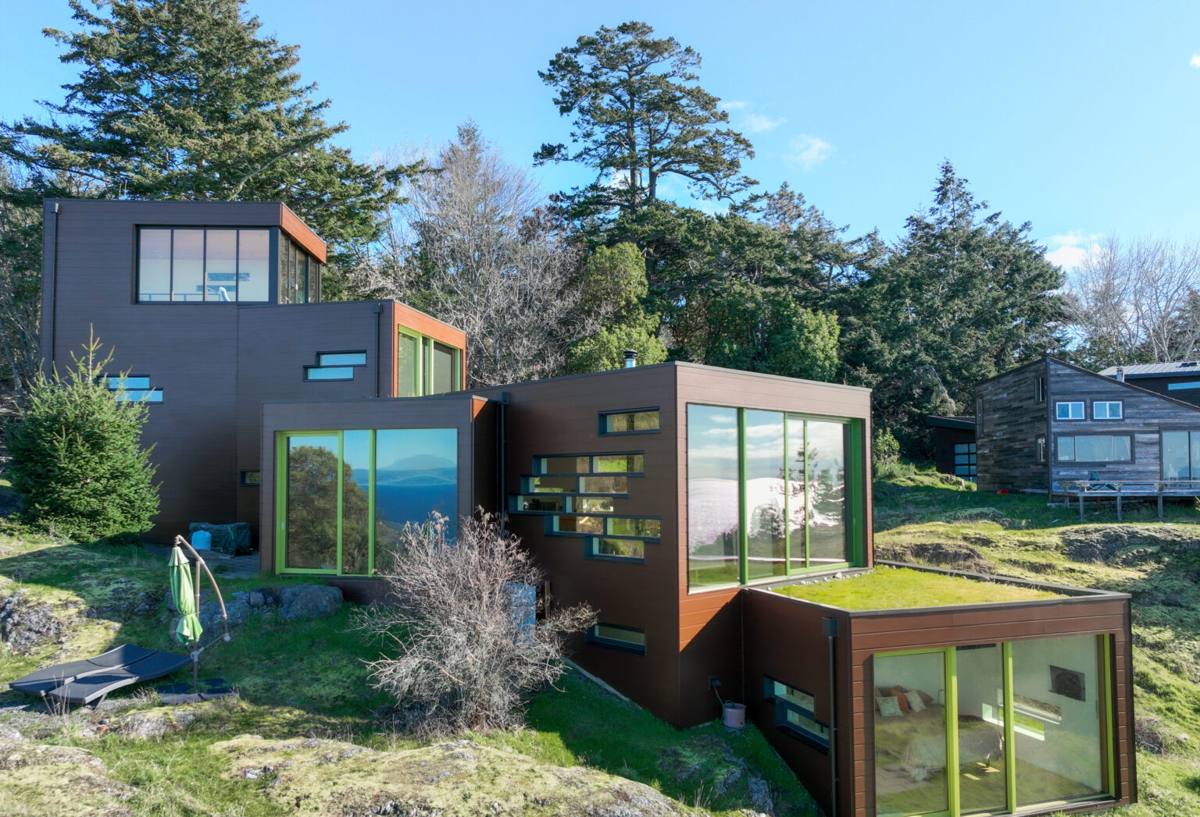
What a Correct Siding Installation Actually Involves
Siding is a system, not just a surface. The panel itself only does part of the job — the rest depends on what's behind it and how it's put together. A correct installation in a wet, wind-exposed area like this pays as much attention to what you can't see as what you can.
Weather-Resistive Barrier and Flashing
Every wall needs a continuous weather-resistive barrier underneath the siding, with flashing detailed correctly at windows, doors, and any place two building materials meet. Driving rain doesn't just hit a wall — it gets pushed and pulled into any gap it can find. Flashing and barrier work is where most long-term siding failures actually start, long before the siding itself is ever a factor.
Fastening and Clearances
Fastener type, spacing, and depth all affect how well siding holds up over decades of wetting and drying. So does clearance — siding held too close to grade, decks, roofs, or hardscape stays damp longer and invites both rot and moss growth at those transition points.
Ventilation and Drainage Plane
A proper drainage plane lets any moisture that does get behind the siding find its way back out instead of sitting against the sheathing. Skipping this step is invisible on installation day and expensive five or ten years later.
Why We Install Only James Hardie Fiber Cement Siding
We made a decision a long time ago to install one siding product, and only one: James Hardie fiber cement. That's not a marketing angle — it's a standard we hold to because of what this climate does to exterior materials over time. Fiber cement doesn't absorb water the way wood-based products can, it won't feed the mold and algae growth that's constant here, and it's non-combustible, which matters more every year as wildfire smoke and ember exposure becomes a bigger part of Pacific Northwest summers.
We're not going to pretend other products don't have anything going for them — they do, and homeowners deserve an honest comparison, not a scare campaign.
| Material | What It Gets Right | Trade-Off in This Climate |
|---|---|---|
| Vinyl siding | Low upfront cost, no painting required | Can warp or crack in temperature swings; seams and panels give wind-driven rain more places to get behind the wall |
| LP SmartSide | Lighter weight, easier to install than fiber cement | Wood-strand core is more sensitive to sustained moisture exposure and edge damage over time |
| Cedar / primed spruce | Natural appearance, long tradition in the region | Needs ongoing refinishing and is more vulnerable to moss, rot, and insect damage in wet, shaded conditions |
| James Hardie fiber cement | Non-combustible, factory-cured finish, engineered for wet climates | Heavier material and more installation-sensitive; needs a crew trained on Hardie's fastening and clearance specs |
The trade-off with Hardie is that it demands more from the installer — it's heavier, it has to be cut and fastened correctly, and it's less forgiving of shortcuts. We think that trade-off is worth it, because it puts the burden on the installation crew instead of on the homeowner ten years down the road.
Signs a Cordata Home's Siding Is Ready for Replacement
Because siding failure here tends to be gradual, it helps to know what to actually look for before it turns into a bigger repair.
- Soft or spongy spots when you press on the siding, especially near the bottom courses or below windows
- Paint that's peeling, bubbling, or failing faster than it used to, even after a fresh coat
- Persistent moss, algae, or dark staining that comes back within a season of cleaning
- Visible gaps, warping, or buckling at panel joints and trim
- Rising heating bills without another clear explanation
- Musty smell or visible staining on interior walls that back up to exterior siding
Any one of these on its own might just need a repair. Several at once, especially combined with the home's age, usually means the underlying moisture barrier has been compromised and full replacement is the more honest recommendation.
Our Siding Installation Process, Start to Finish
The process doesn't change much from house to house, but the details of each step do — and that's where the difference between a good job and a problem job usually shows up.
- Inspection and moisture check — we look at the existing siding, sheathing, and any trouble spots before quoting anything, so the estimate reflects what's actually behind the wall, not just what's visible.
- Product and color selection — choosing the right Hardie profile and finish for the home's style and this climate's light and moisture conditions.
- Tear-off and sheathing review — removing the old siding gives us a direct look at the sheathing and framing, which sometimes reveals damage that needs to be addressed before new siding goes up.
- Weather barrier and flashing installation — this is the step that determines how the whole system performs for the next several decades, and it gets done to spec, not rushed.
- Hardie panel installation — installed to James Hardie's fastening, clearance, and joint-treatment specifications, which is also what keeps the manufacturer's warranty intact.
- Finish work and cleanup — caulking, trim detailing, touch-up, and a full site cleanup so the property looks better than it did before we started.
- Final walkthrough — going over the finished job together before we consider it done.
Picking the Right Hardie Line and Color for This Climate
James Hardie engineers its siding by climate zone, and the HZ5 line is built for exactly the wet, temperate conditions found throughout Whatcom County. It's formulated to hold up against sustained moisture exposure better than a generic, one-size-fits-all product.
Color matters more here than people expect. Hardie's ColorPlus finish is baked on at the factory under controlled conditions, which gives it more consistent resistance to fading and moss staining than a field-applied paint job can match. In an area with as much overcast, damp weather as this one, that factory-cured finish is doing real work — not just cosmetic, but functional, since a compromised finish is one more way moisture finds its way into the panel over time.
What Affects the Cost of a Siding Installation in Cordata
Every home is different, so we don't quote a job without seeing it, but the main variables that move the price are consistent from house to house.
| Cost Factor | Why It Matters |
|---|---|
| Home size and wall complexity | More square footage and more corners, gables, and dormers mean more material and labor |
| Condition of existing siding and sheathing | Hidden moisture damage found during tear-off can add repair work before new siding goes up |
| Trim and detail work | Custom trim, fascia, and accent details take more time than straightforward wall runs |
| Siding profile chosen | Lap, shingle, and panel profiles differ in material cost and installation time |
| Accessibility | Multi-story sections, tight setbacks, or landscaping obstacles affect labor time and equipment needs |
We'd rather walk a property and give a number based on what's actually there than quote a rough range that doesn't hold up once we start pulling siding off the wall.
Why It Matters That We Already Work in Cordata and Whatcom County
Siding installation isn't a one-size-fits-all trade, and a crew that already works this part of Whatcom County brings things to the job that an outside contractor has to learn on the fly. That includes knowing how the local permitting process works, understanding how rainfall and wind exposure can vary block to block depending on elevation and tree cover, and having a feel for the common construction styles and ages of homes in this area — which affects everything from sheathing condition to how trim details were originally built.
It also means accountability. A crew based in this area is going to be around next year and the year after if a warranty question comes up, not just for the length of one job.
Get a Free, No-Pressure Estimate for Your Cordata Home
If your siding is showing its age, or you just want an honest read on where it stands, we're happy to take a look. There's no pressure and no obligation — just a straightforward assessment and a clear estimate for James Hardie siding installation built for what Cordata's weather actually demands. The form below is the easiest way to get started.