 Sudden Valley Roofing
 Building a Deck That Actually Holds Up in Geneva
Geneva sits right up against Lake Whatcom, tucked into the same wet, wooded corner of Whatcom County as Sudden Valley. That location is beautiful, but it's hard on outdoor structures. Homes here deal with a marine-influenced climate that keeps wood damp for months at a time, driving rain that comes in sideways off the water during fall and winter storms, and a moss season that can stretch from October well into spring. A deck that would hold up fine in a drier inland town can start failing here in half the time if it wasn't built with these conditions in mind.
We build custom decks specifically for this kind of environment. That means paying attention to things a lot of deck crews treat as afterthoughts: how water actually moves off the surface, what fasteners will hold up without streaking or corroding, and how to keep moss from getting a foothold in the first place. This page walks through what that looks like in practice for a Geneva property.
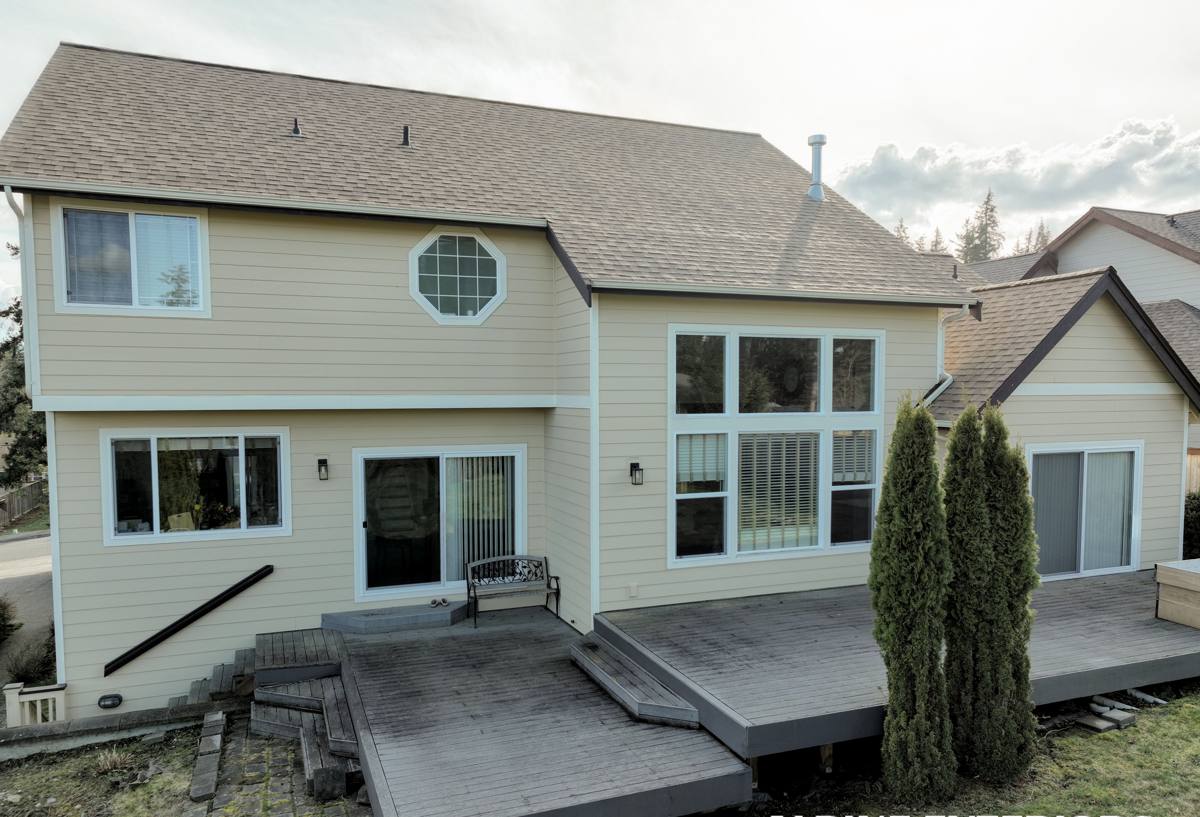
What the Local Climate Does to a Deck Over Time
Every deck failure we get called out to fix in this area traces back to one of a handful of causes, and almost all of them are moisture-related. Understanding the failure modes helps explain why we build the way we do.
Trapped Moisture
Lake-effect humidity and long stretches of rain mean wood surfaces near the water rarely get a full, fast dry-out between storms. Decking that's installed too tight, or over framing without airflow underneath, holds that moisture against the wood and accelerates rot from the inside out — often before it's visible from the top.
Moss and Algae Growth
A long moss season isn't just a cosmetic issue. Moss holds moisture directly against decking boards and stair treads, and it turns a wood or composite surface slick and genuinely dangerous underfoot, especially on stairs. Once moss gets established in the grain of a board or in fastener heads, it's a maintenance problem for the life of the deck unless the surface and drainage were designed to discourage it.
Corrosion from Salt-Tinged, Humid Air
Even away from open coastline, the damp, salt-influenced air common to this part of Whatcom County will corrode the wrong hardware over time. Cheap fasteners and connectors streak, weaken, and eventually fail at exactly the joints that carry the most load — ledger boards, stair stringers, and railing posts.
Decking Material Options for a Geneva Property
There's no single "best" decking material — the right choice depends on your budget, how much upkeep you want to take on, and how close your lot sits to the lake. Here's how the common options compare for this specific climate.
| Material | Upfront Cost | Maintenance | Moisture / Moss Resistance | Typical Lifespan |
|---|---|---|---|---|
| Pressure-Treated Pine | Lowest | Annual cleaning and periodic sealing | Fair — needs upkeep to stay ahead of moss and checking | 15-20 years with maintenance |
| Western Red Cedar | Moderate | Cleaning plus re-oiling every 1-2 years | Good natural rot resistance, but surface still holds moss if not cleaned | 20-25 years with maintenance |
| Composite Decking | Higher | Occasional washing, no sealing or staining | Very good — doesn't absorb water the way wood does, though moss can still grow on the surface film | 25-30+ years |
| PVC / Capped Polymer | Highest | Low — rinse as needed | Best — fully non-absorbent core resists moss and mildew staining longest | 30+ years |
For decks close to the water or in shaded, north-facing yards where moss thrives longest, we usually steer homeowners toward composite or capped polymer boards. For sunnier lots where a homeowner doesn't mind the maintenance rhythm, cedar or pressure-treated wood is a perfectly sound, more affordable choice — as long as the framing underneath is done right, which matters more than the decking material itself.
The Framing and Substructure Nobody Sees — But Everyone Should Ask About
The decking boards get all the attention, but the substructure is what actually determines how long a deck lasts in this climate. This is where we see the biggest gap between a deck that's built correctly and one that's built to look right on installation day.
- Ledger flashing: The board that attaches the deck to the house needs proper flashing to keep water from working its way behind the siding — a common source of hidden rot in wetter climates.
- Joist protection: Joist tape or an equivalent moisture barrier over the top of each joist keeps rain from soaking directly into end grain and fastener holes, which is where rot typically starts.
- Footings sized for saturated soil: Ground near the lake stays wetter longer, so footings need to be sized and set to local frost and soil conditions rather than the bare code minimum.
- Corrosion-resistant fasteners and hardware: Hot-dip galvanized or stainless connectors at every structural joint, matched to whatever decking material is going on top.
- Airflow underneath: Proper joist spacing and ground clearance so air can actually move under the deck and dry it out between rain events instead of trapping humidity.
None of this is visible once the decking is down, which is exactly why it's worth asking a contractor directly what they're using for flashing, joist protection, and fasteners before work starts.
Designing Drainage and Slope to Fight Moss Before It Starts
Moss doesn't grow where water doesn't sit. A big part of building a moss-resistant deck is getting the slope and drainage right at the design stage, not trying to clean your way out of the problem later.
We build in a slight pitch away from the house so water sheds off the surface instead of pooling against the siding or in low spots between boards. Board spacing is set to let water and debris pass through rather than collecting in the gaps, and stair treads and landings get extra attention since standing water there is both a moss problem and a slip hazard. On lots with heavy tree cover — common around Geneva and Lake Whatcom — we'll also talk through gutter and downspout placement near the deck, since a lot of moss growth actually traces back to roof runoff landing on the deck surface rather than the deck itself.
Railings and Hardware Rated for This Environment
Railings take a beating in this climate because they're constantly wet and exposed on all sides. Metal railing components need a finish that resists corrosion in humid, salt-tinged air, not just a painted or powder-coated surface that looks fine in the showroom. Wood railings need the same moisture management as the decking — end grain sealed, top rails sloped slightly to shed water, and post bases kept clear of standing moisture. Whatever material you choose for the deck itself, we spec railing hardware to match, so you're not replacing rusted brackets in five years while the rest of the deck is still solid.
How the Process Works, Start to Finish
1. Site Walk and Design Conversation
We come look at the actual lot — grade, tree cover, sun exposure, proximity to the lake — and talk through how you want to use the space. That site-specific read is what drives the material and drainage recommendations, not a generic template.
2. Design and Material Selection
You'll get a clear layout and a straightforward rundown of material options with honest trade-offs, like the ones in the table above, so you're choosing based on what matters to you: budget, maintenance tolerance, or long-term durability.
3. Permitting
Most attached decks in Whatcom County require a building permit, and we handle that paperwork as part of the job rather than leaving it on the homeowner. Skipping this step is a common shortcut that causes real problems at resale.
4. Construction
Footings, framing, flashing, and decking go in with the moisture-management details covered above — not just the parts that show. We walk you through the substructure before it's covered up if you want to see it.
5. Final Walkthrough
Before we call it done, we walk the finished deck with you, check railings and stairs for solid attachment, and go over basic care so you know what to expect in year one versus year ten.
Maintaining a Geneva Deck Through the Wet Season
Even a well-built deck needs some seasonal attention in this climate. Here's the basic rhythm we recommend to homeowners in the area:
- Sweep leaves and debris off the deck regularly through fall — wet leaves left sitting are one of the fastest ways to start moss and staining.
- Rinse or lightly scrub the surface at the start and end of moss season to knock back growth before it establishes.
- Check gutters and downspouts near the deck so roof runoff isn't draining directly onto the surface.
- Inspect railing posts and stair connections once a year for looseness or corrosion at hardware.
- Re-seal or re-oil wood decking on the schedule appropriate to the species — don't wait until it's visibly gray and dry.
- Clear debris from between boards where it traps moisture, especially in shaded corners.
What a Custom Deck Typically Involves, Cost-Wise
Every deck is different, but these are the main factors that move the price up or down. We give firm numbers after seeing the site, not before.
| Cost Factor | Why It Matters |
|---|---|
| Size and shape | Larger footprints and multi-level or angled designs need more framing and labor |
| Decking material | Composite and PVC cost more upfront than wood but reduce long-term maintenance |
| Height off grade | Taller decks need more substantial footings, railings, and often stairs |
| Site access and grade | Steep or wooded lots near the lake can add labor for material staging and footing work |
| Railing and hardware choice | Corrosion-resistant metal and glass panel systems cost more than standard wood or cable railing |
| Permitting | Whatcom County permit and inspection requirements add time and a fee, but protect you at resale |
Why It Matters to Hire a Crew That Already Works This Area
A contractor who mostly builds decks in drier parts of the state may not think twice about board spacing, joist protection, or hardware grade — because in their usual climate, it doesn't matter as much. Around Lake Whatcom, those details are the difference between a deck that looks good for two years and one that holds up for two decades. We've built and repaired decks around Geneva and Sudden Valley long enough to know exactly which corners get skipped, because we're the ones who get called to fix them later. Building it right the first time — proper flashing, real drainage, corrosion-rated hardware — costs less over the life of the deck than repairing rot or replacing rusted railings a few years in.
If you're planning a new deck or replacing one that's showing its age, we're happy to come take a look and talk through options with no pressure and no obligation. Fill out the form below for a free estimate.