 Sudden Valley Roofing
 Building a Deck That Holds Up in Alger's Marine Climate
Alger sits close enough to the water and the marine air moving in off Whatcom County's coastline that a deck here works harder than one built inland. Salt air accelerates corrosion on fasteners and hardware, driving rain gets pushed sideways under railings and around ledger boards, and the long moss season — often stretching from October well into April — keeps every north-facing or shaded board damp for months at a stretch. A deck built to a generic spec sheet instead of this climate usually shows problems within a few years: soft spots, rust streaks, slick green boards, and a ledger connection that's trapped moisture against the house. Building it correctly the first time costs less than fixing it twice.
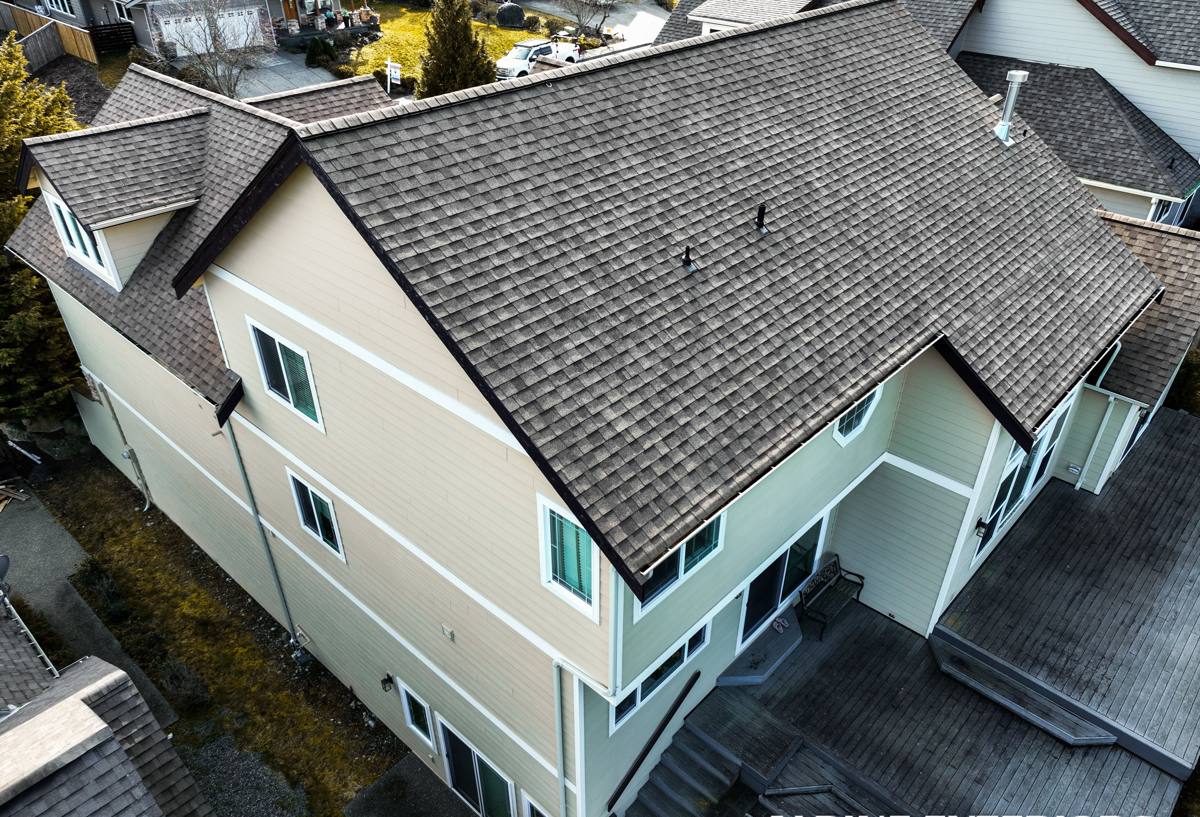
What Alger Homes Actually Need From a Deck
Most of the homes we work on around Alger sit on lots with tree cover, sloped grade, or a mix of both, which changes how a deck needs to be built compared to an open, sunny lot. Shade keeps boards wet longer after rain, which speeds up moss and mildew growth and rot in untreated wood. Sloped ground changes footing depth and post height from one corner of the deck to the other, and it also determines where runoff goes once it leaves the surface. None of this is unusual for the area — it's just something a deck design has to account for instead of ignoring.
Before we design anything, we look at three things on site: how much direct sun the deck area gets through the seasons, where water already runs off the roof and yard, and what the ledger board attachment point on the house looks like. Those three answers drive material choice, drainage details, and framing more than anything else.
Choosing a Decking Material for This Climate
There's no single "best" decking material — there's a best material for a given budget, sun exposure, and maintenance appetite. In a climate with this much rain and shade-driven moss, the differences between materials matter more than they would in a drier region.
| Material | Upfront Cost | Moisture/Rot Behavior | Maintenance | Typical Lifespan |
|---|---|---|---|---|
| Pressure-treated wood | Lowest | Resists rot when sealed; end grain and cut edges are vulnerable | Annual cleaning, re-seal every 1-3 years | 10-15 years |
| Cedar | Moderate | Naturally rot-resistant but softer, scratches and grays without upkeep | Cleaning plus regular oil or stain | 15-20 years |
| Capped composite | Higher | Excellent — the cap resists moisture absorption and staining | Occasional wash, no sealing or staining | 25-30 years |
| PVC | Highest | Fully synthetic, doesn't absorb moisture at all | Occasional wash | 25+ years |
Why We Don't Push Uncapped Composite
Older, uncapped composite boards were a step up from plain wood, but the exposed composite surface can still absorb moisture and support mold growth in a shaded, wet climate like this one, and that surface can't be sanded or refinished the way wood can once it's stained or worn. Our standard is to spec capped composite or PVC when a homeowner wants a low-maintenance product, and real wood when they want something they can refinish and adjust the look of over time. That's a maintenance and moisture-behavior trade-off, not a knock on any manufacturer — it's just what holds up best given how much rain this area gets and how long boards stay wet under tree cover.
What a Correctly Built Deck Involves
The visible decking boards are the smallest part of whether a deck lasts. Everything underneath and behind them is what determines whether it's still solid in fifteen years.
Footings and Framing
Footings need to be sized and set to whatever depth the local building department requires, and that depth depends on soil and site conditions that vary lot to lot — we pull the permit and build to the current code rather than guessing. Joists get sized and spaced for the actual span and expected load, not just "what's always been done," and pressure-treated framing lumber gets used throughout, even under composite or PVC decking that doesn't need it itself.
Ledger Attachment and Flashing
Where the deck attaches to the house is the single most common point of failure we see on older decks in this area. If the ledger board isn't flashed correctly, driving rain gets pushed behind it during storms and sits there against the house framing with nowhere to dry out. We flash every ledger connection with a code-compliant flashing detail and mechanical fasteners rated for the load, not just lag screws driven in without any water management behind them.
Fasteners and Hardware
Salt-laden marine air corrodes standard fasteners faster than most homeowners expect. We use stainless steel or coated fasteners and joist hangers rated for treated lumber and coastal exposure, because a deck that's otherwise built well can still fail early if the hardware holding it together rusts out.
Drainage and Airflow Underneath
A deck built low to the ground or over poorly graded soil traps moisture underneath, which keeps the framing damp and accelerates rot from below — often before any problem shows on the surface. We grade and, where needed, add drainage below the deck so water moves away from the structure instead of pooling under it, and we leave enough clearance for air to actually move under the frame.
Our Process
- Site visit and design: we walk the site, check sun exposure, drainage, and the ledger attachment point, and talk through material and layout options that fit the budget.
- Permitting: we handle the permit application and design documentation with the local building department so the footings, framing, and guardrails all meet current code.
- Construction: footings, framing, ledger flashing, and decking go in on schedule, with inspections at the required stages.
- Final walkthrough: we go over the finished deck together, cover basic care for the specific material installed, and answer any questions before we consider the job done.
Moss, Mildew, and Long-Term Care in a Wet Climate
Even a well-built deck needs some seasonal attention in a place with this much rain and this long a moss season. None of it is complicated, but skipping it for a few years is usually what turns a small maintenance item into a repair.
- Sweep leaves and needles out of the gaps between boards before fall rains set in — trapped debris holds moisture against the wood and speeds up rot and moss growth.
- Rinse pollen and organic buildup off the surface each spring, especially on shaded or north-facing sections.
- Check the ledger board area where the deck meets the house once a year for staining, soft wood, or gaps in the flashing.
- Treat green or black growth on shaded boards early with an appropriate deck cleaner rather than letting it spread across the whole surface.
- Inspect visible fasteners and hardware annually for rust or corrosion, particularly on older decks built before stainless hardware was standard practice.
- Reseal or restain wood decking on the schedule appropriate to the product — usually every one to three years in this climate.
- Keep gutters and downspouts clear so roof runoff isn't dumping onto or under the deck every time it rains.
Cost Factors Worth Understanding
Every deck project has its own numbers, and the honest answer to "what will this cost" is always "it depends" — but the same handful of factors drive most of the variation we see on jobs around Alger:
- Size and shape: square footage and the number of corners, stairs, or level changes both add labor and material.
- Material choice: the material comparison above shows a real spread between pressure-treated wood and PVC — decide based on how much upkeep you actually want to do, not just the sticker price.
- Height and access: a deck that's elevated or built over sloped ground needs more substantial framing and footings than one built close to grade.
- Railing and stair requirements: code-required guardrails and stair details add cost that's easy to underestimate when comparing quotes.
- Site conditions: tree removal, difficult access, or existing structure removal all affect the final number.
Why Local Experience on This Kind of Build Matters
A deck built to a spec sheet written for a dry climate doesn't automatically fail — it just fails earlier and more often here than it would somewhere with less rain and less shade. A crew that already works around Alger and the rest of Whatcom County has already seen which ledger connections rot first, which corners of a lot hold water after a storm, and which materials actually hold up through a full wet season instead of just looking good on install day. That's not a marketing point — it changes actual decisions on site: where the footings go, how the ledger gets flashed, and which fasteners get specified.
If you're planning a new deck or want an honest look at whether an existing one is still sound, we're glad to come take a look. The estimate is free, there's no pressure, and you'll get a straight answer about what your project actually needs — use the form below to get started.