 Sudden Valley Roofing
 Why Decks in Cordata Wear Out Faster Than Homeowners Expect
Cordata sits in a part of Whatcom County where the weather never really lets a deck dry out completely. Between the driving rain that rolls through fall, winter, and spring, the salt-laden air that blows in off the water, and the long stretch of overcast, low-sun months that let moss take hold on anything horizontal, an outdoor deck here is under more or less constant moisture pressure for most of the year. That combination is hard on wood and hard on hardware, and it's the main reason decks in this area often need full replacement years before homeowners expect.
A deck built with the wrong materials, the wrong flashing detail, or fasteners that weren't rated for this climate doesn't fail all at once. It fails quietly — a soft spot here, a rusting screw head there — until one day a board gives way or an inspection turns up structural rot nobody saw coming. Understanding how the local climate attacks a deck is the first step to building one that actually lasts.
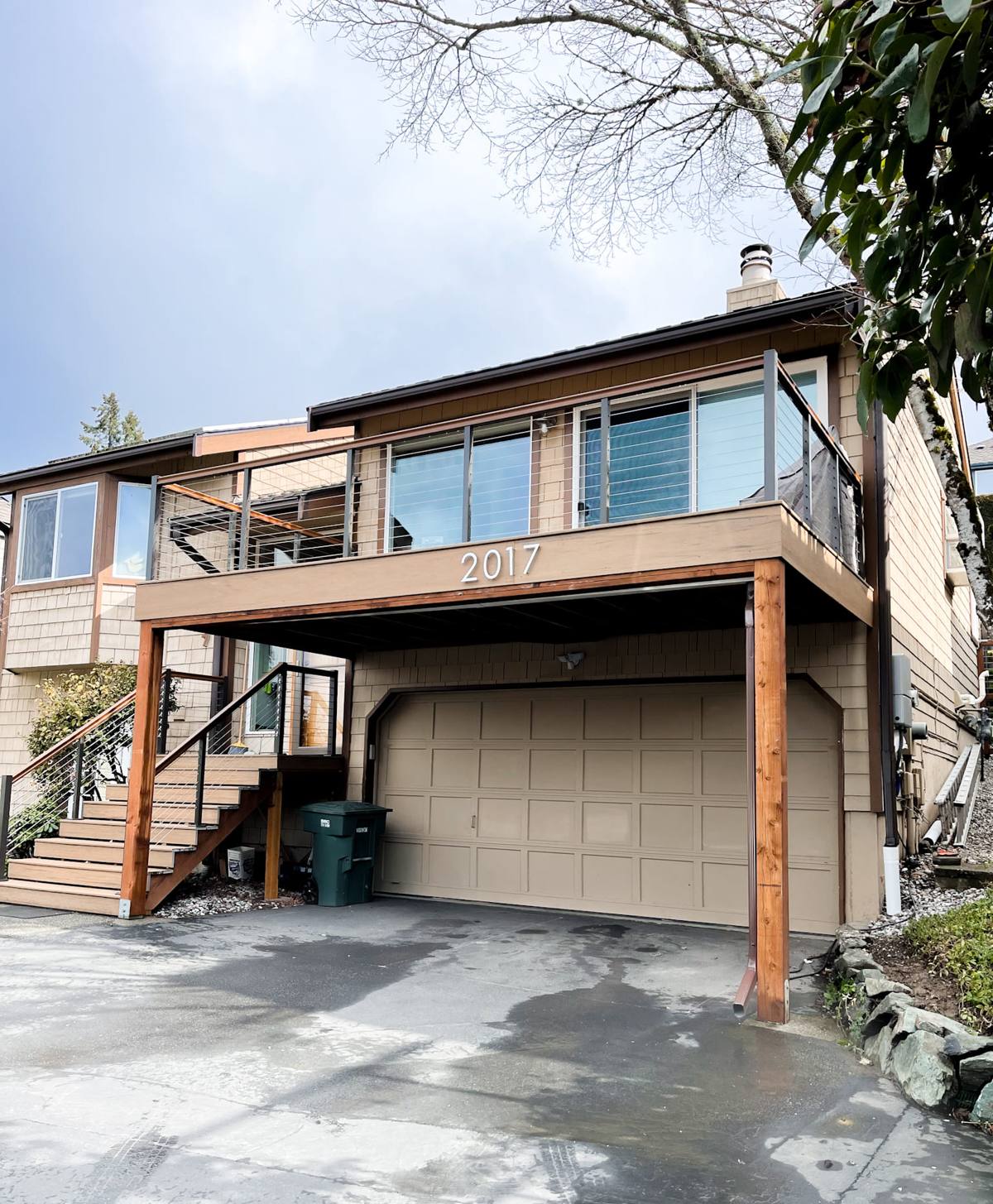
How Moisture, Salt Air, and Moss Actually Damage a Deck
Moisture Gets Trapped, Not Shed
Decks fail from the inside out more often than from the top down. Water works its way into fastener holes, board gaps, and the ledger board connection at the house, then sits there because the surrounding air is too damp to dry it out quickly. Over time this leads to rot in framing members that look fine from above.
Salt Air Accelerates Corrosion
Homes closer to the water in Whatcom County deal with airborne salt that speeds up corrosion on anything metal — nails, screws, joist hangers, railing brackets. Once a fastener starts rusting, it loses holding strength long before it looks obviously bad, which is part of why a deck can seem stable right up until it isn't.
Moss Holds Water Against the Wood
The long moss season here isn't just cosmetic. Moss and algae growing in the grain and in the gaps between boards act like a sponge, keeping the wood surface wet for days after the rain has stopped. That constant dampness is exactly the environment wood rot and fastener corrosion need to take hold.
Signs a Deck Needs Replacement, Not Just Repair
Not every aging deck needs to come out completely. But there's a point where patching individual boards is just delaying a bigger project — and spending money on a deck that's past that point. Here's how we tell the difference on site:
- Boards that feel spongy or spring underfoot, especially near the house or stair landing
- Visible rot or soft wood where the ledger board meets the house rim joist
- Support posts that are soft, cracked, or rotted at ground contact
- Noticeable sag, bounce, or unevenness across the deck surface
- Rust streaks running down from fastener heads or joist hangers
- Heavy, persistent moss or algae buildup that keeps coming back after cleaning
If one or two of these show up in an isolated area, repair is often reasonable. If several show up together, or the ledger connection or framing is compromised, replacement is usually the honest recommendation — repairing a structurally failing deck just moves the same problem a few years down the road.
What a Correct Deck Replacement Actually Involves
A deck replacement done right is a structural project, not a cosmetic one. The decking boards you walk on are the part everyone notices, but the parts that determine whether the new deck lasts are underneath.
Ledger Board and Flashing
This is the single most important detail on any deck attached to a house, and it's the detail that fails most often on older builds in this climate. The ledger board needs to be properly flashed to keep water from running behind it and into the house's rim joist. We check and correct this connection on every replacement, even when the rest of the old deck looked fine.
Framing and Footings
Joists, beams, and posts need to be sized correctly for the span and load, and footings need to be set to the depth and bearing required for the soil conditions here. We don't reuse framing lumber that shows any rot or fastener corrosion just to save a step — it's the part of the deck nobody sees again once decking is installed.
Fasteners and Hardware
Given the salt exposure and moisture in this area, we use stainless steel or hot-dip galvanized fasteners and connectors rated for the type of lumber being used, particularly with modern pressure-treated wood, which is more corrosive to standard hardware than older treatments were.
Drainage and Airflow
A deck that can't shed water or breathe underneath will hold moisture no matter what decking material sits on top. Proper joist spacing, board gapping, and grading beneath the deck all matter more here than in drier climates.
Choosing Decking Material for This Climate
There's no single "best" decking material — every option is a trade-off between upfront cost, maintenance, and how it holds up to constant moisture and moss pressure. Here's how the common choices compare for a Whatcom County deck:
| Material | Moisture & Moss Resistance | Maintenance | Typical Lifespan | Relative Cost |
|---|---|---|---|---|
| Pressure-treated wood | Moderate — needs sealing to perform | Annual cleaning and periodic resealing | 10-15 years | Lowest |
| Cedar | Naturally decay-resistant, but surface still holds moss without upkeep | Regular cleaning, staining or sealing every few years | 15-20 years | Mid-range |
| Composite decking | Good — doesn't absorb water like wood, but moss can still grow on the surface | Periodic washing, no staining or sealing | 20-25+ years | Mid-to-high |
| PVC decking | Best — non-porous, sheds moisture and resists moss growth | Occasional washing | 25+ years | Highest |
We don't push any one product on every job. Wood costs less up front but asks for more of your time every year. Composite and PVC cost more initially but largely remove the sealing-and-staining cycle that's easy to fall behind on in a climate this wet. The right call usually comes down to your budget, how the deck is used, and how much annual upkeep you actually want to commit to.
Our Deck Replacement Process
- On-site assessment. We inspect the existing deck's framing, ledger connection, posts, and footings to see what's actually driving the problem, not just what's visible on the surface.
- Honest scope and estimate. You get a clear breakdown of what needs full replacement versus what can be reused, along with material options and a straightforward cost range.
- Tear-off and structural inspection. Once old decking and framing are removed, we can confirm what's underneath, including the condition of the rim joist behind the ledger board.
- Framing, flashing, and footings. This is where the deck's actual lifespan gets decided — proper flashing, correctly sized framing, and footings set for local conditions.
- Decking, railing, and code compliance. Installation of the chosen decking material along with railings and guardrails built to current code height and baluster spacing requirements.
- Final walkthrough. We go over the finished deck with you, including basic care specific to the material installed.
Permits, Codes, and Neighborhood Guidelines
Deck replacement in Whatcom County typically requires a building permit, particularly when the deck is attached to the house, elevated, or being rebuilt to a different footprint than the original. Guardrail height and baluster spacing are governed by current residential code and get checked as part of any inspection. If your property is part of a neighborhood with an architectural review process, it's also worth confirming decking material or railing style guidelines before work starts — it's a lot easier to check up front than to change course mid-project. We handle the permit process as part of the job so you're not left tracking down requirements yourself.
Maintenance Checklist to Get the Most Out of Your New Deck
Whatever material you choose, a few habits make a real difference in how long a deck lasts in this climate:
- Sweep debris and standing leaves out of board gaps regularly, especially in fall
- Rinse off moss and algae buildup before it has a chance to establish
- Check the ledger board flashing area once a year for any signs of water intrusion
- Keep gutters and downspouts directing water away from the deck structure, not onto it
- Reseal or restain wood decking on the schedule the product calls for — don't wait until it looks obviously weathered
- Trim back shrubs or trees that block airflow and sunlight under and around the deck
- Look at fasteners and hardware periodically for early rust or corrosion
Why a Crew That Already Works in Cordata Makes a Difference
Deck problems in this area tend to follow patterns — the same ledger flashing issues, the same fastener corrosion, the same moss-related rot spots show up on homes with similar age and construction across Cordata and the surrounding Whatcom County neighborhoods. A crew that's already replaced decks in this specific climate knows what to check first, what materials actually hold up here versus what looks good on paper, and how to build in the drainage and flashing details that matter most in a place that gets this much sustained moisture. Based out of Sudden Valley, we're already familiar with the county's permitting process and the way homes in this region are built, which means less time spent diagnosing problems and more time spent building a deck that's set up to last.
If your deck is showing its age, or you just want a straight answer on whether it needs repair or full replacement, we're happy to take a look. Reach out for a free, no-pressure estimate using the form below — we'll give you an honest read on your deck's condition and what it would take to get it right.