 Sudden Valley Roofing
 Edgemoor's Coastal Climate Puts Real Stress on Siding
Edgemoor sits close enough to Bellingham Bay that salt-laden air is a daily fact of life for the homes here, not an occasional nuisance. Combine that with Whatcom County's long wet season, wind-driven rain off winter storms, and the heavy tree canopy that shades so many Edgemoor lots, and you get a climate that is genuinely hard on exterior building materials. Salt air accelerates corrosion on exposed fasteners and metal trim. Driving rain finds any gap in flashing or caulking and pushes moisture behind the siding rather than letting it run off the surface. And shaded, damp walls — especially north- and east-facing ones under mature trees — grow moss for a good chunk of the year, which holds moisture against the wall assembly long after the rain has stopped.
None of this means Edgemoor homes are doomed to constant siding problems. It means the material and the installation both have to be chosen with this specific climate in mind, not a generic one. That's the whole reason this page exists: James Hardie siding, installed correctly, is built to hold up here in ways that some common alternatives simply aren't.
Why We Install Only James Hardie in This Climate
We made a deliberate decision, years ago, to install James Hardie fiber cement siding exclusively — no vinyl, no LP SmartSide, no Cemplank or Allura fiber cement, no primed spruce or cedar. That's not a marketing angle. It's a standard we hold because of what we see on Whatcom County homes over time.
Fiber cement is inherently non-combustible and dimensionally stable in wet-dry cycling, which matters enormously in a climate where siding rarely gets a long stretch to fully dry out between rain events. Engineered wood products like LP SmartSide perform well in many parts of the country, but their cut edges and any breach in the factory coating are vulnerable to moisture wicking — a real risk in a place where driving rain and prolonged dampness are the norm rather than the exception. Vinyl siding is inexpensive and low-maintenance in a general sense, but it isn't rigid, it expands and contracts significantly with temperature swings, and it doesn't stop moisture from getting behind it — it just hides the problem until a wall or window flashing issue shows up as rot underneath. Cedar and primed wood siding can look excellent, but they demand a repainting and caulking maintenance cycle that most homeowners underestimate, and in a moss-prone, high-humidity setting like Edgemoor that maintenance burden only grows.
James Hardie's fiber cement doesn't rot, doesn't feed moss the way wood does, and holds its factory finish far longer than field-painted alternatives. That combination is why it's the only product we put our name behind.
What We're Not Saying
To be fair to the alternatives: vinyl is genuinely the lowest-cost option, engineered wood siding installs quickly and takes paint well, and cedar has a natural look that some homeowners simply prefer. These aren't bad products in every context. They're just not what we choose to install, because in this specific climate the long-term trade-offs — moisture sensitivity, maintenance frequency, or both — outweigh the upfront savings.
The Hardie Product Lines That Make Sense for Edgemoor
HardiePlank Lap Siding
This is the most common choice for Edgemoor homes and covers the vast majority of siding replacements we do in the area. It's available in a range of exposures and textures — smooth for a more modern look, cedarmill for a traditional wood-grain appearance — and it's engineered specifically for the Pacific Northwest's HardieZone 5 climate designation, which accounts for prolonged moisture exposure rather than dry-climate assumptions.
HardiePanel and Trim
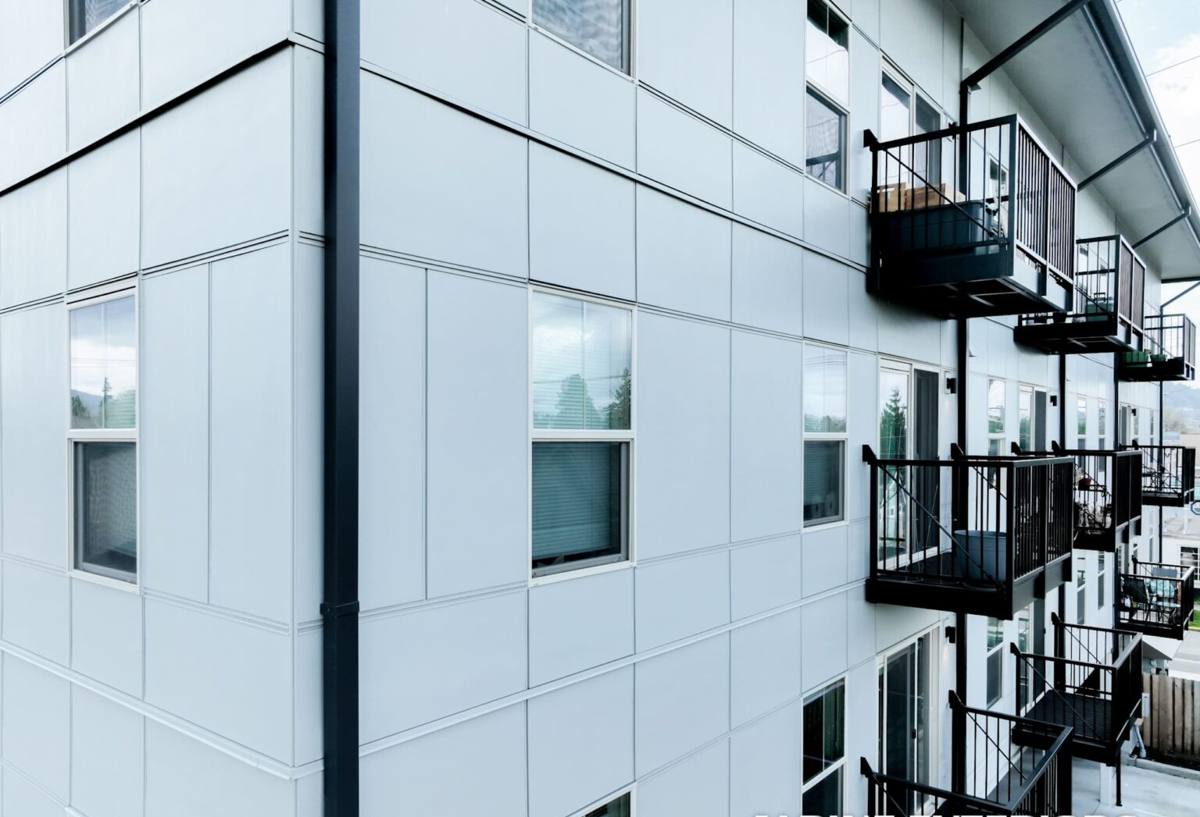
For homes with a more contemporary design, or for accent areas like gables and dormers, HardiePanel vertical siding paired with Hardie trim boards gives a clean, low-maintenance look that holds its lines well even with the wind exposure some Edgemoor lots see off the bay.
ColorPlus Factory Finish
Where it makes sense, we specify Hardie's ColorPlus finish — a factory-applied, baked-on finish rather than field paint applied on site after installation. It's more UV- and moisture-resistant than a standard job-site paint job, it resists the chalking and fading that field-painted siding shows after a few Whatcom County winters, and it comes backed by its own manufacturer finish warranty separate from the base product warranty. For homeowners who want to match an existing trim color exactly, field-applied paint is still an option, but ColorPlus is worth understanding before you decide.
What a Correct Hardie Installation Actually Involves
Hardie siding is only as good as the installation behind it. The product itself is engineered to shed water and resist rot, but that only holds true if the assembly behind it is done to spec. In a climate like Edgemoor's, cutting corners here shows up fast — usually as a moisture problem hidden behind the wall, not something you'd notice from the curb until it's already expensive.
A correct installation includes:
- A properly lapped weather-resistive barrier behind the siding, with all seams taped or shingled correctly so water runs down and out, not in
- Window and door flashing installed in the right sequence relative to the barrier and siding, so water is directed away from the framing
- Corrosion-resistant fasteners — critical in a salt-air environment, where standard fasteners can corrode and stain or weaken over time
- Correct minimum clearance between the bottom edge of the siding and grade, decks, roof lines, and other horizontal surfaces, so splash-back and standing water don't sit against the material
- Manufacturer-specified nailing patterns and joint treatment, including proper caulking at butt joints and trim intersections
- Field-cut edges sealed per manufacturer instructions, since an unsealed cut edge is the one place fiber cement can absorb moisture over time
Following James Hardie's published installation instructions isn't optional if you want the manufacturer warranty to actually mean something — deviations from spec can affect warranty coverage, which is one more reason the installer's attention to detail matters as much as the product choice.
Our Process for a Hardie Siding Project in Edgemoor
- On-site assessment. We look at your current siding, trim, and sheathing to identify any existing moisture damage or rot before we ever price the job — this matters more on older Edgemoor homes that have had years of salt air and rain exposure.
- Tear-off and sheathing inspection. Once the old siding is off, we inspect the sheathing and framing underneath. Any soft or damaged wood gets repaired before anything new goes on — installing new siding over a compromised wall doesn't solve the underlying problem.
- Weather barrier and flashing. We install the water-resistive barrier and all window, door, and penetration flashing correctly sequenced, since this layer does most of the real work of keeping water out.
- Hardie siding installation. Siding, trim, and panels go on per James Hardie's written specifications for our climate zone, with corrosion-resistant fasteners throughout.
- Finish work. Caulking, touch-up paint where needed, and trim details get finished to a clean, consistent standard.
- Final walkthrough. We walk the exterior with you, point out anything worth knowing for future maintenance, and clean up the site fully before we consider the job done.
What Drives the Cost of a Hardie Siding Project
Every home is different, and we don't quote a job without seeing it, but the main variables that move the price on a typical Edgemoor project are consistent:
| Cost Factor | Why It Matters |
|---|---|
| Home size and number of stories | More surface area and taller walls both increase material and labor time |
| Existing siding removal | Tear-off of old wood, vinyl, or damaged siding adds labor before new siding can go on |
| Sheathing or framing repair | Rot found during tear-off has to be fixed properly, which can add scope once walls are opened up |
| Trim and architectural detail | Gables, dormers, and multiple trim profiles take more time than a simple rectangular wall |
| Product line and finish | HardiePlank versus HardiePanel, and ColorPlus versus field paint, carry different material costs |
| Site access | Steep, wooded, or tight waterfront-adjacent lots can affect staging and scaffolding needs |
Why Hiring a Crew That Already Works in Edgemoor Matters
Siding installation isn't one-size-fits-all across a county, even one as compact as Whatcom County. A crew that regularly works Edgemoor and the surrounding Sudden Valley area already knows what to look for: where salt exposure tends to concentrate corrosion issues on bay-facing walls, which orientations grow moss fastest under tree cover, and how much wind-driven rain the area's storms actually push into poorly detailed flashing. That local pattern recognition shows up in small decisions — where to add extra flashing attention, which fastener spacing to lean toward on more exposed elevations, how much clearance to leave at grade on a shaded, damp lot — that a crew unfamiliar with the area might not think twice about.
It also means we're not learning on your house. We've already seen what happens when installation details get skipped in this climate, and we build our process around avoiding those specific failure points rather than following a generic national checklist.
Maintaining Hardie Siding in Edgemoor's Climate
Hardie siding is genuinely low-maintenance compared to wood, but "low-maintenance" doesn't mean "no maintenance," especially with salt air and moss pressure in the mix. A little attention goes a long way:
- Rinse the exterior periodically to remove accumulated salt film, particularly on walls facing the bay
- Keep gutters and downspouts clear so water doesn't overflow and splash back onto lower siding courses
- Trim back vegetation and tree limbs near the house to improve airflow and reduce the shaded, damp conditions moss needs
- Inspect caulking at trim joints and around windows once a year, and re-caulk any cracked or separated joints promptly
- Watch for moss or dark staining at the base of walls near grade, which usually signals a splash-back or drainage issue worth addressing early
- Address any impact damage or chips in the finish promptly rather than letting an exposed cut edge sit through a wet season
If your Edgemoor home's siding is showing its age — or if you're planning ahead rather than reacting to a problem — we're happy to walk the exterior with you and give you a straight assessment. Reach out for a free, no-pressure estimate using the form below.