 Sudden Valley Roofing
 Siding Replacement in Edgemoor: Built for the Bluff, Not Just the Neighborhood
Edgemoor sits on the bluffs above Bellingham Bay, and that position is exactly what makes exterior siding here behave differently than it does a few miles inland. Homes on or near the bluff get salt-laden air coming straight off the water, wind-driven rain that hits harder and more directly than it does on a sheltered lot, and a long stretch of the year where surfaces simply don't get enough sun to dry out fully between storms. We replace siding on Edgemoor homes regularly, and the specification we use here is built around those three conditions specifically — not a generic Whatcom County weather sheet.
On siding, we install James Hardie fiber cement exclusively. That's not a distributor relationship or a marketing angle — it's a standard we settled on after seeing which materials actually hold up on salt-exposed, moisture-heavy properties like the ones throughout Edgemoor, and which ones don't.
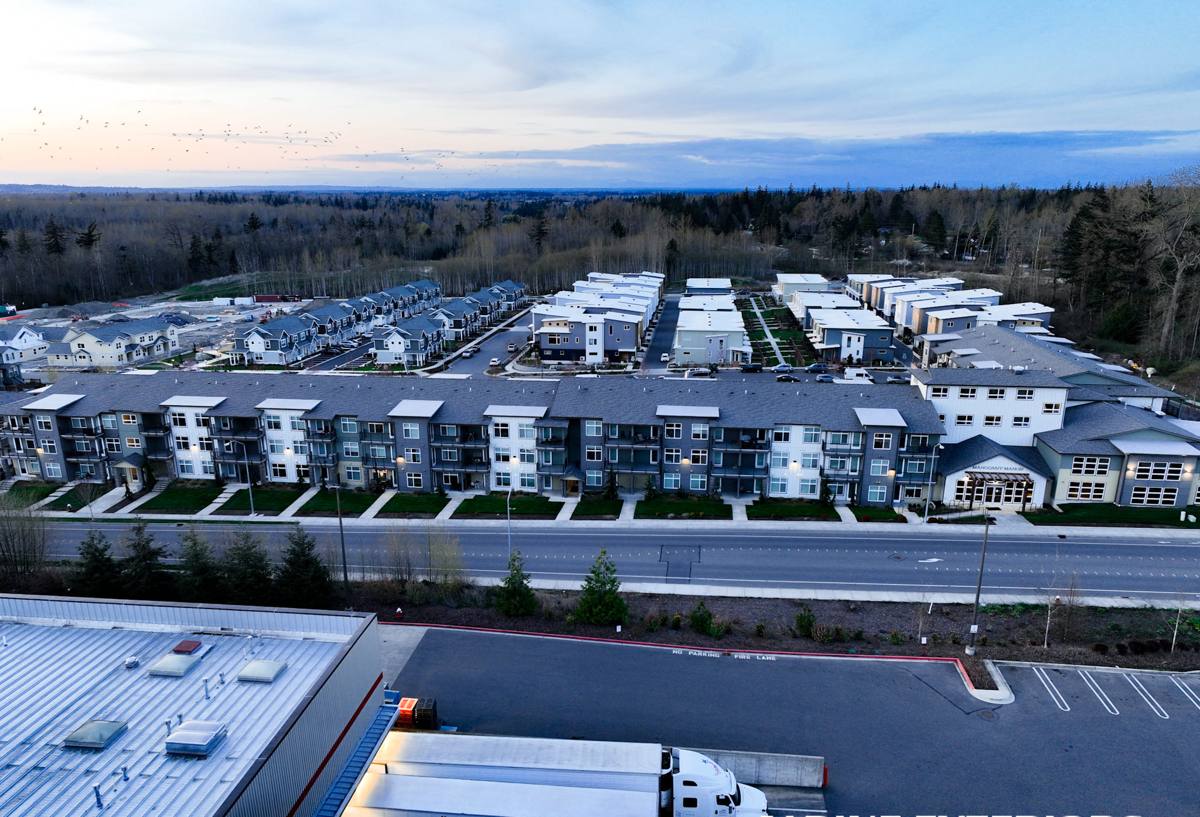
What Salt Air Does to Siding Over Time
Salt air is corrosive in ways that aren't always obvious from the street. It accelerates the breakdown of unprotected fasteners, degrades paint film faster than inland exposure, and works its way into any small crack or seam in a siding surface, where it holds moisture longer than plain rainwater would. On a bluff lot with a clear line to Bellingham Bay, that exposure is close to constant, even on days when it isn't actively raining. Materials that depend on a painted or coated surface to keep moisture out are the ones that show salt damage first — chalking, fading, and eventually finish failure at seams and cut edges.
Driving Rain on an Exposed Elevation
Bluff-top and near-bluff homes in Edgemoor typically face more direct wind exposure than homes tucked into more sheltered parts of Bellingham. Wind off the water pushes rain sideways into wall surfaces rather than letting it run straight down, which puts extra load on flashing, joints, and any horizontal surface where water can collect. A siding system that isn't detailed for that kind of exposure will eventually show it — usually at butt joints, around window and door openings, or at the bottom courses closest to grade.
A Long Moss and Mildew Season
Whatcom County's mild, wet climate keeps moss and mildew active for most of the year, and shaded or north-facing walls in Edgemoor are no exception. Roofs usually show it first, but porous or moisture-retentive siding picks it up too, especially where tree cover or building shadow keeps a wall damp longer than the rest of the house. Once moss or mildew gets established on a siding surface, it holds additional moisture against that surface, which compounds whatever problem is already there.
Why We Only Install James Hardie Siding in Edgemoor
We used to offer a broader range of siding products. We narrowed that down to one system after too many service calls and tear-offs on salt-exposed, moisture-heavy properties showed the same pattern: materials that looked fine on install day were failing years ahead of schedule once real coastal weather got to them.
- Non-combustible core: Fiber cement doesn't feed a fire the way wood-based siding can, which matters for both safety and, in many cases, insurance underwriting.
- Factory-applied ColorPlus finish: The finish is baked on under controlled conditions rather than applied on site, and it resists the fading and chalking that salt air and UV exposure accelerate on painted or site-finished surfaces.
- Climate-engineered HZ product lines: Hardie's HZ5 formulation is built for regions with heavy moisture exposure and freeze-thaw cycling, which is a closer match to a bluff-top Edgemoor property than a formulation built for a dry climate.
- Dimensional stability: Fiber cement doesn't swell, cup, or warp the way engineered wood products can after repeated wetting cycles, which matters on a wall that stays damp longer than average.
- Strong transferable warranty: Hardie backs its products with one of the more substantial warranty structures in the industry, provided the installation follows their published specifications.
We don't install LP SmartSide, vinyl siding, Cemplank, Allura, primed spruce, or cedar. Each of those has a legitimate place in the broader market, and plenty of homeowners elsewhere are satisfied with them. On a salt-exposed bluff property, though, we've made a professional call that we'd rather stand behind one system completely than offer a cheaper option that quietly shifts long-term maintenance risk back onto the homeowner.
What a Correct Siding Replacement Job Actually Involves
Replacing siding on an Edgemoor home isn't just pulling off old panels and nailing up new ones. On a salt-air, wind-exposed lot, the details behind the siding matter as much as the siding itself.
Tear-Off and Substrate Inspection
Once the old siding comes off, we inspect the sheathing underneath for rot, soft spots, or prior water intrusion — problems that are common to find on bluff-facing walls that have taken years of driving rain. Any damaged sheathing gets replaced before new siding goes on; covering up an already-compromised wall just hides the problem for another few years.
Weather-Resistive Barrier and Drainage Plane
A correctly installed weather-resistive barrier, paired with proper flashing at every penetration, window, and door, is what actually keeps wind-driven rain out of the wall assembly. On a wind-exposed elevation, a drainage plane or rain-screen detail behind the siding gives any moisture that does get past the outer layer a way to drain and dry out instead of sitting against the sheathing.
Fastening and Joint Detailing
Fastener type, spacing, and clearance from grade all follow Hardie's published specifications, and joints get sealed correctly rather than caulked as an afterthought. On a salt-exposed property, corrosion-resistant fasteners aren't optional — the wrong fastener will start failing years before the siding itself would.
Signs an Edgemoor Home May Need Siding Replacement
- Visible chalking, fading, or finish breakdown, especially on bluff-facing or west-facing walls
- Soft or spongy spots when pressed, particularly near the bottom courses or around window trim
- Persistent moss or mildew that returns quickly after cleaning
- Cracked, warped, or separating panels at seams and joints
- Peeling or bubbling paint that keeps coming back after repainting
- Water staining on interior walls or ceilings near exterior corners after heavy or wind-driven rain
Comparing Siding Materials for a Salt-Air, Bluff Property
| Material | Salt Air / Moisture Behavior | Maintenance on an Exposed Elevation | Typical Longevity Here |
|---|---|---|---|
| James Hardie fiber cement | Dimensionally stable; factory finish resists salt-driven fading and chalking | Low; periodic washing is generally sufficient | 30+ years with correct installation |
| Vinyl siding | Can become brittle and discolor faster under sustained salt and UV exposure | Low upfront, but seams and panel edges are common failure points | Variable; shorter on directly exposed elevations |
| LP SmartSide / engineered wood | Wood-based core is moisture-sensitive at cut edges and joints | Moderate to high; edge sealing is critical near salt air | Depends heavily on installation quality and upkeep |
| Cedar / primed wood | Absorbs and releases moisture readily; salt accelerates finish breakdown | High; needs regular refinishing on exposed walls | Shorter without consistent, ongoing maintenance |
Why a Crew That Already Works Edgemoor Matters
Edgemoor's mix of bluff-top and near-bluff lots means exposure can change significantly from one property to the next, even within the same few blocks. A crew that already works this neighborhood knows which elevations typically need extra flashing and drainage detailing, how steep or narrow driveways and lots affect staging and material access, and how salt exposure tends to show up first on a given orientation. That local pattern recognition is what separates a siding job that's technically code-compliant from one that's actually built for the specific conditions on a given Edgemoor lot.
A Simple Checklist Before Hiring for Siding Replacement in Edgemoor
- Ask what siding material they install and why, and whether they'll put it in writing along with a warranty
- Confirm current Washington contractor licensing and active liability insurance
- Ask specifically how they handle salt exposure and wind-driven rain on bluff-facing walls
- Ask about their flashing and drainage-plane detailing, not just the siding brand
- Get a clear, written scope of work and timeline before signing anything
Our Siding Replacement Process
We start with an on-site walk of the exterior, paying particular attention to which elevations face the water and driving weather directly, since that varies more from wall to wall on an Edgemoor property than it does on a typical sheltered lot. From there we put together a clear, written scope covering tear-off, substrate repair if needed, weather barrier and flashing detailing, and the specific Hardie products and colors chosen for the home. We treat correct flashing and drainage detailing as standard practice on a bluff property like this, not as an upgrade — it's what keeps a siding job performing for decades instead of years.
If you're weighing siding replacement for a home in Edgemoor, we're happy to walk the exterior with you and give an honest read on what it actually needs. Reach out below for a free, no-pressure estimate.