 Sudden Valley Roofing
 Board & Batten Siding Built for the Fairhaven Climate
Board and batten has become one of the most requested siding profiles in Whatcom County, and it's easy to see why. The vertical lines read as clean and modern on a new build, and they read as classic Pacific Northwest farmhouse on an older one. But the look is only half the job. A home near Fairhaven sits close enough to Bellingham Bay to catch real salt air, and it sits inside a stretch of Washington that gets driving, wind-pushed rain for months at a stretch and a moss season that can run from fall through spring. Siding installed without those three things in mind will look fine for a year or two and then start showing problems — soft spots at the bottom of boards, streaking at the battens, paint failure on the south and west faces.
We run crews that already work this stretch of Whatcom County, including jobs around Sudden Valley and out toward Fairhaven, so this page isn't a generic board and batten explainer. It's specific to what this siding profile needs to do on homes in this exposure, and what we've found separates a board and batten job that lasts from one that doesn't.
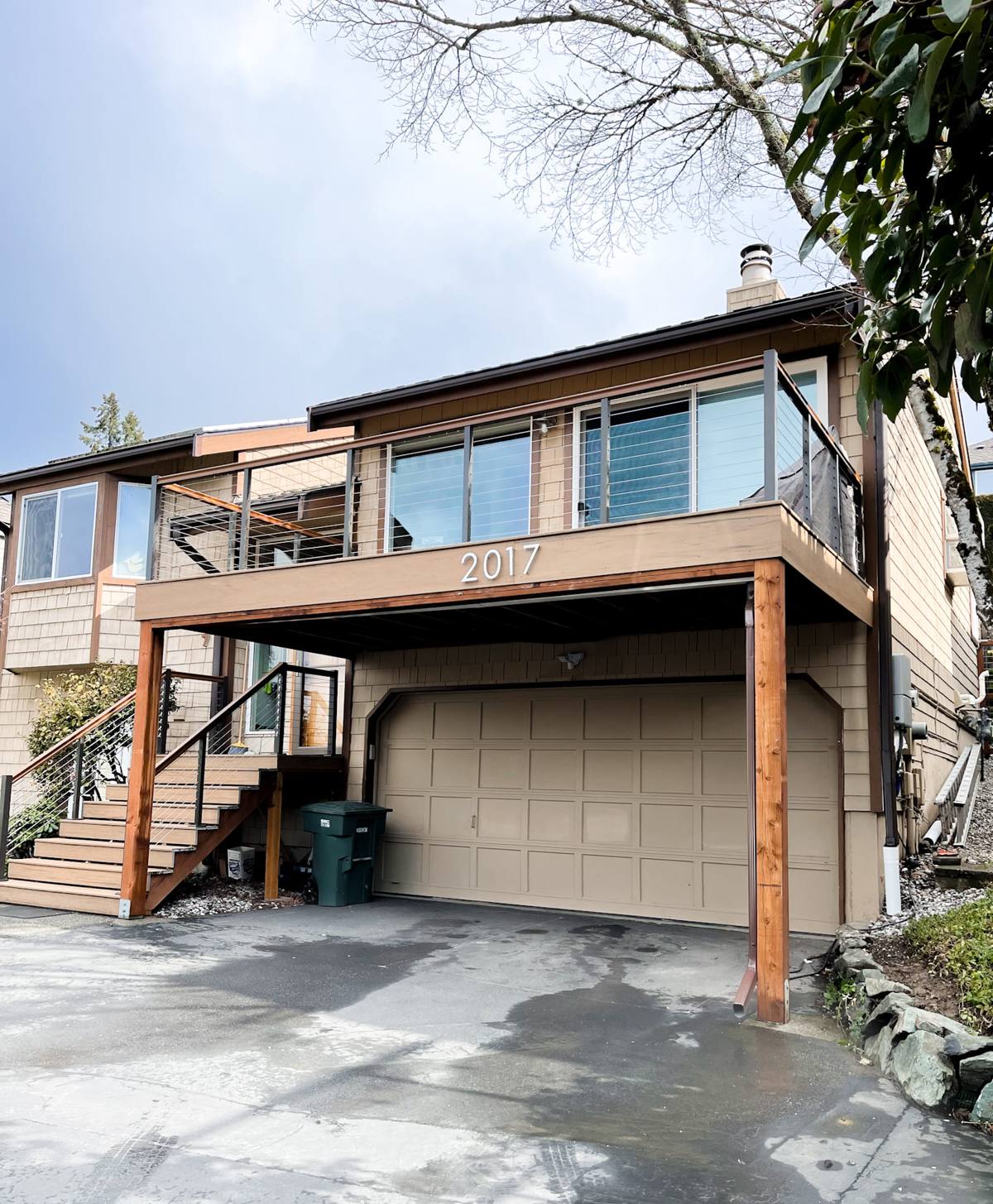
What Local Homes Actually Need From This Siding
Salt Air and Coastal Exposure
Salt-laden air accelerates corrosion on fasteners, hardware, and lower-grade trim, and it's harder on paint film than most homeowners expect. Board and batten has more vertical seams and more exposed batten edges than a lap profile, which means more places for salt-carrying moisture to sit if the fastening and caulking aren't done right. Stainless or coated fasteners rated for coastal exposure aren't optional here — they're the difference between trim that holds its finish for decades and trim that starts weeping rust streaks in five years.
Driving Rain and Wind-Driven Moisture
Whatcom County storms don't always come straight down. Wind off the water pushes rain sideways into wall assemblies, and vertical board and batten has long, continuous joints running parallel to that water path. If the batten isn't fastened correctly, or the housewrap behind it isn't lapped and taped the right direction, wind-driven rain will find the seam and travel behind the siding rather than running off it.
The Long Moss Season
Shaded walls, north-facing elevations, and anything near tree cover in this area will grow moss and algae for a good chunk of the year. Moss holds moisture against the siding face longer than dry air would allow, which is hard on any paint finish and even harder on any siding material that isn't dimensionally stable when it's wet.
What a Correct Board & Batten Installation Involves
The Water-Resistive Barrier and Rainscreen Gap
Every board and batten job we install starts with a properly lapped weather-resistive barrier, with all penetrations and seams sealed before the first board goes up. On most jobs in this climate we also install a rainscreen gap — a thin drainage space behind the siding — so that any water that does get past the outer layer has somewhere to drain and dry instead of sitting against the wall sheathing.
Layout, Fastening, and Reveal
Board and batten is less forgiving of sloppy layout than lap siding because the vertical lines are the whole visual statement — uneven spacing or a batten that isn't plumb is obvious from the street. Fastening pattern matters just as much as layout: fasteners need to hit framing, sit at the correct depth (not overdriven, not proud), and follow the manufacturer's spacing exactly, especially at butt joints and corners where wind load concentrates.
Flashing and Trim Details
Every window, door, and roofline intersection is a place where water wants to get behind the siding. Head flashing above openings, kick-out flashing where a roofline meets a wall, and correctly caulked or capped batten ends at the top and bottom of the wall are what actually keep a board and batten wall dry — not the siding material itself. This is the part of the job that's invisible once it's done and painted, and it's also the part that separates a durable installation from one that fails early.
Why We Install Only James Hardie Fiber Cement
We standardized on James Hardie for every siding job we do, board and batten included, and we don't install vinyl, LP SmartSide, or other fiber cement alternatives. That's a deliberate call, not a sales position:
- Fiber cement is non-combustible, which matters on a wildfire-adjacent state and matters to some insurers.
- Hardie's HZ5 formulation is engineered specifically for cold, wet, humid climate zones like Whatcom County, resisting moisture-driven damage better than a general-purpose board.
- ColorPlus factory finish is baked on under controlled conditions, holding color and resisting the fading and chalking that field-applied paint struggles with under constant coastal UV and salt exposure.
- It carries a strong, transferable limited warranty that stays meaningful if the home changes hands.
- Correctly installed, it holds its shape and paint line for decades without the swelling, delaminating, or repainting cycles that wood-based and engineered-wood sidings can run into in wet climates.
Board and batten in particular benefits from Hardie's dimensional stability. Because this profile relies on crisp, straight vertical lines to look right, a material that swells, cups, or shifts with moisture will telegraph that movement immediately — gaps opening at battens, boards bowing away from the wall. Fiber cement holds its line.
Board & Batten Material Comparison
| Factor | James Hardie Fiber Cement | Vinyl Board & Batten | LP SmartSide / Engineered Wood |
|---|---|---|---|
| Salt air resistance | Strong; factory finish resists chalking | Can become brittle and fade over time | Finish can wear faster under coastal exposure |
| Moisture / rain performance | Engineered for wet climates (HZ5) | Sheds water but panels can warp or bow | Wood-strand core vulnerable if water intrudes at cuts or joints |
| Moss/algae exposure | Holds finish well when regularly rinsed | Surface can stain and is hard to fully clean | Prolonged moisture contact is the main failure point |
| Fire resistance | Non-combustible | Combustible | Combustible |
| Typical repaint interval | Long — factory finish, not field paint | N/A (color molded in, but fades/chalks) | Field-painted; recoat needed periodically |
Our Process for a Fairhaven-Area Board & Batten Job
- On-site assessment — we walk the exterior, check existing siding and sheathing condition, and note exposure-specific risk areas (north walls, shaded sections, ground-contact points).
- Tear-off and sheathing check — old siding comes off and we inspect the sheathing underneath for rot or moisture damage before anything new goes up.
- Weather-resistive barrier and rainscreen — installed and sealed to current best practice for this climate, not just code minimum.
- Flashing at every penetration — windows, doors, and roof-wall intersections are flashed before siding covers them.
- Board and batten installation — laid out, plumbed, and fastened to Hardie's published specifications for this profile.
- Caulking, touch-up, and final walk-through — seams sealed, any factory-finish touch-up done with matched product, and a walk-through so you know what maintenance (if any) to expect.
Cost Factors for Board & Batten Siding in This Area
We don't quote pricing without seeing the house, but the factors that actually move the number on a board and batten project are consistent:
| Factor | Why It Matters |
|---|---|
| Tear-off vs. install over existing wall | Removing old siding and checking sheathing adds labor but is often necessary for a correct install |
| Wall complexity | Dormers, gables, and multiple roof intersections mean more flashing and cut work |
| Trim and corner detail | Board and batten corner treatment and trim width affect both material and labor |
| HZ5 vs. standard formulation | Climate-matched Hardie product is the right call in this exposure, and it's specified accordingly |
| Rainscreen inclusion | Adds a step but meaningfully improves drainage and drying in a high-rain climate |
| Home size and stories | More wall area and taller elevations increase labor time and equipment needs |
Maintenance Checklist for Board & Batten in This Climate
Fiber cement board and batten is low-maintenance compared to wood, but "low" isn't "none" — especially with this area's moss season. A short annual routine keeps it looking right for the long haul:
- Rinse the exterior (garden hose, not a pressure washer aimed directly at seams) once or twice a year, focusing on shaded and north-facing walls where moss and algae collect.
- Check caulking at window and door trim and at batten ends annually; recaulk any cracked or pulled joints before wet season.
- Keep gutters clear so overflow isn't running down the wall face and soaking a section of siding repeatedly.
- Trim back vegetation and tree limbs that keep a wall section shaded and damp longer than the rest of the house.
- Look at fastener heads and trim edges for early rust staining, particularly on walls facing the water — catching it early is a quick fix, not a repaint.
Why a Crew That Already Works Fairhaven Matters
Board and batten installation isn't exotic, but installing it correctly for this specific stretch of Whatcom County means already knowing where wind-driven rain tends to find weak spots, which elevations grow moss fastest, and how salt exposure changes fastener and trim choices. A crew that's already worked jobs around Sudden Valley and out toward Fairhaven has seen how these houses actually perform through a wet winter — not just how they look the day the scaffolding comes down. That local pattern recognition is what keeps a flashing detail from being an afterthought and a rainscreen from being a line item that gets skipped to save a day of labor.
If you're planning a board and batten project in the Fairhaven area, we're glad to walk the exterior with you, point out exposure-specific concerns on your particular house, and give you a straight, no-pressure estimate. There's a form below — reach out and we'll get you scheduled.