 Sudden Valley Roofing
 Why Fairhaven's Exterior Is Under More Pressure Than It Looks
Fairhaven sits close enough to Bellingham Bay that salt-laden air is a daily fact of life on the exterior of a home, not an occasional coastal event. Add Whatcom County's long wet season — months of driving rain pushed sideways by wind off the water — and a short, mild summer that never quite dries things out, and you get siding conditions that are tougher than most manufacturers' warranty language assumes. Moss doesn't wait for a rare wet year here; it's a seasonal certainty on north-facing walls, under eaves, and anywhere siding stays shaded and damp for weeks at a time.
None of that is dramatic on its own. The damage it does is slow: paint film breaking down a few years early, seams and butt joints absorbing moisture nobody notices until trim starts to soften, moss holding water against a wall long after the rain stops. Siding that isn't built and installed for this specific combination of salt, rain, and shade tends to look tired well before it's actually failed structurally — and by the time it fails structurally, the sheathing behind it is usually already compromised.
What Fairhaven Homes Actually Need From Their Siding
Moisture Management, Not Just Moisture Resistance
The material itself matters less than what happens at the seams, the bottom edge, and every place siding meets a window, door, or roofline. Water doesn't fail siding by soaking through the face of a board — it fails siding by finding a gap, a poorly lapped joint, or a fastener hole that was never sealed, and then sitting there. A correct installation is built around keeping water moving down and out, never trapped behind the cladding.
A Finish That Can Take Salt Air Without Chalking or Fading Early
Field-applied paint on any siding material has a shorter clock near the water — salt air accelerates UV and moisture breakdown of paint film. A factory-cured finish designed for coastal exposure holds its color and its bond to the substrate far longer than a coat applied on-site after installation.
Resistance to Sustained Dampness, Not Just Rain Events
The bigger threat in Fairhaven isn't a single storm — it's siding staying damp for days because it's shaded, close to vegetation, or facing north. Material that swells, wicks, or feeds moss growth when it stays wet is a long-term maintenance liability here in a way it might not be somewhere drier.
Why We Install Only James Hardie Fiber Cement Siding
We standardized on James Hardie and don't install LP SmartSide, vinyl, primed wood, or other fiber cement brands. That's a deliberate call based on what holds up under exactly the conditions Fairhaven sees.
The Material Itself
Hardie fiber cement is a cement, sand, and cellulose fiber composite — it doesn't have organic wood content for moss and rot to feed on the way wood-based or engineered-wood siding does, and it's non-combustible, which matters increasingly for insurance underwriting in this region. It doesn't swell at cut edges or delaminate the way some engineered wood products can if a field cut isn't sealed properly.
Climate-Engineered Product Lines
Hardie makes region-specific HZ formulations — HZ5 and HZ10 — engineered for different moisture and freeze-thaw profiles across the country. For Western Washington's wet, mild-freeze climate, we use the line matched to sustained damp exposure rather than a one-size-fits-all product.
ColorPlus Factory Finish
Rather than relying on field-applied paint, Hardie's ColorPlus finish is baked on at the factory in multiple coats, under controlled conditions, before the boards ever reach a job site. That finish holds color and adhesion in salt air and UV exposure noticeably longer than a paint job applied outdoors after installation — and touch-up product is formulated to match, so repairs blend rather than patch.
Warranty Structure
Hardie backs its siding with a long, transferable limited warranty and separately warranties the ColorPlus finish. Transferability matters to resale — a documented, brand-name warranty is worth more to a buyer than a verbal assurance the siding was "installed right."
How Fiber Cement Compares to the Alternatives
| Factor | James Hardie Fiber Cement | Vinyl | Engineered Wood (LP SmartSide) | Cedar / Primed Wood |
|---|---|---|---|---|
| Moisture behavior near salt air | Does not absorb, swell, or feed organic growth | Doesn't absorb but can warp/crack in temperature swings | Wood-based; vulnerable at cut edges and joints if not sealed | Absorbs moisture; needs consistent maintenance |
| Moss/organic growth resistance | Inorganic substrate, resists growth | Resists growth but traps moisture behind panels | Wood fiber content can support growth if damp long-term | Most susceptible; natural wood |
| Finish durability in coastal air | Factory-cured ColorPlus, long fade resistance | Color molded in, but chalks and fades over time | Factory-primed, needs field topcoat | Field-applied paint, shortest repaint cycle |
| Fire resistance | Non-combustible | Combustible, can melt/deform | Combustible | Combustible |
| Typical repaint/refinish interval | Longest before touch-up needed | Doesn't repaint, but can't be refreshed if faded | Shorter than fiber cement | Shortest, every few years |
This isn't to say the alternatives are without merit elsewhere — vinyl is inexpensive and low-maintenance in drier climates, and cedar has real aesthetic appeal for the right buyer willing to keep up with it. For Fairhaven's specific mix of salt air, sustained rain, and moss pressure, fiber cement with a factory finish is the material we're willing to put our name behind.
What a Correct Installation Involves
Fiber cement siding performs to spec only when the installation details are right — the material doesn't compensate for shortcuts the way some more forgiving products can.
- Proper clearance from grade, decks, and roof lines so the bottom edge of the siding never sits in standing water or snow
- Correct fastener pattern and depth — over-driven or under-driven nails compromise the water-shedding lap
- Factory-cut edges kept intact wherever possible; field cuts sealed with touch-up paint before installation, not after
- Proper flashing at every window, door, and roof intersection — this is where most siding failures actually originate, not in the field of the wall
- Correct lap and joint treatment so water is shed outward at every horizontal and vertical seam
- Rainscreen or drainage plane detailing appropriate for a high-moisture climate, giving any incidental moisture a path to drain and dry
- Caulking only where Hardie's installation instructions call for it — over-caulking traps moisture as often as it keeps it out
Hardie's installation instructions are specific and climate-dependent, and following them to the letter is what keeps the warranty valid. A crew that treats fiber cement like any other lap siding — same nailing schedule, same clearances, same caulk-everything approach — is the most common reason a Hardie installation underperforms its potential in a wet coastal climate.
Our Process, Fairhaven to Finished Siding
1. On-Site Assessment
We walk the exterior, check existing sheathing and moisture barrier condition, and look specifically at the sides of the house that take the most weather — usually the north and west exposures near the water.
2. Product and Line Selection
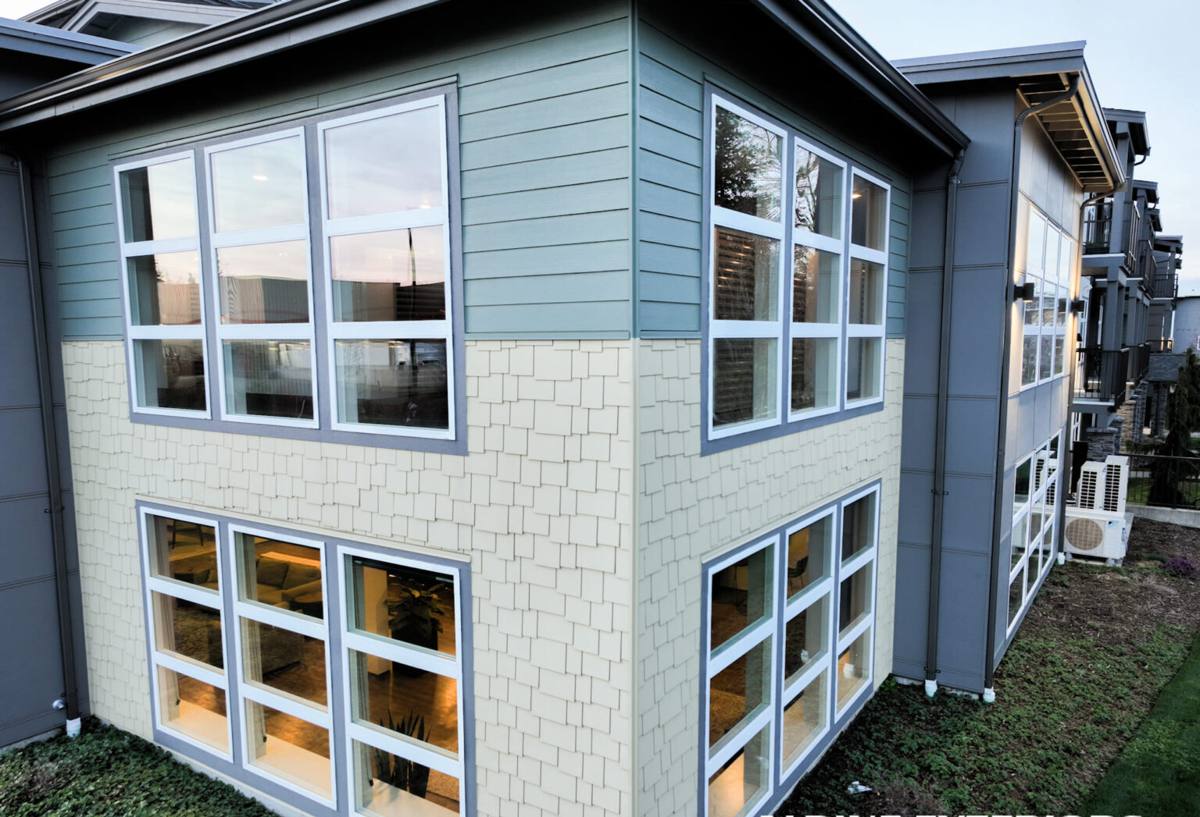
We spec the HZ product line and profile — lap, panel, or shingle — matched to the home's exposure and the look the homeowner wants, and walk through ColorPlus color options.
3. Tear-Off and Substrate Check
Old siding comes off and we inspect sheathing before anything new goes up. Damaged sheathing gets addressed before siding — covering a moisture problem is how small repairs turn into big ones.
4. Weather Barrier and Flashing
A continuous, correctly lapped weather-resistive barrier goes down first, with flashing detailed at every penetration and transition before the first piece of siding is hung.
5. Installation to Manufacturer Spec
Siding is hung to Hardie's published fastening, clearance, and joint requirements — not a generalized standard.
6. Final Walkthrough
We review the finished exterior with the homeowner, confirm touch-up work is complete, and go over basic care so the finish holds up.
Maintenance That Actually Matters Here
Fiber cement with a factory finish needs far less upkeep than wood or field-painted siding, but "low-maintenance" isn't "no-maintenance" in a climate like this one.
Seasonal Moss Control
Shaded and north-facing walls should get an occasional gentle rinse and, where moss is persistent, a soft wash rather than pressure washing directly into seams, which can force water behind the siding.
Caulk and Trim Checks
Once a year, it's worth checking caulked joints at windows, doors, and trim for cracking or separation — these are the spots most exposed to driving rain off the bay.
Touch-Up, Not Repaint
Because ColorPlus is factory-cured, minor scuffs or field-cut edges get touched up with matched product rather than a full repaint — one of the practical advantages over field-painted alternatives.
Why a Crew That Already Works Fairhaven Matters
Siding installation guidelines are written for a national market; applying them well in a specific coastal microclimate takes judgment that only comes from working that climate repeatedly. A crew that's installed siding across Whatcom County's wetter, shadier lots knows where moss pressure actually builds, which exposures need extra flashing attention, and how driving rain off the bay behaves differently than a straight-down rain event inland. That's the difference between siding that meets code and siding that's actually built for where it's going.
It also matters for warranty support. If a question comes up five or ten years in, a local, established crew that's still working in the area is far more useful than a one-time install team that's moved on.
Questions Worth Asking Before You Hire
- Is the installer a certified James Hardie installer, and can they explain the HZ line they'd use for your exposure?
- Will they inspect and address sheathing condition before installing new siding, not just over it?
- What flashing details will they use at windows, doors, and roof intersections?
- Do they provide a copy of the manufacturer's fastening and clearance spec for your specific product line?
- How do they handle field cuts and touch-up to protect the factory finish?
- What's covered under the material warranty versus their own workmanship warranty, and for how long?
If you're weighing a siding project on a Fairhaven home, we're happy to walk the exterior with you, talk through what your specific exposure needs, and put together a straightforward, no-pressure estimate — just fill out the form below to get started.