 Sudden Valley Roofing
 Fairhaven Homes Take a Different Kind of Beating
Fairhaven sits close enough to Bellingham Bay that salt-laden air is a fact of life, not an occasional nuisance. Add in the driving rain that blows through Whatcom County most of the year and the heavy tree cover that shades so many lots here, and you get a roofing environment that's harder on materials than most inland neighborhoods ever see. A roof that would last two decades in a dry climate can start showing real problems in Fairhaven well before that, especially if it was installed without that combination of salt, moisture, and shade in mind.
We work on roofs across this area regularly, and the failures we get called out for follow a pattern: fasteners and flashing that corrode faster than expected, moss mats that hold water against the roof deck for months at a stretch, and underlayment that was never rated for this level of sustained moisture. None of that is unusual for the region — it's just what a coastal, tree-shaded climate does to a roof over time. The fix isn't a mystery product; it's choosing materials and installation details that actually account for these conditions, and doing the work correctly the first time.
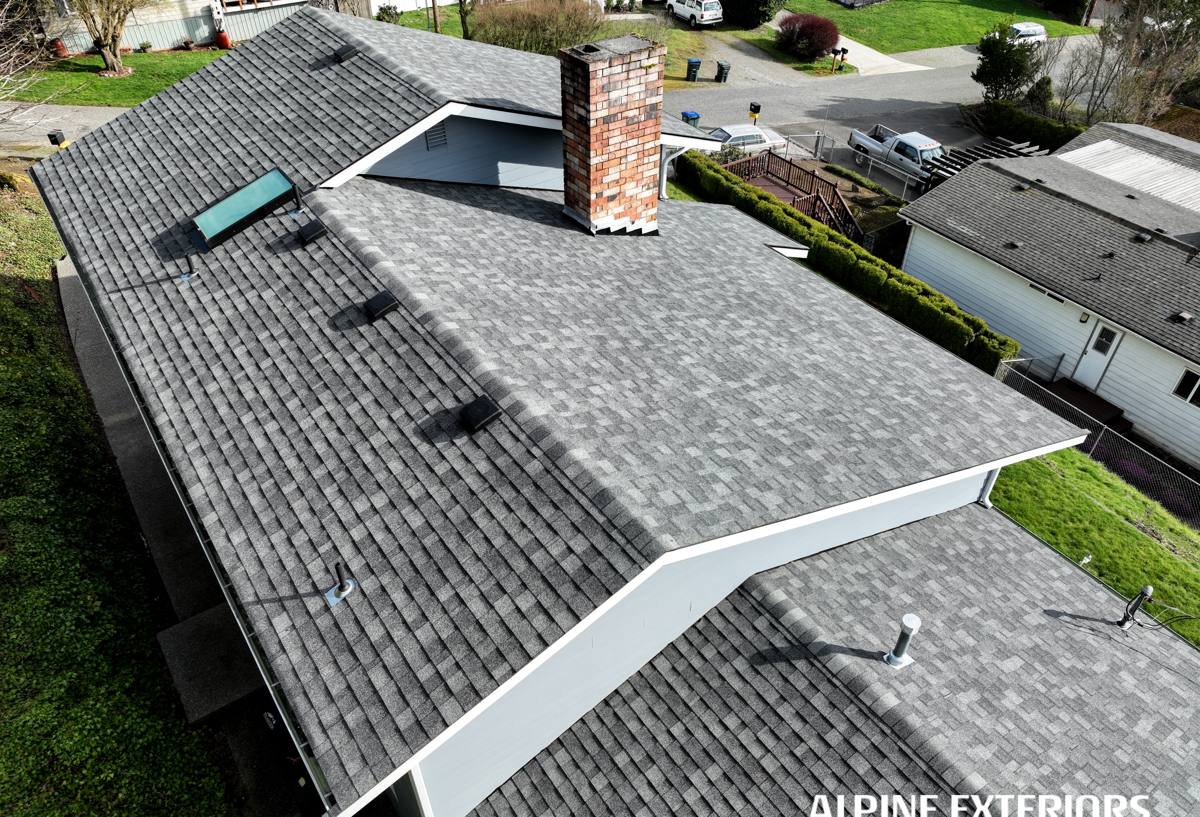
What Salt Air, Rain, and Moss Actually Do Up There
Salt Air
Airborne salt accelerates corrosion on any exposed metal — nail heads, flashing, drip edge, and the fasteners holding shingles or panels down. Once corrosion starts at a fastener, water finds a path in, and a small metal problem becomes a leak problem. This is why the grade and coating of metal components matters more here than it would twenty miles inland.
Driving Rain
Wind-driven rain doesn't just fall on a roof, it gets pushed sideways and upward under shingle edges, around vents, and into any gap in flashing. A roof system built for calmer weather can perform fine for years and still fail the first time it faces a real Pacific storm, because the water is attacking from angles a fair-weather installation never accounted for.
Moss
Shade, moisture, and mild temperatures are exactly what moss needs to thrive, and Fairhaven's tree cover provides plenty of shade. Moss doesn't just look bad — it holds water against the shingle surface long after the rest of the roof has dried, which speeds up granule loss and, on wood or aging asphalt roofs, can lead to rot in the decking underneath.
Signs a Fairhaven Roof Is Due for Replacement
Repairs make sense for isolated damage. Replacement makes sense once the roof as a whole is past the point where patching keeps up with new problems. Watch for:
- Moss growing in mats rather than light surface patches, especially on north-facing or shaded slopes
- Shingles that are curling, cupping, or losing granules faster than the surrounding roof
- Rusting or visibly corroded flashing, vent boots, or exposed fasteners
- Soft spots or noticeable sag when walking the roof or viewing it from a ladder
- Daylight visible through the attic decking, or damp insulation after storms
- Repeated leaks around the same penetration even after past repairs
- A roof approaching or past 20-25 years old, regardless of how it looks from the ground
- Missing or displaced shingles after a windstorm, particularly if it's happened more than once
Any one of these on its own might just call for a repair. Several at once, or a roof that's simply aged out, is the point where replacement is the more honest recommendation — patching an old roof past its useful life usually costs more over time than doing the job right once.
Choosing a Roofing System That Actually Fits This Climate
Material choice matters more here than in a lot of markets, because the conditions punish the wrong choice quickly. Here's how the common options hold up specifically against salt air, driving rain, and moss:
| Material | Moss & Moisture Behavior | Salt Air Durability | Typical Lifespan Here | Maintenance Load |
|---|---|---|---|---|
| Architectural asphalt shingle | Good with proper ventilation and moss-resistant granules; needs periodic cleaning | Solid when flashing/fasteners are corrosion-rated | 20-30 years | Low to moderate |
| Standing seam metal | Sheds moisture fast; minimal surface for moss to hold onto | Excellent with a marine-grade coating and finish | 40-60 years | Low |
| Cedar shake | Holds moisture in a shaded, damp climate; prone to moss and rot without diligent upkeep | Moderate; hardware needs upgrading to resist corrosion | 20-30 years with heavy maintenance | High |
| Synthetic/composite shingle | Sheds moisture well, resists moss better than wood | Good with correct fastener spec | 30-50 years | Low |
We'll install cedar shake if that's what a homeowner wants for the look, but we're upfront about the trade-off: in a shaded, coastal, high-moisture setting like Fairhaven, wood shake asks for more frequent inspection and treatment than asphalt, metal, or synthetic options. That's not a knock on the material — it's just what wood does when it stays damp for long stretches, and it's worth knowing before you commit to the upkeep.
What a Correct Replacement Actually Involves
A roof replacement done for this climate isn't just swapping old shingles for new ones on top of the existing deck. The details that actually determine how long the roof lasts happen underneath the surface layer:
Full Tear-Off and Deck Inspection
We remove the existing roofing down to the deck so we can actually see it. Moss and driving rain both create hidden moisture damage — soft or delaminated sheathing gets replaced before anything new goes down, not covered over.
Moisture-Rated Underlayment
Given the rain here, we use synthetic or self-adhered underlayment rated for sustained wet conditions, not a minimal felt layer that's adequate in drier climates but marginal in this one.
Corrosion-Resistant Flashing and Fasteners
Around every chimney, wall, valley, and vent, flashing and fasteners are the first thing salt air attacks. We spec corrosion-resistant metal and fastener grades specifically because standard-grade hardware has a shorter service life this close to the water.
Ventilation That Matches the Climate
Trapped moisture in the attic accelerates decking rot and can encourage moss growth from the underside out. Proper intake and exhaust ventilation keeps air moving so the deck can dry between rain events instead of staying damp.
Our Process, Start to Finish
- On-site inspection. We walk the roof and the attic, not just look from the ground, and document what we find with photos.
- Written estimate. A clear scope of work and price, broken down so you know what you're paying for and why — no vague line items.
- Material selection. We walk through the trade-offs above so the choice fits your budget, your home's style, and this climate.
- Scheduling around the weather. Roof replacement needs a dry window; we plan the job to minimize the chance of getting caught mid-tear-off by a storm.
- Tear-off and deck repair. Old roofing comes off, the deck gets inspected, and any damaged sheathing is replaced before installation starts.
- Installation. Underlayment, flashing, ventilation, and the roofing material go on in that order, to spec, with attention to every penetration.
- Final walkthrough. We review the finished roof with you, inside and out, before calling the job complete.
What Affects the Cost of a Fairhaven Roof Replacement
Every roof is different, so we won't quote a number without seeing yours, but these are the factors that move the price up or down:
| Factor | Why It Matters |
|---|---|
| Roof size and pitch | More square footage and steeper slopes mean more material, labor time, and safety setup |
| Number of existing layers | Removing multiple old layers takes longer and adds disposal cost versus a single-layer tear-off |
| Decking condition | Rot or soft sheathing found during tear-off needs replacing before new roofing goes down |
| Material choice | Asphalt, metal, synthetic, and cedar carry different material and labor costs |
| Ventilation and flashing upgrades | Bringing older ventilation or flashing details up to current standards adds scope but reduces future risk |
| Roof access and staging | Tree cover, steep driveways, or tight lots common in Fairhaven can affect equipment staging and time on-site |
Why It Matters to Hire a Crew That Already Works in Fairhaven
A crew that only occasionally works this close to the water can miss the details that actually matter here — under-speccing flashing hardware, skipping the moss-resistant granule option, or not accounting for how much shade a lot gets before recommending ventilation. Working this neighborhood regularly means we already know what fails first in this climate and build against it from the start, instead of learning it the hard way on your roof.
It also means we're not guessing at how Whatcom County's weather windows work. Scheduling a tear-off around the region's rain patterns is part of doing the job right — starting a job you can't finish before the next storm rolls in is how homeowners end up with tarps and delays.
Keeping a New Roof Performing After Installation
A correctly installed roof still benefits from some upkeep in this climate, especially where shade encourages moss regrowth:
- Have gutters cleared regularly so water isn't backing up under the roof edge
- Keep overhanging branches trimmed back to reduce shade and debris buildup on the roof surface
- Schedule a periodic visual inspection, especially after major windstorms
- Address any new moss growth early, before it has time to mat and hold moisture
If you're weighing a repair against a full replacement, or you just want an honest look at where your roof stands, we're happy to come out, walk the roof, and give you a straight answer. Request a free, no-pressure estimate using the form below.