 Sudden Valley Roofing
 Storm Damage Roof Repair Built for Ferndale's Weather
Ferndale sits close enough to the water and open farmland that roofs here take a different kind of beating than roofs twenty miles inland. Wind off the Strait picks up speed across open fields before it hits a roofline, driving rain sideways under shingle tabs and flashing edges that were never designed to shed water at an angle. Add in Whatcom County's long, wet moss season and the salt-laden air that drifts in off Bellingham Bay, and you've got a roof that ages faster than the manufacturer's brochure ever accounts for. When a storm does real damage — torn shingles, lifted ridge caps, a chimney flashing that finally gave up — the repair has to account for all of that, not just patch the visible hole.
We've worked enough roofs in and around Ferndale and Sudden Valley to know the difference between a repair that looks fine from the driveway and one that actually holds up through the next atmospheric river event. This page is about that one job, done right, for this one area.
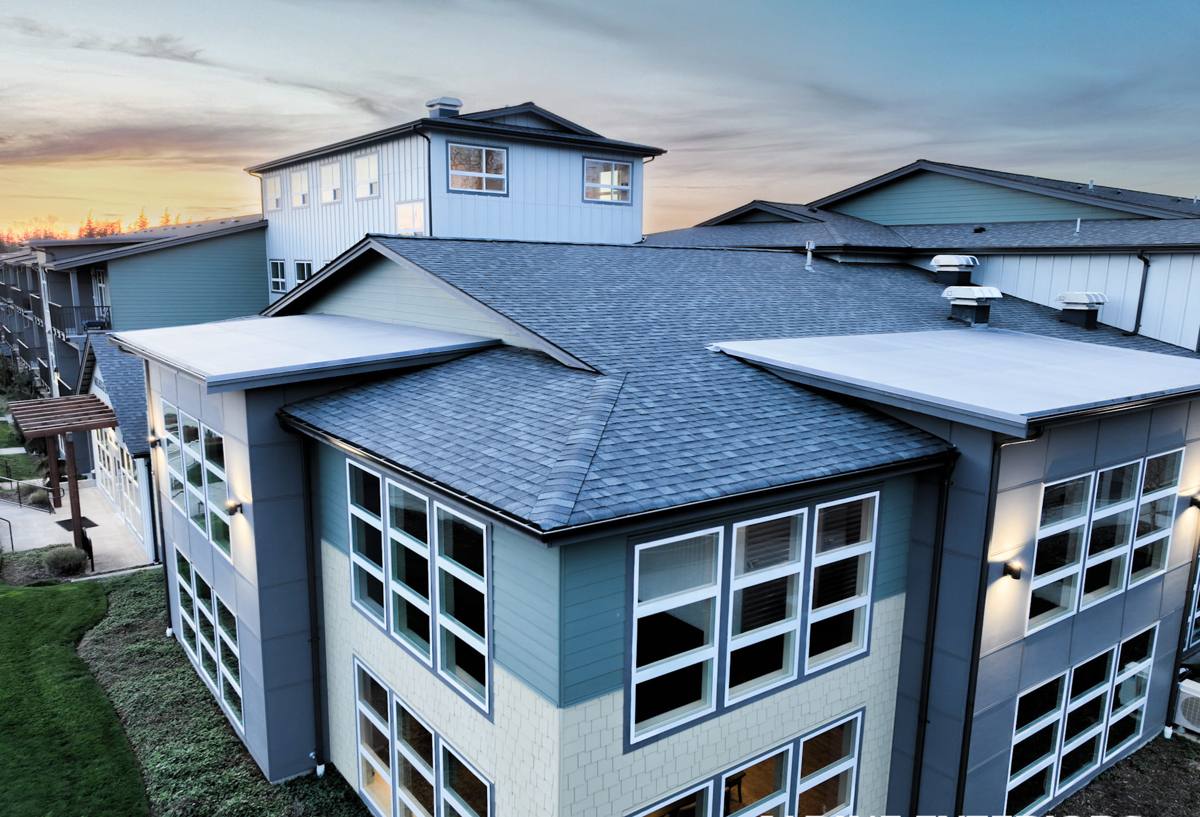
What Ferndale Roofs Are Actually Up Against
Wind-driven rain, not just rain
Most roofing underlayment and flashing details are engineered around water running straight down. Ferndale's storms rarely give you that courtesy. Wind gusts off open farmland and the water push rain sideways and even upward under the first course of shingles near eaves, valleys, and any wall-to-roof transition. A repair that only replaces damaged shingles without checking the underlayment and flashing beneath them is a repair that will leak again in the next windstorm.
Salt air and metal fatigue
Being this close to Bellingham Bay means airborne salt settles on every exposed metal component — flashing, fasteners, gutter hardware, roof vents. Salt accelerates corrosion, and corroded fasteners back out, corroded flashing thins and cracks. A storm that rips off a section of shingles often exposes flashing that was already compromised by salt exposure long before the wind ever showed up. Fixing the shingles without addressing that metal is a short-term fix.
Moss and trapped moisture
Whatcom County's moss season runs long — mild, damp weather for months at a stretch is exactly what moss wants. Moss holds moisture against the roof deck and lifts shingle edges, which means storm wind has more to grab onto. A roof with an active moss problem is more vulnerable to storm damage in the first place, and any storm repair on a mossy roof needs to deal with the moss, not just the torn shingles, or the same section will fail again.
What a Correct Storm Damage Repair Actually Involves
A proper repair isn't just replacing what's visibly missing. It's a sequence, and skipping steps is how homeowners end up paying for the same repair twice.
- Full roof assessment, not just the damaged spot. Wind damage often extends beyond the obviously missing shingles — we check the whole slope, valleys, ridge, and any penetrations (vents, chimneys, skylights).
- Deck inspection. If water got under the shingles, we check the roof deck itself for soft spots, staining, or rot before anything new goes down.
- Underlayment repair or replacement. Torn or waterlogged underlayment gets replaced, not just covered over.
- Flashing check. Chimney, wall, valley, and vent flashing get inspected for corrosion or displacement — this is where salt-air damage usually shows up first.
- Matching shingle replacement. New shingles are matched as closely as possible to the existing roof in color and profile so the repair doesn't stand out as a patch.
- Fastener and seal check. Proper nailing pattern and sealant at every disturbed edge — this is where a lot of storm chasers cut corners.
- Cleanup and debris removal. Old shingles, nails, and torn material don't get left in the gutters or yard.
Signs You Need a Storm Damage Inspection
- Missing, cracked, or curled shingles after a windstorm
- Granules collecting in gutters or downspouts
- Visible daylight through the attic at roof boards or ridge
- Water stains on interior ceilings or upper walls following heavy rain
- Flashing that looks bent, lifted, or separated from the roof line
- Debris (branches, blown material from neighboring roofs) lodged on the roof
- A sudden increase in moss growth in one area, which can indicate a section holding water it shouldn't
If any of these sound familiar after a recent storm, the sooner it's looked at, the smaller the repair tends to be. Water damage compounds — a small leak today is a rotted deck section in six months if it sits through another rainy stretch.
Repair vs. Replacement: How We Make the Call
| Factor | Points toward repair | Points toward replacement |
|---|---|---|
| Extent of damage | Isolated to one slope or section | Multiple slopes or widespread granule loss |
| Roof age | Roof is under 12-15 years old | Roof is near or past expected lifespan |
| Deck condition | Deck is dry and sound under damaged area | Soft spots or rot found during inspection |
| Flashing condition | Flashing is intact, just displaced | Flashing shows advanced salt-air corrosion |
| Shingle match availability | Matching shingles still available | Discontinued profile, patch would look mismatched |
| Moss/moisture history | No prior moss or leak issues | Chronic moss buildup or repeat leak history |
Most storm damage we see in Ferndale falls on the repair side of that table — a targeted fix on a roof that still has years of service life left. But we'll tell you honestly if what we find points the other way. There's no benefit to either of us in patching a roof that's going to need full replacement within a year or two anyway.
Insurance and Storm Claims
Wind and storm damage is often covered under homeowners insurance, but the claim only goes smoothly if the documentation is solid. We provide a written assessment with photos of the damage, which you can submit to your insurer as part of your claim. We're not a public adjuster and we won't promise a specific claim outcome — that's between you and your insurance company — but we'll give you an honest, accurate picture of what's actually damaged and what it will take to fix it, which is what most adjusters are looking for.
Why Local Storm Response Matters
After a significant windstorm, roofing crews from outside the area sometimes show up going door to door in affected neighborhoods. Some are legitimate. Many are gone before the ink dries on a warranty, and if there's a problem with the work six months later, there's no one to call. A crew that already works Ferndale and the wider Sudden Valley and Whatcom County area has a reason to stand behind the repair — this is where our reputation and our next job come from, not a one-time transaction before moving to the next storm-hit town.
There's also a practical side to working locally: we already know how Ferndale's wind patterns tend to hit roofs, which flashing details fail first in this climate, and what shingle profiles are common on homes in the area for a cleaner match. That's not something a crew passing through after a storm picks up in an afternoon.
Our Process, Start to Finish
1. Inspection and estimate
We come out, walk the roof (weather permitting) or use a ladder and binoculars/drone assessment when the roof surface itself isn't safe to walk, and document the damage. You get a clear written estimate before any work starts — no vague verbal numbers.
2. Scheduling
Storm repairs get prioritized based on active leak risk. A roof actively letting water into the attic jumps ahead of cosmetic-only damage.
3. The repair
We follow the sequence outlined above — deck check, underlayment, flashing, shingles, fasteners — rather than just covering the visible damage.
4. Final walkthrough
We walk you through what was found and what was done, including anything we noticed that isn't urgent now but is worth watching, like early moss regrowth or aging flashing elsewhere on the roof.
What Storm Repairs Typically Cost
Cost depends heavily on the extent of damage, roof pitch and accessibility, and whether the deck or flashing needs work beyond the shingles themselves. A small, isolated repair (a handful of shingles, one section of flashing) is a modest job. A repair involving deck replacement or extensive flashing work climbs from there. We won't quote a number without seeing the roof — anyone who does is guessing, and a storm-chaser lowball quote that grows once they're on your roof is a common complaint homeowners share with us after the fact. Our estimate reflects what we actually find during inspection.
Preventing the Next Storm From Doing the Same Damage
Once a storm repair is done, a few simple habits reduce the odds of a repeat call:
- Keep gutters clear so wind-driven rain has somewhere to go instead of backing up under eaves
- Address moss growth before it spreads across a full slope
- Trim back tree limbs that could come down on the roof in the next windstorm
- Have flashing checked every couple of years given how quickly salt air ages exposed metal here
- Don't ignore small granule loss in gutters — it's often the first visible sign of shingle wear before a storm finds the weak spot
If you've got storm damage on a Ferndale roof, or you're not sure whether what you're seeing is worth a repair call, we're happy to take a look. Fill out the form below for a free, no-pressure estimate.