 Sudden Valley Roofing
 Geneva's Siding Has to Work Harder Than Most
Geneva sits close enough to Bellingham Bay and the broader Whatcom County shoreline that homes here deal with a mix of weather stresses most inland siding never sees. Salt-tinged air, wind-driven rain off the water, and a moss season that can run most of the year all put steady pressure on exterior cladding. A siding product that performs fine in a drier climate can start showing problems within a few years out here — swelling at seams, paint failure, soft spots at the bottom courses, or moss creeping up from the ground line. When we quote a fiber cement siding job in Geneva, we're not treating it as a generic siding replacement. We're accounting for the specific way this stretch of Whatcom County wears down a wall system.
Salt-Laden Air and Coastal Moisture
Airborne salt accelerates corrosion on fasteners, flashing, and any exposed metal trim, and it also draws moisture into porous or poorly sealed materials. Siding that isn't dimensionally stable can absorb that moisture, swell, and then dry unevenly — which is exactly what causes paint to crack and peel ahead of schedule. Fiber cement resists this cycle far better than wood-based products because it doesn't move the same way when it takes on and releases moisture.
Driving, Wind-Driven Rain
Rain that comes in sideways during a Whatcom County storm doesn't just wet the face of a wall — it drives water up under laps, around trim, and into any gap in the water-resistive barrier. Geneva homes need a siding system installed with correct overlaps, flashing, and drainage detailing behind the cladding, not just a product that looks good once it's up. Material choice matters, but installation detailing matters just as much.
A Long Moss and Algae Season
Shade, moisture, and mild temperatures for much of the year give moss and algae a long runway on north-facing walls, under eaves, and near the ground line. Some siding materials feed that growth or trap moisture against the surface, which speeds up rot in wood-based products. Fiber cement doesn't rot, and a factory-cured finish resists the kind of surface staining that makes a home look neglected even when the siding underneath is sound.
Why Fiber Cement Is the Right Material for This Climate
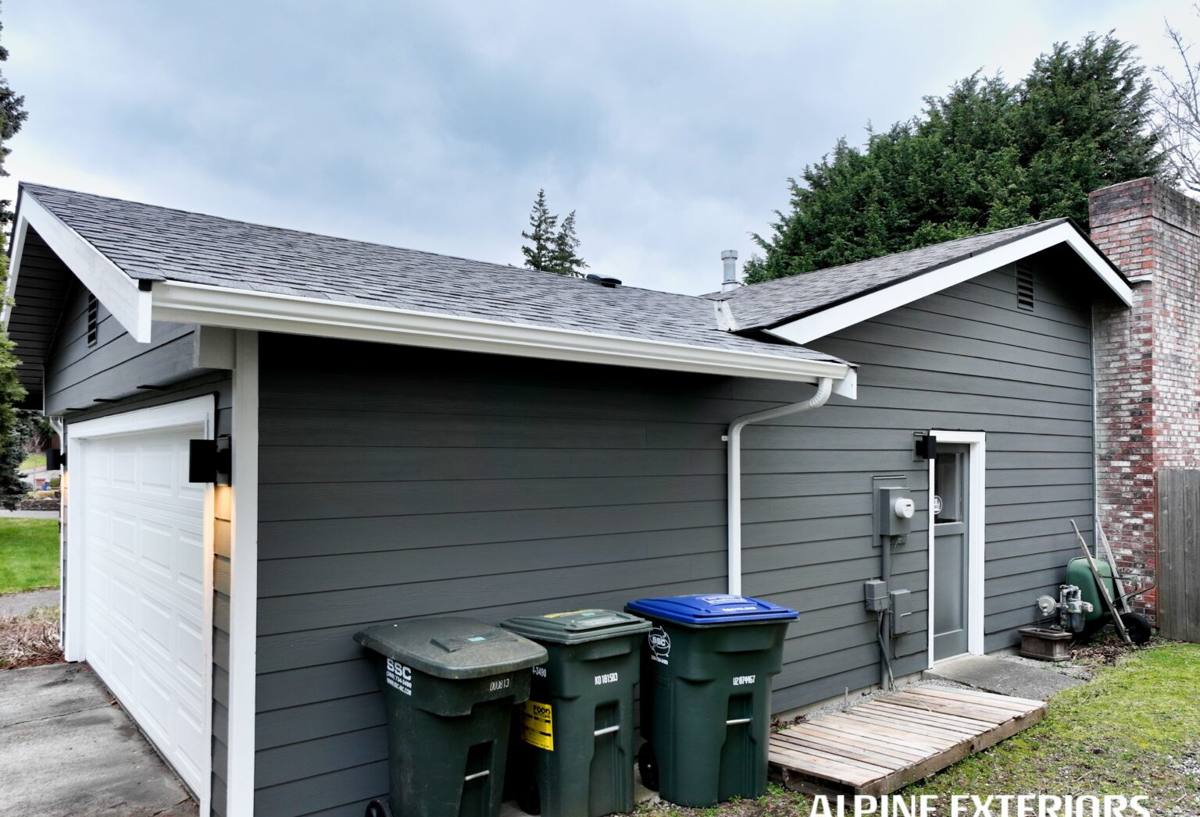
Fiber cement is a mix of cement, sand, and cellulose fiber, cured into planks and panels that are dimensionally stable, non-combustible, and resistant to moisture damage in ways that wood, wood-composite, and vinyl products aren't. It doesn't swell and shrink dramatically with humidity swings, it holds paint and factory finishes far longer than wood, and it stands up to the freeze-thaw and wet-dry cycling that's routine in this part of Washington. None of that means every fiber cement product performs the same — the backer material, the curing process, and the factory finish all vary by manufacturer, and those differences show up on a home within a handful of years, especially in a coastal-influenced climate like Geneva's.
Why We Install Only James Hardie
We standardized on James Hardie fiber cement siding and don't install LP SmartSide, vinyl, Cemplank, Allura, primed spruce, or cedar. That's a deliberate call, not a marketing line. Hardie's HZ5 product line is engineered specifically for climates with significant moisture exposure, which fits Whatcom County. The ColorPlus factory finish is baked on under controlled conditions rather than field-applied, which gives it more consistent coverage and a longer service life before repainting is needed. Hardie also backs its products with a strong, transferable limited warranty, which matters to a homeowner who may sell within the warranty period. We've found that when a fiber cement job goes wrong, it's almost always either a lesser-engineered product or a poor installation — and we control for both by installing one product line, to spec, every time.
What a Correct Fiber Cement Installation Actually Involves
Fiber cement siding is unforgiving of shortcuts. A rushed or under-detailed install can look fine on day one and still fail early in a wet climate. Here's what we consider non-negotiable on every job:
- A continuous, correctly lapped water-resistive barrier behind the siding, with all penetrations sealed
- Proper flashing at windows, doors, and any horizontal trim, including kickout flashing where a roofline meets a wall
- Minimum clearance between the bottom of the siding and grade, decks, or roof surfaces, per manufacturer specification
- Correct fastener type, spacing, and placement — over-driven or under-driven nails are one of the most common causes of premature failure
- Factory-primed or ColorPlus-finished cut edges sealed in the field to prevent moisture wicking
- Proper joint treatment and caulking at butt seams, using products compatible with the Hardie finish system
- Ventilation behind the cladding where the wall assembly calls for it, so trapped moisture has somewhere to go
Every one of these steps is spelled out in James Hardie's installation guidelines, and every one of them affects the warranty. A crew that skips flashing details or uses the wrong fasteners can void coverage without the homeowner ever knowing until a problem shows up years later.
Our Process on a Geneva Siding Job
Assessment and Moisture Check
We start by walking the exterior and identifying problem areas — soft siding, staining patterns that suggest water intrusion, moss buildup, and any spots where trim or flashing has already failed. On older homes we pay close attention to areas that have historically taken the brunt of wind-driven rain, since those are usually the first places a wall assembly shows damage.
Tear-Off and Sheathing Inspection
Once the old siding comes off, we inspect the sheathing underneath. This is the point where hidden rot or moisture damage gets caught — and it needs to be addressed before anything new goes up, not covered over. We won't install new siding over compromised sheathing.
Weather Barrier and Flashing
We install a continuous water-resistive barrier and detail flashing at every penetration — windows, doors, hose bibs, vents, and roof-to-wall transitions. This is the layer that actually keeps a home dry; the siding itself is the second line of defense, not the first.
Hardie Installation
Planks or panels go up per James Hardie's specifications for fastening, spacing, and clearance. We use factory-finished ColorPlus product wherever possible to minimize field painting, and we seal cut edges as we go rather than waiting until the end of the job.
Final Walkthrough
We check caulking, trim, and touch-up work, and we walk the home with the owner before calling the job finished.
Comparing Siding Options for a Geneva Home
Homeowners often ask why fiber cement costs more upfront than vinyl or engineered wood siding. The honest answer is that the total cost of ownership tells a different story once you factor in maintenance and replacement cycles in this climate.
| Factor | James Hardie Fiber Cement | Vinyl | Engineered Wood |
|---|---|---|---|
| Moisture resistance | High — won't rot or swell | Doesn't absorb water but can warp in heat/cold | Vulnerable if edges aren't sealed |
| Fire resistance | Non-combustible | Combustible, can melt/deform | Combustible |
| Finish longevity | Factory ColorPlus finish, long fade resistance | Color molded in, can fade and chalk | Requires field paint, more frequent repainting |
| Typical lifespan (PNW conditions) | 30+ years installed to spec | 15-25 years | 15-20 years, shorter if moisture exposure is high |
| Moss/algae resistance | Good, doesn't feed growth | Fair, but can trap moisture at seams | Poor if coating fails |
| Upfront cost | Higher | Lower | Moderate |
In a climate with a long wet season and consistent moss pressure, the products that cost less upfront tend to need attention — repainting, seam repair, panel replacement — much sooner than fiber cement does.
Signs a Geneva Home Needs Siding Replacement
Not every siding problem means a full replacement, but these are signs worth having inspected before they turn into structural repairs:
- Soft or spongy spots when you press on the siding, especially near the bottom courses
- Paint that's peeling, bubbling, or chalking heavily in patches rather than evenly across the wall
- Persistent moss or algae growth that returns quickly after cleaning
- Visible gaps, warping, or separation at seams and corners
- Rising energy bills that suggest air and moisture are getting through the wall assembly
- Staining or discoloration on interior walls near exterior corners, which can point to water intrusion behind the siding
Why a Crew That Already Works Geneva Matters
Siding performance in this climate isn't just about product selection — it's about knowing how water actually moves across a wall in this specific setting. A crew that regularly works Geneva and the surrounding Sudden Valley area already understands which wall orientations take the worst of the wind-driven rain, where moss tends to establish first, and how local permitting and inspection processes work in Whatcom County. That local pattern recognition shows up in the details — where extra flashing gets added, how ventilation is handled behind the cladding, and which trim details need extra attention. It's the difference between a siding job that looks right on installation day and one that's still performing well a decade later.
Maintenance After Installation
Correctly installed James Hardie siding is low-maintenance, not no-maintenance. A periodic rinse to clear moss and organic buildup, a yearly check of caulking at trim and seams, and keeping gutters clear so water isn't sheeting down the wall face will keep a Geneva installation performing for decades. None of this is heavy work, but skipping it lets small issues — a failed caulk joint, a clogged gutter — turn into water intrusion problems that are far more expensive to fix than to prevent.
If your Geneva home's siding is showing its age or you're planning ahead for a replacement, we're happy to walk the exterior with you and give you a straight, no-pressure assessment. Reach out for a free estimate using the form below.