 Sudden Valley Roofing
 Siding Built for the Geneva Stretch of Sudden Valley
Geneva sits close enough to the water and the surrounding tree cover that its homes take a different kind of weathering than siding fifteen minutes inland in Bellingham or Ferndale. Between the humidity coming off Lake Whatcom, the shade from mature Douglas fir and cedar canopy, and the salt-tinged marine air that rolls up from the Sound, siding here has to handle constant moisture exposure without ever fully drying out between rain events. That combination is exactly why we install James Hardie fiber cement exclusively, and why we treat a Geneva job differently than a siding job in a drier, more open part of the county.
This page covers what a correct James Hardie install looks like specifically for homes in this neighborhood — the climate factors driving the decisions, what goes wrong when those factors get ignored, and how our process is built around them.
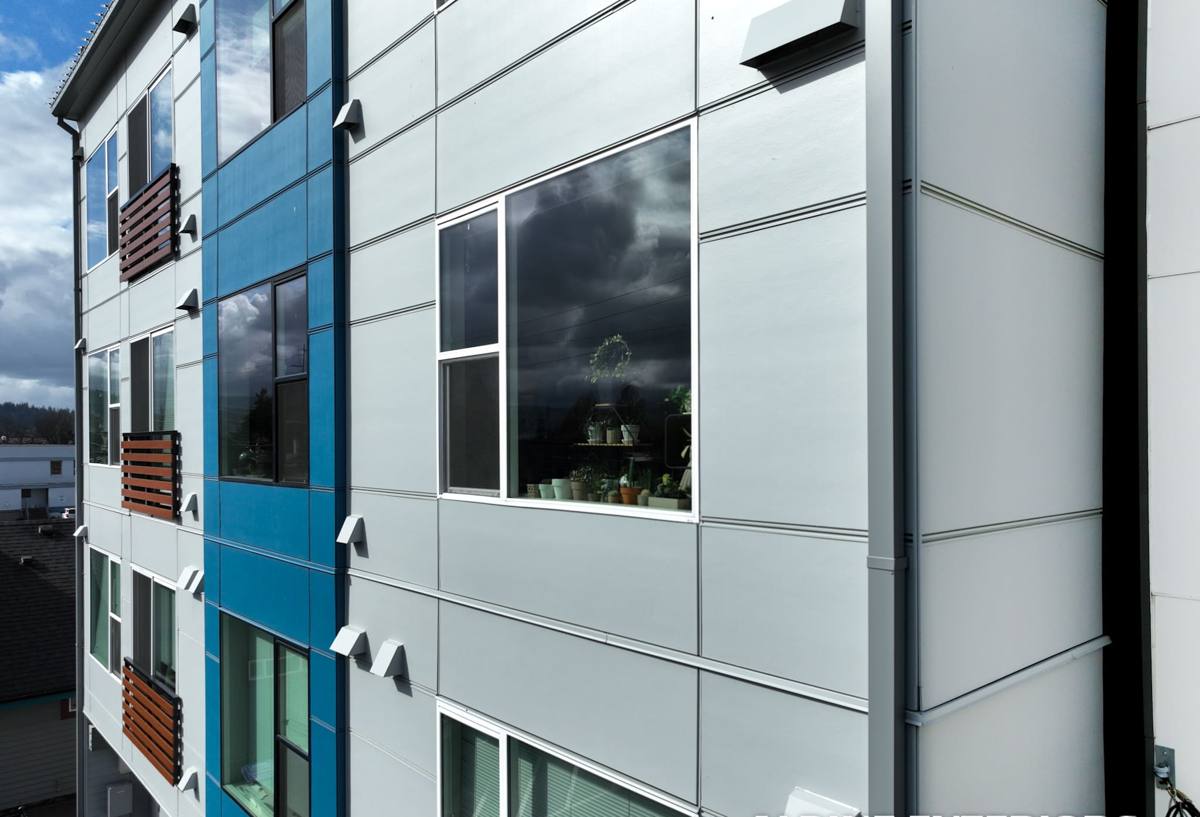
What Geneva's Climate Actually Does to Siding
Salt Air and Slow-Drying Moisture
Sudden Valley isn't coastal in the way Bellingham Bay is, but Lake Whatcom and the region's overall marine exposure still put a fine salt and mineral residue on exterior surfaces over time. Combined with Whatcom County's long wet season, that residue doesn't get rinsed away as cleanly as it would somewhere with more sun and wind. It sits, mixes with moisture, and slowly works on any siding material that isn't dimensionally stable or that relies on paint film alone for protection.
Driving Rain Off the Lake
Wind off the lake pushes rain sideways into south- and west-facing walls more than homeowners expect. That means water isn't just falling on siding — it's being driven up under laps, into seams, and against trim edges. Any gap in flashing, caulking, or panel fit becomes a moisture entry point, and once water gets behind siding in a shaded, slow-drying lot, it stays there.
A Long Moss and Algae Season
The tree cover that makes Geneva lots attractive also keeps a lot of exterior wall area in shade for much of the year. Shade plus consistent moisture is the exact recipe for moss and algae growth on siding, trim, and fascia. Untreated wood-based products and lower-grade composites can start showing green and black staining within a couple of seasons in these conditions. It's cosmetic at first, but sustained moss growth holds moisture against the surface and accelerates whatever underlying material problem already exists.
Why We Only Install James Hardie Here
We don't carry vinyl, LP SmartSide, Cemplank, Allura, or unprimed cedar or spruce siding, and Geneva is one of the clearer examples of why. Each of those products has legitimate uses somewhere, but none of them line up well with this specific combination of shade, moisture, and salt exposure over a 20-30 year ownership horizon.
- Vinyl expands and contracts with temperature swings and can warp or bow when trapped moisture sits behind it in shaded wall sections — it also doesn't hold paint if a homeowner ever wants to change the color.
- Wood-based composites (LP SmartSide, engineered wood panels) use wood fiber with a resin binder. In a low-sun, high-moisture pocket like Geneva, any breach in the factory coating gives moisture a path into the wood fiber core, and edge swelling becomes a recurring maintenance item.
- Primed spruce or cedar is real wood, and real wood in constant shade and dampness needs a maintenance schedule — recoating, caulk checks, moss treatment — that most homeowners underestimate going in.
- Other fiber cement brands (Cemplank, Allura) are legitimate fiber cement products, but we've standardized on one manufacturer's system so our crew's technique, caulking practices, and warranty paperwork stay consistent job to job — and James Hardie's factory-baked ColorPlus finish and HZ5 formulation are engineered specifically for Pacific Northwest wet-side conditions.
James Hardie fiber cement is non-combustible, doesn't expand and contract the way vinyl does, and doesn't have a wood fiber core for moisture to migrate through. The ColorPlus factory finish is baked on under controlled conditions, which holds up better against the slow salt-and-moisture cycle Geneva sees than a field-applied paint job ever will.
The HZ5 Product Line and Why It Matters Here
James Hardie engineers its siding in different formulations for different climate zones. For Whatcom County, we install the HZ5 line, which is formulated for regions with sustained damp weather and freeze-thaw cycling. The difference from a generic or warmer-climate formulation isn't cosmetic — it's in how the cement composite resists moisture absorption and holds dimensional stability through repeated wet-dry cycling, which is functionally what a Geneva wall section goes through most of the year given the tree shade.
| Factor | Why It Matters in Geneva |
|---|---|
| HZ5 moisture formulation | Built for sustained damp exposure rather than intermittent rain, matching the shaded, slow-drying lots common here |
| Factory-baked ColorPlus finish | Resists fading and salt residue buildup better than field-applied paint on wood or composite siding |
| Non-combustible composition | No wood fiber core, so there's nothing for trapped moisture to rot from the inside out |
| Dimensional stability | Doesn't expand/contract like vinyl, which keeps joints and caulking tighter through temperature swings off the lake |
What a Correct Installation Involves
The product only performs as designed if the install matches Hardie's published specifications. This is where most siding problems actually originate — not in the material, but in shortcuts taken during installation. On a Geneva job specifically, we pay close attention to a few things that matter more here than they would on a drier lot.
Water Management Comes First
Before any siding panel goes up, we confirm the water-resistive barrier and flashing details are correct — proper lapping, integrated window and door flashing, and kick-out flashing where rooflines meet walls. On a shaded, high-moisture lot, a flashing mistake doesn't just cause a leak, it creates a spot that never fully dries, which is where rot and mold problems start regardless of what siding is on the surface.
Proper Clearances and Gaps
James Hardie specifies minimum clearances from grade, roofing, and decks, along with specific gaps at butt joints and trim to allow the panels to manage moisture correctly. We hold those clearances even when it would be faster to tuck siding closer to grade or roofline — those gaps are functional, not cosmetic, especially in a spot that stays damp longer than average.
Fastener Pattern and Caulking
Hardie's warranty and performance depend on correct fastener spacing, blind- or face-nailing per the panel type, and the right caulk at every joint and penetration. Panels move slightly with moisture and temperature, and a fastener pattern that's too tight or too loose changes how that movement plays out over years, not weeks — which is why get-it-right-once matters more than crews that don't work here regularly tend to appreciate.
Trim and Transition Details
Outside corners, window trim, and roofline transitions are where water intrusion actually starts in most siding failures we see. We use compatible trim products and factory-matched caulking at every transition, not general-purpose sealant that will fail years before the siding does.
Our Process for a Geneva Siding Job
- On-site assessment: we walk the property, check current siding condition, note shaded and moisture-prone wall sections, and inspect for any existing rot or water damage behind the current siding.
- Written scope and product selection: we specify HZ5 panel type (lap, shingle, or panel), ColorPlus color, and trim package based on the home's exposure and the owner's preferences.
- Removal and sheathing check: old siding comes off and we inspect sheathing and framing for hidden moisture damage before anything new goes up — this step catches problems that don't show from the outside.
- Weather barrier and flashing: water-resistive barrier, window/door flashing, and kick-out flashing get installed or corrected to current standards.
- Hardie panel installation: installed to manufacturer clearance, fastening, and joint specifications.
- Trim, caulking, and final detailing: corners, trim boards, and penetrations sealed with compatible materials.
- Walkthrough: we review the completed work with the homeowner before calling the job done.
Signs Your Current Siding Is Already Losing the Fight
- Persistent moss or algae staining that comes back within months of cleaning
- Soft or spongy spots when you press on siding near the bottom edge or under windows
- Visible gaps, warping, or bowing in panels, especially on shaded walls
- Paint that's peeling or bubbling rather than just fading
- Caulking that's cracked, shrunk, or pulled away from trim and joints
- A musty smell near exterior walls inside the home, which can indicate moisture behind the siding
Any one of these on its own isn't necessarily an emergency, but on a Geneva lot with limited sun exposure, problems like these tend to progress faster than they would elsewhere in the county because the wall never gets a real chance to dry out.
Why a Crew That Already Works This Neighborhood Matters
Siding installation is detail work, and the details that matter shift by microclimate. A crew that mostly works drier, sunnier parts of Whatcom County can install technically competent siding that still underperforms in a shaded, moisture-heavy pocket like Geneva if they don't adjust flashing details, clearances, and joint sealing for those conditions. Working this area regularly means we already know which wall orientations take the worst of the lake-driven rain, which lots hold moisture longest under tree cover, and where the previous generation of siding on similar homes tends to fail first. That local pattern recognition shows up in fewer callbacks and a siding job that's still performing correctly a decade or two out, not just at the final walkthrough.
Get a Straightforward Estimate
If your Geneva home's siding is showing moss, soft spots, or paint failure, or you're planning ahead for a replacement, we're happy to come take a look. We'll give you a straightforward assessment of what's actually going on and a written estimate for James Hardie siding installed correctly for this neighborhood's conditions — no pressure, no upsell. Use the form below to request a free estimate.