 Sudden Valley Roofing
 Windows Built for the Way Happy Valley Actually Weathers
Homes around Happy Valley and the broader Sudden Valley area take a specific kind of beating. There's salt air drifting in off nearby water, long stretches of driving rain that hits west- and south-facing walls sideways instead of straight down, and a moss season that can run half the year on shaded, tree-covered lots. None of that is dramatic on any single day, but it's relentless, and it's exactly what wears out windows years before their expected lifespan. Frames swell and stick. Seals fail quietly between the panes. Sills stay damp long enough for mildew and moss to take hold. We work on windows in this neighborhood regularly, and the failures we see are almost always tied back to moisture — either it's getting in through poor flashing, or it's trapped inside the wall by a window that was never properly integrated with the siding in the first place.
This page is specifically about custom window installation and replacement for Happy Valley homes — not a general product catalog. What we cover here is what actually matters for a house in this climate: how to tell your current windows are failing, what a correct installation involves, how frame and glass choices hold up locally, and what it costs to do the job right.
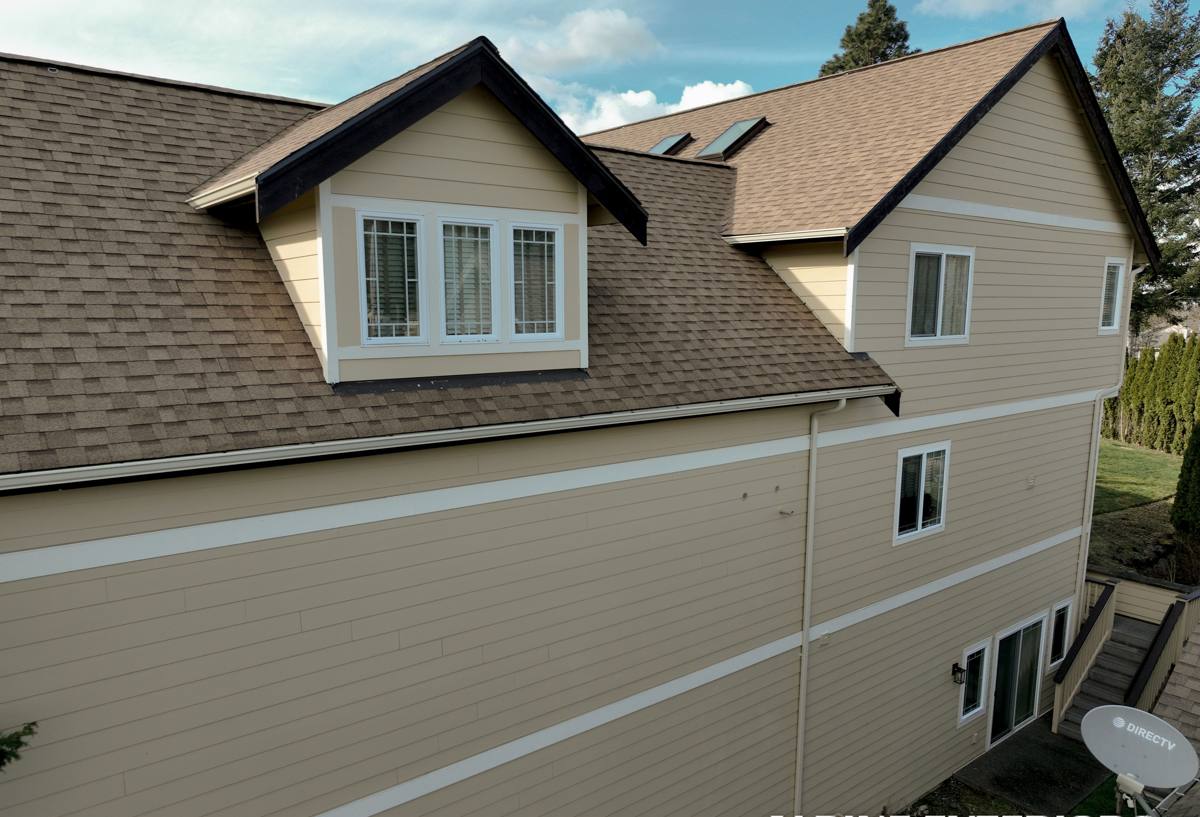
Signs Your Windows Are Losing the Battle
Most homeowners don't replace windows because they woke up wanting new ones — they replace them because something started bothering them. In a wet, mossy climate like this one, the warning signs tend to show up earlier and more clearly than they would in a drier region. Here's what we'd want you to check before deciding whether repair or replacement makes more sense:
- Fogging or a permanent haze between the panes of double-pane glass — the seal has failed and the gas fill is gone
- A noticeable draft near the frame even when the window is fully latched
- Windows that stick, won't stay open, or need force to close — often swollen wood or a warped frame
- Soft, discolored, or crumbling wood at the sill or lower frame corners
- Moss or dark mildew staining building up on the exterior sill or trim, even after cleaning
- Condensation forming on the inside of the glass regularly, especially in bathrooms and bedrooms
- A jump in heating costs without any other explanation
- Visible gaps or cracked caulk where the frame meets the siding
One or two of these on their own might just mean a repair or a fresh bead of sealant. Several at once, especially soft wood or persistent moisture, usually means the window and possibly the framing behind it are compromised.
What a Correct Window Installation Actually Involves
The part homeowners see is the new window going in. The part that determines whether it lasts is everything around it — and it's the step most likely to get rushed by crews who don't do a lot of window work in wet climates. A correct install includes:
Tear-Out and Inspection
Removing the old window is also the only real chance to see what's happening behind it. We check the sheathing, the framing, and the existing weather-resistive barrier for rot or trapped moisture before anything new goes in. Installing a beautiful new window over compromised framing just hides the problem for a few more years.
Sill Pan Flashing
This is the single most important detail on a house that gets driving rain. A sill pan creates a sloped, sealed pathway so that any water that does get past the window — through condensation, wind-driven rain, or a future seal failure — drains back outside instead of sitting in the wall cavity. Skipping this step is one of the most common shortcuts we find when we open up an older wall.
Proper Integration With the Weather-Resistive Barrier
Flashing tape and the house wrap need to be layered correctly — shingle-style, top over bottom — so water always sheds downward and outward. Done backward, it funnels water directly into the wall.
Shimming, Leveling, and Insulating the Gap
A window that's out of square will bind, leak air, and stress the seals early. The gap between the window and the rough opening needs a compressible, non-expanding insulation — not just spray foam packed in tight, which can bow the frame.
Exterior Sealant and Trim
Caulk matters, but so does where you don't caulk. A weep path at the bottom of the frame needs to stay open so any incidental moisture can escape. Sealing a window completely airtight on all four sides, including the bottom, is a common mistake that traps water instead of shedding it.
Frame Materials That Actually Hold Up Locally
There's no single "best" window frame — it depends on exposure, budget, and how much upkeep you want to do. Here's how the common options compare for a home dealing with salt air and constant moisture:
| Frame Material | Moisture Resistance | Maintenance | Typical Lifespan |
|---|---|---|---|
| Vinyl | Very good — won't rot, resists salt exposure well | Low; occasional cleaning | 20–30 years |
| Fiberglass | Excellent; dimensionally stable in wet, temperature-swinging conditions | Low | 30–40+ years |
| Wood-Clad | Good if the cladding stays intact; vulnerable where cladding is damaged or gaps open up | Higher — exposed wood needs monitoring, especially at joints | 20–30 years with upkeep |
| Aluminum | Prone to condensation and cold transfer unless thermally broken | Low | 20–30 years |
For most Happy Valley homes, we lean toward vinyl or fiberglass because they don't give moss and mildew organic material to grow into and they don't rot. Wood-clad windows can still be the right call for a specific architectural look, but we'll tell you upfront that they need more attention over time in this climate, particularly at corner joints and anywhere the cladding gets nicked during other exterior work.
Hardware Matters Too
Salt air corrodes cheap fasteners and hinges faster than people expect. We use corrosion-resistant screws and hardware on every install here, not just on homes closest to the water — moist, salt-tinged air travels further inland than most people assume.
Glass Packages and Energy Performance
The glass does more work than most homeowners realize, and it's where a lot of the real performance difference lives.
- Double-pane with Low-E coating and argon fill — the standard for most replacement projects here; good balance of cost and performance
- Triple-pane — better insulation and sound dampening, worth considering on north- and west-facing walls that take the brunt of weather, but heavier and pricier
- Low-E coating — reflects heat back in during winter and out during summer without darkening the glass noticeably
- Warm-edge spacers — reduce the cold ring around the glass edge that contributes to interior condensation, which matters in a humid climate
If you're seeing condensation on the inside of your current windows in the cooler months, that's often a spacer or seal issue rather than something wrong with your heating — and it's worth mentioning when we come out for an estimate.
What Drives the Cost of a Custom Window Project
We won't quote a number without seeing the job, but here's what actually moves the price up or down:
| Factor | Why It Matters |
|---|---|
| Number and size of windows | Larger openings and whole-house projects have different labor and material scaling than a single window swap |
| Frame material | Fiberglass and premium vinyl cost more upfront than basic vinyl, but generally need less attention later |
| Glass package | Triple-pane and specialty coatings add cost but pay back in comfort and lower energy bills over time |
| Condition behind the old window | Rot or moisture damage found during tear-out means additional framing repair before the new window can go in |
| Access and site conditions | Upper-story windows, tight lots, and limited staging space add labor time |
| Disposal and haul-away | Old glass and frame material require proper disposal, which is typically built into the quote |
The honest answer for most homeowners is that a straightforward, standard-size window replacement runs a modest per-window cost, while larger openings, structural repair, or premium glass packages push it higher. We'd rather walk your specific windows with you and give you real numbers than throw out a broad range that doesn't match your house.
How Our Process Works
- Free on-site estimate. We walk the exterior and interior of each window you're considering, check for existing moisture damage, and talk through your priorities — energy performance, appearance, budget, or all three.
- Product selection. We help you compare frame materials and glass packages against your actual exposure — a shaded, north-facing window has different needs than one that gets full afternoon sun and driving rain.
- Scheduling around the weather. Window openings need to stay dry during installation, so we plan around forecasted rain rather than pushing through it.
- Careful tear-out. We remove the old unit, inspect the framing, and address any rot or damage before installing anything new.
- Installation with proper flashing. Sill pan, shingle-lapped house wrap integration, correct shimming, and appropriate sealant — the details covered above, done in the right order.
- Final walkthrough. We test operation, check seals, review warranty coverage, and make sure you know what maintenance, if any, the new windows need.
Why Local Experience in Happy Valley Actually Matters
A crew that mostly works dry climates will still install a window — but they may not think twice about flashing details that matter here, or they'll schedule around convenience rather than rain. Working regularly around Sudden Valley and the surrounding Whatcom County area means we've already seen how moss builds up on shaded sills, how salt-tinged air chews through cheap hardware faster than the warranty period, and how wind-driven rain finds gaps that would never be an issue in a milder, drier region. That local pattern recognition is often the difference between a window that performs for 25 years and one that starts failing at year eight.
We also coordinate window work with the rest of the exterior — siding, trim, and roofing details around the opening — so the whole water-management system works together instead of one contractor's work undermining another's.
Maintenance After Installation
New windows still need occasional attention in this climate, even the low-maintenance frame materials:
- Rinse pollen, salt residue, and grime off exterior glass and frames a couple of times a year
- Check and clear weep holes at the base of the frame so drainage paths don't clog with debris or moss
- Inspect exterior caulk lines annually and touch up any that have cracked or pulled away
- Wipe down sills after heavy rain if you notice pooling, and keep gutters and downspouts nearby clear so runoff isn't hitting the window directly
None of this is a heavy lift, but skipping it is how small issues turn into bigger ones over a few wet seasons.
If your windows are drafty, fogged, sticking, or just showing their age, we're happy to come take a look. The estimate is free, there's no pressure, and you'll get a straight answer about whether repair or replacement makes more sense for your home — you can request one using the form below.