 Sudden Valley Roofing
 Why Barkley Homes Need Siding Built for This Climate
Barkley sits close enough to Sudden Valley and the broader Whatcom County landscape that homes here take a specific kind of weather beating year-round: moisture-laden marine air that never fully lets up, driving winter rain that hits siding sideways during a good storm, and a moss season that can stretch from fall through spring on anything shaded by fir and cedar canopy. None of that is dramatic on its own. It's the constant, low-grade exposure that wears siding down — swelling seams, softening edges, and feeding the kind of surface growth that traps moisture against a wall for months at a time.
Siding in this area isn't just a cosmetic layer. It's the first line of defense between that moisture and the wood framing behind it. When it fails, it usually fails slowly and quietly — a soft spot behind a downspout, a delaminating corner, paint that won't hold past a couple of seasons — and by the time it's obvious from the street, there's often already water damage underneath. That's the standard we install to: siding that's engineered for this specific climate, not siding that merely tolerates it.
What "Correct" James Hardie Installation Actually Means
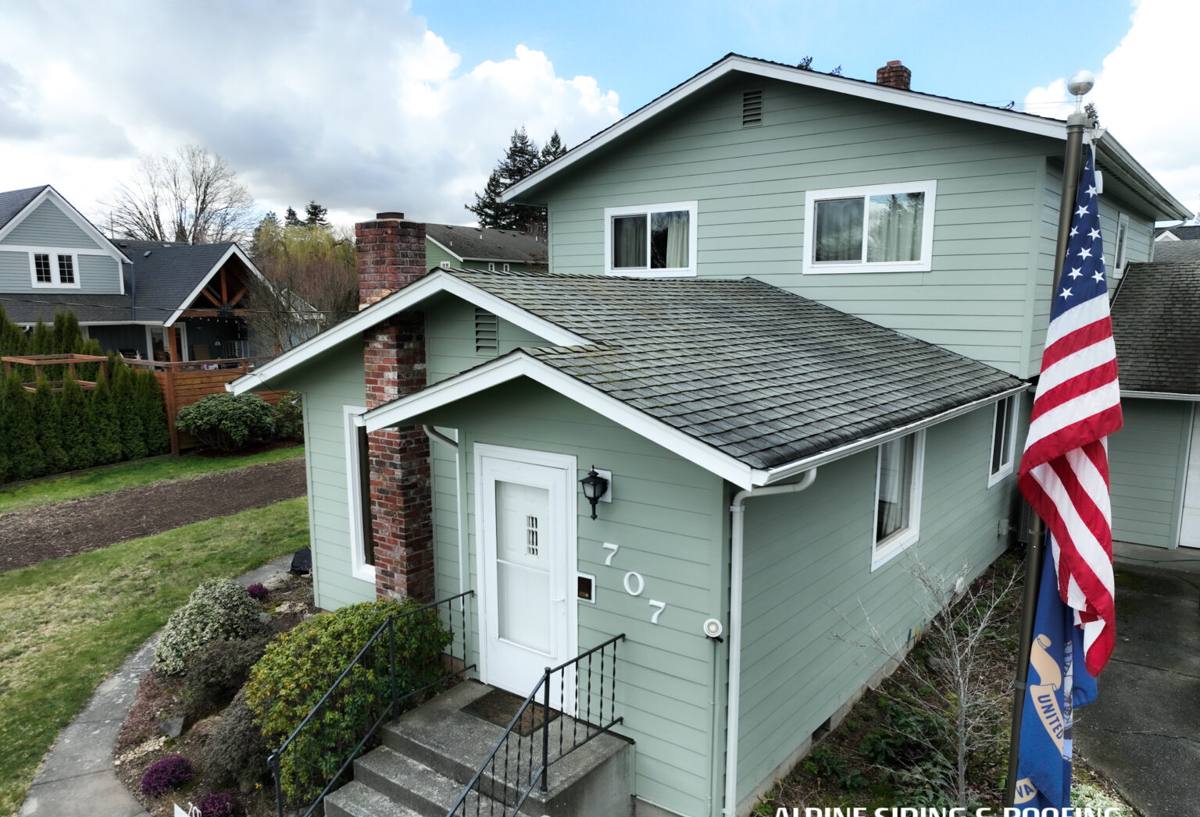
James Hardie fiber cement is the product we install, full stop — we don't offer vinyl, LP SmartSide, Cemplank, Allura, primed spruce, or cedar as alternatives. That's not a marketing position, it's an operational one: we'd rather do one product exceptionally well than spread a crew thin across five materials with five different failure modes. But the product is only half the equation. A correct Hardie job depends just as much on installation detail as on the boards themselves, and this is where a lot of siding jobs — on any brand — quietly go wrong.
The Details That Actually Determine Longevity
- Proper clearance between the bottom edge of siding and grade, decks, and roof lines — Hardie's own installation guidelines specify minimums for a reason, and skipping them is one of the most common causes of early rot in wet climates
- A correctly lapped weather-resistive barrier behind the siding, with flashing integrated at every window, door, and penetration — not just caulked over
- Fastener placement and spacing that matches Hardie's fastening schedule, not "close enough," since under- or over-driven nails compromise the plank's ability to move with moisture and temperature
- Factory-primed or ColorPlus-finished cut edges sealed in the field, since an exposed raw edge is where moisture gets a foothold first
- Kick-out flashing at every roof-to-wall intersection, so runoff is directed away from the siding field instead of running down behind it
Any one of these done wrong won't show up on move-in day. It shows up two, five, or ten winters later, which is exactly why installation quality matters as much as the material choice.
HZ5 Engineering and Why It Matters Here
James Hardie manufactures its siding in different formulations calibrated to different climate zones — the HZ5 line is engineered for regions with more freeze-thaw cycling and sustained moisture exposure, which describes the Pacific Northwest reasonably well. The core difference from a generic fiber cement board is moisture management: HZ5 product is formulated and tested to resist the kind of prolonged dampness that Whatcom County winters produce, rather than the drier, hotter conditions other regions deal with.
This matters for a straightforward reason: siding that was engineered for a different climate can still look fine on install day and still underperform over the years it spends absorbing Pacific Northwest rain. Matching the product formulation to the actual climate a home sits in isn't an upsell — it's the baseline we work from before a single board goes up.
Our Installation Process, Start to Finish
Every Barkley job runs through the same sequence, because skipping steps is how corners get cut on other jobs.
- Assessment: We walk the exterior, check for existing moisture damage, soft sheathing, and rot around windows, trim, and roof intersections before quoting anything — hidden damage found after tear-off gets addressed, not painted over.
- Tear-off and sheathing check: Old siding comes off in sections so we can inspect the sheathing underneath. Any compromised sheathing gets replaced before new material goes up — new siding over rotten sheathing just hides a problem, it doesn't solve it.
- Weather barrier and flashing: A new weather-resistive barrier is installed with proper laps, and flashing is integrated at every window, door, and roof line before siding starts.
- Hardie installation: Boards, panels, or shingle-style siding go up per Hardie's fastening schedule and clearance specs, with cut edges sealed and joints properly staggered.
- Trim, caulking, and touch-up: Trim work and caulking are finished last, using products compatible with ColorPlus finishes so the factory color match holds.
- Final walkthrough and cleanup: We walk the finished job with the homeowner and clear the site of old material and debris.
Siding Materials in a Whatcom County Climate
Homeowners in Barkley often ask what actually separates the options on the market. Here's an honest breakdown of how each performs under the moisture and moss conditions common to this area.
| Material | Moisture Behavior | Maintenance Burden | Typical Lifespan Here |
|---|---|---|---|
| Vinyl | Doesn't rot, but seams and edges can allow water behind the panel with no way to dry out | Low, but cracks and fades over time; hard to color-match repairs | Moderate — sun and impact damage add up faster than the material itself fails |
| LP SmartSide (engineered wood) | Wood-based core is vulnerable if the factory seal is breached at cuts or fasteners | Moderate — requires diligent caulk and paint upkeep in wet climates | Depends heavily on installation quality and ongoing maintenance |
| Cedar | Natural material; absorbs and releases moisture, which is manageable but requires vigilance | High — regular refinishing, sealing, and moss/mildew treatment | Can last decades with consistent upkeep, shorter if neglected |
| James Hardie fiber cement | Non-combustible cement composite; doesn't absorb moisture the way wood-based products do | Low — occasional wash-down and repaint on the ColorPlus finish's cycle | Long-term, provided installation followed spec |
This isn't a claim that other materials are unusable — plenty of homes wear vinyl or cedar successfully. It's why, as a company, we chose to standardize on one product we can install to a consistent, high standard rather than stock five different materials with five different tolerance profiles for this climate.
Maintenance After Installation
Correctly installed Hardie siding is low-maintenance, not no-maintenance. In a moss-prone area like Barkley, a few habits go a long way:
- Rinse siding annually, especially north-facing walls and areas under tree canopy where moss and algae take hold first
- Keep gutters clear so overflow doesn't run down the siding face during heavy rain
- Trim back vegetation and tree limbs that keep a wall shaded and damp longer than the rest of the house
- Check caulking at trim joints and penetrations every couple of years and re-seal where it's cracked or pulled away
- Repaint on the cycle recommended for your ColorPlus finish, or sooner if you notice chalking or fading
Why a Local Barkley Crew Matters
Siding installation isn't one-size-fits-all across a region. A crew that already works Barkley and the surrounding Sudden Valley area knows which walls take the worst of the driving rain, which lots stay shaded and mossy longer into the season, and what kind of moisture damage shows up first in this specific microclimate versus a drier inland town. That local pattern recognition shortens the assessment phase and helps catch problems — like a chronically damp corner or a flashing detail that's failed on similar homes nearby — before they turn into callbacks.
There's also a practical side: a local crew is accountable to the same community it works in. Warranty service, follow-up questions, and touch-up work are a short drive away rather than a phone call to a company that installed your siding once and moved on to the next region.
What to Ask Before You Hire
Whether you're talking to us or getting other quotes, these are the questions that separate a careful contractor from one just trying to close the job:
- Will you replace or repair damaged sheathing if it's found during tear-off, and is that discussed before work starts?
- What clearance will the siding have from grade, decks, and roof lines?
- Is flashing installed at every window, door, and roof-to-wall intersection, or just caulked?
- Which Hardie product line and climate formulation (HZ5 or otherwise) is being quoted, and why?
- Is the manufacturer's fastening schedule followed, or is fastener spacing left to the crew's discretion?
- What's covered under warranty, and is it transferable if you sell the home?
Warranty and Long-Term Value
James Hardie backs its siding with a strong, transferable warranty on the material itself, which matters both for peace of mind and resale — a documented warranty that transfers to a new owner is a tangible selling point when it's time to list the home. That manufacturer warranty covers the product; our installation work is a separate commitment, which is exactly why the installation details covered above aren't optional steps. A warranty is only as good as the job it's backing.
Between the non-combustible material, the factory-baked ColorPlus finish that resists fading and chalking longer than field-applied paint, and a climate-matched formulation, Hardie siding installed correctly is a long-term investment rather than a recurring maintenance line item — which is the whole reason we limited what we install to this one product.
If you're in Barkley or elsewhere around Sudden Valley and want a straight answer on what your home's siding actually needs, we're happy to take a look. Reach out for a free, no-pressure estimate — there's a form right below.