 Sudden Valley Roofing
 Why Silver Beach Siding Has to Work Harder Than It Looks
Silver Beach sits close enough to open water that homes here take on a steady diet of wind-driven moisture, and Whatcom County's long wet season doesn't do the siding any favors either. It's not one dramatic storm that causes problems — it's the slow accumulation of hundreds of soaking-wet weeks a year, salt-laced air working at fasteners and finishes, and moss finding every north-facing, shaded surface it can colonize. Siding that would hold up fine in a drier inland climate can fail early here if it's the wrong material, or if it's installed without accounting for what this specific location does to a house year after year.
That's the lens we use on every Silver Beach project: not "what siding looks good," but "what siding, installed which way, actually survives here." This page walks through what that means in practice.
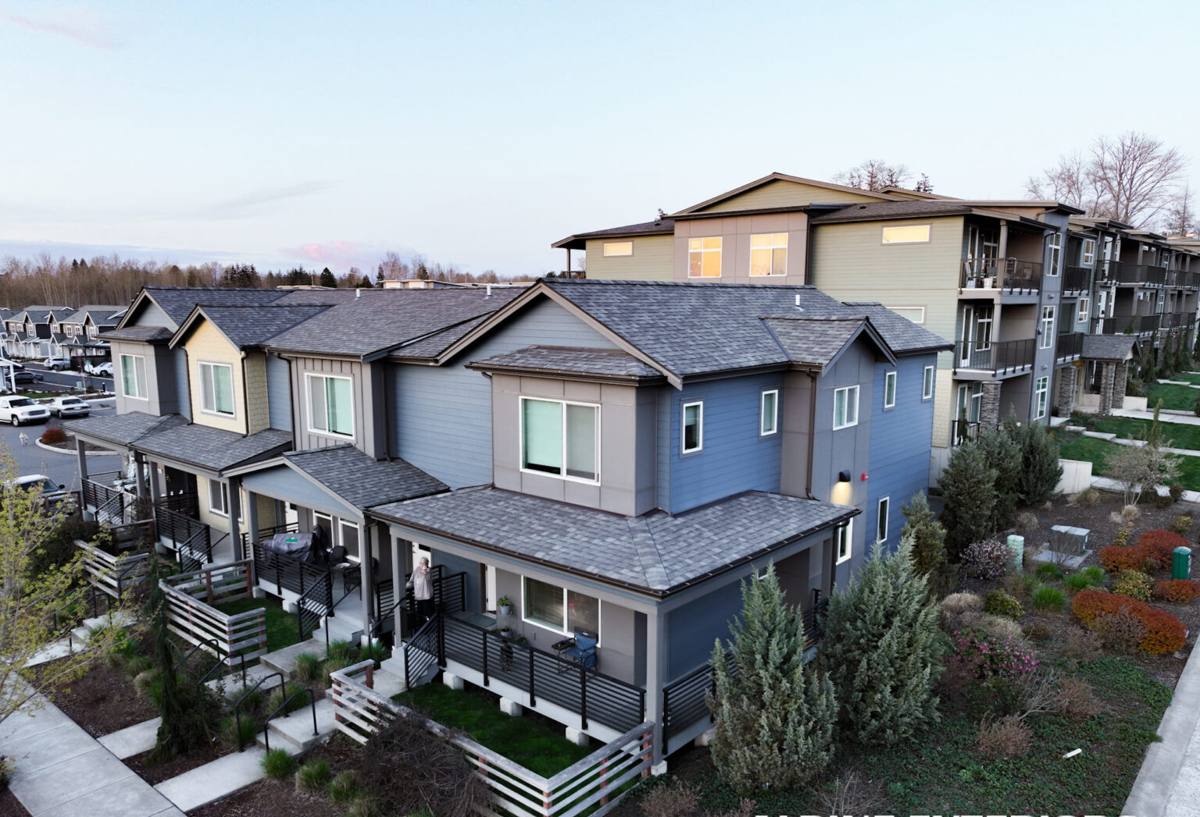
What This Climate Actually Does to a House Over Time
Driving Rain, Not Just Rain
Whatcom County doesn't just get a lot of rainfall — a meaningful share of it arrives sideways, pushed by wind off the water. Driving rain finds horizontal laps, unsealed joints, and gaps around trim in a way that straight-down rain never tests. Siding systems that rely on caulk alone to keep water out, rather than proper lap geometry and drainage behind the cladding, tend to show it first in exactly these conditions.
Salt Air and Slow Corrosion
Proximity to open water means airborne salt settles on every exterior surface, including fasteners, flashing, and trim. Over years, that accelerates corrosion on anything not rated for it and can degrade some paints and coatings faster than the manufacturer's stated service life would suggest inland. It's a slow process, which is exactly why it's easy to underestimate when a siding product is chosen without this climate in mind.
A Long Moss Season
Shade, moisture, and mild temperatures are a perfect combination for moss and algae growth, and Silver Beach has all three for most of the year. Moss doesn't just look bad — it holds moisture against the siding surface, which matters a great deal depending on what that surface is made of and how it's finished.
Why We Install Only James Hardie Fiber Cement
We made a deliberate decision to standardize on James Hardie fiber cement siding and stop installing everything else — no vinyl, no LP SmartSide, no Cemplank or Allura, no primed spruce or cedar. That's not a marketing position; it's a practical one built around exactly the conditions described above.
Non-Combustible, Dimensionally Stable
Fiber cement doesn't expand and contract with moisture and temperature the way wood-based products do, and it won't feed a fire the way combustible claddings can. In a climate that cycles wet and dry constantly, dimensional stability matters for keeping joints tight and paint intact over decades, not just years.
Climate-Engineered HZ Product Lines
James Hardie manufactures regionally engineered versions of its siding, designated by HZ (HardieZone) number, specifically because moisture exposure varies so much across the country. Whatcom County falls into the wetter HZ5 climate zone, and the product formulated for it is built to resist moisture-related damage better than a version engineered for a drier region. Installing the correct HZ designation for this specific location is a detail that gets skipped more often than homeowners realize.
ColorPlus Factory Finish
Rather than relying on field-applied paint, James Hardie's ColorPlus finish is baked on in a controlled factory process, which produces a more consistent, more UV- and moisture-resistant top coat than most site-applied paint jobs can match. That matters directly here: a factory finish holds up better against the freeze-thaw-adjacent cycling and constant damp that Whatcom County sees for much of the year, and it gives moss and algae less of a foothold to begin with.
What a Correct Installation Involves
The product only performs to spec if the installation matches the manufacturer's requirements. This is where most of the real-world failures we get called to look at actually originate — not in the siding material itself, but in shortcuts taken during installation. A correct job includes:
- A weather-resistive barrier installed continuously behind the siding, lapped correctly with flashing at every penetration
- Proper clearance between the bottom edge of the siding and grade, decks, roofing, and other horizontal surfaces
- Correct fastener type, spacing, and depth — over-driven nails are one of the most common causes of early cracking
- Factory-cut or properly sealed field cuts, since an unsealed cut edge is a moisture entry point
- Correct lap and joint treatment, including butt joint flashing where panels meet
- Caulking used only where the manufacturer specifies it, not as a substitute for correct flashing and drainage
Where Shortcuts Show Up First
| Detail | Correct Approach | Common Shortcut |
|---|---|---|
| Bottom clearance | Minimum clearance maintained above grade, roofing, and decks per manufacturer spec | Siding installed tight to grade or roofline, trapping moisture |
| Fastening | Fasteners set flush, at specified spacing and into framing | Nails over-driven or shot into sheathing only, creating stress cracks |
| Cut edges | Field cuts sealed with manufacturer-approved product | Raw cut edges left exposed to weather |
| Water barrier | Continuous, properly lapped house wrap with flashed penetrations | Gaps or reverse-lapped seams that funnel water inward |
None of these are visible once the job is finished and painted — which is exactly why the installer's discipline matters as much as the product on the truck.
How Our Process Works on a Silver Beach Home
- Exterior assessment. We look at existing siding condition, moisture staining, trim and flashing condition, and any areas showing moss or algae buildup before quoting anything.
- Moisture and substrate check. Especially on older homes, we check for trapped moisture or sheathing damage under the current siding before it's removed, so it's addressed rather than sealed back over.
- Product and line selection. We help you choose between lap, shingle-style, or panel Hardie products, along with a ColorPlus color that fits the home and holds up to this climate's UV and moisture exposure.
- Weather barrier and flashing installation. This is the step that determines whether the siding actually performs for its full service life, done before a single piece of visible siding goes up.
- Installation to manufacturer spec. Correct fastening, clearances, and joint treatment throughout, not just on the parts that show.
- Final inspection and cleanup. We walk the finished exterior with you before considering the job done.
Choosing the Right Hardie Line and Color for This Area
James Hardie offers several siding profiles, and the right one depends on the home's style and exposure, not just preference:
- HardiePlank lap siding — the most common choice, available in several textures and exposures, works well on most home styles in this area
- HardieShingle siding — a shingle-look profile for homes wanting a more traditional Pacific Northwest coastal appearance
- HardiePanel vertical siding — often used as an accent or on modern-style homes, paired with trim boards
On color, darker ColorPlus tones can show moss growth less obviously in shaded, damp areas, while lighter tones may need more frequent washing to stay looking clean in this environment. Neither is wrong — it's a maintenance trade-off worth discussing before you commit to a color for the whole house.
Cost Factors for a Silver Beach Siding Project
Every home is different, but the line items that actually move the price on a project here are consistent:
| Factor | Why It Matters |
|---|---|
| Existing siding removal and disposal | Tear-off adds labor and disposal cost, and can reveal sheathing repairs needed underneath |
| Home size and wall complexity | More corners, gables, and dormers mean more cutting, flashing, and labor time |
| Trim and accent work | Window and door trim, fascia, and any shingle or panel accents add material and labor |
| Site access | Steep lots or limited staging space near the water can slow installation and require extra equipment |
| Color and profile selection | Some ColorPlus colors and specialty profiles carry different material costs |
We give you an itemized, written estimate before any work starts, so you're not guessing at where the number comes from.
Maintaining Hardie Siding in This Climate
James Hardie siding is genuinely low-maintenance compared to wood-based alternatives, but "low-maintenance" doesn't mean "no maintenance" in a climate like this one. A simple annual routine keeps it performing and looking right:
- Rinse the exterior yearly with a garden hose or low-pressure wash to remove salt film, pollen, and early moss growth
- Trim back vegetation and tree cover that keeps any wall shaded and damp longer than necessary
- Check caulking at trim and penetrations annually and have it touched up before gaps open into leaks
- Keep gutters and downspouts clear so roof runoff isn't dumping extra water directly onto siding
- Address any impact damage or chipped finish promptly rather than letting a small gap become a moisture entry point
Why a Crew That Already Works in Silver Beach Matters
Installation quality is only half the equation — the other half is knowing what this specific location throws at a house. A crew that regularly works Silver Beach and the broader Sudden Valley area already understands where wind-driven rain hits hardest on a given lot orientation, which north-facing walls need extra attention for moss, and how to sequence a project around this area's wet-season weather windows. That local pattern recognition is the difference between a siding job that just meets code and one that's actually built for where it's going.
If you're weighing a siding project on a Silver Beach home, we're happy to walk the exterior with you, point out what we see, and put together a straightforward, no-pressure estimate. There's no obligation — just an honest look at what your home needs.