 Sudden Valley Roofing
 Why Lake Whatcom Wears a Roof Down Differently
Sudden Valley sits along the south end of Lake Whatcom in Whatcom County, tucked under heavy stands of Douglas fir and cedar that shade most rooflines for a good part of the day. That shade is nice for the deck in July, but it's hard on a roof. Storms roll in off the Pacific and the Salish Sea for months at a stretch, and a shaded, tree-covered roof here simply doesn't get the sun exposure to dry out between systems the way an open roof in a treeless subdivision would. The result is a moss and algae season that can run from early fall through late spring, not just a few weeks.
On top of the moisture, this part of Whatcom County sits close enough to Bellingham Bay and the broader Puget Sound airshed that homes get a steady dose of marine air — fine, salt-carrying moisture that settles on metal edges, fasteners, and flashing and speeds up corrosion over the years. It's a slower process than what you'd see right on the water, but it's real, and it's one of the first things we account for when we spec a metal roof for a Lake Whatcom property.
What a Metal Roof Needs to Handle in This Neighborhood
Moss and Organic Growth
Moss doesn't just sit on top of a roof — it holds water against the surface and, on the wrong material or the wrong installation, works its way under laps and around fasteners over time. Metal is naturally more moss-resistant than asphalt shingles because there's no granule surface for spores to grab onto, but a shaded, damp lot like a lot of Sudden Valley lots still needs a roof designed with clean water shed and good airflow, not just a moss-resistant material and hope.
Corrosion at Fasteners and Cut Edges
Every metal roof has weak points — screw heads, cut panel edges, and spots where two different metals touch. In a marine-influenced climate like this one, those are exactly the spots that fail first if the wrong fastener or flashing metal gets used. Galvanic corrosion, where two dissimilar metals in contact accelerate each other's breakdown in the presence of moisture, is a real and preventable issue, not a rare edge case, on a lake-adjacent home that stays damp much of the year.
Steep, Complex Rooflines
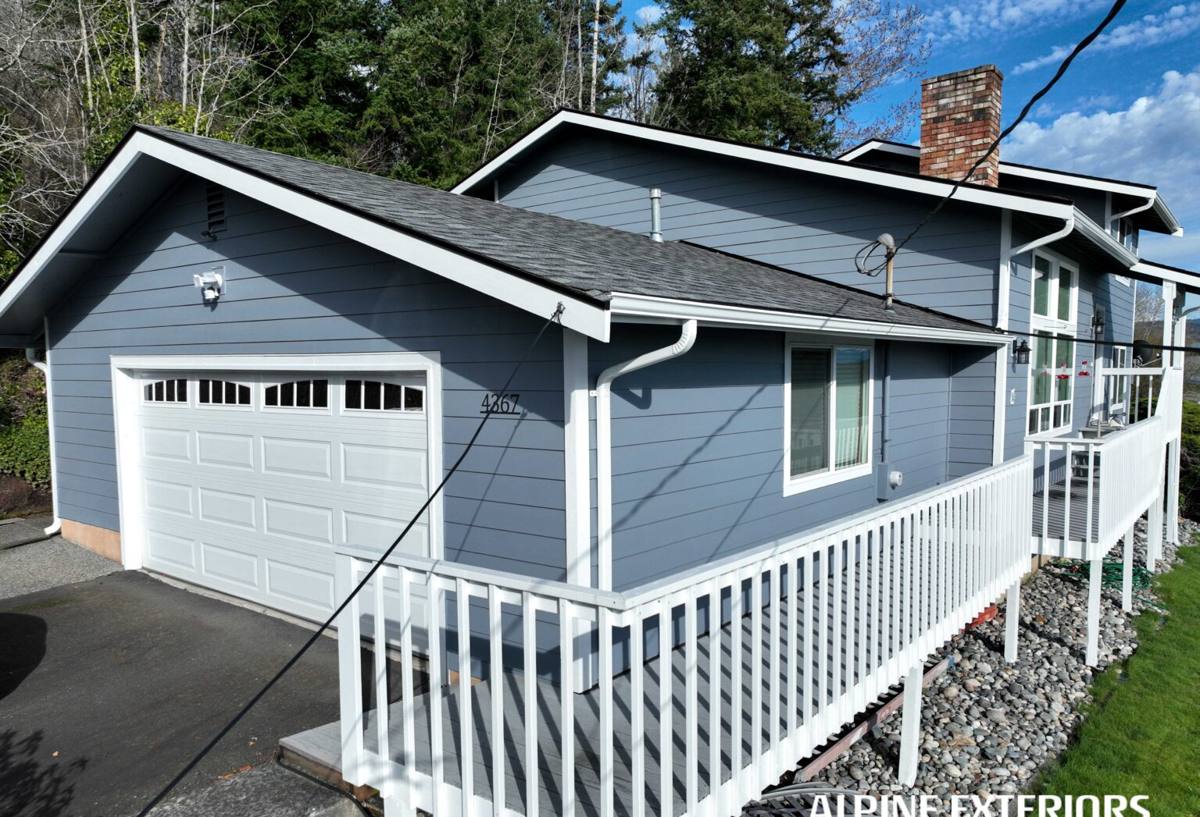
A lot of homes around the lake were built to capture a view, which usually means multiple roof planes, dormers, and skylights rather than one simple rectangle. Every valley, wall intersection, and skylight curb is a place water can find a way in if the flashing isn't done right. More roof complexity isn't a reason to avoid metal — it's a reason to make sure whoever installs it is used to detailing these joints correctly the first time.
Panel Systems: What Actually Fits a Lake Whatcom Home
Not all metal roofing is the same product wearing a different color. The two main families homeowners here choose between are standing seam and exposed-fastener panels, and the right pick depends on your roof's pitch, budget, and how long you want to go between maintenance checks.
| Factor | Standing Seam | Exposed-Fastener Panel |
|---|---|---|
| Fasteners | Hidden under interlocking seams | Visible, driven through the panel face |
| Long-term maintenance | Lower — no exposed screws to re-seat or reseal | Moderate — fastener washers age and may need attention over the years |
| Moisture performance | Very good on low-slope and complex roof planes | Good on straightforward, steeper pitches |
| Typical cost tier | Higher upfront | Lower upfront |
| Best fit | Multi-plane roofs, valleys, view homes | Simple gable roofs, outbuildings, garages |
We don't push one system on every roof. On a straightforward gable garage or shop building, an exposed-fastener panel installed correctly will give years of solid service at a lower cost. On a cut-up, view-oriented main house roof with multiple valleys, we lean toward standing seam because it removes the exposed fastener as a long-term maintenance item entirely — which matters more on a roof that stays wet as much as these do.
What a Correct Installation Actually Involves
The panels are only part of the system. A metal roof lives or dies on the details underneath and around it:
- Underlayment: a synthetic, high-temperature underlayment rated for use under metal, not a leftover felt product not designed for the heat a metal roof can hold in direct sun.
- Ice-and-water barrier: self-adhered membrane at eaves, valleys, and any low-slope transition, since these are the spots most likely to see standing or backed-up water during a heavy Pacific storm.
- Flashing at penetrations: chimneys, skylights, and vent pipes need custom-formed flashing, not a generic boot stretched to fit.
- Fastener and metal compatibility: matching fastener and flashing metal to the panel material to avoid galvanic corrosion between dissimilar metals.
- Thermal movement allowance: metal expands and contracts with temperature swings, so panels and fasteners need to be installed with room to move — a rigid, over-tightened installation is what causes oil-canning and stress cracking down the line.
- Ventilation: proper intake and exhaust airflow so moisture from inside the house doesn't condense against the underside of the metal in our cooler, wetter months.
Our Process for a Lake Whatcom Project
- Roof assessment: we walk the roof, check the decking for soft spots or rot (common under old moss growth), and evaluate existing ventilation before recommending anything.
- Material and system selection: we walk you through standing seam versus exposed-fastener options based on your roof's actual shape, not a one-size answer.
- Tear-off versus recover decision: if the decking is sound and code allows it, a recover can save cost; if there's hidden moisture damage, we tear off and replace decking as needed rather than covering a problem.
- Installation, scheduled around the weather: given how much of the year around the lake sees rain, we plan install windows around realistic dry stretches rather than rushing panels down in wet conditions.
- Final walk-through: we go over the completed roof, flashing details, and warranty paperwork with you before we consider the job done.
What Drives the Cost
| Cost Factor | Why It Matters |
|---|---|
| Roof pitch and number of planes | More valleys, dormers, and hips mean more flashing labor and material |
| Tear-off vs. recover | Removing and disposing of the old roof adds labor and dump fees |
| Panel gauge and finish | Heavier gauge steel and premium coatings cost more but last longer in wet, shaded conditions |
| Site access | Tree canopy, narrow driveways, and tight lots slow down material staging and crane or lift access |
| Roof size and decking condition | Larger roofs and any needed decking repair add directly to material and labor |
We won't quote a number without seeing the roof — anyone who does is guessing. What we can tell you honestly is that the factors above are what actually move the price, not the brand name on the panel.
Maintaining a Metal Roof in a Moss-Heavy, Wet Climate
- Clear gutters and valleys of fir and cedar needles at least twice a year — clogged valleys are one of the most common causes of water backing up under panels.
- Trim back overhanging limbs where practical to cut down on shade and debris landing directly on the roof.
- Have moss or algae staining treated gently rather than pressure-washed — aggressive pressure washing can strip factory coatings and force water under laps.
- Check fastener heads, sealant at penetrations, and flashing joints once a year, ideally after the wettest part of the season has passed.
- Watch for streaking or discoloration near valleys and skylights, which usually shows up well before an actual leak does.
Why a Crew That Already Works Sudden Valley Matters
A lot of the streets around Sudden Valley are private, community-maintained roads, and lots here tend to be tighter and more tree-lined than a typical open subdivision. That changes how a job actually runs — where a delivery truck can stage, how panels get carried in without damaging landscaping, and which roofs need extra care because of low branches or steep driveway grades. A crew that's already done work in this neighborhood isn't figuring that out for the first time on your job; we already know how to move material and equipment through these lots without turning your yard into a mess for a week.
It also means we're not guessing at what Lake Whatcom's climate does to a roof over ten or twenty years — we've seen it firsthand on homes like yours, and we build the installation around that reality instead of a generic spec sheet.
If you're weighing metal roofing for a home near Lake Whatcom, we're glad to come take an honest look and walk you through what your specific roof actually needs. Use the form below to request a free, no-pressure estimate.