 Sudden Valley Roofing
 Why Fairhaven Roofs Face a Tougher Job Than Most
Fairhaven sits close to the water in south Bellingham, Whatcom County, and that location cuts both ways. The view and marine air are part of what make the neighborhood desirable, but the same conditions are hard on a roof. Salt-laden air off the bay accelerates corrosion on exposed metal — nails, flashing, vent caps, and fasteners — years before it would fail somewhere further inland. Add the Pacific Northwest's long wet season, when driving rain comes in sideways during winter storms, and water finds its way into seams, laps, and fastener holes that would stay dry in a gentler climate. Then there's shade. Many Fairhaven lots have mature trees and homes close enough together that roof surfaces stay damp long after a storm passes. That's exactly the environment moss needs to take hold, and once established, it works under shingle edges and lifts them, holding moisture against the roof deck for months at a stretch through the long moss season. None of this means a Fairhaven roof is doomed — it means repairs here have to account for conditions a roof in a drier part of Whatcom County simply doesn't face. A patch that would hold up fine elsewhere can fail fast here if it doesn't account for moss, salt exposure, and sustained wet weather.
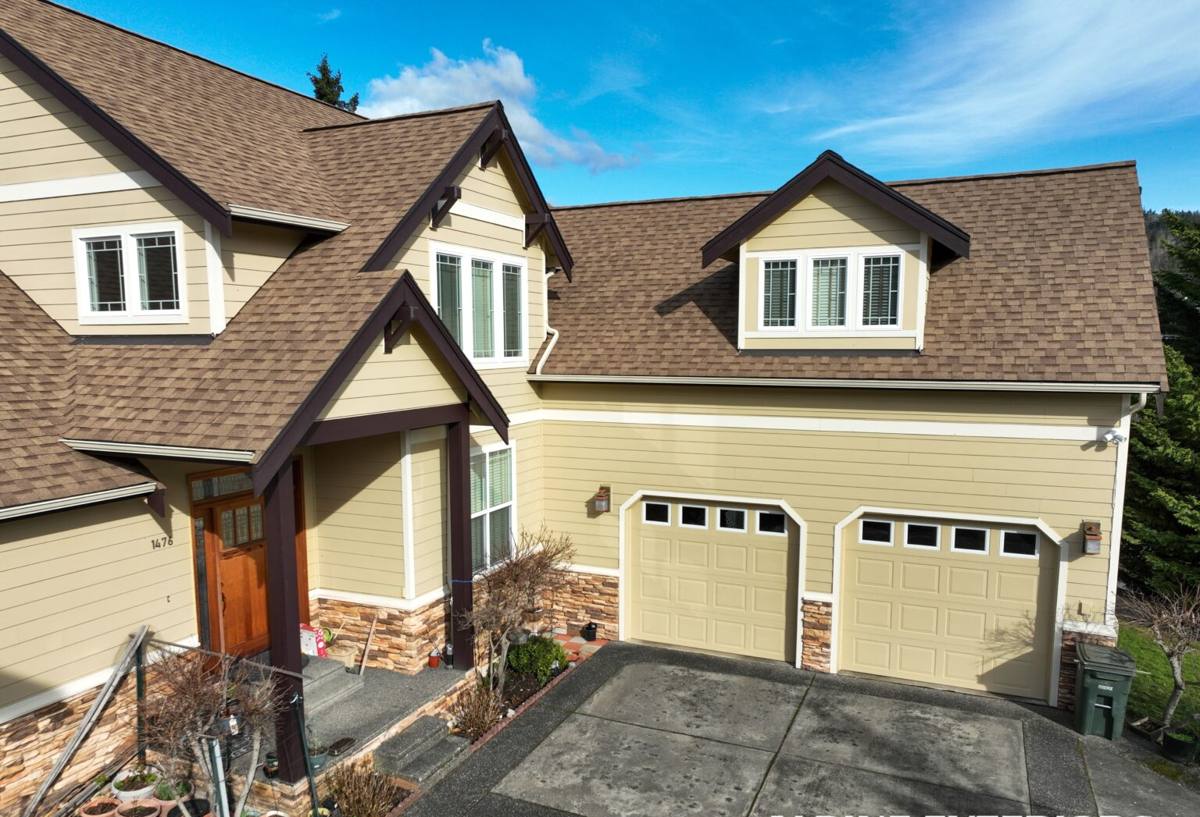
The Damage We See Most Often on Fairhaven Homes
Every roof is different, but after years of repair calls in this part of Whatcom County, a handful of problems show up again and again:
- Moss-lifted shingles — moss growing under shingle tabs on shaded, north-facing slopes, working the edges loose and letting wind-driven rain underneath.
- Flashing failures — corroded or improperly lapped flashing around chimneys, skylights, and roof-to-wall junctions, often the actual source of a leak that shows up as a stain somewhere else entirely.
- Valley leaks — closed or open valleys where debris and moss slow drainage, letting water back up under the shingles instead of running off cleanly.
- Fastener and metal corrosion — nail heads, vent boots, and exposed trim that break down faster near the water than they would further inland.
- Aging materials on older homes — Fairhaven has a good number of older houses, and roofs installed decades ago are often past the point where a single patch is a lasting fix.
The tricky part is that the visible damage — a stain on a ceiling, a curled shingle — is rarely the whole story. Water travels along the roof deck and framing before it shows up inside, so the spot you can see and the spot that's actually failing are often several feet apart.
What a Correct Roof Repair Actually Involves
Tracing the Water, Not Just the Stain
A repair that only addresses the spot where water is showing up inside the house is a temporary fix at best. We start by tracing water back along the roof deck, rafters, and flashing to find where it's actually entering — which, with wind-driven coastal rain, is often a flashing lap or fastener location several feet upslope from the interior stain.
Matching Materials and Technique
Once we know the source, the repair has to match the existing roofing in material, exposure, and fastening pattern. A patch that doesn't tie into the surrounding courses correctly just creates a new place for water to collect. This matters even more on older Fairhaven roofs where the original materials may no longer be manufactured, so the closest available match has to be chosen and installed carefully to perform the same way as what's around it.
Checking Ventilation and Moisture Balance
A leak repair that ignores attic ventilation is only solving half the problem. Trapped moisture in an under-ventilated attic condenses on the underside of the roof deck and can look identical to a leak from outside, except patching the roof surface won't fix it. Part of a proper repair is confirming intake and exhaust ventilation are balanced so the deck can dry out and stay dry between wet spells.
Repair or Replace? How We Help You Decide
Not every roof problem calls for a full replacement, and not every leak can be responsibly patched. We weigh a combination of factors before recommending either path:
| Factor | Leans Toward Repair | Leans Toward Replacement |
|---|---|---|
| Roof age | Under 12–15 years, or a durable material still within its expected service life | Nearing or past the manufacturer's expected lifespan for the material |
| Extent of moss/moisture damage | Localized to one or two areas | Widespread across multiple slopes |
| Decking condition | Solid, no soft spots found during inspection | Soft, delaminated, or rotted sections found in more than one area |
| Repair history | First or second repair in this area of the roof | Same area has already been patched multiple times before |
| Flashing condition | Flashing sound, issue isolated to shingles or underlayment | Flashing corroded or undersized across the roof |
We'll walk you through where your roof falls on each of these before recommending a scope of work, and if a repair is the honest answer, that's what we'll propose. A roof doesn't need to be replaced just because it has a leak.
Our Roof Repair Process in Fairhaven
- Initial contact and scheduling. We ask what you're seeing — a stain, a missing shingle, a draft — and get a crew out to look at the roof directly rather than quoting blind.
- On-roof and attic inspection. We check the roof surface, flashing, and penetrations, then go into the attic if accessible to trace the water path and check for deck damage and ventilation issues.
- Written scope and estimate. You get a clear explanation of what's actually wrong, what we recommend, and a written price before any work starts — no surprise add-ons once we're on the roof.
- The repair itself. We remove and replace only the affected materials, re-flash as needed, and tie the repair into the surrounding roofing so it sheds water the way the rest of the roof does.
- Cleanup and debris check. Old materials, nails, and moss debris are cleared from the roof and gutters before we leave — leftover debris in a valley or gutter just sets up the next problem.
- Follow-up. We'll tell you plainly if what we found suggests other areas worth watching, so you're not blindsided by a second leak later in the season.
Materials and Methods for Coastal Whatcom County Homes
| Component | What We Prioritize and Why |
|---|---|
| Flashing metal | Corrosion-resistant metal and correct lap sequencing at chimneys, walls, and valleys — the single most common failure point on a marine-air roof. |
| Underlayment | A water-resistant underlayment installed correctly at laps and penetrations, so it backs up the shingle layer during wind-driven rain instead of just sitting under it. |
| Fasteners | Corrosion-resistant nails set correctly — overdriven or underdriven fasteners are a common, avoidable cause of early shingle failure near the water. |
| Moss treatment | Manual removal of moss and debris rather than aggressive pressure washing, which can strip granules and shorten the life of the shingles it's meant to protect. |
We don't push one specific shingle brand as the only acceptable option for a repair. What matters more than the label is correct installation — proper nailing pattern, sealed laps, and flashing detailed for how hard it rains here, not just to a generic minimum standard.
Why a Crew That Already Works in Fairhaven Matters
Roof repair isn't just about materials — it's about recognizing what a specific neighborhood's roofs tend to run into. A crew that regularly works in Fairhaven and the surrounding Bellingham area already has a sense of which slopes hold moss longest because of tree cover and orientation, which flashing details tend to fail first in wind-driven rain off the water, and how older homes in this part of the county were commonly roofed so a repair can be matched correctly instead of guessed at. That local pattern recognition shortens the time it takes to find the actual source of a leak and reduces the chance of a repair that looks right at first but doesn't hold up through the next storm season.
Local also means being realistic about scheduling. Roof repairs in this climate go faster and hold up better when they're done in a dry weather window, and a crew that works this area regularly can plan around that instead of rushing a repair between storms.
Keeping a Fairhaven Roof Healthy Between Repairs
A repair holds up longer when it's backed by basic upkeep the rest of the year. Between service calls, we recommend homeowners keep an eye on the following:
- Gutters and downspouts cleared of needles, leaves, and moss debris, especially before the fall rains start
- Overhanging branches trimmed back so shaded roof sections get more light and air movement
- Moss growth on north-facing or heavily shaded slopes checked at least once a year, before it spreads under shingle edges
- Attic checked periodically for damp insulation, a musty smell, or daylight showing through the roof deck
- A visual check of the roof after any significant windstorm for lifted or missing shingles
None of this replaces a professional inspection, but it catches small problems while they're still small — and small problems are a lot cheaper to fix than the water damage they turn into after a full wet season left unchecked.
Signs It's Time to Call for a Repair
Some warning signs are obvious; others are easy to miss until they've caused real damage. Call for an inspection if you notice:
- A water stain on a ceiling or wall, even a small one that seems to come and go with the weather
- Visible moss buildup along shingle edges or in valleys
- Granules collecting in gutters or at downspout outlets
- Daylight visible through the roof deck from inside the attic
- A musty smell in the attic or an upper-floor closet
- Shingles that look curled or cracked, or are missing after a storm
Catching any of these early usually means a straightforward repair. Waiting through another wet season usually means a bigger one.
If you're seeing any of these signs, or just want an honest opinion on what your roof needs before the next storm season rolls in, Sudden Valley Roofing Co offers free, no-pressure estimates for homes in Fairhaven and the surrounding Whatcom County area. Fill out the form below and we'll take a look.