 Sudden Valley Roofing
 Why Bellingham Roofs Age Differently Than Roofs Inland
A roof in Bellingham or Sudden Valley doesn't fail for the same reasons a roof in a dry inland climate fails. Out here, the enemy isn't one big storm — it's the slow, constant grind of moisture, salt-laden air off the Sound, and shade from mature trees that never lets a roof fully dry out between rains. Whatcom County gets a long stretch of low-intensity, driving rain that finds every weak seam, every under-sized nail, every spot where flashing was cut short to save time. Add in the salt air common to this part of the coast, which accelerates corrosion on exposed metal fasteners and flashing, and you have a climate that punishes shortcuts faster than most.
None of that means roofs here fail early when they're built and installed correctly. It means the margin for error is smaller. A roof replacement done for a home near Lake Whatcom or in the Sudden Valley community has to account for extended wet seasons, shaded northern exposures that stay damp longer, and the moss growth that comes with both. This page is about what that actually looks like in practice — not generic roofing advice, but what we specifically check, choose, and build for on homes in this area.
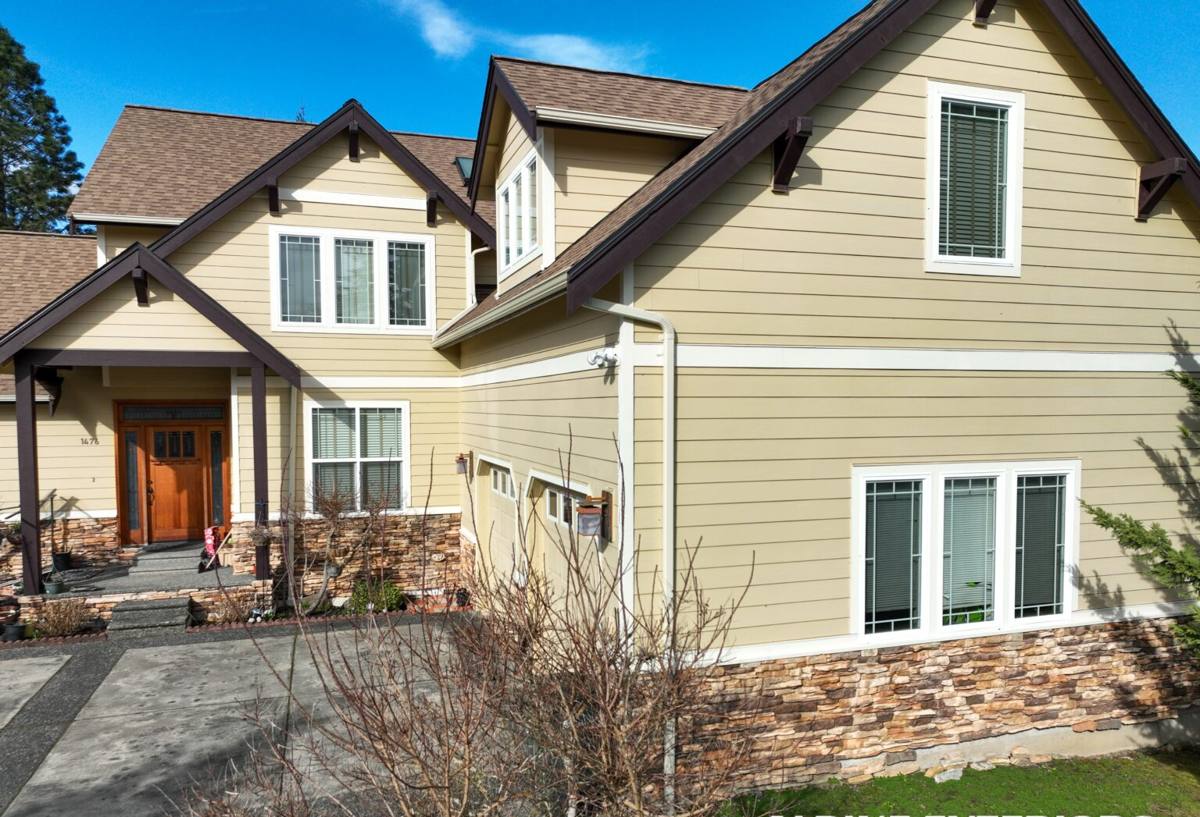
Signs a Repair Won't Cut It Anymore
Homeowners often call us assuming they need a repair and find out the roof is past the point where patching makes sense. Some signs to watch for:
- Granules collecting in gutters or at downspout outlets in noticeable amounts, season after season
- Moss or algae staining that returns within months of cleaning, especially on north-facing slopes
- Soft spots or slight give when walking the roof deck, which usually means moisture has reached the sheathing
- Daylight visible through the attic roof boards, or damp insulation near the eaves
- Shingles that are cupping, curling, or cracking rather than lying flat
- Repeated leaks around the same penetration (chimney, vent, skylight) despite prior repairs
- A roof approaching or past 20-25 years old, which is a realistic lifespan ceiling for asphalt shingles in this climate even with good maintenance
Any one of these on its own might still be repairable. Two or three together, especially on a roof already past the two-decade mark, usually means the underlying materials are failing broadly, not just at one weak point.
What a Correct Roof Replacement Involves Here
Tear-off and deck inspection
We don't install new roofing over old shingles, and we don't recommend it for this climate. A full tear-off is the only way to actually see the deck — the plywood or OSB sheathing underneath — and in a wet climate that deck is exactly where problems hide. Soft, delaminated, or stained sheathing gets replaced before anything new goes down. Skipping this step is one of the most common ways a "new roof" fails within a few years.
Underlayment and water protection
Underlayment matters more here than in drier regions because it's the backup layer that has to perform during long soaking rains, not just the occasional storm. We use synthetic underlayment across the field of the roof and self-adhering ice-and-water membrane at the vulnerable points — eaves, valleys, and roof-to-wall transitions — where wind-driven rain is most likely to work its way backward under the shingles.
Flashing and metal work
Given the salt air common near the water and around Lake Whatcom, we pay close attention to flashing material and fastener quality. Cheap or mismatched metal corrodes faster here than it would inland, and a corroded flashing seam is one of the most common sources of a slow, hard-to-find leak. Step flashing at walls, counterflashing at chimneys, and valley metal all get installed as separate, correctly lapped pieces — not caulked-over shortcuts.
Ventilation
A roof replacement is also the right time to correct ventilation, and in this climate it's not optional. Poor attic ventilation traps moisture, which shortens the life of the new roof from underneath and can contribute to the same moss and algae growth homeowners are trying to get away from on top. We check intake at the soffits and exhaust at the ridge or roof vents as part of every replacement, not as an upsell.
Choosing Materials for a Wet, Shaded Climate
There's no single "best" roofing material for every home in Sudden Valley or Bellingham — it depends on the home's exposure, roof pitch, tree cover, and budget. What we do insist on is matching the material to how much sun and airflow a given roof actually gets, because that's what determines how fast moss and algae come back.
| Material | How it holds up here | Maintenance to expect |
|---|---|---|
| Architectural asphalt shingles | Good performance for the cost; algae-resistant (copper- or zinc-infused) versions slow moss growth noticeably on shaded slopes | Periodic gutter and moss checks; moderate lifespan in constant shade |
| Standard 3-tab shingles | Lower upfront cost, but thinner mat and shorter realistic lifespan under heavy moss and moisture exposure | More frequent moss treatment and earlier replacement |
| Metal roofing | Sheds water and moss very well due to smooth, non-porous surface and steep drainage; performs well near the coast when finishes and fasteners are matched to salt exposure | Low ongoing maintenance; occasional fastener/seam checks |
| Cedar shake | Traditional look, but absorbs and holds moisture longer than other options, which is a real liability under heavy tree cover and long wet seasons | Higher maintenance burden; requires diligent moss and moisture management |
We'll walk through these trade-offs on-site rather than push one product. A roof that gets afternoon sun and reasonable airflow can do fine with standard architectural shingles. A shaded, north-facing roof surrounded by tall trees is a much stronger candidate for an algae-resistant shingle line or metal, simply because it will spend more of the year damp.
Our Process for a Bellingham / Sudden Valley Replacement
- On-site inspection — we get on the roof (not just the ground) and check the deck condition, ventilation, flashing points, and moss/moisture patterns specific to that home's exposure.
- Written estimate — a clear scope covering tear-off, deck repair allowance, underlayment, flashing, material, and ventilation, so there are no surprise line items mid-project.
- Scheduling around the weather — in this climate we plan tear-off days around forecast windows and keep the deck covered and protected any time it's exposed, since an open roof deck and an unplanned downpour is exactly the situation that causes interior damage.
- Tear-off and deck repair — full removal of old roofing, deck inspection, and replacement of any compromised sheathing before new materials go down.
- Underlayment, flashing, and material installation — installed in the sequence and with the overlaps described above, not shortcuts specific to faster jobs in drier climates.
- Ventilation correction — intake and exhaust balanced as needed.
- Final walkthrough — we go over the finished roof and the workmanship warranty with the homeowner before calling the job done.
What Affects the Cost of a Replacement Here
| Factor | Why it matters locally |
|---|---|
| Roof size and number of planes | More valleys, dormers, and roof-to-wall transitions mean more flashing detail, which is where wet-climate leaks originate |
| Deck condition | Homes with long-standing moss or past leaks often need sheathing repair discovered only after tear-off |
| Tree cover and shade | Heavily shaded roofs are better candidates for algae-resistant shingles or metal, which cost more upfront but reduce moss-driven maintenance |
| Access and pitch | Steeper roofs and homes on sloped Sudden Valley lots can require more safety setup and labor time |
| Material choice | Standard shingles, algae-resistant shingles, and metal carry different material and labor costs, as reflected in the comparison above |
We give real numbers after seeing the roof, not before. Broad ranges without an inspection tend to be either misleadingly low or padded to cover unknowns — neither helps a homeowner make a real decision.
Moss, Algae, and the Long Game
Moss is worth its own section because it's the single most common complaint we hear from homeowners in this area, and it's often misunderstood. Moss itself doesn't just sit on top of shingles — its root structure lifts shingle edges and holds moisture against the surface, which accelerates granule loss and, eventually, leaks. Algae staining is more cosmetic but is a sign the roof stays damp longer than it should.
A roof replacement is the best point to get ahead of this cycle: correct ventilation so the deck and shingle undersides dry out faster, choose a shingle line built to resist algae growth if the roof is shaded, and make sure gutters and valleys are sized and flashed to move water off the roof quickly rather than letting it sit. None of that eliminates moss entirely in a climate this wet — but it meaningfully slows how fast it comes back and how much damage it does before you notice it.
Why Local Experience on This Specific Terrain Matters
Sudden Valley homes sit on varied, often sloped lots around Lake Whatcom, with tree cover that changes roof-to-roof and even slope-to-slope on the same house. Bellingham proper has its own mix of older and newer roof structures closer to the water. A crew that already works this specific stretch of Whatcom County knows which roofs in which micro-locations tend to hold moisture longest, which flashing details fail first under this rainfall pattern, and how to sequence a tear-off around a forecast that can turn quickly. That's not something a crew based somewhere drier picks up on the first job — it's built from doing this work, on these roofs, in this weather, repeatedly.
Questions to Ask Before You Hire
- Will the job include a full tear-off, or is layering over the existing roof being proposed?
- What underlayment and ice-and-water protection will be used, and where specifically?
- Is ventilation being assessed and corrected, or just the visible shingle layer replaced?
- What happens if deck damage is found during tear-off — is there a clear process and pricing for that?
- What's covered under the workmanship warranty, separate from the manufacturer's material warranty?
- How will the crew protect the home and landscaping during tear-off, especially if rain moves in mid-project?
A contractor who answers these clearly and specifically, without vague reassurances, is generally one who's actually done the work here before.
If your roof in Bellingham or Sudden Valley is showing its age, we're glad to take a look and give you a straight answer about whether it needs a full replacement or can be reasonably repaired. Use the form below to request a free, no-pressure estimate.