 Sudden Valley Roofing
 Roofing in Geneva: A Lake Whatcom Climate Problem, Not Just a Wear-and-Tear Problem
Geneva is one of the small lakeside communities that make up the patchwork of neighborhoods around Lake Whatcom, not far from Sudden Valley itself. Homes here don't age the way roofs age in drier parts of the state. Between the tree cover, the lake humidity, and the long stretch of wet months that define a Whatcom County winter, a roof in Geneva is working harder than most people realize — and it shows in different ways than storm damage or hail. It shows as moss creeping up from the eaves, as soft spots where moisture has been sitting under a shingle for years, and as granule loss that happens faster on north-facing slopes shaded by fir and cedar.
None of that means Geneva roofs fail faster because the materials are bad. It means the climate here rewards a specific kind of installation — the right underlayment, the right ventilation, and flashing detail that doesn't cut corners around valleys and penetrations. A replacement done without that in mind will look fine for a year or two and then start showing the same problems the old roof had.
What Driving Rain and Moss Actually Do Over Time
Driving rain pushed sideways by wind finds gaps that a straight-down rain never would — lifted shingle tabs, poorly lapped flashing, nail heads that sit slightly proud. Moss compounds the problem because it holds moisture against the roofing material long after a storm has passed, and its root structure works into shingle mat and wood fiber over a moss season that, in this part of Washington, can run most of the year on shaded slopes. The combination is slow, cumulative damage rather than one dramatic failure — which is exactly why so many roofs get replaced later than they should.
What a Correct Roof Replacement Actually Involves
A roof replacement isn't just stripping old shingles and nailing down new ones. Done right, it's a sequence where each layer depends on the one before it being correct.
- Full tear-off to bare decking — never a layover, which traps moisture and voids most manufacturer warranties
- Deck inspection and repair, replacing any sheathing that's soft, delaminated, or stained from long-term leaks
- Ice and water shield at eaves, valleys, and penetrations — the areas most exposed to wind-driven rain and ice damming
- Synthetic underlayment across the full deck as the roof's real waterproofing layer, with the shingles as the wear surface
- New flashing at chimneys, walls, skylights, and vents, rather than reusing old flashing that's already been through one or more roof cycles
- Balanced ventilation — intake at the soffits, exhaust at the ridge — sized to the attic, not just whatever was there before
- Correct nailing pattern and exposure per the shingle manufacturer's spec, which is what most warranty claims actually get denied over
Skip any one of these and the roof will likely still look complete from the ground. The failures that come from skipping them just take longer to show up — usually as a leak two or three winters later, once it's harder to trace back to the install.
Material Options for Geneva Homes
There's no single "best" roofing material for every house. The right choice depends on the roof's pitch, how much shade it sits under, and how long the homeowner plans to stay in the house. Here's how the common options stack up against the specific conditions around Lake Whatcom.
| Material | Moss Resistance | Moisture Behavior | Typical Lifespan Here | Notes |
|---|---|---|---|---|
| Architectural asphalt shingle (algae-resistant) | Good with proper ventilation | Handles driving rain well when installed correctly | 20–30 years | Most cost-effective; wide color range; the standard choice for most homes |
| Standard 3-tab shingle | Fair | Adequate but thinner mat | 15–20 years | Lower upfront cost, shorter service life in wet, shaded conditions |
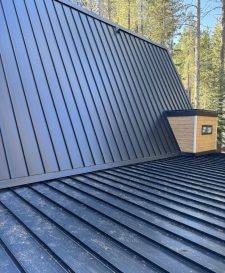
| Standing seam metal | Excellent — moss struggles to get purchase | Sheds water fast, minimal seams for moisture entry | 40–50+ years | Higher upfront cost; best for steep, shaded, or high-maintenance-averse properties |
| Cedar shake | Poor without diligent upkeep | Absorbs and holds moisture, needs airflow underneath | 20–25 years with maintenance | We're honest with clients that shake needs a maintenance commitment this climate makes harder to keep up with |
Most Geneva homeowners land on an algae-resistant architectural shingle — it balances upfront cost against real performance in shaded, wet conditions. Metal roofing earns its higher price tag on steep or heavily shaded lots where moss and moisture are the dominant threat rather than storm impact.
Ventilation and Moisture: The Part Homeowners Don't See
Why Ventilation Is Half the Job
An attic that can't breathe traps warm, moist air against the underside of the roof deck. In winter that moisture condenses, soaks the sheathing, and — combined with cold nights — can encourage ice damming at the eaves. In summer, trapped heat shortens shingle life from underneath, which is a big part of why two identical roofs on identical houses can age at very different rates. Balanced ventilation, with intake low at the soffits and exhaust high at the ridge, keeps that air moving and keeps both the shingles and the deck drier year-round.
Why We Check the Attic Before We Quote the Roof
We look at attic ventilation and any existing moisture staining before we ever write an estimate for a replacement. It's a five-minute check that tells us whether the old roof failed early because of the roofing material itself or because the attic underneath it was never set up to handle a Whatcom County winter. Replacing the shingles without fixing that just resets the clock on the same problem.
Signs a Geneva Roof Needs Replacing, Not Patching
Not every roof problem calls for a full replacement — plenty of issues are legitimately fixable with a repair. But there's a point where patching stops making financial sense and starts just delaying the same conversation. Signs worth taking seriously:
- Granule loss heavy enough that shingles look bald or patchy, especially on north- or west-facing slopes
- Moss established thick enough that it's lifting shingle edges, not just growing on the surface
- Shingles that are cupping, curling, or cracking across multiple areas of the roof, not just one spot
- Daylight or water staining visible in the attic along the roof deck
- A roof that's already 18-20+ years old with an asphalt shingle, or showing its age visibly
- Repeated leaks in different locations after previous patch repairs
- Soft or spongy spots underfoot when walking the roof for inspection
One or two of these on their own might mean a repair is enough. Several at once, or an older roof combined with any of them, usually means a replacement is the more honest recommendation — and it's the one we'll give even when a repair would be the easier sale.
Our Roof Replacement Process, Start to Finish
- On-site inspection — we walk the roof and the attic, not just look from the driveway, and explain what we find in plain terms
- Written estimate covering material options, scope, and a clear price — no vague allowances buried in the fine print
- Scheduling around weather — we plan tear-off days with a dry window in mind, since an open deck shouldn't sit exposed overnight in this climate
- Tear-off and deck inspection, with any rot or damage reviewed with the homeowner before we cover it back up
- Underlayment, flashing, and shingle installation to manufacturer spec, with ventilation corrected as needed
- Full site cleanup, including a magnetic sweep for stray nails around the property
- Final walkthrough so the homeowner sees the finished roof and understands what was done and why
What a Roof Replacement Costs
Pricing depends on roof size, pitch, complexity (valleys, dormers, chimneys), material choice, and how much deck repair turns up once the old roofing comes off. A straightforward asphalt shingle replacement on an average Geneva-area home typically runs in the low-to-mid five figures, with steeper or more complex roofs, or a move to metal, pushing higher. The factors below tend to move the price more than homeowners expect:
| Factor | Why It Matters |
|---|---|
| Roof pitch | Steep roofs take longer, require more safety setup, and use more material per square |
| Number of layers being removed | Tear-off cost rises with each existing layer of roofing on the deck |
| Deck condition | Rotted or delaminated sheathing found during tear-off adds material and labor |
| Roof complexity | Valleys, skylights, chimneys, and dormers all add flashing work and labor time |
| Material choice | Standard architectural shingle sits well below metal or cedar shake in material cost |
We'd rather walk a roof in person and give a real number than throw out a broad estimate that doesn't hold up once we're actually up there.
Why a Crew That Already Works Geneva Matters
A lot of roofing problems around Lake Whatcom aren't unique to any one house — they're shared by every home dealing with the same tree cover, the same lake humidity, and the same wet-season timeline. A crew that's already worked in and around Geneva and Sudden Valley isn't guessing at how a roof will hold up here; they've seen how the last several winters treated the roofs already on the ground. That matters when it comes to picking underlayment for a shaded, moss-prone slope, or knowing that a north-facing valley on a lake-area home needs more attention to detail than the same valley would on a drier, more open lot inland.
It also matters for the practical side of the job — knowing the local permitting process, being realistic about scheduling around the wet months instead of promising a tear-off during a stretch of weather that doesn't hold, and being reachable afterward if a question comes up. We're not visiting Geneva for one job and moving on; it's part of the area we work in regularly.
If your roof is showing its age, or you just want an honest opinion on whether it's a repair or a replacement, we're happy to come take a look. There's no pressure and no cost to get a straight answer and a written estimate — just fill out the form below to get started.