 Sudden Valley Roofing
 Why Siding Choice Matters More in Sehome Than People Think
Homes in the Sehome area sit inside one of the more demanding siding climates in Whatcom County. The combination of salt-laden air moving inland, long stretches of driving rain, and a moss season that can run half the year puts real, ongoing stress on exterior walls. It's not one dramatic storm that causes damage — it's the slow, cumulative effect of moisture finding its way behind panels, joints, and trim, season after season, for years.
That's the lens we use when we talk to homeowners here about siding. A product that performs fine in a dry inland climate can fail early in this one. The right material, installed the right way, is the difference between siding that still looks tight and clean after fifteen years and siding that's cupping, staining, or rotting at the bottom courses well before that.
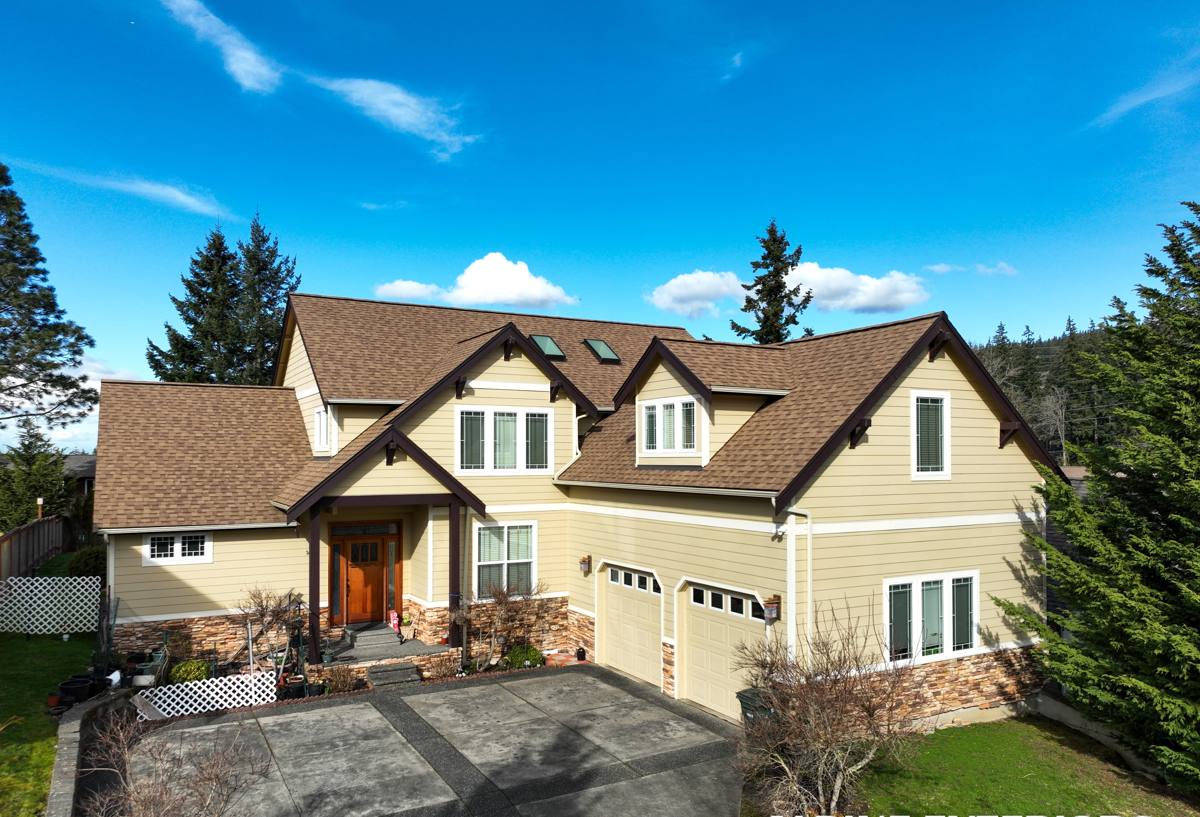
What This Climate Actually Does to Siding
Salt Air and Slow Corrosion
Airborne salt doesn't just affect homes right on the water. It travels, settles on exterior surfaces, and accelerates the breakdown of fasteners, caulking, and any siding material that isn't dimensionally stable. Over time it also degrades paint film faster than a typical field finish is built to handle, which is part of why factory-applied finishes matter so much in this region.
Driving Rain and Wind-Driven Moisture
Rain that comes in sideways doesn't behave like rain falling straight down. It gets pushed up under laps, into seams, and behind trim that wasn't flashed correctly. Siding materials that swell, wick moisture, or lose their shape when wet are working against the climate instead of with it.
The Long Moss Season
Shaded, moisture-heavy conditions in this part of Whatcom County keep moss and algae active for much of the year, especially on north-facing walls and anywhere tree canopy blocks sun and airflow. Moss holds moisture against the siding surface far longer than an open, sunny wall would, which is exactly the environment that causes rot in wood-based products and finish failure in lower-grade composites.
Why We Standardized on James Hardie Fiber Cement
We install James Hardie fiber cement siding exclusively. We don't install vinyl, LP SmartSide or other engineered wood composites, primed spruce, cedar, or other fiber cement brands. That's not a marketing preference — it's a standard we set after weighing how different materials actually hold up in a climate like this one over decades, not just the first few years.
What Fiber Cement Gets Right
Fiber cement is made from cement, sand, and cellulose fibers, which makes it dimensionally stable in a way wood and wood-composite products can't match. It doesn't swell and shrink with moisture cycles the way engineered wood does, it won't feed rot or pests the way real wood can, and it's non-combustible — a meaningful advantage during wildfire smoke seasons that now affect Western Washington summers as well.
Why James Hardie Specifically
Not all fiber cement is engineered the same. James Hardie builds region-specific HZ product lines designed around moisture exposure, and their ColorPlus finish is baked on in a factory process rather than sprayed or brushed on site. That matters directly here: a factory finish resists the fading and peeling that salt air and UV accelerate, and it comes backed by a stronger, clearer transferable warranty than most field-applied finishes carry. When we compared the realistic long-term maintenance burden and warranty structure across brands, Hardie was the one we were comfortable standing behind on every home we touch.
How Siding Materials Actually Compare in This Climate
| Material | Moisture Behavior | Finish Durability | Long-Term Maintenance |
|---|---|---|---|
| Vinyl | Doesn't absorb water, but can warp or crack in temperature swings and impact | Color is through-body but can fade and become brittle with UV exposure over time | Low upfront maintenance, but repairs require full panel replacement and matching aged color is difficult |
| Engineered wood composite | More moisture-sensitive at cut edges and seams; prone to swelling if seals fail | Field or factory finishes vary; edge sealing is critical and easy to miss | Requires diligent caulk and paint maintenance to avoid edge rot |
| Cedar / primed wood | Absorbs moisture readily; needs consistent ventilation and finish upkeep | Field-applied finishes need recoating on a regular cycle | Highest ongoing maintenance in a wet, mossy climate |
| James Hardie fiber cement | Dimensionally stable; resists swelling, cupping, and moisture-driven warping | Factory-applied ColorPlus finish engineered for UV and weather exposure | Lowest recurring maintenance when installed and flashed correctly |
What a Correct Fiber Cement Installation Actually Involves
Fiber cement performs the way it's supposed to only when it's installed correctly. Most of the siding failures we get called out to inspect on older homes trace back to installation shortcuts, not the material itself. Getting this right in a wet, salt-influenced climate means paying close attention to details that are easy to skip.
The Details That Actually Matter
- Correct clearance between the bottom edge of the siding and the ground, roofline, or hardscape to avoid wicking moisture
- Proper weather-resistive barrier and flashing at every window, door, and penetration before a single panel goes up
- Manufacturer-specified fastener type, spacing, and depth — over-driven or under-driven nails are one of the most common causes of early failure
- Caulking only where the manufacturer calls for it, with the right sealant — over-caulking traps moisture instead of shedding it
- Field-cut edges primed or sealed before installation, since raw cut edges are more vulnerable to moisture intake
- Proper overlap and joint treatment so wind-driven rain can't push behind the panels
Common Shortcuts We See on Rushed Jobs
The most frequent problems we find on homes that had siding installed by a crew unfamiliar with fiber cement's requirements: panels nailed too tight against each other with no expansion gap, missing or incorrect house wrap at seams, caulk used as a substitute for proper flashing, and bottom courses installed too close to grade or roofing. None of these show up as a problem on day one. They show up two, five, or ten years later as staining, soft spots, or paint failure at the joints — usually right around the time a homeowner assumes their siding should still be problem-free.
Our Process on Sehome-Area Projects
1. On-Site Assessment
We walk the exterior, check current siding condition, look at moisture exposure by wall orientation, and note any existing rot, trim damage, or flashing issues that need to be addressed before new siding goes up — not covered up by it.
2. Scope and Product Selection
We talk through which James Hardie profile and HZ line fits the home, the ColorPlus color options, and where trim, fascia, and accent details make sense. We give a clear, honest scope in writing before any work starts.
3. Tear-Off and Substrate Check
Old siding comes off so we can actually see the sheathing underneath. Any water damage, soft sheathing, or existing mold gets addressed at this stage — installing new siding over a compromised substrate just hides a problem that will resurface.
4. Weather Barrier, Flashing, and Installation
House wrap and flashing go in first, per manufacturer spec, at every window, door, corner, and penetration. Panels are then installed with correct clearances, fastening, and joint treatment.
5. Final Inspection and Walkthrough
We walk the finished exterior with the homeowner, check every elevation, and confirm the work matches the agreed scope before calling the job done.
Cost Factors for Fiber Cement Siding in This Area
| Factor | Why It Affects Cost |
|---|---|
| Existing siding removal | Tear-off, disposal, and any sheathing repair found underneath add labor and material |
| Home size and wall complexity | Dormers, multiple gables, and cut-up wall lines take more time and material than simple rectangular walls |
| Siding profile chosen | Lap width, shingle-style panels, and board-and-batten each have different material and labor requirements |
| Trim and accent work | Corner boards, window trim, and fascia detailing add to both material cost and install time |
| Site access | Steep grades, tight setbacks, or limited staging area on a lot can affect labor time |
We don't quote off square footage guesses over the phone. Every estimate is based on an actual look at the home, because two houses of the same size can have very different scopes once you account for trim, access, and existing damage.
Signs Your Current Siding Is Already Failing
Because moisture damage in this climate is gradual, homeowners often don't notice a problem until it's fairly advanced. Watch for:
- Soft or spongy spots when you press on the siding, especially near the bottom courses
- Paint that's peeling, bubbling, or chalking heavily in patches rather than evenly
- Persistent moss or algae staining that comes right back after cleaning
- Visible gaps, warping, or cupping at panel seams
- Rising energy bills that can't be explained by anything else, which can point to moisture-compromised insulation behind the siding
- Interior wall staining or musty odor on exterior-facing walls
Why a Crew That Already Works This Area Is Worth It
Fiber cement installed correctly in a dry, mild climate and fiber cement installed correctly for salt air, driving rain, and a long moss season are not quite the same job. A crew that regularly works homes in and around Sudden Valley and Sehome already knows which wall orientations take the worst weather, where moss tends to establish first, and how much clearance and flashing detail actually holds up here over time — not just on paper. That local pattern recognition is what keeps a siding job from becoming a callback five years down the road.
If you're weighing a siding replacement or want a second opinion on an existing installation, we're happy to take a look. Reach out for a free, no-pressure estimate using the form below.