 Sudden Valley Roofing
 Siding in Columbia: A Small Area With a Specific Set of Problems
Columbia sits inside the broader Sudden Valley area of Whatcom County, and like the rest of this part of Washington, it deals with a climate that is genuinely hard on exterior building materials. It isn't one dramatic event that wears siding out here — it's the accumulation of small, constant exposures. Salt-laden air moving in off the water gets absorbed into porous or poorly sealed materials over years. Driving, wind-blown rain doesn't just wet the surface of a wall, it finds every gap in flashing, trim, and caulking and pushes moisture behind the cladding if the assembly isn't built correctly. And the long stretch of damp, low-sun months every year gives moss, algae, and mildew months at a time to take hold on anything that stays wet.
None of that is unusual for this region — it's just the baseline. What it means practically is that siding installed in Columbia has a tougher job to do than siding installed somewhere dry and inland. A product and installation method that would be perfectly fine in a mild, arid climate can fail here years ahead of schedule. That's the lens we bring to every siding job in this area: build for the actual conditions, not the average national ones.
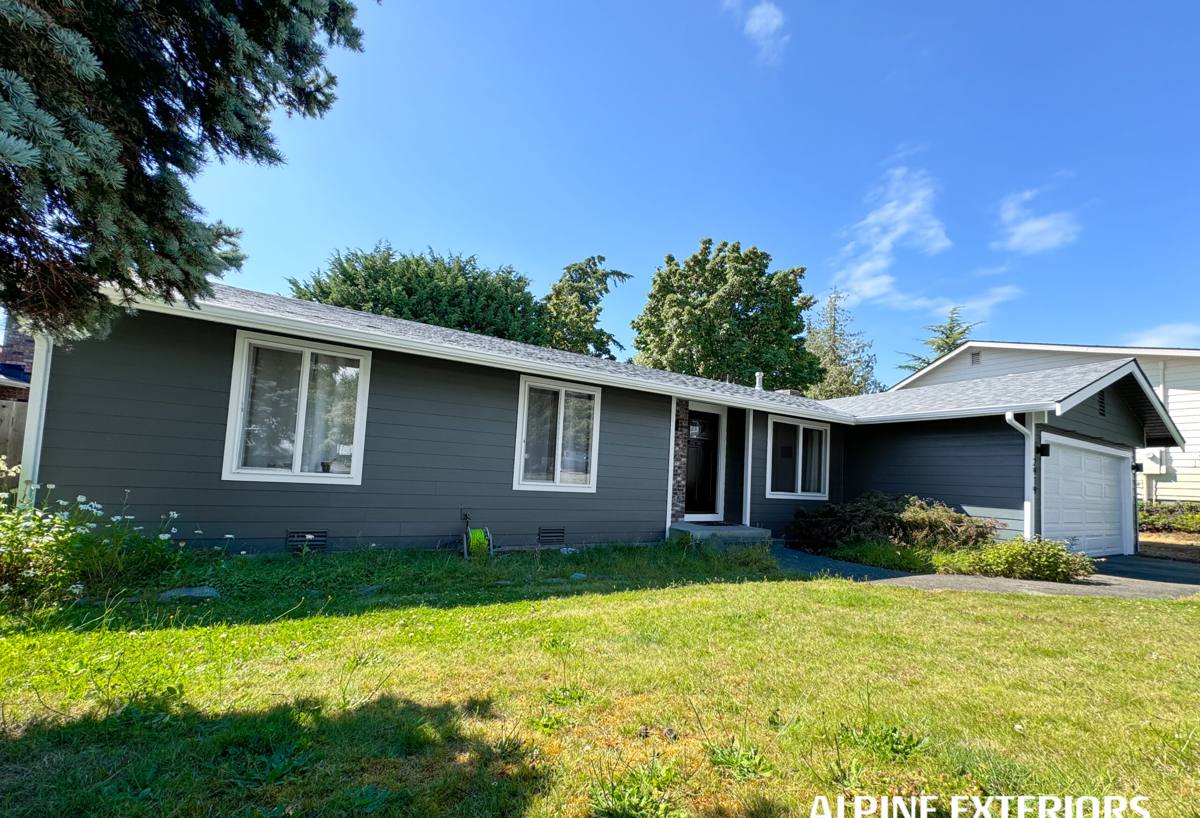
Signs Your Current Siding Is Losing That Fight
Homeowners in Columbia usually call us for one of a few reasons. Recognizing these early can be the difference between a straightforward re-side and a job that also has to deal with rotted sheathing underneath.
- Paint that's peeling, bubbling, or needing repainting far more often than it used to
- Soft or spongy spots when you press on the siding, especially near the bottom courses or around windows
- Persistent moss or dark streaking that comes back within weeks of being cleaned
- Visible gaps, warping, or cupping in boards, especially on the sides of the house that face prevailing wind and rain
- Cracking at butt joints or around trim where caulk has failed and not been maintained
- A musty smell or discoloration on interior walls that share an exterior wall with problem siding
Any one of these on its own might just mean a repair. Several together, especially on a home more than 15-20 years old, usually mean the whole system — siding, house wrap, and flashing — is due for a real look.
What a Correct Siding Installation Actually Involves
Siding is easy to install badly and still have it look fine for the first year or two. The problems show up three, five, ten years down the road, once water has had time to find the weak points. A correct installation is mostly about what you don't see once the job is done.
Water Management Behind the Cladding
Every wall needs a continuous water-resistive barrier (house wrap or building paper) installed with proper overlaps, and every penetration — windows, doors, hose bibs, light fixtures — needs to be flashed so that water sheds outward and downward, never inward. In a climate that gets consistent driving rain, this layer matters more than the siding material sitting on top of it. We check and correct this layer as part of every installation rather than just siding over whatever is already there.
Fastening and Manufacturer Specification
Fiber cement siding has a specific fastening pattern, nail type, and minimum embedment depth set by the manufacturer, and those specs exist for a reason — get them wrong and you get fasteners that back out, boards that crack, or a warranty that's no longer valid. We install to the manufacturer's published specification, not a shortcut version of it.
Trim, Joints, and Caulking
Butt joints, corner boards, and the transitions around windows and doors are where most siding failures start. Proper joint treatment (whether that's a shingle-lap detail, a rain-screen gap, or manufacturer-approved sealant) keeps water from sitting in these spots. In a climate with a long wet season, a joint that's caulked instead of properly detailed is a maintenance problem waiting to happen.
Comparing Siding Materials for This Climate
Homeowners in Columbia often ask us to explain why we recommend one material over the others they've seen advertised. Here's an honest comparison based on how each performs specifically in a wet, salt-air, moss-prone climate — not in a showroom.
| Material | Moisture Behavior | Maintenance Burden | Typical Lifespan Here |
|---|---|---|---|
| Vinyl siding | Doesn't absorb water itself, but seams and panels can allow moisture behind the cladding; can warp or crack in temperature swings | Low day-to-day, but repairs are visible (color mismatch) and panels are prone to wind damage | Variable; often replaced early for appearance or storm damage |
| Cedar / natural wood | Absorbs and releases moisture constantly; very sensitive to the region's damp, low-sun conditions | High — regular refinishing, sealing, and moss/mildew treatment required | Shorter without diligent upkeep |
| Primed spruce / engineered wood (e.g. LP-type) | Performs well when the factory coating stays intact; edge and cut-end exposure is the main risk point | Moderate — depends heavily on installation quality at joints and cut edges | Solid if installed and maintained correctly |
| James Hardie fiber cement | Non-combustible and dimensionally stable; doesn't swell, rot, or support moss growth the way wood-based products can | Low — factory ColorPlus finish resists fading and doesn't need repainting on the manufacturer's typical cycle | Long, when installed to spec |
Every material on that list has homeowners who are happy with it. Our job is to be straight about the trade-offs, and for a climate like this one, fiber cement's resistance to moisture-driven decay and its factory-cured finish are what tip the decision for us.
Why We Only Install James Hardie Fiber Cement
We made a decision as a company to install one siding system: James Hardie fiber cement, in the HZ5 product line engineered for climates like this one — regions that see sustained rain, humidity, and freeze-thaw cycles rather than sustained heat. That's a narrower offering than a lot of contractors provide, and it's intentional.
Fiber cement doesn't rot, it doesn't feed moss and mildew the way organic wood fiber can, and it holds paint and color far longer than wood-based siding because the color is baked into the board at the factory rather than applied on site. It's also non-combustible, which matters to a lot of homeowners regardless of climate. The trade-off is that it's heavier to install correctly, more sensitive to cut and fastening technique than vinyl, and it costs more upfront than some alternatives. We think that trade-off is worth it for a house that has to stand up to Whatcom County winters and wet seasons for decades, and it's why we don't offer the lighter, cheaper options as an alternative — we'd rather do one thing well than several things as a compromise.
Our Process for a Columbia Siding Job
Assessment and Estimate
We start by looking at the existing siding, the condition of the sheathing and water-resistive barrier underneath where accessible, and any trouble spots — north-facing walls, areas under overhangs that stay shaded and damp, spots near ground contact. That assessment is what an accurate, honest estimate is built on, not a generic per-square-foot number.
Prep and Removal
Old siding comes off, and we inspect the sheathing underneath for soft spots or existing water damage before anything new goes up. This is the point where hidden problems get caught — covering them up would just guarantee a bigger repair later.
Water Barrier and Flashing
We install or repair the house wrap and flash every penetration before a single piece of Hardie board goes on. This step is where most of the long-term performance of the wall actually comes from.
Installation to Manufacturer Spec
Fastening pattern, nail embedment, joint treatment, and clearances (from grade, roofing, and decks) are all done to James Hardie's published installation guidelines, which is also what keeps the manufacturer's warranty intact.
Final Walkthrough
We walk the finished job with the homeowner, cover basic care, and answer questions about warranty coverage before calling it done.
Why a Crew That Already Works Columbia Matters
Siding installation isn't one-size-fits-all across Whatcom County, even within Sudden Valley. A crew that already works in this specific area has a working sense of which sides of a house typically take the worst weather locally, how moss and moisture tend to behave on shaded lots, and what kind of exposure a given lot layout is likely to see through a wet winter. That's not something you get from a general contractor who mostly works somewhere drier and treats every job the same way.
There's also a practical side: a local crew is easier to reach for a warranty question five years down the road, doesn't have to build travel time into every estimate, and has a reputation in the area that depends on the work holding up — not just looking good at handoff.
Caring for Hardie Siding After Installation
Fiber cement is low-maintenance compared to wood, but "low-maintenance" doesn't mean "no maintenance," especially in a climate with a long moss season.
- Rinse the siding periodically with a garden hose to keep organic buildup from taking hold, especially on shaded or north-facing walls
- Keep gutters clear so overflow doesn't run down and saturate siding at the roofline
- Trim back vegetation and tree cover that keeps a wall shaded and damp longer than the rest of the house
- Re-caulk joints and trim transitions if you ever see cracking or gaps, rather than waiting for water to get behind them
- Check the manufacturer's finish warranty terms if you ever notice fading or chalking well ahead of what's expected
If your siding in Columbia is showing its age, or you're planning ahead rather than reacting to a problem, we're glad to come take a look. The estimate is free, there's no pressure attached to it, and you'll get a straight answer about what your house actually needs — just fill out the form below to get started.