 Sudden Valley Roofing
 Why Fairhaven's Coastal Exposure Wears Siding Down Faster
Fairhaven sits close enough to the water that homes here take on a different kind of weather load than siding was designed for on paper. Salt-laden air corrodes exposed fasteners and metal trim faster than it does even a few miles inland. Wind-driven rain off the water doesn't just fall straight down — it gets pushed sideways into seams, laps, and butt joints that were never meant to see standing moisture. And Whatcom County's long, damp shoulder seasons give moss and algae months at a time to take hold on north-facing walls and anything shaded by trees or a neighboring structure.
None of that means siding here is doomed. It means siding here needs to be installed and repaired with those specific stresses in mind, not treated like a generic patch job. A repair that would hold up fine in a dry inland climate can fail within a year or two on a Fairhaven exterior if it ignores salt exposure, water path, or moss growth.
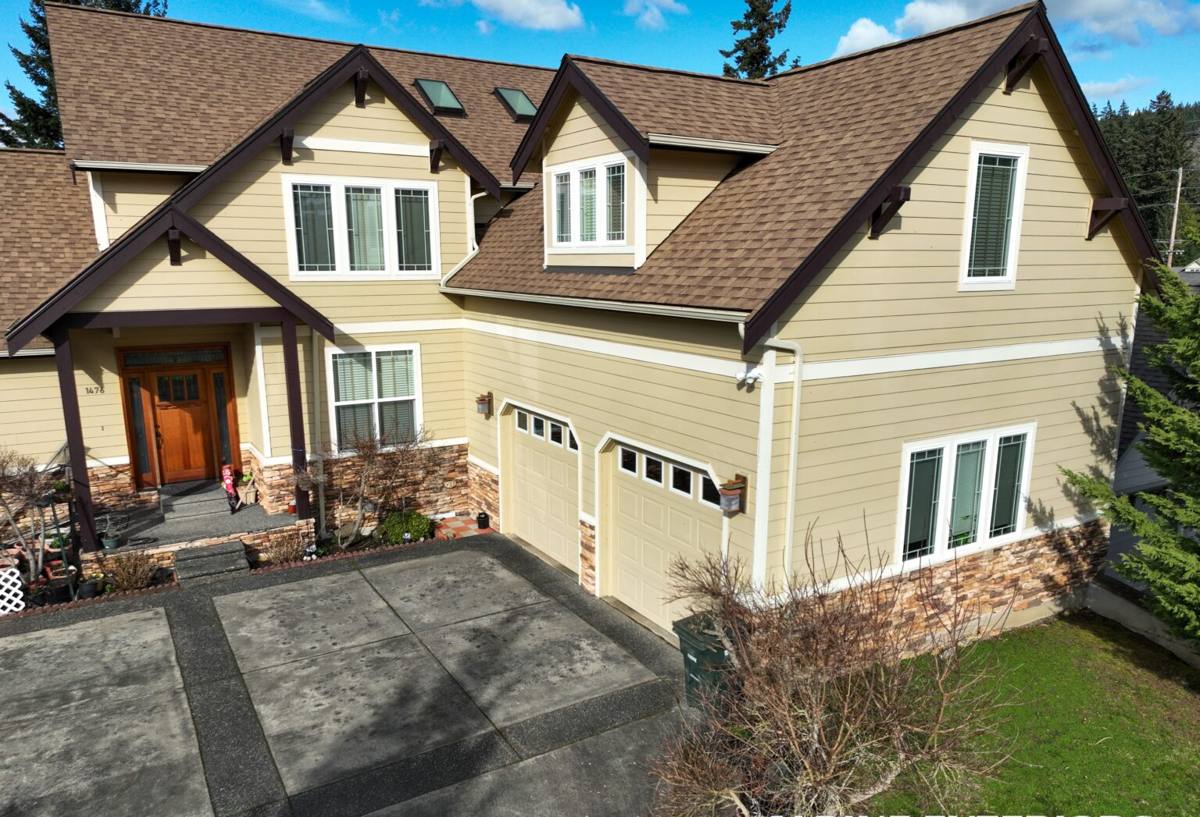
Signs Your Fairhaven Home's Siding Needs Repair
Most siding problems don't announce themselves with a hole in the wall. They show up as small, easy-to-miss signals first. If you catch them early, a repair stays a repair instead of turning into a much larger job.
- Soft or spongy spots when you press on the siding, especially near the bottom courses or around window and door trim
- Paint that's bubbling, peeling, or failing in patches rather than evenly across the whole wall
- Visible gaps at seams, corners, or where siding meets trim, flashing, or the foundation
- Persistent green or black staining that comes back quickly after cleaning
- Warping, buckling, or panels that look slightly bowed compared to the wall plane
- Rust streaks below nail heads or metal trim pieces
- A musty smell or visible staining on interior walls that share an exterior wall with damaged siding
If you're seeing more than one of these, especially on a wall that faces the prevailing wind and rain, it's worth having it looked at before the next wet season.
What Salt Air and Driving Rain Actually Do to Siding Over Time
Fastener and Trim Corrosion
Salt air accelerates corrosion on any exposed metal — nail heads, flashing, trim screws, and even some coatings on lower-grade siding products. Once a fastener starts to rust and lose its grip, the panel around it can work loose, opening a path for water that wasn't there before. This is one of the more common failure points we find on repair calls near the water in Whatcom County, and it's easy to overlook because the panel itself often still looks fine.
Wind-Driven Water Intrusion
Standard siding installation assumes rain falls mostly straight down and sheds off the face of the wall. Wind-driven rain off the water pushes moisture sideways and upward, forcing it into laps, seams, and butt joints that a calmer climate would never test. Over years, that repeated intrusion saturates the sheathing behind the siding even when the siding surface looks intact.
Extended Moss and Algae Growth
Whatcom County's damp fall-through-spring stretch gives moss and algae far more time to establish than in drier regions. Moss holds moisture against the siding surface, keeps that surface cooler and wetter longer after rain, and can work into seams and butt joints, prying them open over time. It also traps organic debris that feeds further growth, so a small patch left alone tends to spread.
What a Correct Siding Repair Actually Involves
A proper repair is not just cutting out a bad section and nailing in a new piece. Done right, it addresses why that section failed in the first place, so the same spot doesn't fail again in two years.
- Diagnose the water path. We trace how moisture got behind the siding — a failed seam, missing flashing, a caulk joint that gave out, a fastener that corroded — before touching anything.
- Check the sheathing and framing behind the damaged area. If water has been getting in for a while, the wood behind the siding may be soft or rotted. Patching over compromised sheathing just hides the problem.
- Address the underlying cause, not just the symptom. That might mean correcting flashing detail, re-establishing proper lap and clearance, or fixing a drainage path — not just replacing the visible panel.
- Match the replacement material correctly. Profile, exposure, and finish need to match the surrounding siding closely enough that the repair doesn't stand out or create a new water trap.
- Re-seal and re-flash to current best practice. Original construction details aren't always ideal for this climate; a repair is a chance to correct that at the repaired section.
Skip any of those steps and you end up with a repair that looks fine for a season and then fails again in the same spot — often worse the second time, because the underlying damage kept spreading while it was hidden behind the patch.
Repair or Replace? How We Help You Decide
Not every damaged section calls for a full re-side, and not every home is a good candidate for spot repair. The right call depends on how isolated the damage is and what condition the rest of the siding is in.
| Factor | Repair Usually Makes Sense | Full Replacement Usually Makes Sense |
|---|---|---|
| Extent of damage | Isolated to one or two sections or walls | Widespread across multiple walls or the whole exterior |
| Age of existing siding | Relatively young, still performing well elsewhere | Nearing or past its expected service life |
| Underlying sheathing | Sound, no rot found once opened up | Rot or moisture damage found in multiple areas |
| Material match | Original product/color still available or close enough | Discontinued or badly faded, patch would be visibly obvious |
| Root cause | Localized issue (one bad seam, one damaged panel) | Systemic issue (wrong original installation detail repeating everywhere) |
We'll walk the exterior with you, explain what we're seeing, and give you an honest recommendation either way — including telling you when repair is genuinely the right, more affordable answer rather than pushing a bigger job you don't need yet.
Our Siding Repair Process
We keep the process straightforward and communicate at each step, since most homeowners only deal with siding repair once every several years and shouldn't have to guess what's happening to their house.
- Inspection: We assess the damaged area and check adjacent sections and common trouble spots (corners, penetrations, low clearance points) for related issues.
- Diagnosis and quote: We explain what caused the damage, what the repair involves, and give you a clear price before any work starts.
- Removal: Damaged siding and any compromised trim or flashing come off carefully to avoid widening the affected area unnecessarily.
- Sheathing check: We inspect what's underneath and flag any rot or moisture damage before closing the wall back up.
- Repair and reinstall: We correct the underlying issue, install matching material, and detail flashing and sealant to hold up against wind-driven rain.
- Cleanup and walkthrough: We clear the site and walk you through what was done and what to keep an eye on going forward.
Why We Repair and Replace With James Hardie Fiber Cement
When a repair calls for new material rather than just resealing what's there, we use James Hardie fiber cement siding — it's the only siding product we install, on repairs and full replacements alike. Fiber cement doesn't absorb and swell with moisture the way wood-based products can, and it's non-combustible, which matters to a lot of homeowners regardless of climate. Hardie's ColorPlus factory finish is baked on rather than field-painted, so a patched section holds its color and resists fading and peeling far better than a repair painted on-site.
Hardie also builds climate-specific product lines engineered for regions with heavy moisture exposure, which fits Whatcom County's rain and humidity better than a one-size-fits-all product. We've made the call not to install vinyl, LP SmartSide, or other fiber cement alternatives — not because those products have no merit, but because we'd rather stand behind one system we know performs correctly here, especially on repairs where a mismatched product's different moisture behavior can actually cause new problems at the seam where old and new material meet.
What This Means for a Repair Specifically
If your existing siding is already Hardie, a repair is usually a clean match — same material behavior, same finish process, same expected lifespan. If your existing siding is a different product and the damaged section is significant, we'll talk through whether patching with a different material at that spot is really the best long-term move, versus planning a broader transition to Hardie over time.
Why Local Experience in Fairhaven Matters
A siding repair crew that regularly works Fairhaven and the surrounding Sudden Valley and Whatcom County area already knows which walls take the worst of the wind-driven rain, where moss tends to establish first, and which older installation details in this area tend to fail early. That local pattern recognition shortens the diagnosis step and helps us catch related problems — like a corroding fastener two feet from the visible damage — before they turn into a second repair call next year.
It also means we're not guessing at how this climate behaves. We've seen what a winter of driving rain off the water does to a poorly flashed seam, and we build every repair to hold up against that reality, not just against a dry-weather standard.
Keeping Repaired Siding in Good Shape Afterward
A correct repair should last, but a little seasonal attention extends that further, especially in a coastal, moss-prone climate like this one.
- Rinse siding periodically to clear salt residue and organic buildup before it becomes established growth
- Keep gutters clear so overflow doesn't run down the wall face and saturate seams
- Trim back vegetation and tree cover that keeps a wall shaded and damp longer than the rest of the house
- Do a quick visual check each fall and spring for new soft spots, gaps, or staining, particularly on walls facing the prevailing weather
Catching a small issue during one of those checks is exactly how a repair stays a repair instead of becoming a bigger project later.
If you're seeing damage, staining, or soft spots on your Fairhaven home's siding, we're happy to take a look and give you a straight answer on what it needs. Reach out for a free, no-pressure estimate using the form below.