 Sudden Valley Roofing
 Siding Built for What Cordata Actually Deals With
Cordata sits inland enough from the water that people sometimes assume it's sheltered from the coastal weather that hammers homes closer to Bellingham Bay. It isn't, not really. Salt-laden air still moves through on the wind, driving rain still comes in sideways off the Salish Sea for days at a stretch, and the low, gray, wet stretch of fall through spring gives moss and algae months at a time to get established on anything that stays damp. Siding here isn't decorative — it's the one layer standing between your framing and a climate that rarely lets a house dry out completely between storms.
We're based in the Sudden Valley area of Whatcom County, and Cordata is well within the territory we work regularly. That matters more than it sounds like it should. A crew that's replaced siding on a handful of Cordata homes has already seen how the local microclimate treats different products, which sides of a house take the worst weather, and where builders in this area tend to cut corners that show up as problems ten or fifteen years later.
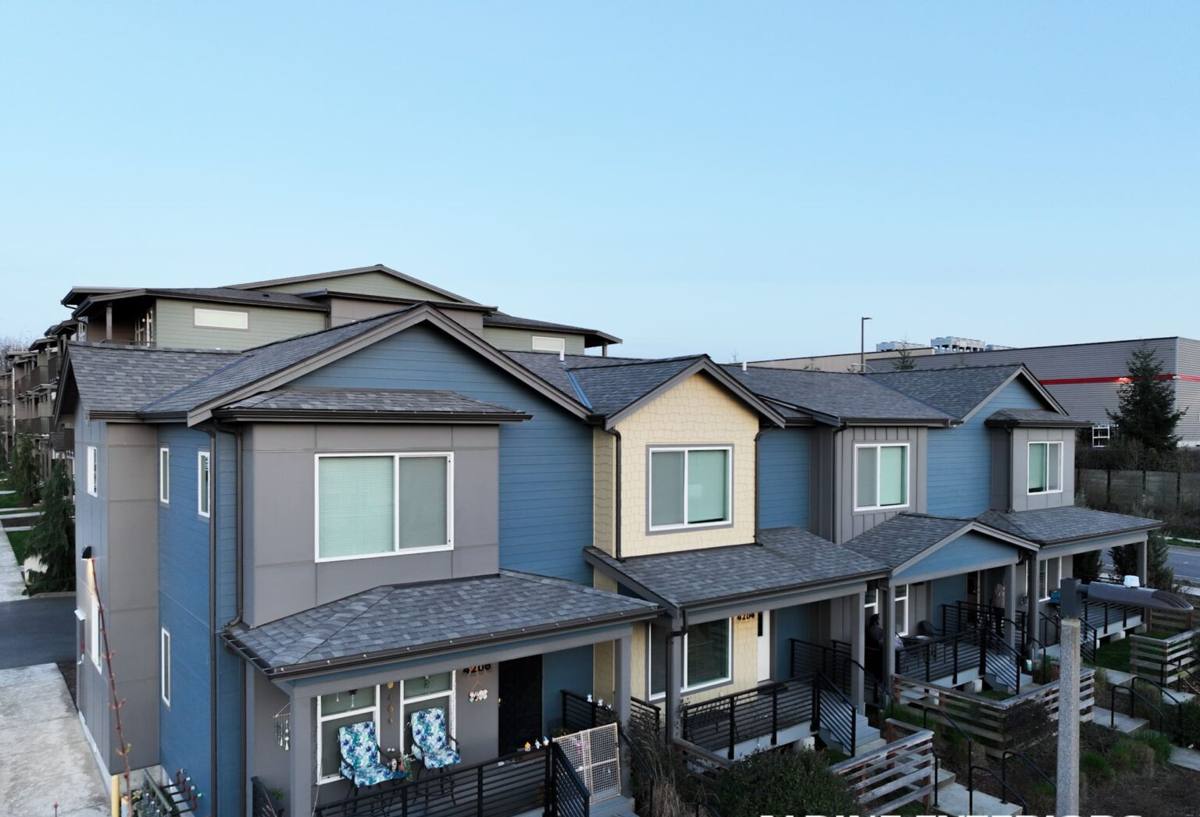
What This Climate Does to Siding Over Time
Every siding material fails in its own way, but the failure mode in Whatcom County is almost always moisture-driven. Wood-based products swell, delaminate at the edges, or rot from the back where they can't dry. Vinyl doesn't rot, but it doesn't stop moss and algae either — it just hides what's happening behind it, since vinyl is a cladding, not a sealed moisture barrier, and problems at the seams and fastener points go unnoticed until they're expensive. Improperly installed fiber cement can suffer the same fate as any other product if the water-resistive barrier, flashing, and clearances aren't done correctly.
The common thread we see on Cordata homes:
- North- and west-facing walls holding moss and grime far longer each year than south-facing walls
- Caulk joints and butt seams failing years before the siding field itself
- Bottom courses near grade or decks staying damp long after a storm passes
- Paint or factory finish breaking down first at seams, corners, and fastener heads
- Soft or spongy spots discovered only once old siding is pulled off
None of that is unique to Cordata — it's Whatcom County weather doing what it does. But it does mean that a siding replacement here has to be planned around moisture management first and appearance second, even though appearance is usually what gets a homeowner calling in the first place.
Signs a Cordata Home Actually Needs Replacement
Not every issue calls for full replacement. Isolated caulk failure, a few loose boards, or a small area of storm damage can often be repaired. Full replacement makes sense when the problems are systemic rather than local. A few signs worth taking seriously:
- Soft, spongy, or crumbling siding when pressed, especially near the bottom courses
- Persistent moss or algae growth that returns within a season of cleaning
- Visible warping, cupping, or separation at seams across multiple walls
- Paint that won't hold no matter how often it's redone
- Bubbling, staining, or a musty smell on interior walls that back up to exterior siding
- Siding original to a home built more than 20-25 years ago that has never been replaced
If you're only seeing one or two of these on one wall, a repair and a conversation about maintenance may be enough. If you're seeing several of these across the house, replacement is usually the more honest recommendation — and a contractor who tells you that instead of upselling a full tear-off for a fixable problem is worth paying attention to.
What a Correct Siding Replacement Involves
Tear-Off and Inspection
Old siding comes off entirely, not just in the visibly bad sections. That's the point where we find out what's actually happening behind the cladding — sheathing condition, insulation state, and whether previous moisture problems left damage that needs to be addressed before anything new goes up. Skipping this step and re-siding over existing problems is one of the most common shortcuts in the industry, and it's how homeowners end up paying for the same repair twice.
Water-Resistive Barrier and Flashing
Given how much driving rain this region sees, the housewrap and flashing details matter as much as the siding itself. Every window, door, and penetration needs proper flashing that sheds water down and out, not into the wall assembly. This is the part of the job that's invisible once it's done — and it's also the part most likely to be shortcut by crews trying to move fast.
Fastening and Installation to Spec
Fiber cement siding has manufacturer-specified nailing patterns, clearances from grade and roofing, and gapping requirements at joints. These specs exist because the product was engineered around them — ignore them and you introduce the exact moisture entry points that cause premature failure. Correct installation also means proper clearance at decks, patios, and grade so the bottom courses aren't sitting in standing water or buried in mulch.
Finish and Detail Work
Trim, corners, and caulking are where a lot of jobs are won or lost on appearance and durability alike. Factory-finished products reduce the amount of field caulking and painting needed, which reduces the number of joints that can fail down the road.
Why We Only Install James Hardie Fiber Cement
We don't install vinyl, LP SmartSide, primed wood, cedar, or other fiber cement brands. That's a deliberate standard, not a limitation of what we know how to do. In a climate that keeps homes damp for months at a stretch, the materials that struggle most are the ones that rely on paint film integrity, engineered wood cores, or unsealed panel seams to keep water out over the long haul. James Hardie's fiber cement is cement, sand, and cellulose fiber — it doesn't rot, it doesn't feed moss the way organic wood surfaces can, and it holds up to repeated wet-dry cycling better than wood-based composites.
Climate-Engineered Product Lines
Hardie makes region-specific formulations, including an HZ5 line engineered for areas with more freeze-thaw cycling and moisture exposure — relevant to Whatcom County's wet winters. That's an advantage over one-size-fits-all products that aren't engineered around a specific climate zone.
ColorPlus Factory Finish
Hardie's ColorPlus finish is baked on at the factory under controlled conditions, rather than field-applied. That gives a more durable, more even finish than site-painted siding, and it comes backed by its own finish warranty separate from the product warranty.
Non-Combustible
Fiber cement doesn't burn. That's not the primary reason we recommend it for a wet climate like this one, but it's a real difference from wood-based sidings that homeowners should know about.
Transferable Warranty
Hardie backs its products with a long, transferable limited warranty — a real asset if you sell the home before the siding's useful life is up, and one of the reasons we're comfortable standing behind it after the crew leaves.
How Hardie Compares for This Climate
| Factor | James Hardie Fiber Cement | Vinyl | Wood / Engineered Wood |
|---|---|---|---|
| Moisture resistance | Does not rot or swell; cement-based | Won't rot but seams and fasteners can let water behind panels unnoticed | Absorbs moisture; prone to swelling and rot over time |
| Moss and algae resistance | Non-organic surface resists growth; factory finish sheds grime | Doesn't feed growth but shows dirt and algae readily | Organic surface can support moss and mildew growth |
| Salt air durability | Stable in coastal-influenced climates | Can become brittle over decades of UV and temperature swings | Salt-laden moisture accelerates rot and finish failure |
| Finish maintenance | Factory finish; occasional cleaning | No paint needed but fades and chalks over time | Regular repainting or restaining required |
| Fire resistance | Non-combustible | Melts/deforms under heat | Combustible |
| Typical service life | Multiple decades when installed to spec | Decades, but seam and impact failures common | Shorter, especially in wet climates without diligent upkeep |
What Siding Replacement Typically Costs
Every home is different, and we won't quote a number without seeing the house, but the main variables that move the price are consistent from job to job. This is meant to help you understand what you're paying for, not to substitute for an actual estimate.
| Cost Factor | Why It Matters |
|---|---|
| Home size and wall area | More square footage means more material and labor, straightforwardly |
| Existing siding removal | Multiple layers or difficult-to-remove materials add labor time |
| Underlying damage | Rotted sheathing or framing found during tear-off requires repair before new siding goes on |
| Number of stories and access | Second stories, steep lots, and limited access increase labor and equipment needs |
| Trim, corners, and architectural detail | More corners, windows, and trim profiles mean more cutting and finish work |
| Siding profile and color selection | Lap width, shingle-style panels, and custom colors can shift material cost |
Our Process for Cordata Homeowners
The steps are the same whether the house is in Cordata, elsewhere in Bellingham, or closer to us in Sudden Valley — but knowing the neighborhood helps us anticipate issues before we're standing on a ladder looking at them.
- On-site assessment — we look at the current siding, check for moisture damage at vulnerable points, and talk through what you're seeing and what's prompting the project.
- Product and profile selection — choosing the Hardie line, lap width or panel style, and color that fits the home and your budget.
- Tear-off and sheathing inspection — removing old siding and addressing any damage found underneath before anything new is installed.
- Water-resistive barrier and flashing — installed to manage the amount of driving rain this region gets, at every window, door, and penetration.
- Installation to manufacturer spec — correct fastening, clearances, and joint treatment so the siding performs the way it's engineered to.
- Final walkthrough — going over the finished work with you before we consider the job done.
Why Local Experience in This Area Matters
A crew that only shows up in Cordata once every few years doesn't have a feel for how the neighborhood's weather exposure differs wall to wall, which sides of a house take the worst of the driving rain, or how aggressively moss comes back in a given yard's shade pattern. Being based in Whatcom County means we're dealing with these same conditions on our own projects year-round, not learning them on your house. It also means warranty follow-up and any future questions don't involve chasing down a contractor who was only passing through.
If your Cordata home's siding is showing its age, or you just want an honest read on whether you're looking at repair or replacement, we're glad to come take a look. The estimate is free, there's no pressure attached to it, and you'll get a straight answer about what your house actually needs.