 Sudden Valley Roofing
 Why Silver Beach Siding Takes a Different Kind of Beating
Homes around Silver Beach sit in one of the harder spots in Whatcom County to keep siding looking and performing well. The combination of moisture-laden air moving in off the water, driving rain that comes in sideways during fall and winter storms, and long stretches of shade from mature trees adds up to a siding environment that's tougher than what you'll find on a dry, open lot a few miles inland. None of that means siding is doomed here — it means the material and the workmanship have to be right for the conditions, and repairs have to address the actual cause of the damage, not just the symptom.
Moisture-Driven Wear
Wind-driven rain doesn't just wet the surface of your siding — it pushes water sideways into seams, laps, and fastener points that were never designed to handle that kind of pressure. Over years, that repeated soaking-and-drying cycle is what causes swelling, delamination, and soft spots in siding that isn't built to handle it, and it's what eventually lets water sneak behind the cladding into the sheathing and framing underneath.
The Long Moss Season
Shaded, moisture-retentive spots on a home — north-facing walls, areas under overhangs, sections close to trees — stay damp longer here than in drier parts of the state, and that means a longer moss and algae season. Moss holds moisture against the siding surface far longer than open air would, which accelerates decay in wood-based products and stains and etches lower-quality finishes. It's a slow problem, which is exactly why it's easy to miss until it's already done damage.
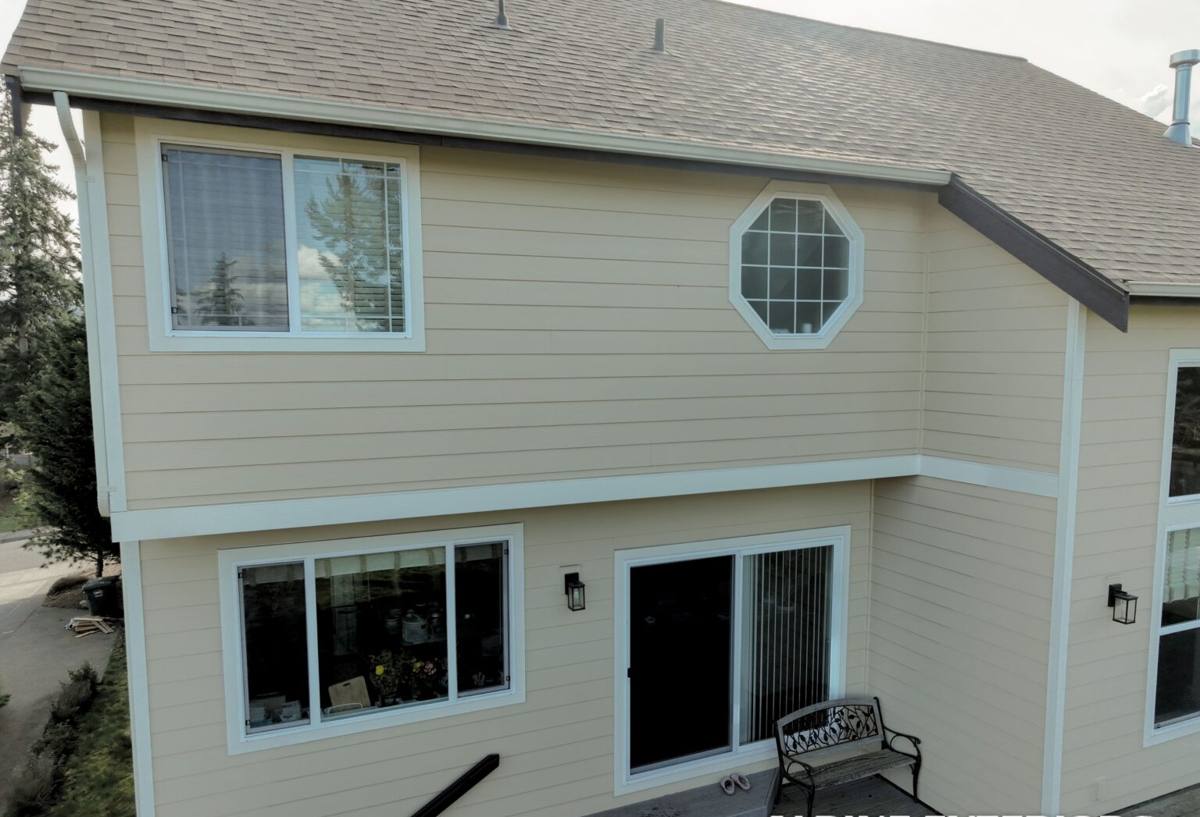
Signs Your Siding Needs Repair, Not Just a Wash
A lot of homeowners default to pressure washing or repainting when siding starts looking rough. Sometimes that's genuinely all it needs. Other times, cleaning it up just hides a problem that keeps getting worse underneath. Here's what should actually prompt a repair call:
- Soft, spongy, or crumbling spots when you press on the siding, especially near the bottom courses or around windows and doors
- Visible gaps, cracks, or separation at seams, corners, or trim boards
- Paint that's bubbling, peeling, or failing in a localized area rather than uniformly across the wall
- Persistent dark streaking, moss, or algae that keeps coming back within a season or two of cleaning
- Warping, buckling, or boards that no longer sit flat against the wall
- Interior signs — a musty smell, a stained wall, or peeling interior paint — on a wall that backs up to damaged siding
- Visible daylight or drafts through gaps you didn't notice before
Any one of these on its own might be minor. Several together, or any sign of softness combined with staining, usually means moisture has already gotten past the surface.
What a Correct Siding Repair Actually Involves
Siding repair gets treated as a small job, and sometimes it is. But done right, it's not just pulling a bad board and nailing up a new one. There are three things that separate a repair that lasts from one that fails again in two or three years.
Diagnosing the Real Problem First
Damaged siding is often a symptom, not the disease. Before we replace anything, we pull back enough material to see what's actually happening behind it — whether the house wrap is intact, whether flashing at a window or door is doing its job, whether the damage is isolated or points to a bigger moisture path. Replacing the visible board without finding the entry point just buys a few years before the same spot fails again.
Matching Material and Finish
A patch job that doesn't match butts up against the rest of the wall visually and, worse, can create a performance mismatch — different materials expand, contract, and shed water differently, and mixing them at a seam is often where the next leak starts. We match both the profile and, where the product allows for it, the factory finish, so a repair blends in rather than becoming the obvious weak point on the wall.
Flashing, House Wrap, and the Parts You Don't See
The siding itself is the last line of defense, not the only one. A correct repair restores the drainage plane behind it — proper overlap on the house wrap, correctly installed flashing at penetrations and transitions, and a drainage gap where the assembly calls for one. Skipping this step is the single most common reason a "fixed" section of siding fails again within a few years.
Repair or Replace? What Actually Decides It
Not every damaged section needs full replacement, but not every problem should be patched, either. These are the factors that actually drive that decision:
| Factor | Leans Toward Repair | Leans Toward Replacement |
|---|---|---|
| Extent of damage | Isolated to one or two boards/areas | Spread across multiple walls or elevations |
| Moisture intrusion behind siding | Sheathing and framing are dry and sound | Rot has reached the sheathing or framing |
| Age and condition of remaining siding | Siding is mid-life and otherwise performing well | Siding is near the end of its service life overall |
| Material match availability | Matching profile/finish is available | Product discontinued or too far mismatched to blend |
| Underlying material | Non-combustible, moisture-stable cladding | Wood-based or moisture-sensitive product already failing broadly |
We'll always tell you honestly which side of that table your home falls on. A repair that's going to fail again in a season isn't a favor to you — it's a call-back waiting to happen.
Why We Only Repair With — and Recommend — James Hardie Fiber Cement
We install James Hardie fiber cement siding exclusively, and that standard carries through to repairs. Fiber cement doesn't absorb and swell with moisture the way wood-based siding products can, which matters directly in a climate that keeps siding wet for long stretches at a time. It's also non-combustible, which is a real consideration as wildfire smoke seasons have become more common across the Pacific Northwest even in areas that don't border wildland.
For repair work specifically, Hardie's ColorPlus factory-finish system is a genuine advantage: because the color is baked on at the factory rather than field-applied, a matched replacement board holds its color and sheen the same way the surrounding siding does, instead of a field-painted patch slowly weathering differently than the rest of the wall. Hardie's HZ5 product line is engineered for the wetter, harsher weather side of its climate zones, which is the right specification for homes exposed to the kind of driving rain and prolonged dampness common around Silver Beach and the rest of Whatcom County.
We don't repair or replace with LP SmartSide, vinyl, or other fiber cement brands, and we're upfront about why: our reputation is built on repairs and installations that hold up for decades, not just until the next wet season. Standardizing on one product line lets us stock accurate profiles, match finishes correctly, and back our work with confidence in how the material actually performs over time.
Our Silver Beach Siding Repair Process
- On-site inspection. We look at the damaged area and the surrounding wall, checking for moisture intrusion, not just surface damage.
- Diagnosis and honest recommendation. We tell you plainly whether this is a repair, a larger repair, or something that points toward a bigger issue — and why.
- Material matching. We source the correct Hardie profile and finish to match your existing siding as closely as the product line allows.
- Removal and inspection of what's underneath. Damaged siding comes off, and we check the house wrap, flashing, and sheathing before anything new goes back up.
- Correct reinstallation. Flashing and drainage details get restored to spec, not just covered over, before the new siding goes on.
- Final check and cleanup. We walk the repair with you, confirm it's sealed and finished correctly, and clean up the site.
Why Hiring a Crew That Already Works Silver Beach Matters
A siding repair on a home exposed to this kind of moisture and shade pattern isn't the same job as a repair on a dry lot across the county. Crews that regularly work homes in this area already know what to check for — where moss tends to build up first, which wall orientations take the worst of the driving rain, and what "normal" wear looks like here versus what actually signals a bigger problem. That local pattern recognition is the difference between a five-minute inspection that catches the real issue and one that misses it because it doesn't match what a contractor is used to seeing elsewhere.
It also matters for logistics — knowing realistic timelines around Whatcom County's wetter months, understanding how to sequence a repair so the wall isn't left open during a stretch of bad weather, and having existing relationships with suppliers who stock the Hardie profiles used on homes in this area rather than having to special-order and wait.
Keeping Repaired Siding Healthy Afterward
A correct repair should last, but a little routine attention extends that considerably in this climate:
- Keep tree branches and shrubs trimmed back from siding to reduce shade and let walls dry out between rain events
- Clean gutters regularly so overflow doesn't run down the wall directly above a repaired section
- Rinse moss- and algae-prone areas (shaded, north-facing walls especially) once or twice a year before growth gets established
- Walk the exterior after major storms and check caulking and seams at trim, windows, and corners
- Address any new soft spots or staining quickly rather than waiting for the next scheduled maintenance
If you're seeing damage, staining, or soft spots on your Silver Beach home's siding, it's worth having someone look at it before the next wet season sets in. We're happy to come out, walk the exterior with you, and give you a straight answer on what it needs — with a free, no-pressure estimate either way.